
The Anemone Flower: What It Is, What It Means and How to Keep It
The anemone is a flowering plant of the buttercup family (Ranunculaceae), best known in bouquets as Anemone coronaria: a cup-shaped flower with silky petals in red, white, pink, purple or blue and a dark, almost black centre. Its name comes from the Greek word for wind, which is why it is often called the windflower. As a cut flower it is a spring favourite, valued for its graphic look and bright, clean colours.
In our Saint Petersburg shops, open since 2011, customers usually ask three things about anemones: what they mean as a gift, why they open and close, and how long they will last in a vase. This guide answers those questions in the order people ask them, with the practical detail a florist would give across the counter.
What an anemone looks like and how to recognise it
A cut anemone has a single straight stem, a ruff of finely divided green leaves a few centimetres below the flower, and a bloom of five to eight broad petals around a raised dark centre. Strictly speaking, those petals are sepals, but nobody in a flower shop calls them that. The dark centre is made of a ring of stamens around a knob-like pistil, and it is the feature that makes anemones instantly recognisable in a bouquet.
Customers sometimes confuse anemones with ranunculus, which belongs to the same family. The difference is easy to see: ranunculus has many layers of tightly packed petals like a small rose, while the classic anemone has one or two layers and an open face. Poppies are the other look-alike, but a poppy has a hairy, often curving stem and crumpled, paper-thin petals.
Garden anemones are a separate story. Japanese anemones bloom in late summer and autumn on tall plants and are rarely sold as cut flowers, while the small white wood anemone flowers in spring woodland, including the forests around Saint Petersburg. When people ask for anemones in a bouquet, they nearly always mean Anemone coronaria.
Anemone meaning and symbolism
The anemone carries a mixed set of meanings, and it helps to know them before you choose one as a gift. In Greek myth the flower grew from the blood of Adonis mourned by Aphrodite, which links it to love, loss and remembrance. In the Victorian language of flowers it stood for anticipation and, in some lists, for forsaken love.
In modern floristry these older meanings matter much less than colour. Red anemones read as passion and strong feeling, white ones as sincerity and calm, and purple and blue as admiration and a slightly artistic taste. Pink is the safe, tender choice for a birthday or a thank-you. Most of our customers buy anemones simply because they look fresh and unusual, and that is a perfectly good reason.
If you are sending flowers to someone in Russia, remember the old custom of giving an odd number of stems for happy occasions; even numbers are associated with funerals. Many younger people no longer mind, but for a grandmother or an older colleague it is wiser to stick to odd numbers.
Bouquets we can deliver


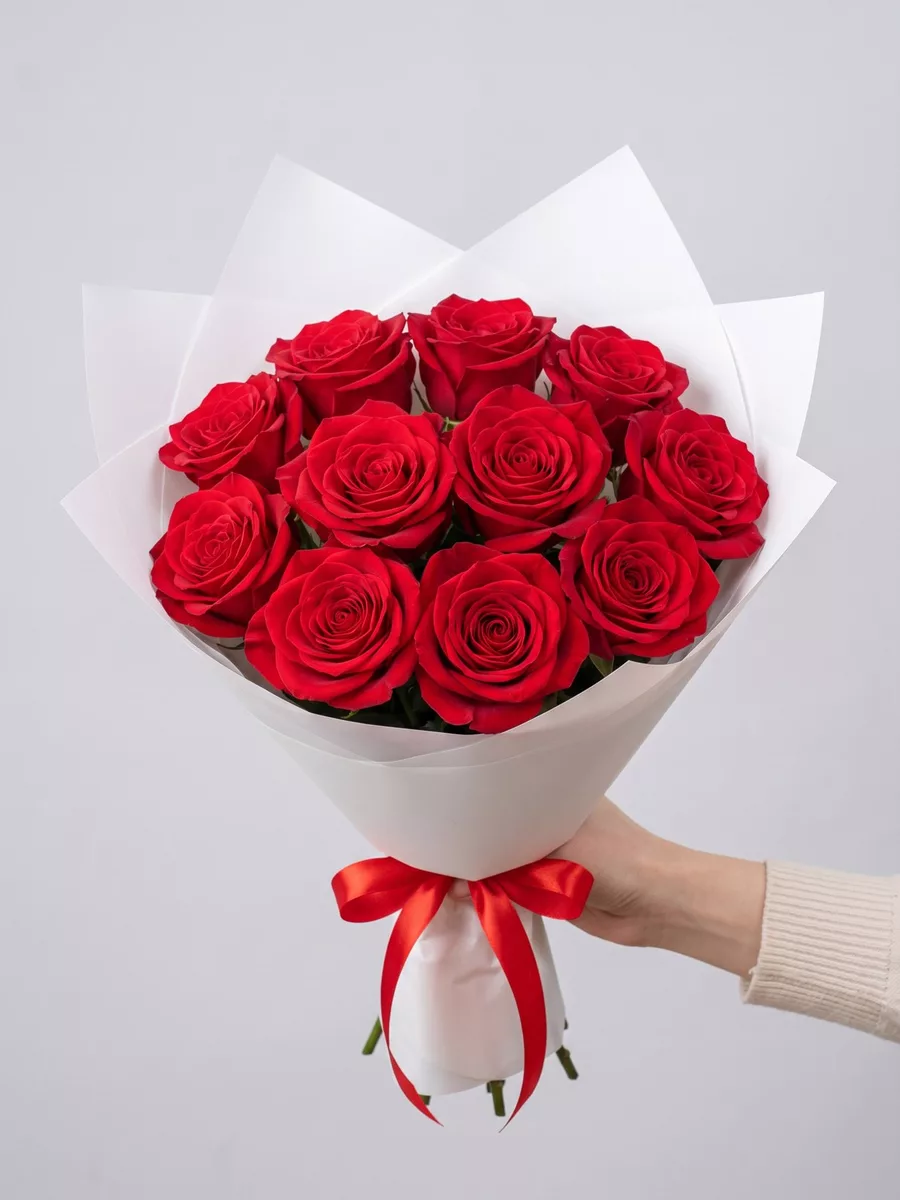

Why anemones open in the day and close at night
One of the most frequent questions in the shop comes the day after purchase: the flowers were wide open in the evening and tightly closed in the morning. This is normal. Anemones respond to light and temperature, opening in a warm bright room and closing in the dark or in the cool, and they keep doing it after cutting.
The movement is also a sign that the flower is alive and drinking. With every cycle the bloom opens a little wider and the stem grows a little longer, sometimes by several centimetres over a week. That is why an arrangement with anemones changes shape in the vase: the stems lift and curve towards the light.
Use this to your advantage. If you want the flowers fully open for a dinner, keep them in a bright warm room for a few hours beforehand. If you want them to last, move them somewhere cool at night, where they will close and rest.
How to care for cut anemones
Anemones are thirsty and have soft, hollow stems, so they need more water than most spring flowers. Fill the vase with cool clean water to about two thirds of its height and check it every day; the level drops faster than you expect. Recut the stems by a centimetre or two at an angle with a sharp knife every couple of days and change the water at the same time.
Keep the vase away from radiators, direct sun and the fruit bowl. Saint Petersburg apartments are very warm in the heating season, and in a hot room anemones open, drop their petals and finish in three or four days. In a cool room the same flowers last a week or more. Remove the leaves that would stand in the water, because soft foliage rots quickly and clouds it.
Choose a vase with a fairly narrow neck, or arrange anemones among firmer flowers, so the stems that grow and bend have support. If one stem starts to droop, recut it and stand it in deep cool water for an hour before putting it back. For a longer look at varieties and how long they last, see our article on anemones in Russia.
Choosing anemones for a bouquet
Buy anemones with buds that show colour but are not fully open; the dark centre should be visible only as a ring. Fully opened flowers look spectacular on the first day but have less time left. Check the leaf collar under the bloom: it should be fresh and green, not yellowing or dry at the tips.
Anemones work beautifully on their own in a mono bouquet of a single colour or a mix of jewel tones. In mixed arrangements they pair well with ranunculus, tulips, hyacinths, eucalyptus and spring greenery. The dark centres give an otherwise soft bouquet a graphic accent, which is why designers like white anemones with white ranunculus and a few pale tulips.
Because the stems keep growing, a florist usually places anemones a little lower than the surrounding flowers. Within a day or two they reach the same height and the bouquet looks balanced instead of untidy.
Ordering flowers to Saint Petersburg and across Russia
If you are abroad and want to send flowers to someone in Russia, you can choose a bouquet in our catalogue and pay online by bank card, SBP or Yandex Pay; foreign bank cards are accepted, with payment via Robokassa. We deliver across Russia. City delivery costs 500 RUB, and for remote districts and suburbs the operator confirms the price when confirming the order.
In large cities express delivery takes 1-2 hours after the order is confirmed. You can also choose an exact time (plus or minus 30 minutes), a window of 09-12, 12-15, 15-18 or 18-21, or pre-order 1-30 days ahead. In Saint Petersburg delivery is around the clock. The courier calls the recipient about 15 minutes before arrival, and if nobody is at home we agree a second delivery the same day or, with your consent, leave the flowers with a neighbour or the concierge.
Delivery is anonymous by default and the card with your message is free. All conditions are on the Delivery and payment page, and for any question you can call us on 8 (812) 507-67-05.
Frequently asked questions
What does the anemone flower symbolise?
Traditionally it is linked to love, anticipation and remembrance through the myth of Adonis. Today colour matters more: red for passion, white for sincerity, pink for tenderness.
How long do cut anemones last?
Usually about a week in a cool room with fresh water changed every couple of days. In a hot apartment they may finish in three or four days.
Why do my anemones close at night?
Anemones open in warmth and light and close in the dark or in the cool. It is a normal sign that the flowers are alive and drinking.
Are anemones and ranunculus the same flower?
They belong to the same family but are different flowers. Ranunculus has many tightly packed petals, while the classic anemone has an open face with a dark centre.
Can I pay for a bouquet to Russia with a foreign card?
Yes, foreign bank cards are accepted with payment via Robokassa. You can also pay by Russian bank card, SBP or Yandex Pay.
Ready to send a bouquet?
Pick a city, choose the flowers, and we will hand them over with a photo confirmation.
Choose a city →