
Anniversary Flowers in Russia: What to Send for Every Round Date
In Russia, a round anniversary is not just a birthday with a zero at the end — it carries genuine social weight, and the flowers you send are read like a message. Get them right and you become the person who understood the moment. Get them wrong and even a generous bouquet can feel oddly flat. This guide walks you through the expectations year by year, the varieties that hold up under Russian conditions, and the small details that separate a memorable delivery from a forgotten one.
Why Round Dates Feel Different in Russian Culture
Russians draw a clear line between an ordinary birthday and a round anniversary — the 30th, 40th, 50th, 60th, and so on. The round date is called a yubilei, a word borrowed from Hebrew through Latin, and it implies ceremony. Colleagues pool money for a serious gift. Family members travel. A standard bunch of ten spray roses that would be perfectly acceptable on a regular Tuesday feels almost dismissive on a yubilei.
The expectation is scale and intention. A bouquet for a round anniversary should look considered: more stems, a clear colour story, and ideally flowers that carry some symbolic resonance. Russians are not always able to articulate why a bouquet feels right, but they notice immediately when it does not.
For someone sending from outside Russia or simply unfamiliar with the custom, the safest principle is this: double what you would normally spend and add structure. A loose, garden-style arrangement that works beautifully in London or Amsterdam can read as unfinished here. Russians tend to appreciate density — flowers that fill the eye, stems that stand upright, a silhouette that photographs well at a celebration table.
Temperature matters practically too. Saint Petersburg winters push well below freezing, and summers can spike above 25 degrees Celsius. A florist who delivers directly and controls the cold chain from cooler to door is not a luxury — it is the difference between peonies that open gracefully over three days and peonies that arrive already bruised. Timing a delivery to land one to two hours before guests arrive is the standard we work toward on every round-date order.
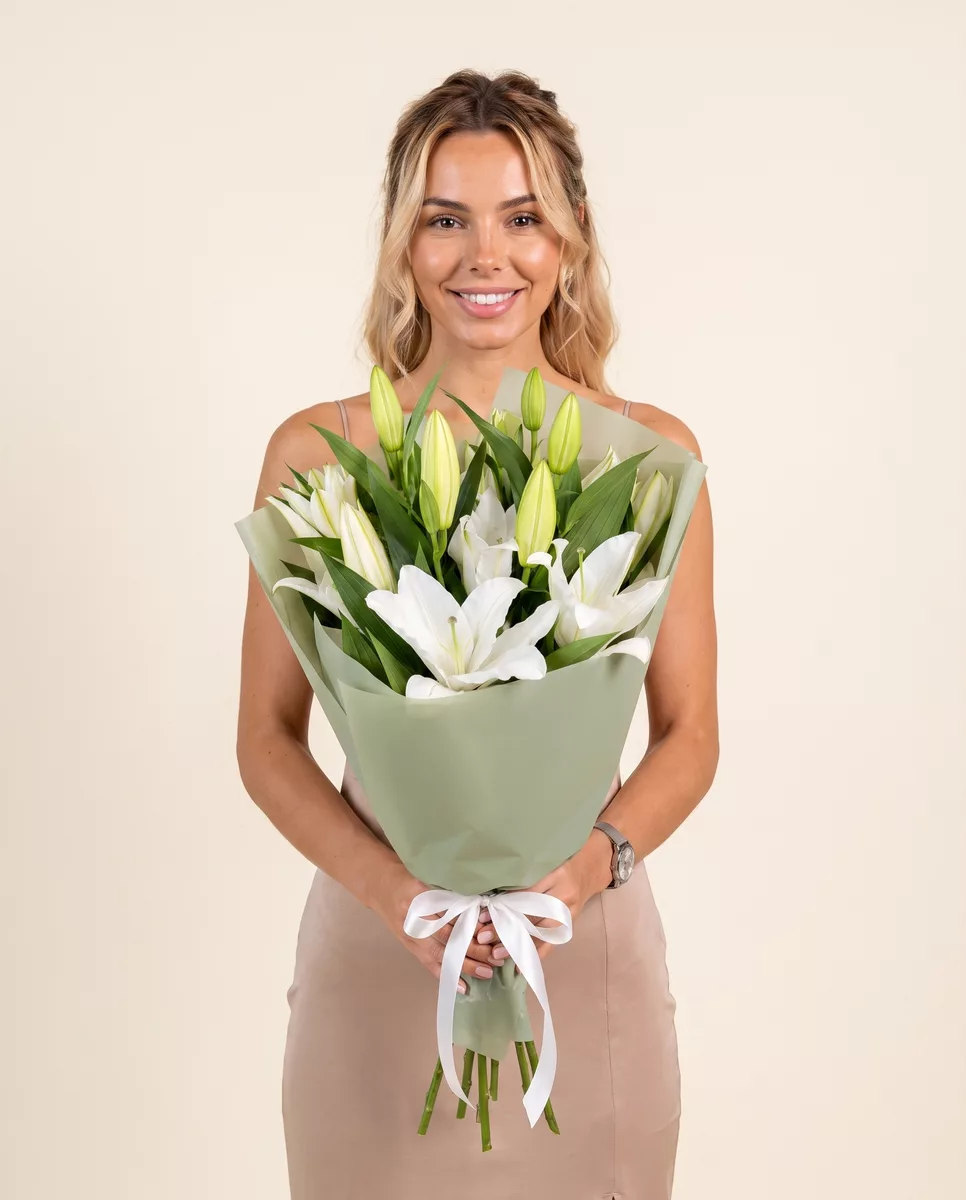
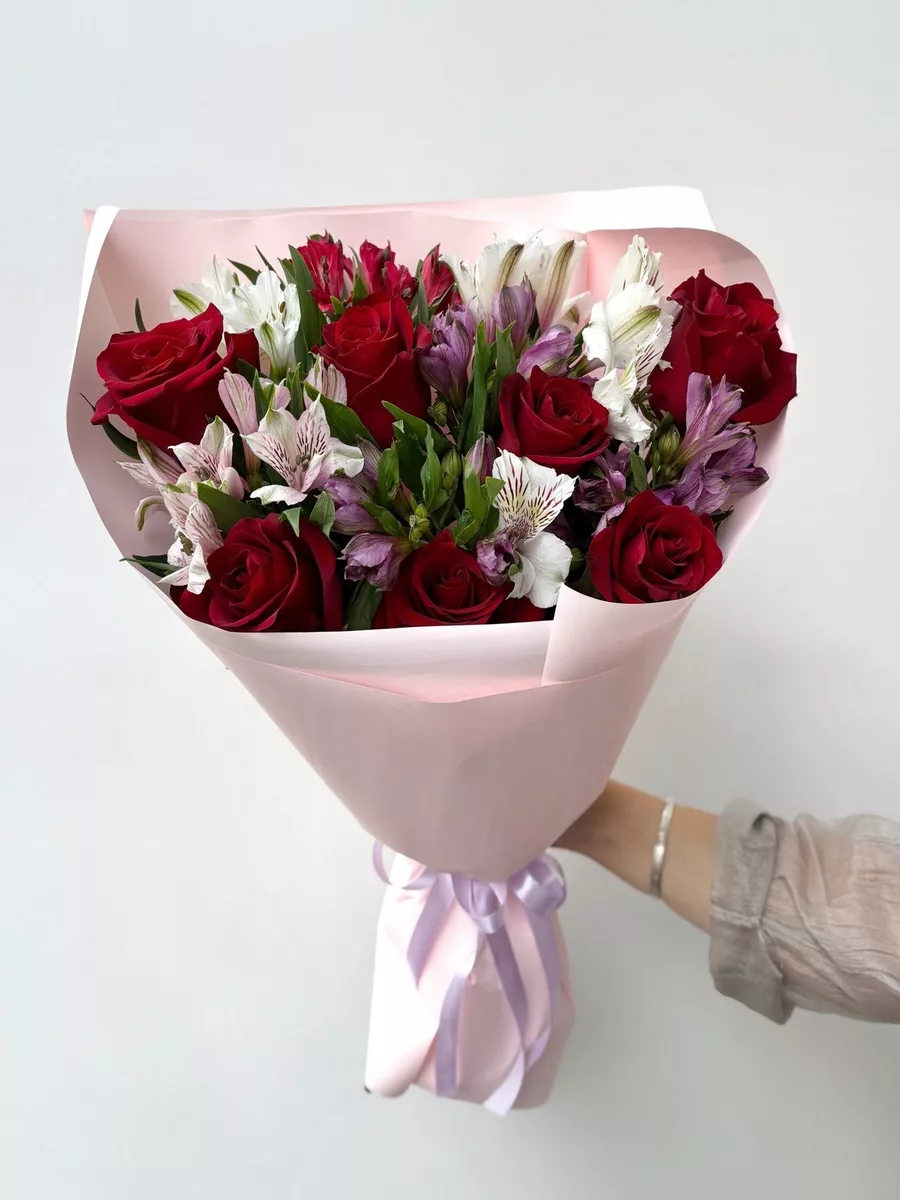
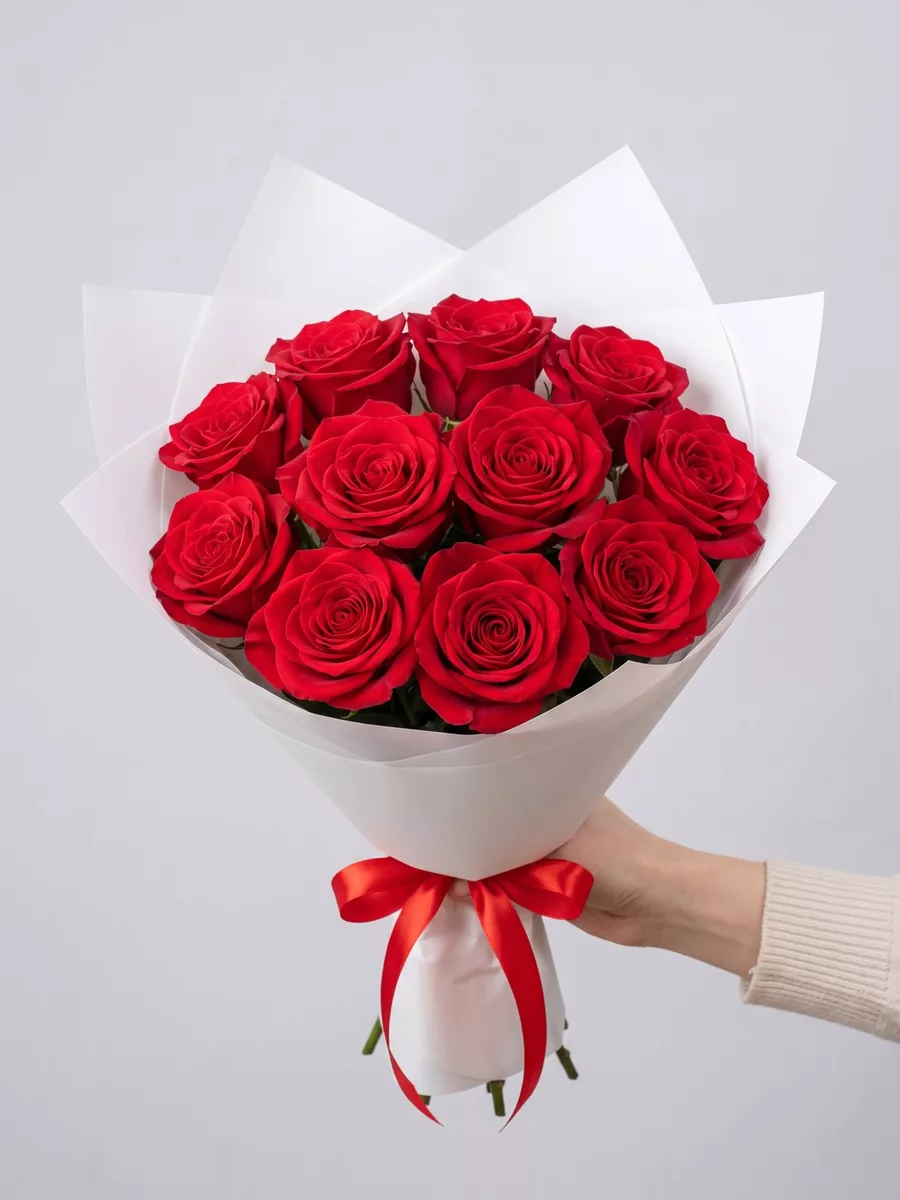
Bouquets we can deliver

The 30th Anniversary: Fresh, Abundant, and Unafraid of Colour
Turning thirty in Russia is a complicated milestone. It is young enough to celebrate with energy but old enough that the person receiving flowers wants to feel genuinely seen rather than treated like a student. The bouquet should reflect that balance: vibrant without being juvenile, abundant without being overwhelming.
Ranunculus are an excellent anchor for a thirtieth-anniversary bouquet. They layer like roses but carry a lighter, almost papery quality that reads as youthful and sophisticated at once. Pair them with garden roses — varieties like David Austin's Keira or Juliet, which have that cupped, full-petalled shape — and you have a combination that photographs beautifully and lasts well at room temperature. In summer months, add a few stems of sweet peas if they are available; they bring movement and fragrance without overwhelming the structure.
Colour at thirty can be bold. Coral, peach, and warm terracotta tones are popular right now and feel contemporary without chasing trends so hard that they date quickly. If the recipient is male, consider a structured arrangement of garden roses in cream and burgundy with dark foliage — scabiosa pods or eucalyptus add texture without softening the overall impression too much.
A practical note: ranunculus are sensitive to heat above 22 degrees Celsius and should travel in a cooled environment. If your delivery window is the afternoon of a summer celebration, confirm with the florist that the flowers leave the cooler as close to departure time as possible. Thirty stems is a reasonable minimum for a round date at this age — it signals that you took the occasion seriously.
The 50th Anniversary: The Yubilei That Demands Grandeur
The fiftieth is the yubilei of yubileis in Russian culture. It is the one that gets a hall booked, speeches prepared, and a photographer hired. The flowers arriving at the door before the party or delivered to the venue must hold their own in that context. A modest bouquet at a fiftieth reads as an afterthought regardless of the flowers inside it.
For women turning fifty, the classic Russian choice remains roses — but not the tight, long-stemmed Ecuadorian roses sold by the dozen everywhere. The expectation at this milestone is garden roses with wide, open heads: varieties like Olivia, Yves Piaget, or the peony-shaped Keira. Fifty stems is considered the traditional minimum, because the number mirrors the age and Russians notice when someone has counted. Wrap them in matte kraft paper with a wide satin ribbon rather than cellophane — the presentation signals care.
For men, a structured arrangement of calla lilies, anthuriums, and tropical foliage reads as appropriately serious. Calla lilies hold exceptionally well — up to ten days in water — which matters when a celebration runs long and flowers sit on a table for hours.
Peonies are the most requested flower for fiftieth anniversaries between May and early July when they are in season. They are generous, fragrant, and unmistakably festive. Order them in bud — tight, firm buds about the size of a walnut — so they open over the two days following the celebration, extending the joy. Fully open peonies delivered in summer heat will be finished within 24 hours. This is one of the most common and most avoidable mistakes we see on large-order deliveries.
The 60th and 70th: Elegance Over Volume
At sixty and seventy, the yubilei often becomes more intimate — closer family, trusted friends, a dinner rather than a banquet. The flowers should shift accordingly: less about volume and more about lasting elegance. A bouquet that will sit on a dining table for a week of quiet celebration has different requirements than one designed to impress a crowded hall.
White and cream arrangements carry particular respect at these milestones. White roses, white lisianthus, and white hydrangea together create a bouquet that feels refined without being cold. Lisianthus — sometimes called eustoma in Russian florist shops — is an underrated choice: it resembles a ruffled rose, lasts seven to ten days in water, and holds its colour without browning at the edges the way some white roses do in warm rooms.
Hydrangea adds volume without requiring dozens of stems, which is practical when the recipient lives alone and does not have ten vases. One large hydrangea head can fill a third of an arrangement. Choose varieties with dense, tightly packed florets — they travel better and last longer than the looser antique types.
For a seventieth, consider adding a few stems of white or blush orchids — Phalaenopsis spikes cut from the plant — for an element that feels genuinely luxurious. Orchids last two to three weeks in a cool room, which means the flowers from the celebration will still be blooming when the birthday cards are being put away.
Avoid lilies at these milestones unless you know the recipient well. Stargazer and Oriental lilies are beloved by some Russians and strongly disliked by others due to their intense fragrance. In a small apartment, they can be overpowering within hours.
Wedding Anniversaries: The Numbers Russians Actually Celebrate
Wedding anniversaries follow their own logic in Russia, and the round numbers carry specific names that hint at what is expected. The first year is called the cotton anniversary, the fifth is wooden, the tenth is tin or aluminium, the twenty-fifth is silver, and the fiftieth is golden. These names are more widely known than in many Western countries, and gifts — including flowers — are sometimes chosen to echo the theme.
For a silver anniversary at twenty-five years, white and silver-toned flowers work beautifully: white roses, white calla lilies, silvery-blue eryngium, and dusty miller foliage. Eryngium is a thistle-related flower with a metallic blue-grey colour that photographs strikingly and lasts well even in warm rooms — a practical bonus when the couple is hosting guests.
The golden anniversary at fifty years is the one that prompts the largest floral orders we receive. Yellow and gold tones — mimosa in February, yellow garden roses in summer, golden sunflowers in late summer and autumn — are natural choices. Sunflowers are enormously popular in Russia and carry no negative associations here; a generous arrangement of large-headed sunflowers with eucalyptus and cream roses is genuinely festive and affordable enough to send in volume.
One important note on wedding anniversaries specifically: always confirm whether the flowers are going to the couple's home or to a restaurant. Arrangements intended for a restaurant table need to be lower — eye-level centrepieces block conversation. We adjust the design based on the destination, and it is worth mentioning this when you place the order.
Practical Timing, Temperature, and the Mistakes to Avoid
The most common mistake on anniversary orders is treating the delivery time as flexible. On a regular weekday, a two-hour window is fine. On a yubilei, flowers that arrive while the guest of honour is still getting dressed, or after the toasts have already been given, lose much of their impact. For a celebration starting at seven in the evening, aim for delivery between five and six. Confirm the address carefully — many Saint Petersburg celebrations happen at dachas or rented venues outside the city centre, and a precise address saves everyone frustration.
In winter, which in Saint Petersburg means anything from October through April, cold is your flowers' friend in transit but enemy at the door. Roses and ranunculus tolerate a few minutes of minus temperatures wrapped in paper, but tropical flowers — anthuriums, orchids, calla lilies — show cold damage quickly: dark translucent patches on the petals that cannot be reversed. If the recipient lives in a building with an unheated entrance hall, ask them to come to the door promptly or arrange for a neighbour to receive the flowers.
In summer, the reverse problem applies. Heat above 25 degrees Celsius accelerates opening in peonies and tulips dramatically. Order these flowers in tight bud if the delivery is more than two hours before the event. Roses, lisianthus, and calla lilies are more forgiving in heat.
Finally, include a handwritten card rather than a printed one whenever possible. In Russian celebration culture, the personal note is not a formality — it is part of the gift. A blank card with a printed sticker feels noticeably impersonal at a milestone event. This detail costs nothing and changes how the flowers are received entirely.
Anniversary flowers in Russia are a language with its own grammar, and round dates are its most important sentences. The variety you choose, the number of stems you send, the colour palette, the timing of delivery — each element is read by the recipient and everyone around them. You do not need to memorise every custom to get it right. You need to treat the occasion with the seriousness it deserves: choose flowers that last, order in quantities that match the milestone, and deliver at a time that lets the bouquet be part of the celebration rather than an afterthought to it. When in doubt, call the florist and describe the person and the occasion. A good florist will do the rest. We deliver bouquets across Russia in 1–2 hours.
Frequently asked questions
How many flowers should I send for a 50th anniversary in Russia?
Fifty stems is the traditional minimum for a fiftieth yubilei — the number mirrors the age and Russians genuinely notice when someone has counted. For a large celebration with many guests, seventy to one hundred stems in a single arrangement or split across two bouquets is not unusual and signals real respect for the occasion.
Are there flowers that are considered inappropriate for Russian anniversaries?
Yellow flowers were once considered unlucky in Soviet-era superstition, but that association has largely faded among younger and middle-aged Russians. Strong-smelling lilies can be divisive in small apartments. Beyond that, variety choice is mostly a matter of taste and season rather than strict taboo — when in doubt, roses are always safe and always appreciated.
What is the best flower for a winter anniversary delivery in Saint Petersburg?
Roses, lisianthus, and calla lilies handle cold transit best and are available year-round. Avoid tropical flowers like anthuriums and orchid spikes in unheated building entrances — they show cold damage fast. Roses wrapped in kraft paper and delivered directly to the door tolerate brief exposure to minus temperatures without lasting harm.
Can I send flowers for a wedding anniversary if I am not attending the celebration?
Absolutely — sending flowers ahead of the event is a well-understood and appreciated gesture in Russia. Aim for delivery one to two hours before the celebration begins so the couple can arrange them before guests arrive. Include a personal handwritten note; a printed card feels impersonal at a meaningful milestone like a silver or golden anniversary.
How far in advance should I order anniversary flowers for delivery in Russia?
For standard bouquets, same-day ordering with a one-to-two-hour delivery window works well. For large anniversary arrangements — fifty stems or more, specific rare varieties, or deliveries timed precisely to an event — placing the order one to two days ahead gives the florist time to source the best available flowers and prepare the arrangement properly.
Ready to send a bouquet?
Pick a city, choose the flowers, and we will hand them over with a photo confirmation.
Choose a city →