
Are These Dead? How to Assess a Tired Bouquet
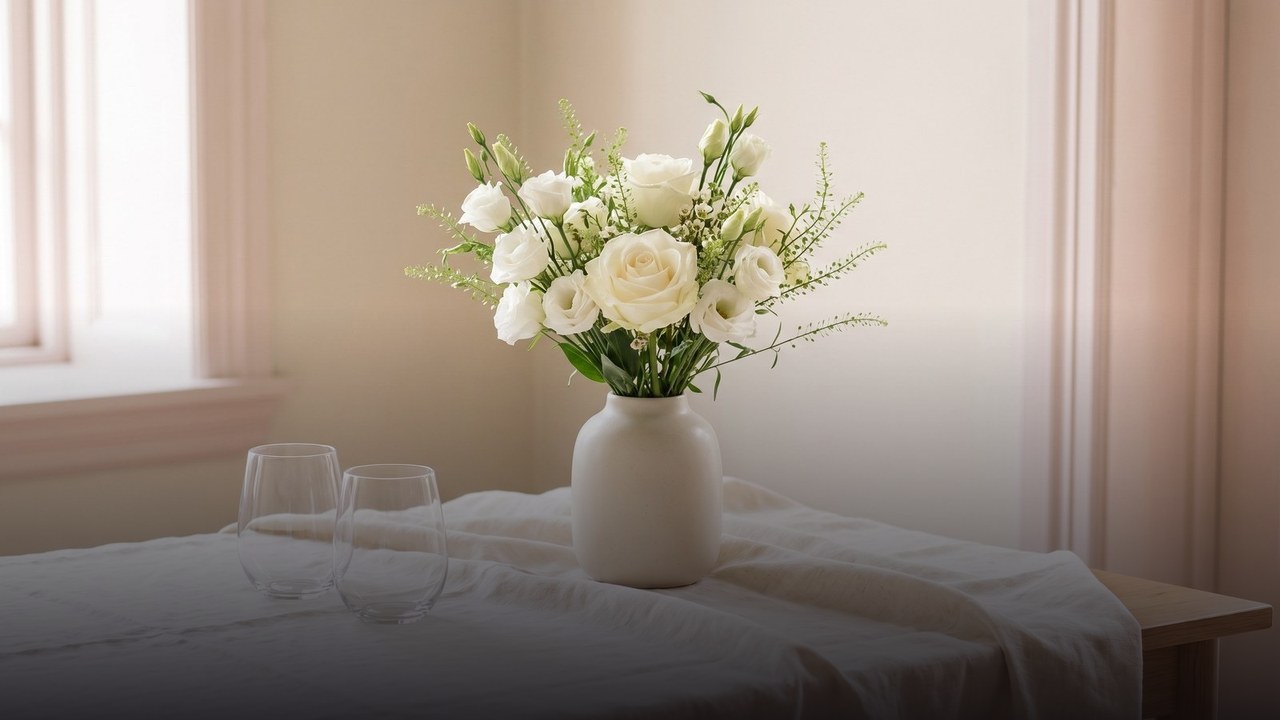
Drooping flowers are not necessarily dead: firm stems and mostly intact petals can indicate water stress, while mushy tissue, spreading decay and completely dry, brittle petals indicate damage that watering cannot reverse. Check each stem separately, then give any sound flowers fresh water and a clean cut before deciding what to discard. An ageing outer petal alone does not mean the whole bloom is finished.
At Pyat Tsvetov (5 Flowers), customers often ask whether a bent head or a brown petal means a bouquet has reached its end. Our Saint Petersburg flower shops have been serving customers since 2011, and the useful starting point is always the same: look at the stem, leaves, petals and vase water together. This guide concerns cut flowers in a vase; a dormant plant, bulb or bare garden branch needs a different assessment.
Read the whole stem, not just the flower head
Set the vase somewhere well lit and examine the bouquet stem by stem. A drooping head with flexible petals and a firm stalk may still improve after proper hydration, although recovery is not certain. A collapsed bloom with translucent, slimy or disintegrating tissue is a different case. Look beneath the flower head as well as at the cut end, because weakness at either point can affect its appearance.
Separate cosmetic wear from structural damage before removing anything. On roses, the outermost petals can look rougher or more creased than the centre; one marked outer petal is not enough to judge the entire rose. By contrast, a broken stalk cannot be repaired by adding water, and a soft, rotting section should be removed from the vase. Our guide to flowers that are dead or just need water explains this distinction in more detail.
Try one careful hydration reset
If the stems are firm and there is no obvious rot, empty the vase and wash it thoroughly, rinsing away any detergent. Remove leaves that would sit below the new waterline, then use a clean, sharp blade or suitable secateurs to trim a small section from each stem. Make a clean cut without crushing the stalk and place it promptly into fresh water. If flower food was supplied, follow its stated dilution rather than adding an estimated amount.
Keep the bouquet away from radiators, direct sunlight and strong draughts while you assess it. Allow several hours for a possible response, checking whether the heads lift or the petals regain some firmness; a brief glance immediately after trimming tells you little. Avoid trying several household mixtures in succession, since that makes the condition harder to assess and may damage the flowers. There is no universal rescue treatment, and tissue that is already brown, brittle or decayed will not become fresh again.
Bouquets we can deliver




Allow for the way different flowers age
Tulips can bend and change direction in a vase, so a curved stem alone is not proof that they are dead. Check whether the stem remains firm and the petals are still attached and reasonably supple. A rose with a hanging head needs closer inspection of the stem beneath the bloom, while a broken gerbera stalk has a mechanical problem that water cannot mend. Judge the physical condition rather than expecting every variety to stand in the same upright shape.
Mixed bouquets also age unevenly, and one fading flower does not set the condition of every other stem. Some flowers open further as they mature, while individual florets in a cluster can fade before the rest. Remove spent material carefully and reassess the remaining arrangement without it. Neither a tightly closed bud nor a fully open bloom proves freshness on its own; petal condition, stem strength and signs of decay provide a more useful picture.
Know when to remove a flower from the vase
Discard stems with mushy decay, obvious mould or petals that are breaking down into wet tissue. If the water smells unpleasant or has become cloudy, empty it, clean the vase and inspect all submerged stem sections before refilling. Water condition is a reason to act, but it does not establish that every flower is dead. Keep only stems whose remaining tissue is sound, and continue checking the water and removing fallen leaves.
When the lower stem is damaged but the upper part is firm, you may be able to cut above the affected area and use the shorter flower in a clean, smaller vase. This is an option for a sound bloom, not a way to rescue rot that extends into the head. Dry, papery flowers can sometimes be kept for their appearance, but they will not return to a fresh state in water. If the bouquet matters as a keepsake, decide whether you want to preserve its dry form rather than repeatedly attempting hydration.
Handle a disappointing gift with clear observations
If flowers have just arrived looking tired, take clear photographs of the whole bouquet and the affected stems before making substantial changes. Note concrete details such as a snapped stalk, soft stem base or several brittle blooms instead of describing everything as dead. Share those observations with the sender or shop and ask for care advice appropriate to the flowers received. Photographs help explain the condition, although they cannot always establish the cause or remaining vase life.
When sending flowers to someone else, a drooping bloom is a care issue rather than a reliable message about the sender's feelings. Keep any conversation about the gift practical and considerate, particularly when the recipient is dealing with illness, grief or a busy household. At Pyat Tsvetov, delivery is anonymous by default: the courier does not name the sender. A card with your text is free, so include your name in that text if you want the recipient to know who sent the bouquet.
Plan a delivery to Russia around the recipient
If you are abroad and arranging a new bouquet for someone in Russia, start with the bouquets catalogue and check the recipient's city, address and availability before ordering. We deliver flowers across Russia; city delivery costs 500 RUB, while the operator confirms the price for remote districts and suburbs when confirming the order. Express delivery in large cities is available within 1–2 hours after order confirmation. Count that interval from confirmation, and allow for the difference between your time zone and the recipient's when planning the occasion.
You can also arrange delivery at an exact time with a tolerance of plus or minus 30 minutes, choose a 09–12, 12–15, 15–18 or 18–21 window, or pre-order 1–30 days ahead. In Saint Petersburg, delivery is available around the clock. The courier calls the recipient about 15 minutes before arrival, so a surprise still involves a practical delivery call. If the recipient is absent, we agree a second delivery the same day or handover to a neighbour or concierge with the sender's consent.
Read the delivery and payment information before completing your order, especially if you are coordinating from another country. Online checkout uses CloudPayments; check the payment options displayed there rather than assuming that a particular foreign-issued card will be accepted. For questions, call 8 (812) 507-67-05. Give the recipient's availability and intended delivery date clearly, so the delivery arrangements fit the person receiving the flowers.
Frequently asked questions
Are drooping flowers dead?
Not necessarily: drooping can occur while the stem and petals are still sound. Clean the vase, recut firm stems and give them fresh water, then assess whether they improve over several hours.
Can brown petals turn fresh again?
Brown, dried or decayed petal tissue will not become fresh again. If only an outer petal is affected, inspect the rest of the bloom before discarding the flower.
Does cloudy vase water mean the entire bouquet is dead?
Cloudy water calls for a water change, a thorough vase clean and an inspection of the stems. Remove decaying material, but assess each remaining flower individually.
Should I add sugar or household remedies to revive flowers?
Start with a clean vase, fresh water and a clean stem cut instead of improvised mixtures. If you have supplied flower food, use it according to its instructions.
Can I order flowers to Russia while living abroad?
You can arrange delivery across Russia through our online checkout, which uses CloudPayments. Check the payment options shown at checkout, since acceptance of every foreign-issued card is not guaranteed.
Ready to send a bouquet?
Pick a city, choose the flowers, and we will hand them over with a photo confirmation.
Choose a city →