
Aspirin for Flowers in a Vase: A Florist’s Practical Guide
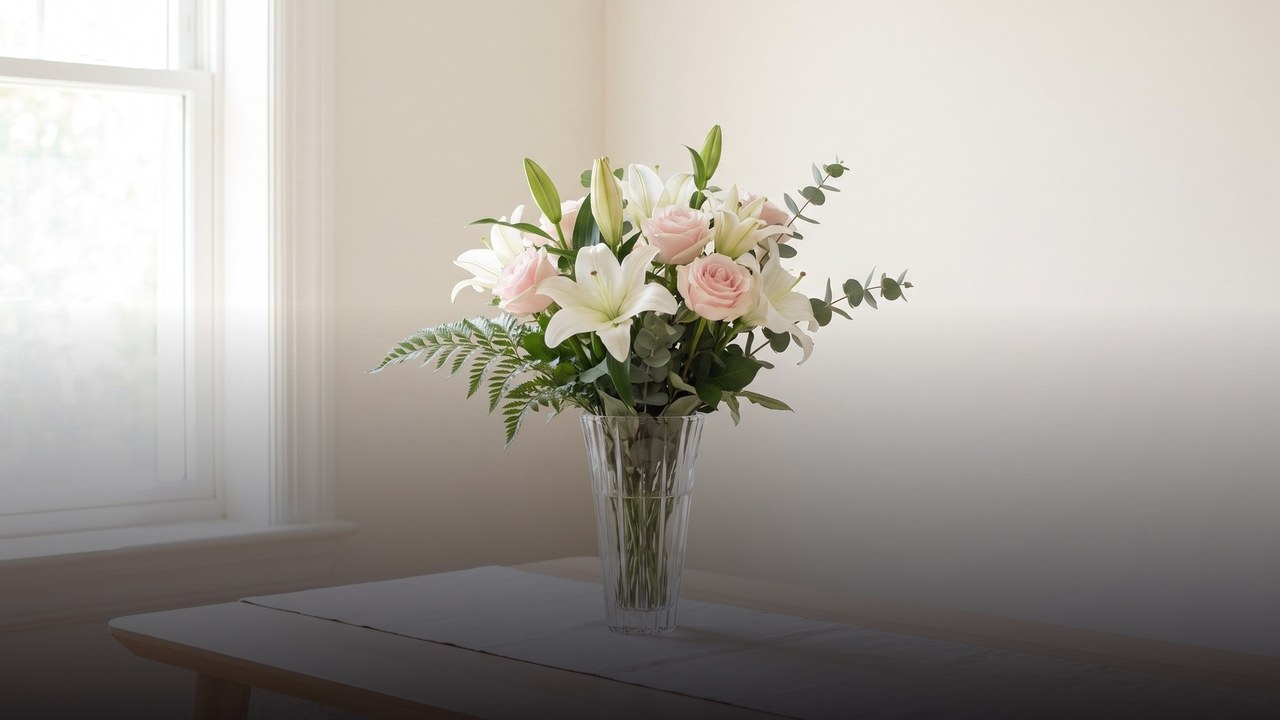
We sometimes hear from customers who want to put aspirin in a vase to keep their flowers fresh. We do not recommend it as routine care: aspirin does not replace cut-flower food, and there is no dependable household dose suitable for every bouquet. Start with a clean vase, freshly cut stems and flower food mixed according to its instructions; if you have no flower food, use clean water and refresh it regularly.
At Pyat Tsvetov (5 Flowers), we have been helping customers choose and care for flowers in Saint Petersburg since 2011. The useful distinction is between adding something to the water and actually keeping the stems able to take up water. A tablet cannot correct a dirty vase, submerged leaves or a bouquet standing beside a radiator. Whether you are caring for flowers at home or sending a bouquet to someone in Russia, a few clear care instructions are more useful than a cupboard remedy.
What aspirin can—and cannot—do in vase water
Aspirin contains acetylsalicylic acid, so the idea behind this remedy is partly connected with changing the acidity of the water. Water chemistry can affect cut flowers, but adding a medicine tablet is an imprecise way to manage it. The result depends on the water, the amount added and the flowers themselves. A dose described as one tablet per vase says little when both tablet strengths and vase volumes vary.
Aspirin also does not provide the balanced functions of a product formulated for cut flowers. Commercial flower food typically combines a carbohydrate source with ingredients that manage acidity and microbial growth; aspirin alone does not do all three jobs. There is no reason to assume that a larger dose will work better, and unsuitable concentrations may harm stems. If a bouquet lasts well after someone adds aspirin, that observation alone does not establish that the tablet caused the longer vase life.
Set up the vase before adding anything to the water
Wash the vase with detergent, rinse it thoroughly and remove any residue from its previous use. Choose a vessel that holds the stems without forcing them into a tight bundle or leaving a heavy bouquet unstable. Remove any leaves that would sit below the waterline, because decaying foliage makes the water harder to keep clean. Our guide to choosing a vase for your bouquet explains how the opening and proportions affect support and access for care.
Use a clean, sharp knife or secateurs to make a fresh cut at the base of each stem, then place the flowers promptly in the prepared water. The aim is a clean cut without crushing or splitting the stem; an elaborate cutting angle is less important than a sound, open stem end. Check that every stem reaches the water, including shorter stems hidden inside a mixed bouquet. Keep the arrangement away from direct sun, heaters, strong draughts and ripening fruit, which can release ethylene that accelerates ageing in sensitive flowers.
Bouquets we can deliver




Use flower food correctly, or keep plain water clean
If you have cut-flower food, read its dilution instructions and measure the water rather than guessing from the size of the vase. A sachet intended for a particular volume needs that volume to work as directed. Too little or too much changes the intended mixture, so stronger is not automatically better. Do not add aspirin, sugar, bleach or another household ingredient on top of the prepared solution; combining recipes makes the concentration and effects harder to predict.
Without flower food, plain clean water is a sensible temporary choice. Check the level every day and replace the water daily, or sooner if it becomes cloudy, smells unpleasant or contains fallen plant material. When changing it, rinse the vase and inspect the submerged parts of the stems for soft tissue or slime. Follow the product’s directions when using flower food, and remember that clear-looking water can still need attention: appearance alone does not show how clean it is.
Adjust care to the flowers in the bouquet
A mixed bouquet does not age at one uniform speed, so judge individual stems rather than waiting for the whole arrangement to fade. Remove spent flowers and loose petals before they fall into the water, and keep healthy stems in a clean vessel if you rearrange the bouquet. Roses, tulips, lilies and other cut flowers have different habits and care needs, which is another reason a universal aspirin recipe is unhelpful. For roses specifically, our guide to rose vase life explains what to watch for as the flowers open and age.
Some combinations need particular care: freshly cut daffodils release sap that can affect other flowers in shared water. Keep them separate while conditioning them and seek flower-specific advice before adding them to a mixed arrangement. Tulips may continue to lengthen and bend in the vase, so a change in shape is not automatically a sign that they need a chemical additive. If lilies are present, keep every part of the flowers, including pollen and vase water, away from cats because lilies are highly toxic to them.
If you already added aspirin or the flowers are drooping
If you have already put aspirin in the vase, there is no need to add another ingredient to counteract it. Empty the solution, wash and rinse the vase, then refill it with clean water or correctly diluted cut-flower food. Rinse the stem bases and make a fresh cut with a clean tool before returning the flowers to the vase. This gives you a controlled starting point, although it cannot reverse damage or guarantee recovery.
For drooping flowers, first check whether the water level has fallen below any stem ends and whether the vase has become warm or dirty. Refresh the water, remove damaged material and place the bouquet in a cooler spot away from direct heat while you observe it. Avoid boiling water, crushing stems or soaking every flower head as a general rescue method, because advice for one flower may damage another. Petals that have dried, browned or become translucent will not become fresh again, so remove declining stems and keep caring for those that remain sound.
Sending flowers to Russia with useful care advice
If you are ordering from abroad, choose a bouquet from our bouquets catalogue and include a short, practical care message for the recipient. A card with your text is free; a useful line is, “Place in a clean vase, keep leaves out of the water and check the water level daily.” We deliver flowers across Russia, with city delivery costing 500 RUB; for remote districts and suburbs, the operator confirms the price when confirming the order. Online checkout uses CloudPayments, so check the payment options displayed there for your card.
For delivery planning, express delivery in large cities is available in 1–2 hours after the order is confirmed, alongside an exact-time option with a tolerance of plus or minus 30 minutes. The available time windows are 09–12, 12–15, 15–18 and 18–21, and orders can be placed 1–30 days ahead; in Saint Petersburg, delivery is around the clock. The courier calls the recipient about 15 minutes before arrival, and delivery is anonymous by default, meaning the courier does not name the sender. See delivery and payment details, or call 8 (812) 507-67-05 with questions about your order.
Frequently asked questions
How much aspirin should I put in a vase of flowers?
We do not recommend a household aspirin dose for a bouquet. Tablet strength, water volume and flower type vary, so use cut-flower food as directed or clean water refreshed regularly.
Is aspirin the same as flower food?
No. Cut-flower food is formulated to support cut flowers through a combination of ingredients, while aspirin does not supply that complete mixture.
Can I add aspirin and sugar together?
We do not recommend mixing them in vase water. Sugar can also feed microorganisms, and adding aspirin does not turn a homemade mixture into a balanced flower-care product.
Will aspirin revive wilted roses?
Aspirin is not a dependable rescue treatment for wilted roses. Check water access, clean the vase and recut the stems; flowers affected by dehydration may respond, but ageing or damaged tissue will not recover.
Can I send flowers in Russia without revealing my name?
Yes, delivery is anonymous by default: the courier does not name the sender. A card with your text is free, so consider whether your message or signature reveals your identity.
Ready to send a bouquet?
Pick a city, choose the flowers, and we will hand them over with a photo confirmation.
Choose a city →