
Aspirin for Roses: What to Put in the Vase Instead
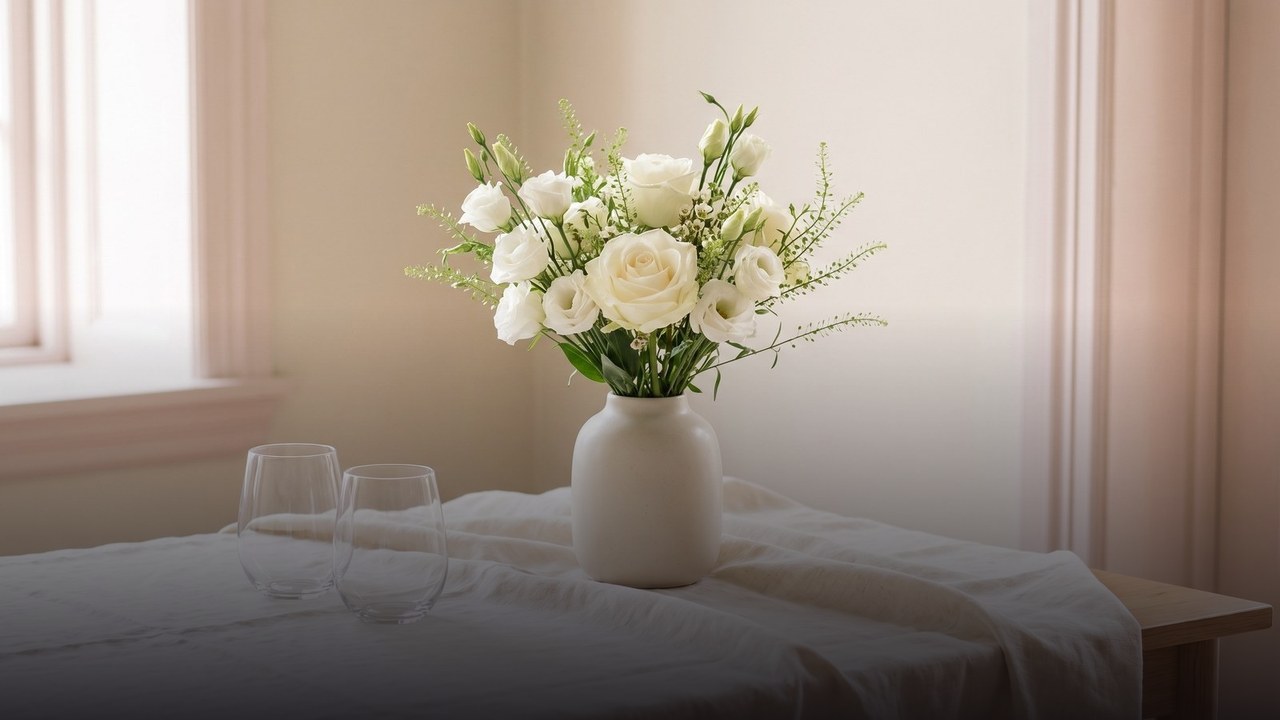
Aspirin is not a reliable substitute for cut-flower food, and adding a crushed tablet to a vase does not guarantee longer-lasting roses. Although aspirin can affect water acidity, a household tablet does not provide the balanced ingredients used in a purpose-made flower preservative. For roses at home, start with a clean vase, freshly cut stems and flower food used exactly as directed.
Customers often ask whether a tablet from the medicine cupboard can rescue a rose bouquet that has started to droop. At Pyat Tsvetov (5 Flowers), with three Saint Petersburg flower shops and a history dating to 2011, we start with the practical checks: water level, stem condition and placement. These reveal more useful next steps than adding another ingredient to the vase.
What aspirin can and cannot do for cut roses
The aspirin tip usually comes from the idea that more acidic water helps cut flowers take up water. Acidity is relevant to vase care, but changing it with a tablet is imprecise: the result depends on the water, the amount added and the tablet formulation. It also leaves other needs unaddressed, including nutrition and control of microbial growth.
Commercial cut-flower food is formulated for several jobs, typically combining a sugar source, an acidifying ingredient and ingredients that limit microbial growth. Aspirin alone does not perform all those functions. A tablet intended for people should therefore not be treated as an equivalent product, even when an online recipe describes it as a florist's secret.
There is no dependable household dose we recommend for aspirin in a vase of roses. Tablet strengths, vase volumes and water conditions vary, so a rule such as one tablet per bouquet gives little useful control. This advice concerns cut roses; it should not be extended to spraying garden roses or treating a plant disease.
Set up the vase before trying any additive
Wash the vase with detergent, rinse it thoroughly and check that no residue remains around the base or neck. A narrow vase can hide old plant material where a quick rinse will miss it. Choose a container that supports the stems without packing them tightly, and add enough water to keep the cut ends well submerged.
Remove leaves that would sit below the waterline, while keeping healthy foliage higher on the stems. Submerged leaves decay and make the water harder to keep clean. With a sharp, clean tool, remove a small section from each stem base on a slant, then put the roses promptly into the prepared vase.
Inspect the wrapping before arranging the bouquet so that no water container or transport material is overlooked. Loosen packaging that prevents the stems from sitting properly in the vase, and handle the flower heads gently. Keep the roses away from direct sun, radiators and draughts; placement matters throughout their time indoors.
Bouquets we can deliver




Use flower food carefully, or keep the water clean
If you have a packet of cut-flower food, read its water-volume instructions before mixing it. Use the stated proportion rather than assuming that an entire packet suits every vase. Too little water makes the solution more concentrated than intended, while adding extra powder does not establish that the flowers will last longer.
Without flower food, use clean water and make vase hygiene your priority. Check the water level daily, because the stems can lose access to water before the bouquet looks noticeably dry. Replace the water regularly, and immediately if it becomes cloudy or develops an odour; rinse the vase and inspect the submerged stems at the same time.
Avoid building a mixture of aspirin, sugar, vinegar, bleach or other household products. Sugar alone can encourage microbial growth, and improvised combinations make concentration difficult to judge. If aspirin is already in the vase, empty it, wash and rinse the container, and restart with clean water or correctly diluted flower food.
Respond to drooping roses by checking the stems
A drooping head is a reason to inspect the bouquet, rather than proof that it needs aspirin. First check whether every stem reaches the water and whether leaves or wrapping are holding any stems above it. Look for damaged, crushed or deteriorating stem bases, then clean the vase and renew the water before making further changes.
Recut the affected stems with a sharp, clean tool and return them promptly to water. Place the vase in a cool part of the room, away from direct heat, and allow time to observe the response. Some roses may regain firmness after their water supply improves, but a damaged stem or an ageing flower may not recover.
Avoid treating every drooping rose with boiling water, a hot bath or repeated handling of the petals. These methods can introduce further damage, and no rescue method reverses natural ageing. For a more detailed sequence, see our guide to reviving wilted roses after delivery, starting with the stem, water and wrapping checks.
Judge vase life by condition, not an aspirin promise
Roses do not all open at the same speed or remain attractive for the same length of time. Their variety, condition when received and care at home all affect what happens in the vase. A photograph of a bouquet beside an aspirin tablet cannot show which of these factors produced the result, so treat dramatic household comparisons cautiously.
Watch the flowers individually instead of waiting for the whole bouquet to decline. Remove fallen leaves and petals from the water, and take out stems that have become soft or decayed. A dry or marked outer petal does not always mean the entire rose is finished; assess the flower head and stem together before discarding it.
An opening rose can still be attractive, even though it looks different from a tight bud. Our guide to the lifespan of roses in a vase explains what to watch for as a bouquet develops. When giving roses, a short care note about clean water and flower food is more useful than passing on an unverified aspirin recipe.
Send roses to Russia with useful timing and care advice
If you are ordering from abroad for someone in Russia, choose a delivery time when they can receive the bouquet and put it in water. We deliver flowers across Russia, with city delivery costing 500 RUB; the operator confirms the price for remote districts and suburbs when confirming the order. Start with the bouquets catalogue and include a free card with your own message.
In large cities, express delivery is available within 1–2 hours after order confirmation. You can also choose an exact time with a margin of plus or minus 30 minutes, a window of 09–12, 12–15, 15–18 or 18–21, or pre-order 1–30 days ahead. Delivery in Saint Petersburg is available around the clock; see delivery and payment when planning your order.
Delivery is anonymous by default: the courier does not name the sender, so sign the card if you want the recipient to know who sent it. The courier calls about 15 minutes before arrival; if the recipient is absent, we agree a second delivery that day or handover to a neighbour or concierge with the sender's consent. Online checkout uses CloudPayments; check the payment options displayed there rather than assuming a foreign card will be accepted. For questions, call 8 (812) 507-67-05.
Frequently asked questions
Does aspirin make roses last longer in a vase?
Aspirin is not a dependable way to extend the life of cut roses. Clean equipment, fresh stem cuts, suitable placement and correctly diluted cut-flower food are more practical priorities.
How many aspirin tablets should I put in rose water?
We do not recommend a household aspirin dose for cut roses. Tablet formulations, water conditions and vase volumes vary, and aspirin does not replace a complete flower preservative.
What should I use if I have no flower food?
Use clean water in a thoroughly washed vase, with no leaves below the waterline. Check the level daily and replace the water regularly, especially if it becomes cloudy or smells.
Can aspirin bring a wilted rose back to life?
Aspirin is not a reliable rescue treatment. Check water access, clean the vase and recut the stem; a rose may recover if poor water uptake was the problem, but ageing or damaged flowers may remain wilted.
Can I order roses for someone in Russia while I am abroad?
We deliver flowers across Russia, and online checkout uses CloudPayments. Check the options shown at checkout for your payment method, as acceptance of every foreign card cannot be guaranteed.
Ready to send a bouquet?
Pick a city, choose the flowers, and we will hand them over with a photo confirmation.
Choose a city →