
Closed Rose: Understanding the Bud and Caring for It
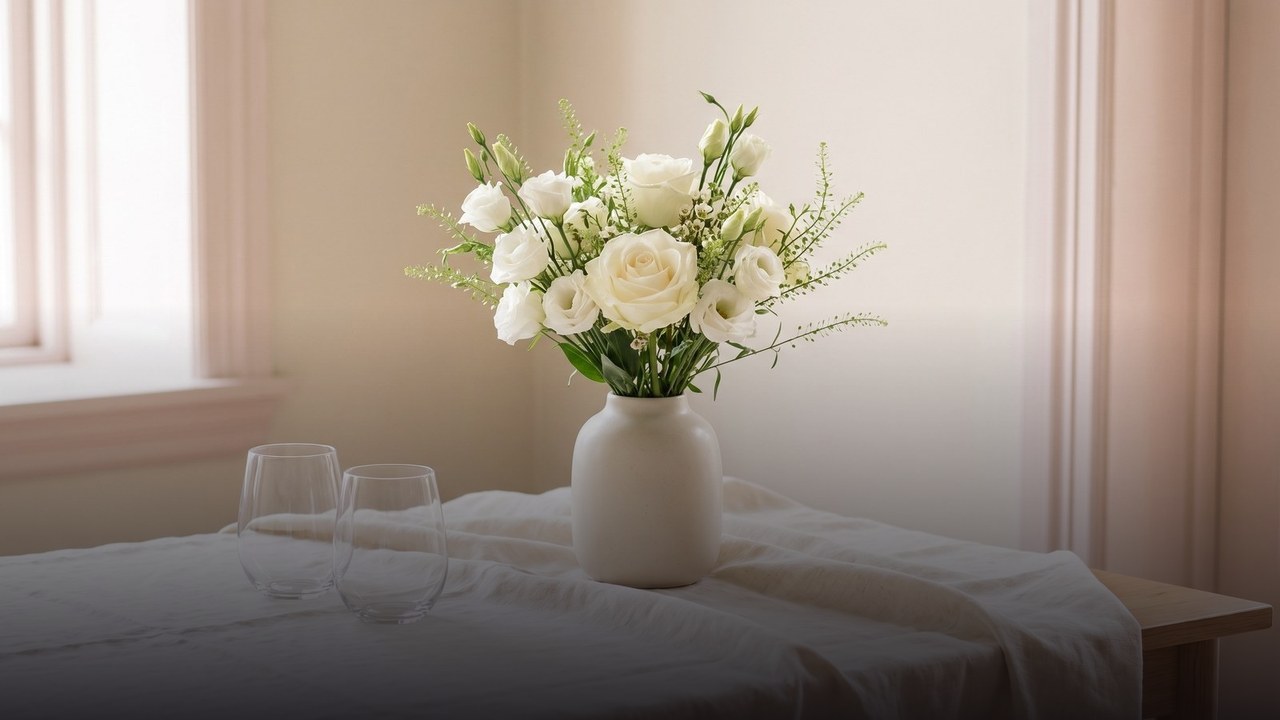
A closed rose is a rose whose petals remain gathered into a bud rather than spreading into an open bloom. In a cut bouquet, this can reflect its variety, the stage at which it was cut, or limited water uptake; a tight bud alone does not prove freshness or guarantee that it will open. Start by checking the stem and petals, then give the rose clean water and time before trying to change its shape.
Customers at Pyat Tsvetov (5 Flowers) often ask whether a tightly closed rose is ready to give or needs a day in a vase first. The useful distinction is between a firm, developing bud and a flower that is failing to take up water. We have run our Saint Petersburg flower shops since 2011, and our advice begins with the whole stem, not just the outline of the bloom. Below is a practical guide to judging the bud, caring for it and choosing flowers for someone in Russia.
How to read a closed rose bud
Look at the bloom from the side as well as from above. A rose can have a pointed centre while its outer petals are already beginning to loosen, so the centre alone can make it appear less developed than it is. Some varieties have densely layered or cupped flowers that keep a compact outline even as they mature. Judge progress by whether the outer petals gradually separate, rather than expecting every rose to become a broad, flat flower.
Check the neck immediately below the flower head: it should support the bloom rather than hang limply. Look for petals that hold their shape and avoid treating a hard squeeze as a freshness test, because pressure can bruise them. A slightly weathered outer petal can be a protective guard petal and does not, by itself, mean the rose is spoiled. By contrast, spreading brown patches, a musty smell or soft, collapsing tissue are reasons to examine the flower more closely.
Give the rose water before trying to open it
Begin with a thoroughly washed vase and fresh water, then remove any leaves that would sit below the waterline. Recut the base of each stem with a clean, sharp tool, making a fresh cut without crushing or splitting the end. Place the rose in water promptly so it can begin taking up moisture through the newly cut surface. If flower food is available, follow the packet's dilution instructions; a stronger solution is not a shortcut to a better result.
Keep the vase in a room with a stable temperature, away from radiators, direct sun and strong draughts. Check the water level daily, change cloudy water and wash away any slippery residue inside the vase. Keep ripening fruit away from the arrangement, since the ethylene it releases can shorten the life of susceptible flowers. For more detail on everyday rose care, see our guide to rose varieties, seasons and vase life.
Bouquets we can deliver




How to encourage opening without damaging the petals
Once the rose is in water, leave space around the head so neighbouring flowers or tight wrapping do not hold the petals together. Remove transport wrapping carefully, supporting the stems as you work, and leave any ties that are needed to hold the arrangement safely. A comfortable room can allow a hydrated bud to develop, but placing it beside a heater risks drying it out. Take a photograph when you put it in the vase and compare it later to notice small changes without repeatedly handling the flower.
Avoid pulling the petals apart, squeezing the base of the bud or using a hairdryer to force a quick result. These methods can create a more open outline while bruising the petals or drying their edges, and they do not solve poor water uptake. Do not immerse the flower head in hot water or add household chemicals to the vase. A cut rose has a limited supply of stored resources, so even careful treatment cannot make every very immature bud open fully.
Why a rose may stay closed or begin to droop
A bud that stays firm but changes little may simply develop slowly or belong to a variety with a compact form. Another possibility is that it was cut too early to open well after harvest, something a home care routine cannot reliably reverse. Watch the flower over the next day rather than judging it after only an hour in water. There is no single opening schedule for all cut roses, and a rose that opens quickly is not automatically the one that will last longest.
A closed head with a drooping neck needs a different response: check water access first. Make sure the stem end is submerged, clean the vase and give the stem a fresh cut with a sharp tool before returning it to fresh water. Keep any visibly decaying stem separate from the rest of the bouquet while you assess it. Our guide to reviving wilted roses after delivery explains further care steps, although recovery depends on the flower's condition.
What a closed rose means when you give it
A rosebud is often associated with beginnings, youth or affection that is still developing, but these are cultural associations rather than a fixed message. Most recipients will read the colour, occasion and accompanying words before interpreting how tightly the petals are closed. A compact red rose can still be understood as romantic, while a pale bud may suit a quieter expression of affection. If the meaning matters, put it into the card instead of relying on the recipient to decode the flower.
For a gift that will be photographed or displayed immediately, consider how much of the flower you want visible at the moment it arrives. A tight bud has a restrained outline; a partly open rose shows more petal detail, though neither stage alone predicts its remaining vase life. Browse the bouquets catalogue with the recipient's occasion and preferences in mind. For a conventional bouquet given in Russia, an odd number of stems is customary, as even numbers are generally associated with mourning.
Ordering roses for someone in Russia
We deliver flowers across Russia, with city delivery costing 500 RUB; the operator confirms the price for remote districts and suburbs when confirming the order. In large cities, express delivery is available 1–2 hours after order confirmation, with other options including an exact time within ±30 minutes or the windows 09–12, 12–15, 15–18 and 18–21. You can also pre-order 1–30 days ahead, and delivery in Saint Petersburg operates around the clock. Choose timing around the recipient's availability, since no delivery slot can guarantee that a particular rosebud will open by a particular hour.
Delivery is anonymous by default: the courier does not name the sender, and a card with your text is free. The courier calls the recipient about 15 minutes before arrival; if they are absent, we agree a second delivery that day or a handover to a neighbour or concierge with the sender's consent. Online checkout uses CloudPayments, so check the payment options displayed there rather than assuming a foreign-issued card will be accepted. Read delivery and payment details, or call 8 (812) 507-67-05 if you need to discuss the order.
Frequently asked questions
Does a closed rose mean it is fresh?
A closed bud alone does not establish freshness. Check the stem's support, the condition of the petals and whether the flower takes up water and develops after being placed in a clean vase.
How long does a closed rose take to open?
There is no reliable timetable that applies to every cut rose: variety, maturity at cutting and condition all matter. Watch for gradual separation of the outer petals over the next day, while accepting that some buds may never open fully.
Should I remove the outer petals to help a rose open?
Do not strip away healthy petals to force the bud open. You can gently remove an obviously damaged, loose outer guard petal, but pulling at firmly attached petals can bruise the bloom.
Is a closed rose suitable as a romantic gift?
Yes, a closed rose can be a romantic gift, especially when its colour and accompanying message express your intention. The stage of opening has no universal meaning, so use the card to make your feelings clear.
Can I send roses anonymously to someone in Russia?
Yes, our delivery is anonymous by default, and the courier does not name the sender. A card with your text is free, so include your name in the message if you want the recipient to know who sent the flowers.
Ready to send a bouquet?
Pick a city, choose the flowers, and we will hand them over with a photo confirmation.
Choose a city →