
Cut Flower Storage Air Quality: A Practical Care Guide
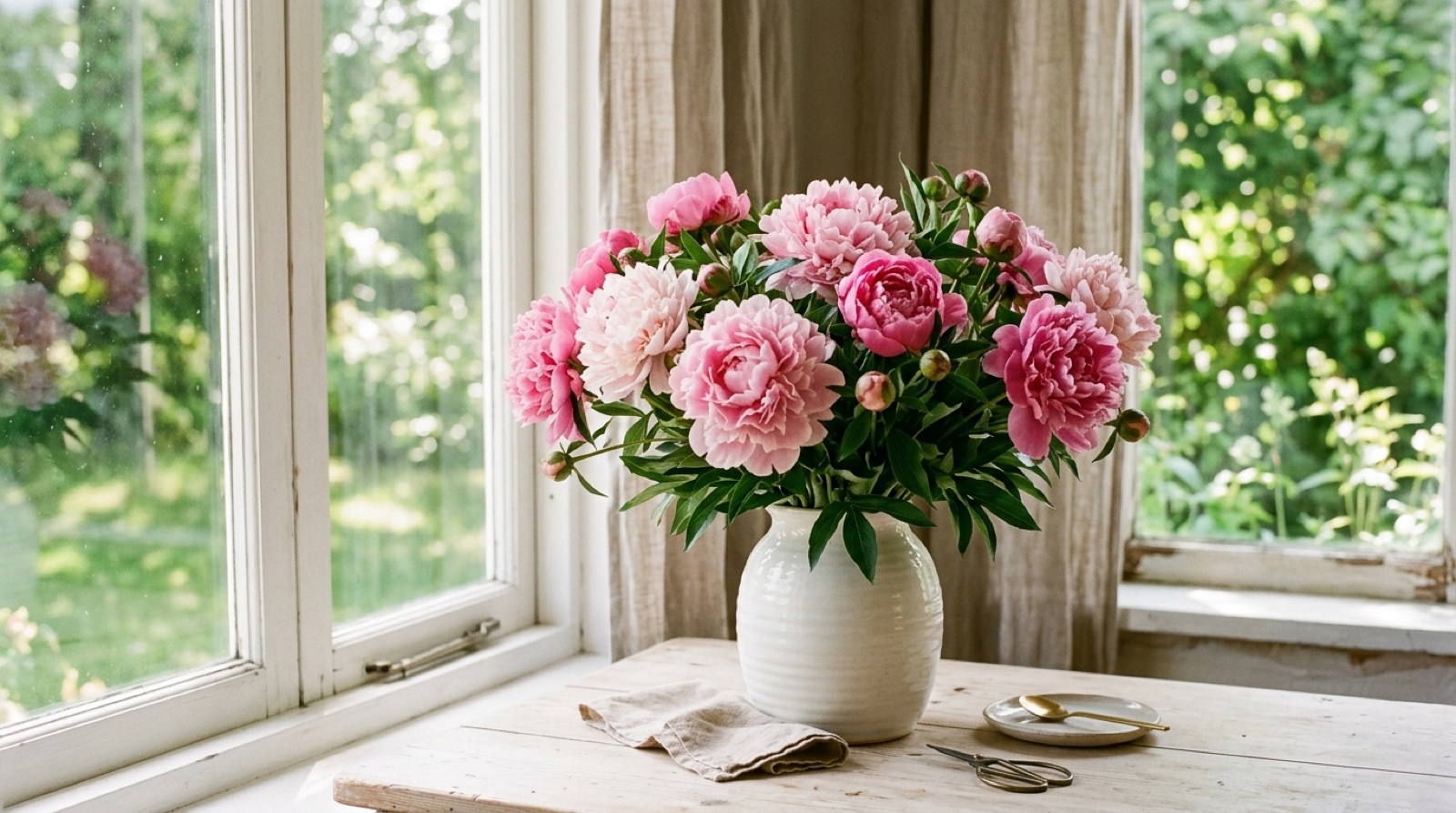
For cut flower storage, good air quality means keeping bouquets away from ripening fruit, smoke, vehicle exhaust and other sources of ethylene or irritating fumes. Choose a cool, clean room with gentle air exchange, and avoid direct draughts from fans, heaters or air conditioners. Clean vase water matters alongside clean air, because either poor placement or contaminated water can shorten a bouquet's useful life.
Customers at Pyat Tsvetov (5 Flowers) often ask where to leave a bouquet overnight: in the kitchen, beside an open window or inside the fridge. Our Saint Petersburg flower shops have been serving customers since 2011, and the useful starting point is the actual room, rather than a storage trick. Check what shares the space with the flowers, where the air comes from and whether the stems can remain upright in clean water.
Keep ripening fruit and combustion fumes away
Ethylene is a gaseous plant hormone released by ripening fruit and ageing plant material; it can also occur in combustion emissions. Some cut flowers respond to exposure with premature petal drop, fading or other signs of ageing, although sensitivity varies by species and cultivar. Carnations are a familiar sensitive example, so a mixed bouquet deserves careful placement even when its other flowers appear unaffected.
Do not put a vase beside a fruit bowl or store flowers in the same enclosed cupboard as ripening produce. Moving the fruit to the other end of a small, poorly ventilated kitchen is a less useful precaution than choosing a separate room. Remove fallen petals, yellowing foliage and decaying stems promptly, rather than letting plant debris collect around the vase.
Keep bouquets out of garages, loading areas and rooms receiving vehicle exhaust or tobacco smoke. A pleasant smell does not establish that the air is suitable, and an unpleasant smell is not a reliable measure of ethylene either. At home, identifying and removing likely sources is more practical than trying to judge the air by scent.
Ventilate the room without blowing air over petals
A closed, stuffy room can retain heat and airborne pollutants, but a strong breeze creates a different problem by increasing water loss. Aim for ordinary room ventilation with the bouquet outside the direct path of moving air. A side table away from a supply vent is usually a better choice than the spot directly beneath an air conditioner.
When opening a window, move flowers away from the sill before cold or hot outdoor air reaches them. Avoid leaving a bouquet between an open window and an open door, where a persistent draught may develop. Ventilate according to outdoor conditions: an open window facing heavy traffic or smoke may introduce the very pollutants you want to avoid.
Do not point a desk fan at flowers to make their surroundings feel fresher. Likewise, an air purifier should not blow directly across the vase, and a standard particle filter should not be assumed to remove ethylene. First address fruit, smoke, heat and stagnant placement; equipment cannot compensate reliably for keeping a bouquet beside a continuing pollution source.
Bouquets we can deliver




Choose a stable place before trying refrigerated storage
For an ordinary home display, look for a cool position away from direct sunlight, radiators and cooking appliances. Flowers can lose water faster in warm surroundings, even when the room seems comfortable to a person. Move the vase away from a sunny window as the light shifts during the day, and check that an evening heating cycle does not warm its new position.
A household refrigerator is not automatically suitable flower storage. Fruit and vegetables may release ethylene, shelves may not allow upright water storage, and flowers touching a cold surface can suffer damage. Some tropical flowers are sensitive to chilling, so there is no single refrigerator setting that should be recommended for every mixed bouquet.
For one night, a cooler room with clean air and a stable vase is often the more manageable home option. Do not use a balcony or unheated entrance as a makeshift cooler without considering frost, sunlight and rapid weather changes. Shared entrances introduce their own risks from opening doors and passing traffic; our guide to air-lock lobbies and flower placement covers that setting.
Treat clean water and clean air as one care routine
Good ventilation cannot restore water uptake when a dirty vase or decaying leaves are causing problems around the stems. Wash the vase thoroughly, rinse it and remove foliage that would sit below the waterline. Recut stem ends with a clean, sharp tool before arranging the flowers, then place them promptly in water.
Use the correct dilution if you have cut-flower food, following its packet instructions. Do not compensate for stale water by adding extra food, and avoid improvised mixtures of sugar, bleach or household cleaners. Check the water level daily, refresh the water regularly and wash the vase again if it develops slime or an unpleasant smell.
Keep the area around the arrangement dry and clear of fallen plant material. Do not mist a whole bouquet simply because the room feels dry: water held between crowded petals can encourage spotting and decay, particularly when air movement is poor. For the wider routine, follow our guide to keeping cut flowers fresh, adjusting care to the flowers in your arrangement.
Use visible changes to investigate the cause
Wilting does not identify an air-quality problem on its own. First check whether the vase has enough water, whether stem ends remain submerged and whether leaves are rotting below the waterline. Then review recent changes in placement, including a nearby heater switching on, a fruit bowl being added or a bouquet spending time in a smoky room.
Petal drop or unusually rapid ageing can be consistent with ethylene exposure, but these signs are not proof of it. Move the bouquet away from suspected sources, remove deteriorating material and maintain clean water. Existing damage may not reverse, so judge the next steps by the condition of the remaining flowers rather than expecting every bloom to recover.
Brown spots, soft petals or visible mould call for a separate check of dampness and decay. Remove affected flowers, avoid wetting the remaining petals and give the arrangement space without aiming a fan at it. Keep flowers away from cleaning sprays and fragrance aerosols too; move the vase before spraying nearby surfaces, then return it once the area has aired.
Plan flower delivery around a suitable place to receive them
When sending flowers to someone in Russia, useful preparation includes choosing a time when the bouquet can be received and brought indoors. Pyat Tsvetov delivers across Russia, with city delivery costing 500 RUB; an operator confirms the price for remote districts and suburbs when confirming the order. Browse the bouquets catalogue, then consider where the recipient can place the flowers away from heat, fruit and fumes.
In large cities, express delivery is available 1–2 hours after order confirmation. Other options include an exact time with a tolerance of ±30 minutes, the windows 09–12, 12–15, 15–18 and 18–21, or pre-ordering 1–30 days ahead. Delivery operates around the clock in Saint Petersburg; when ordering from abroad, check that the selected timing fits the recipient's day.
The courier calls the recipient about 15 minutes before arrival, and delivery is anonymous by default: the courier does not name the sender. A card with your text is free, so sign it if you want the recipient to know who sent the flowers. Online checkout uses CloudPayments; check the payment options displayed there, and see delivery and payment details or call 8 (812) 507-67-05 if you need clarification.
Frequently asked questions
What matters most for cut flower storage air quality?
Remove likely sources of ethylene and fumes, especially ripening fruit, smoke and vehicle exhaust. Keep flowers in a cool, clean space with gentle ventilation and no direct airflow over the petals.
Can I keep a bouquet beside a fruit bowl?
Choose a separate space, especially for a mixed bouquet containing ethylene-sensitive flowers. Ripening fruit can release ethylene, and separating the vase and fruit within one small enclosed room may offer limited benefit.
Will an air purifier make flowers last longer?
A standard particle filter should not be assumed to remove ethylene gas. Removing pollution sources, avoiding heat and maintaining clean vase water are more useful first steps.
Should I put cut flowers in my fridge overnight?
Only consider it if you know the flowers tolerate the conditions and can keep them upright in water, away from produce and cold surfaces. For an unidentified mixed bouquet, a cool room is generally easier to manage safely.
Can flowers recover after exposure to poor air?
Moving them to a suitable room can reduce further exposure, but damaged petals or dropped blooms may not recover. Check water uptake and remove decaying material as well, since poor air is only one possible cause of deterioration.
Ready to send a bouquet?
Pick a city, choose the flowers, and we will hand them over with a photo confirmation.
Choose a city →