
Do Flowers Like Cold Water? What to Use in Your Vase
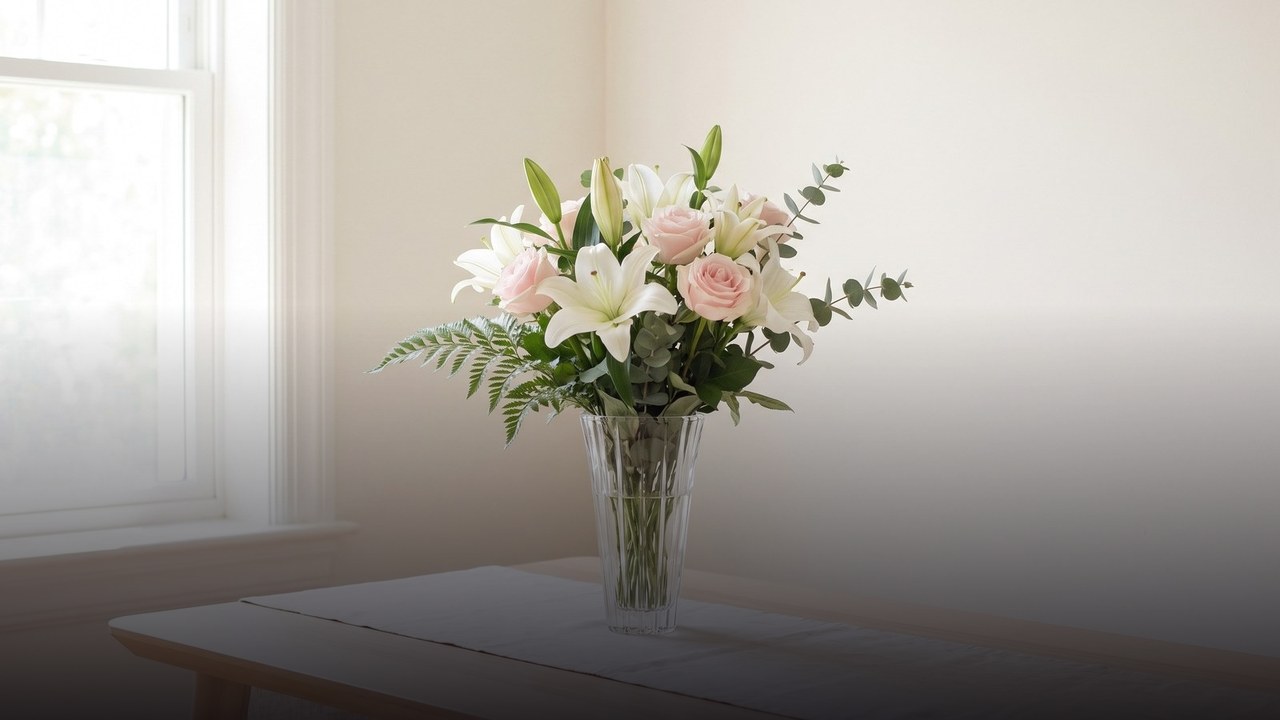
Most cut flowers do well in fresh, cool or room-temperature water; they do not need icy water. Tulips suit cool water, while room-temperature water is a practical starting point for many mixed bouquets. Clean water, clean stems and a suitable position matter more than making the vase as cold as possible.
Customers asking about cold water usually want a simple decision they can make at the kitchen sink: fill the vase from the cold tap, let the water warm up, or add ice. At Pyat Tsvetov (5 Flowers), with three flower shops in Saint Petersburg and a history dating to 2011, we approach that decision through the bouquet in front of you. The useful distinction is between comfortably cool water and an extreme temperature chosen in the hope of reviving tired stems.
Cool water is useful; colder is not automatically better
For an everyday bouquet, use fresh drinking-quality water that feels cool or neutral to your hand. If your cold tap runs very cold, let the filled vase stand until the water loses its sharp chill. There is no need to measure every refill or chase a precise temperature for an ordinary mixed arrangement. Consistent care is more useful than repeatedly adjusting the water between cold and warm.
Ice cubes are unnecessary for routine vase care, and they do not clean the water or feed the flowers. A vase in a hot room will warm up again, so adding ice leaves the main problem unresolved. Move the bouquet away from direct sunlight, radiators and appliances that give off heat. Keep it out of strong draughts as well, especially beside an open window in cold weather.
Freshness also depends on what happened before the flowers reached the vase, including how long the stems were without water. Changing water temperature cannot reverse damaged petals, crushed stems or advanced ageing. Start with a clean container and a fresh cut, then watch the bouquet rather than expecting cold water to produce a dramatic recovery. Our guide to warm or cold water for flowers explores the choice by flower type.
Choose water with the flowers in mind
Tulips are a good example of flowers that suit cool water and a cool position indoors. Use a vase that supports their stems, keep leaves above the waterline and check the water level daily. Their stems can continue growing and bend towards the light after cutting, so a changing shape does not automatically mean they need colder water. Turn the vase occasionally if the arrangement is leaning towards a window.
For roses and many mixed bouquets, room-temperature water is a sensible default, particularly when you do not have care instructions for the individual stems. Do not assume roses need hot water or a boiling-water treatment because a stem has drooped. Gerberas also benefit from careful hygiene and a clean vase; chilling dirty water will not solve a stem-care problem. If a bouquet contains several flower types, follow any supplied care directions and avoid extreme temperatures.
A mixed bouquet may change unevenly, with one flower opening quickly while another stays firm for longer. Remove individual stems as they deteriorate instead of waiting for the whole arrangement to fade. If you separate flowers into smaller vases, clean each container and prepare the stems again. For tulip-specific support and positioning, see our guide to keeping tulips from drooping.
Bouquets we can deliver




Prepare the vase before worrying about temperature
Wash the vase with detergent, rinse it thoroughly and check the inside for residue from an earlier bouquet. Remove leaves that would sit below the waterline, taking care not to strip or damage the stems unnecessarily. With clean, sharp scissors or secateurs, trim roughly 1–2 cm from each stem, cutting above any visibly damaged end. Place the flowers in water promptly so the newly cut surfaces do not sit exposed while you finish arranging.
If cut-flower food is supplied, mix it with the amount of water stated on its packet. More concentrated solution is not a shortcut to longer vase life, and adding sugar alone is not an equivalent substitute. Use enough water to keep the cut ends submerged while leaving foliage clear of it. Avoid packing stems so tightly that you cannot inspect the water or remove a fading flower without disturbing the whole bouquet.
Use a daily routine to keep the water fresh
Check the water level every day, particularly during the first days after arranging the bouquet. A vase can still look reasonably full while shorter stems have lost contact with the water. Top it up as needed, using the correct dilution if you are using flower food. Replace plain water every day or two, and sooner if it becomes cloudy, smells unpleasant or contains fallen plant material.
When changing the water, rinse the stems gently and wash away any residue inside the vase. Recut the ends if they have become discoloured or if you need to remove a damaged portion, using clean tools each time. Take out fallen leaves and fading flowers rather than letting them remain in the arrangement. Keep the bouquet away from ripening fruit, which can release ethylene and hasten ageing in sensitive flowers.
Treat drooping as a clue, not a request for ice
When a flower droops, first check whether its cut end is actually underwater and whether the stem is bent or crushed. Examine the vase for cloudy water and submerged leaves, then consider whether the bouquet has been standing in sun or near heating. These checks help you identify a practical cause before changing the temperature. A flower that has simply run out of water needs prompt access to fresh water, not a handful of ice cubes.
For a stem that appears dehydrated but remains otherwise sound, clean the vase, make a fresh cut and return it promptly to fresh water. Put the bouquet in a cool indoor position away from direct heat and allow time to observe it. Some stems may regain firmness, but recovery depends on their condition and is not assured. Brown, translucent or badly damaged petals will not become fresh again through a change in water temperature.
Plan delivery to Russia around the recipient's day
If you are sending flowers to someone in Russia from abroad, arrange a delivery time when they can receive the bouquet and put it in water. Browse our bouquets catalogue, then consider the recipient's routine before selecting timing. We deliver across Russia; city delivery costs 500 RUB, while the operator confirms the price for remote districts and suburbs when confirming the order. In large cities, express delivery is available in 1–2 hours after the order is confirmed.
Other timing options include an exact time within a margin of 30 minutes, windows of 09–12, 12–15, 15–18 or 18–21, and pre-ordering 1–30 days ahead. In Saint Petersburg, delivery is available around the clock. The courier calls the recipient about 15 minutes before arrival; if they are absent, we agree a second delivery that day or handover to a neighbour or concierge with the sender's consent. A recipient who is ready with a clean vase can start caring for the flowers promptly.
Delivery is anonymous by default, so the courier does not name the sender; use the free card with your text if you want the recipient to know who sent the flowers. A short care reminder can be useful, but leave room for the personal message that makes the gift meaningful. Online checkout uses CloudPayments; check the options displayed there for your payment method, as foreign-card acceptance is not guaranteed. See delivery and payment for practical information, or call 8 (812) 507-67-05 with questions.
Frequently asked questions
Do flowers like cold water straight from the tap?
Fresh, cool tap water is suitable for many cut flowers if it is drinking-quality water. If it comes out extremely cold, let it lose the sharp chill before adding the bouquet; icy water is unnecessary.
Should I add ice cubes to a flower vase?
Ice cubes are not needed for normal bouquet care. Fresh water, a clean vase and a position away from sunlight and heating are more useful than repeatedly chilling the vase.
Do roses prefer warm or cold water?
Room-temperature water is a practical starting point for cut roses unless you have specific care instructions. Clean the vase, remove submerged leaves and trim the stems before placing them in water.
Will cold water revive drooping flowers?
Cold water alone is not a reliable remedy for drooping. Check the water level and stem condition, then clean the vase and recut sound stems before returning them to fresh water; recovery is not assured.
Can I order flowers to Russia while living abroad?
You can order through our website for delivery across Russia and check the available payment options in the CloudPayments checkout. Foreign-card acceptance is not guaranteed, so verify the options shown before relying on a particular card.
Ready to send a bouquet?
Pick a city, choose the flowers, and we will hand them over with a photo confirmation.
Choose a city →