
Flower Delivery in Marks: Zones, Timing and What to Expect
Customers ordering flowers to Marks often ask the same three questions: will the bouquet arrive fresh, how long will it actually take, and which flowers travel well over that distance. These are exactly the right questions. Marks is a small city in Saratov Oblast, sitting on the left bank of the Volga, and delivering there from Saint Petersburg requires honest planning around transit time, seasonal temperature swings and the specific varieties that hold up best in transit. Here is what you need to know before you place an order.
Where We Deliver in Marks and the Surrounding Area
Marks is a compact city, so the delivery zone covers the central streets, the residential districts along Lenina and Sovetskaya, the areas near the river embankment and the newer housing blocks on the eastern edge of town. We also deliver to addresses in the immediate surrounding settlements provided they are reachable by a reliable road route and the order is placed with enough lead time. The key thing customers get wrong is assuming that a small city means instant availability — in fact, the opposite is true. Because Marks is not a major logistics hub, each delivery requires careful scheduling and we do not run the same frequency of courier runs as we do in Saint Petersburg itself. When you enter your address at checkout, the system will confirm whether your specific street falls within the active zone. If you are sending to a private house rather than an apartment building, include the house number, any building letter and a contact phone number for the recipient — couriers in smaller cities often navigate by phone call rather than GPS pin alone. Industrial zones on the far western outskirts and rural addresses more than fifteen kilometres from the city centre may require an extended delivery window, so flag those early when you call or message us.
Bouquets we can deliver



How Long Delivery to Marks Actually Takes
The one-to-two-hour window that works in Saint Petersburg does not apply to Marks, and we say this plainly so there are no surprises. Marks is roughly 1,400 kilometres from Saint Petersburg by road, which means flowers are transported by a combination of temperature-controlled courier logistics and scheduled runs rather than a single driver making a short city trip. In practice, you should plan for next-day delivery when ordering before a certain cut-off time, which is displayed live on the site and shifts depending on current logistics capacity. Same-day delivery to Marks is available for orders placed early in the morning on certain days, but it is not guaranteed every day of the week — check availability before you commit to a specific date. The most common mistake is ordering the evening before an event and expecting morning arrival: that window is almost always too tight. Order two days ahead whenever the date is fixed and important. If the occasion is a birthday or anniversary, a morning delivery on the day itself is achievable when the order goes in by early afternoon the previous day. We track every shipment and will contact you if there is any change to the estimated arrival window, so make sure the phone number you provide at checkout is one you actually answer.
Which Flowers Travel Well to Marks
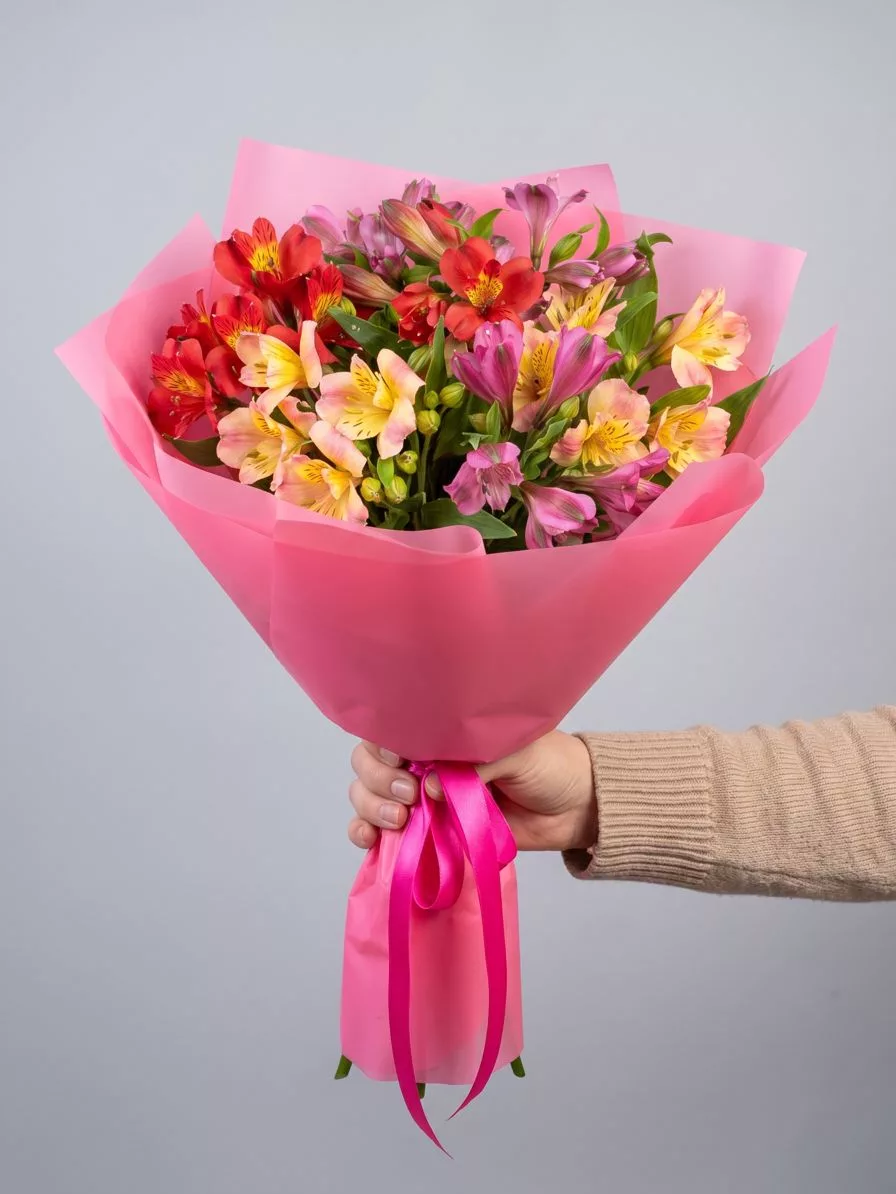
Not every flower is a good candidate for a long-distance delivery, and experienced florists are blunt about this. Roses are the most reliable choice for transit to Marks: varieties like Explorer, Avalanche and Red Naomi have firm petals, strong stems and tolerate the temperature fluctuations that occur during loading and unloading far better than more delicate blooms. Spray roses add volume without adding fragility. Chrysanthemums — both single-headed and spray types — are another strong option; they are robust, long-lasting and available year-round. Alstroemeria travels excellently and often arrives in bud, opening fully within a day of delivery, which customers sometimes mistake for under-ripeness but is actually ideal for longevity. Carnations are underrated for long-distance orders: they are sturdy, drink well after transit and last ten to fourteen days in a vase with fresh water changes. Flowers we recommend against for Marks delivery include garden roses with very open blooms, ranunculus in summer heat, and any arrangement built around tropical blooms like anthuriums unless the season and temperature conditions are right. Tulips in spring are fine if ordered when temperatures along the route are below twenty degrees Celsius; in July or August they are a risk. Eustoma, also called lisianthus, travels reasonably well when cut at the right stage. When in doubt, call us and we will tell you honestly what is looking good in the shop that day and what will hold up for your specific delivery date.
Seasonal Factors That Affect Your Order
Saratov Oblast experiences genuine continental climate swings — cold winters where temperatures drop well below minus fifteen Celsius and hot summers where daytime highs regularly exceed thirty degrees. Both extremes affect how we pack and what we recommend. In winter, bouquets are wrapped in insulating kraft paper with an inner thermal sleeve, and the outer packaging is sealed tightly to prevent cold shock during the final handoff from courier to recipient. Cold shock on roses causes the outer petals to go translucent and limp within hours, which is why we use this method rather than leaving flowers in a standard box. In summer, the risk shifts to heat: direct sun exposure during the last leg of delivery can cause wilting even in otherwise robust stems. We schedule summer deliveries to avoid peak afternoon heat where possible and use gel packs in the packaging. Spring is generally the most straightforward season for delivery to Marks — moderate temperatures mean less intervention is needed and a wider range of varieties is viable. Autumn is similar, though fog and rain on the route occasionally cause minor delays. The practical takeaway for customers is simple: tell us the expected weather at the recipient's end if you know it is extreme, and we will adjust the packing accordingly. Mentioning that the recipient is on the fifth floor of a building without a lift, or that they live in an unheated entrance hall, also helps us make the right call on packaging.
What a Typical Bouquet for Marks Looks Like
Customers ordering to Marks most often choose mid-size bouquets of fifteen to twenty-five stems rather than large statement arrangements, and this is actually a sensible instinct for long-distance delivery. Smaller, tighter bouquets travel with less movement inside the box and arrive with fewer broken stems. The most popular combinations we send to Saratov Oblast include monobouquets of cream or pink roses, mixed bouquets combining spray roses with chrysanthemums and eucalyptus, and seasonal tulip bunches in spring. Eucalyptus and ruscus are the foliage of choice for transit because they are nearly indestructible and keep the arrangement looking full even if a single stem shifts during transport. Peonies are requested frequently in late May and June, which is their natural season in Russia, and they do travel reasonably well at that time of year if cut at the tight bud stage — a fully open peony will not survive the journey intact. Hydrangeas are popular but require extra water, and we pack them with a water-soaked foam block at the stem end for long-distance orders. For corporate or large event orders to Marks, we recommend discussing the composition directly with us at least three days in advance so we can source the right quantities and confirm availability. Impulse orders of thirty or more stems to an out-of-city address sometimes cannot be fulfilled on the same day simply because the stems need to be conditioned and packed correctly, not because of any shortage.
What to Check Before You Place the Order
A significant share of delivery problems come not from logistics but from incomplete information at the order stage. Go through this list before you confirm. First, verify the recipient's address down to the flat number — in Marks, as in most smaller Russian cities, apartment buildings often have multiple entrances and the entrance number matters. Second, confirm that the recipient will actually be home or reachable during the delivery window; if they are at work, provide a work address or arrange a specific time. Third, if the bouquet is a surprise, give us a secondary contact we can call if the recipient does not answer — a neighbour, a family member, anyone who can accept the flowers. Fourth, check the cut-off time for your chosen delivery date on the site before you assume it is achievable. Fifth, if you are ordering from outside Russia and are unfamiliar with how Russian addresses are written, use the format: city, street name, house number, building number if applicable, flat number — in that order. Sixth, double-check the phone number you enter for the recipient: a single transposed digit means the courier cannot reach them. Seventh, if you want a specific note card with a personal message, write it out in full when ordering rather than leaving a vague instruction — our florists will copy your exact wording. These steps take three minutes and prevent the majority of failed or delayed deliveries we see.
Caring for the Flowers After Delivery in Marks
Once the bouquet arrives, the recipient's first actions in the next thirty minutes determine how long the flowers last. Cut one to two centimetres off each stem at a forty-five-degree angle using a sharp knife or scissors — not a blunt kitchen knife, which crushes the stem tissue and blocks water uptake. Do this with the stems submerged in water if possible, or at minimum immediately before placing them in a vase. Use a clean vase filled with cool, not cold, water. Room temperature water is absorbed faster than ice-cold water, which matters most in the first hour after the flowers have been in transit. Remove any leaves that will sit below the waterline, as submerged foliage rots quickly and contaminates the water. Change the water every two days and re-cut the stems each time. Keep the bouquet away from direct sunlight, heating radiators and fruit bowls — ripening fruit releases ethylene gas, which shortens the life of cut flowers noticeably, especially for roses and carnations. Roses ordered from us come with a small sachet of flower food; dissolve it in the first vase of water and do not add more on subsequent changes unless you have another sachet. In Marks, summer indoor temperatures can be high, so a cooler room overnight — a hallway or a room with the window slightly open — will extend vase life significantly. Chrysanthemums and alstroemeria are the most forgiving in warm conditions; roses and tulips benefit most from cooler overnight temperatures.
Ordering flowers to Marks is straightforward when you plan around the actual distance and give us complete information at checkout. The flowers that travel best are the ones we have been working with for years — roses, chrysanthemums, alstroemeria, carnations — and our packing is adjusted for the season and the temperature conditions along the route. Order two days ahead when the date matters, check the cut-off time for same-day or next-day delivery, and make sure the recipient's phone number is correct. Everything else we handle from the shop floor. We deliver bouquets across Russia in 1–2 hours.
Frequently asked questions
Can I order flowers to Marks for same-day delivery?
Same-day delivery to Marks is available on certain days for orders placed early in the morning, but it is not guaranteed every day. Check the live cut-off time displayed on the site before ordering. For a fixed important date, placing your order two days in advance is the most reliable approach and gives us time to pack correctly for the distance.
What flowers are not suitable for delivery to Marks?
Avoid fully open garden roses, ranunculus in warm weather, and tropical blooms like anthuriums unless temperature conditions are right. Tulips are fine in spring but risky in summer heat above twenty degrees Celsius. If you are unsure, call us before ordering and we will tell you what is viable for your specific date and current conditions along the route.
How is the bouquet packaged for long-distance delivery?
In winter we use insulating kraft paper with a thermal inner sleeve sealed against cold shock. In summer we include gel packs to manage heat during the final delivery leg. Hydrangeas get a water-soaked foam block at the stem end. Packaging is adjusted based on the season and the forecast temperature at the destination, not a single standard method.
What if the recipient is not home when the courier arrives in Marks?
The courier will call the phone number provided at checkout. If there is no answer, they will attempt a second call and wait a short time. To avoid a failed delivery, provide a secondary contact when ordering — a neighbour or family member who can accept the flowers. You can also specify a work address if the recipient will not be home during the delivery window.
Do you deliver to addresses outside Marks city centre, such as nearby villages?
We deliver to settlements near Marks provided they are reachable by a reliable road and the order is placed with sufficient lead time. Addresses more than fifteen kilometres from the city centre or in rural areas without a clear road access may require an extended window or may fall outside the active zone. Enter your full address at checkout to confirm availability before paying.
Ready to send a bouquet?
Pick a city, choose the flowers, and we will hand them over with a photo confirmation.
Choose a city →