
Flower Delivery in Kameshkovo: Zones, Timing and What to Expect
Kameshkovo sits in Vladimir Oblast, and customers ordering flowers there often assume the process works the same as ordering across town in a big city. It does not, and that gap in expectation causes most of the complaints we hear. Knowing the actual delivery window, which stems hold up on a long road trip and what the recipient needs to do when the courier arrives will save you a ruined bouquet and a difficult phone call.
Where Kameshkovo Sits in Our Delivery Map
Kameshkovo is a small industrial town in Vladimir Oblast, roughly 250 kilometres east of Moscow and considerably further from Saint Petersburg. When customers ask whether we deliver there, the answer is yes, but it helps to understand what that distance means in practice. The route from our dispatch point runs through the Vladimir region road network, and depending on traffic on the M7 highway and local conditions entering the town, the courier is on the road for several hours. We cover the central streets of Kameshkovo as well as residential districts along the main avenues, but very rural addresses on the outskirts require confirmation at the time of order — a few hamlets nominally listed under Kameshkovo actually sit five to ten kilometres outside the town boundary, and that affects timing. When you place an order, give the full postal address including the apartment or house number, the entrance code if there is one, and a working phone number for the recipient. Couriers cannot wait more than fifteen minutes at a door, and in a town where many buildings look alike, a precise address is not a formality but a necessity. We also ask whether the building has an intercom system, because older residential blocks in Vladimir Oblast towns frequently have intercoms that are either broken or not connected to the flat number shown outside. Getting this detail right at checkout prevents the most common delivery failure we see in smaller Russian cities.
Bouquets we can deliver



Realistic Delivery Windows for Kameshkovo Orders
The one-to-two-hour window we advertise applies to central Saint Petersburg and a number of major Russian cities where we maintain fast logistics. For Kameshkovo, the honest figure is different, and we prefer to state it plainly rather than let a customer expect a courier in ninety minutes. Orders placed before noon on a business day are typically delivered the same day, with the courier arriving in the afternoon. Orders placed in the evening are scheduled for the following morning unless you specifically arrange an evening slot and confirm it with our team by phone. Weekend and public holiday deliveries follow a modified schedule — Russia observes a significant number of official holidays, particularly around New Year in January, International Women's Day on 8 March and Victory Day in May, and demand during those periods is extremely high. If you are ordering for one of those dates, place the order at least two days in advance. Same-day delivery on a major holiday to Kameshkovo is not something we can reliably guarantee, and we would rather tell you that directly. The delivery window you choose at checkout is a target, not a guaranteed minute — road conditions in Vladimir Oblast in winter can add time unpredictably, and we will call you if there is a significant delay rather than leave you wondering.
Which Flowers Survive a Long-Distance Road Delivery
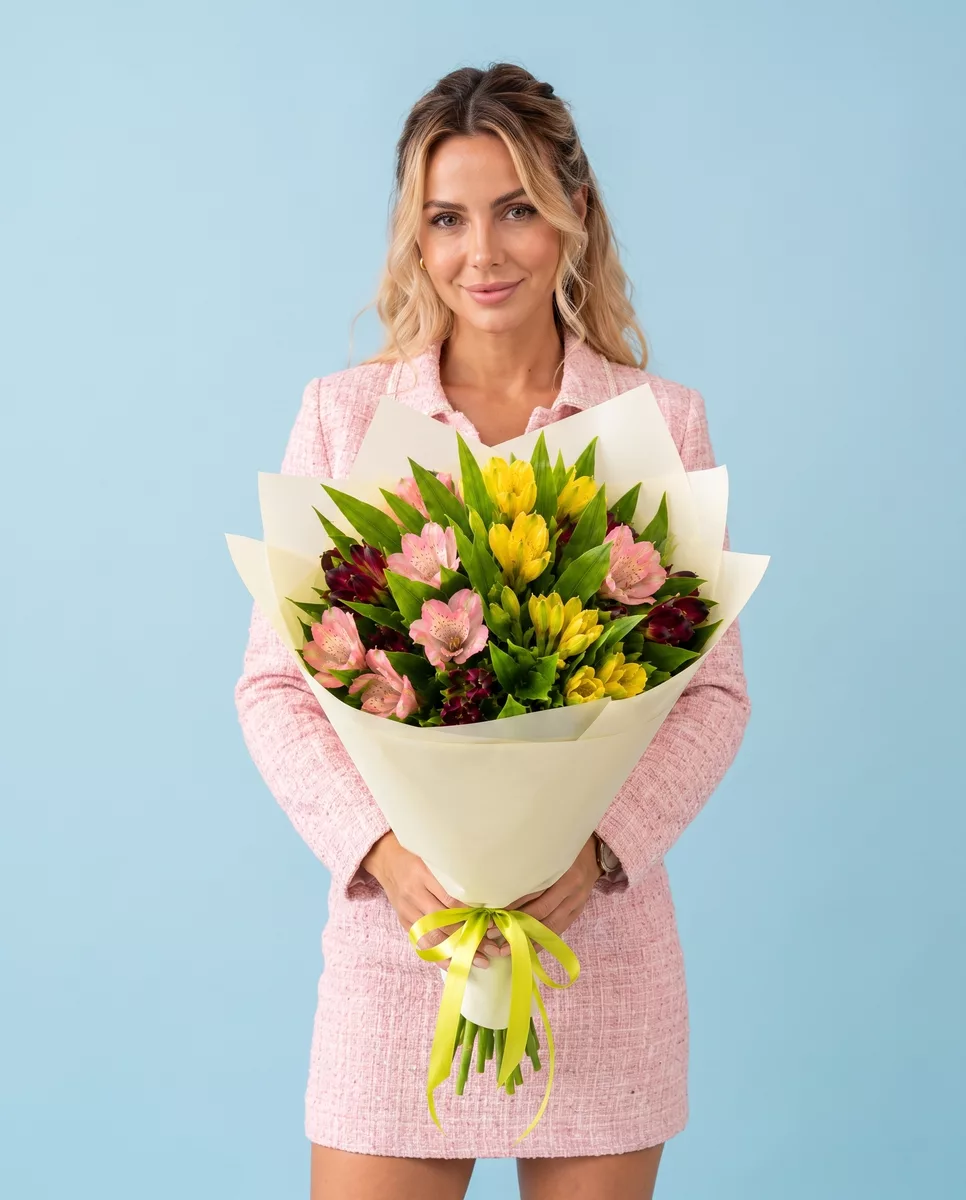
This is the question florists actually care about, and it is where most online flower guides fall short by listing varieties without mentioning how they behave in transit. Roses are the most ordered flower in Russia and they travel reasonably well if cut correctly and kept hydrated, but long-stemmed garden roses with many petals are more fragile than standard spray roses. For deliveries to Kameshkovo we recommend closed-bud roses — buds that are just beginning to open rather than fully bloomed flowers — because they arrive in better condition and then open beautifully over the following two to three days in the recipient's home. Chrysanthemums are extremely robust and handle road vibration and temperature swings better than almost any other cut flower; a large-headed chrysanthemum bouquet is a sensible choice for a long delivery. Alstroemeria also travels well and lasts up to two weeks in water, which makes it good value for the recipient. What we advise against for Kameshkovo distances: fully open peonies in summer, which bruise easily; open tulips in warm weather, which close and reopen unpredictably; and any arrangement with tropical foliage that wilts quickly without refrigeration. Gerberas look striking in photographs but their stems are hollow and snap under pressure. If a customer insists on a specific variety we will say so honestly rather than pack something that will not survive the journey.
Packaging and Temperature: What Happens to Flowers on the Road
Professional floral packaging for long-distance delivery is not the same as the decorative wrapping you see in a shop window. For Kameshkovo orders, stems go into water-retaining material at the cut end — a wet sponge or hydrogel sachet sealed in film — and the whole bouquet is wrapped in kraft paper or a hard-sided box depending on the composition. Delicate flowers like ranunculus or anemones get box packaging because they cannot withstand lateral pressure from wrapping alone. Temperature is the more complicated variable. In summer, when Vladimir Oblast regularly sees temperatures above 25 degrees Celsius, the courier vehicle must be climate-controlled, and we verify this before dispatching a long-distance order. In winter, the risk reverses: flowers freeze surprisingly quickly if left in an unheated vehicle or carried across an open car park in minus fifteen. The recipient should bring the bouquet indoors immediately and let it acclimatise at room temperature for twenty minutes before unwrapping, rather than cutting the paper off in the cold entrance hall. In spring and autumn, which are the most comfortable seasons for flower transport in central Russia, temperature is less of a concern, but rain and wind can damage open blooms even in mild weather. We pack accordingly and mark boxes that need to stay upright.
What the Recipient Should Do When the Courier Arrives
Many customers order flowers as a surprise, which means the recipient has no idea a delivery is coming. This creates a specific set of problems in Russian residential buildings. The courier will call the recipient's phone number before arriving at the door — if the recipient does not pick up, the courier will try twice more and then contact the sender. If nobody is reachable, the courier cannot leave flowers unattended in a common corridor; that is both a security issue and a practical one, since flowers left in an unheated entrance hall in winter will be damaged within an hour. We strongly suggest telling the recipient that a delivery is coming, even if you do not say what it is. If you want it to be a complete surprise, at least make sure their phone is on and they are home. When the bouquet arrives, the recipient should check the stems immediately. Cut a centimetre off each stem at an angle using a clean knife — not scissors, which crush the stem cells — and place the flowers in a vase with fresh, cool water. Remove any leaves that would sit below the waterline, because submerged leaves rot quickly and contaminate the water. Change the water every two days. This is standard florist advice that applies everywhere, but it matters more after a long delivery because the stems have been out of water longer than a local delivery would require.
Ordering for Russian Occasions: What Kameshkovo Customers Usually Choose
Russia has a strong gifting culture around specific calendar dates, and customers ordering to Kameshkovo tend to follow those patterns closely. International Women's Day on 8 March is the single busiest day in the Russian flower calendar — it is a national holiday and virtually every woman receives flowers, from schoolteachers to grandmothers to colleagues. Tulips dominate 8 March orders because they are the traditional spring flower for this date, and Dutch tulips in mixed colours or single-colour bunches of ten or twenty-five are the standard choice. Birthdays are the second most common occasion, and here customers have more flexibility: roses in the recipient's favourite colour, mixed seasonal bouquets or a mono-bouquet of a single dramatic variety like lisianthus all work well. Anniversary orders tend to be larger — fifty or one hundred roses is not unusual for a significant anniversary in Russian gifting tradition, and the numbers are genuinely meaningful rather than decorative. New Year orders spike in late December and continue through the first week of January because the Russian New Year celebration on 1 January is the biggest holiday of the year. If you are not familiar with Russian customs, the key thing to know is that odd numbers of flowers are for celebrations and even numbers are not used for gifts — this is a widely observed convention, and we follow it automatically when assembling bouquets.
How to Check Your Order Before Confirming
A checklist before you confirm a Kameshkovo order saves more problems than any other single step. First, verify the recipient's address character by character — Vladimir Oblast addresses often include a district name, a street name, a building number and a flat number, and any one of those missing will delay the courier. Second, confirm the recipient's phone number is a current Russian mobile number; landlines in small towns are sometimes listed but not always answered. Third, check the delivery date against the Russian public holiday calendar if you are ordering around any major holiday — we can tell you whether your chosen date is realistic when you call. Fourth, look at the flower varieties in your chosen bouquet and ask yourself whether any of them are particularly delicate; if you are not sure, call us and we will advise. Fifth, think about the weather forecast for the delivery day, because ordering open peonies for a summer afternoon delivery to a town in central Russia is a risk we will flag but ultimately leave to your judgement. Sixth, decide whether you want a message card included — in Russia, handwritten cards inside bouquets are common for birthdays and significant occasions, and we can include a printed note with your text. Finally, save your order confirmation number; if you need to reach us about a delivery in progress, that number is the fastest way for us to find your order and give you an accurate status.
Ordering flowers to Kameshkovo is straightforward once you account for the distance, the delivery window and the varieties that travel well on a long road route. The customers who have the best experience are the ones who give us a precise address, a reachable phone number for the recipient and a realistic lead time — especially around major Russian holidays when demand across the country spikes sharply. We have been delivering across Russia long enough to know what goes wrong and how to prevent it, and we would rather have a direct conversation about your specific order than send something that arrives in poor condition. We deliver bouquets across Russia in 1–2 hours.
Frequently asked questions
Can you deliver to a rural address just outside Kameshkovo town limits?
Yes, but we need to confirm it before you complete the order. Some addresses listed under Kameshkovo are actually several kilometres outside the town boundary, which affects the delivery time and occasionally the delivery fee. Call us with the full postal address and we will check it immediately rather than discover the issue after dispatch.
What happens if the recipient is not home when the courier arrives?
The courier will call the recipient's phone number twice. If there is no answer, they will contact the sender. Flowers cannot be left unattended in a building entrance, particularly in cold weather. If nobody is reachable within a short window, the order is rescheduled. The simplest solution is to let the recipient know a delivery is coming, even without revealing what it is.
Is same-day delivery to Kameshkovo possible on 8 March?
It is possible if you order early in the morning, but we strongly recommend ordering two to three days before 8 March. That date is the busiest day in the Russian flower calendar and demand across all delivery zones is extremely high. Early orders also give us more flexibility on variety selection, since tulips and roses sell out quickly in the days leading up to the holiday.
Why do you recommend closed-bud roses for long-distance delivery?
Fully open roses are at their most fragile stage and do not handle road vibration or temperature changes well over a journey of several hours. A closed or half-open bud arrives intact and then opens naturally over two to three days in the recipient's home, which actually extends the life of the bouquet. The recipient gets to watch the flowers open, which many people find more enjoyable than receiving an already-bloomed arrangement.
Do you include care instructions with deliveries to Kameshkovo?
Yes, every long-distance order includes a printed care card with basic instructions: trim the stems, use a clean vase with cool water, remove submerged leaves and change the water every two days. For specific varieties like tulips or lisianthus that have particular care requirements, we add a note about those as well. You can also ask us to include a personalised message card for the recipient.
Ready to send a bouquet?
Pick a city, choose the flowers, and we will hand them over with a photo confirmation.
Choose a city →