
Flower Delivery in Kem: Zones, Timing and What to Expect
Kem sits on the western shore of the White Sea, roughly 500 kilometres north of Petrozavodsk, and customers ordering flowers here ask the same first question every time: will they actually arrive fresh? The answer depends on the route chosen, the day of the week, the variety in the box and how clearly the address is written. This article covers all of that — delivery zones inside Kem, realistic timing, which flowers travel well to this latitude, and the small details that separate a successful delivery from a wilted disappointment.
Where in Kem We Deliver and How the City Is Divided
Kem is a compact city, but its layout still matters when you are planning a delivery. The central districts around Lenin Street and the area near Kem railway station are the easiest to reach and represent the core delivery zone. The Rabocheostrovsk settlement, sitting a few kilometres to the east on the coast, is served as well but adds travel time because the road runs along the shoreline and can slow in winter conditions. Customers sometimes assume that because Kem is small, every address is equally accessible — that is not always true. The industrial waterfront areas near the port have limited address signage, so the more precise the street number and any building entrance details, the better. When you place an order, write the full postal address including the district name if you know it, not just a landmark. Courier navigation in smaller northern cities relies heavily on exact house numbers because the street grid is irregular in the older parts of town. If the recipient lives in a private house rather than an apartment block, note whether there is a gate code or a dog in the yard — these details sound minor but they are the ones that cause a courier to stand outside for ten minutes in minus fifteen degrees. We cover the whole urban territory of Kem, including addresses on the islands connected by the road bridge, so do not assume your location is out of range before checking.
Bouquets we can deliver



Delivery Timing: What One to Two Hours Actually Means in Kem
The one-to-two-hour delivery window that Five Flowers offers across Russia applies to Kem, and it is worth understanding what drives that range. Orders placed before noon on weekdays consistently land at the shorter end of the window because the morning assembly is complete, the courier load is lighter and road traffic in Kem is minimal compared to any large city. Orders placed in the afternoon on Fridays or around public holidays take longer because demand spikes and assembly queues at the source extend. Temperature also plays a role that customers rarely consider: in deep winter, the courier cannot leave flowers in a cold vehicle while completing another stop, so routing becomes more conservative and single-delivery runs are more common, which protects the flowers but adds clock time. If you are ordering for a specific moment — a birthday dinner at seven in the evening, for example — choose a delivery window that ends at least forty minutes before that moment. Cutting it to the exact minute creates pressure that nobody benefits from. Same-day orders placed after six in the evening are handled where logistics allow, but the safest approach for an evening event is an afternoon order with a specified arrival window. Express orders, where you need the bouquet within the hour rather than within two, are possible for central Kem addresses and should be requested explicitly when placing the order rather than assumed to be the default. The more information you give about the recipient's schedule, the more accurately we can plan the drop.
Which Flowers Survive the Journey to Kem in Good Condition
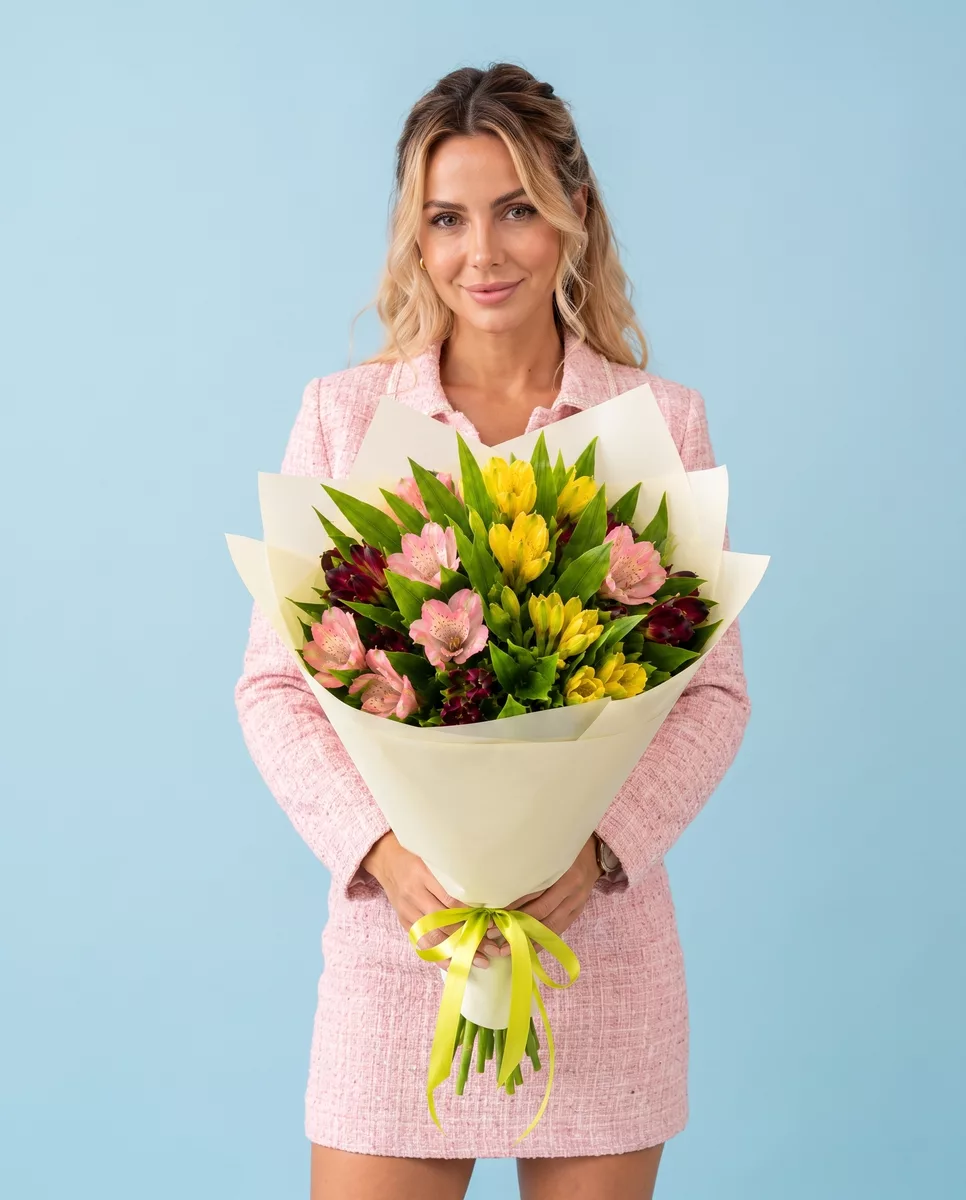
Kem's climate is subarctic in character: winters are long, temperatures drop well below minus twenty in January and February, and the wind off the White Sea adds a chill that affects exposed flowers within minutes. That physical reality shapes which varieties we recommend for delivery here. Roses travel well when they are properly conditioned before boxing — stems cut at an angle, hydrated for several hours, then packed in insulated wrapping for the northern route. The varieties that hold up best are the large-headed garden types and the classic high-centred Dutch roses rather than the spray or garden roses with thinner petals, which bruise in cold air. Chrysanthemums are extremely reliable for Kem deliveries: they are cold-tolerant, structurally firm and do not drop petals when the box is jostled. Alstroemeria is another solid choice — the buds travel closed and open over several days once the recipient puts them in water, which means the bouquet improves after arrival rather than peaking in transit. Tulips in season are popular but require careful handling in cold weather because the stems become brittle below minus ten; we pack them with extra insulation in winter months. Eustoma, sometimes called lisianthus, is delicate and better suited to warmer-season deliveries. Orchid stems in a water tube travel acceptably but need to be moved indoors immediately on arrival. The general principle is: the sturdier the stem and the tighter the bud, the better the flower performs on a northern route.
Seasonal Considerations: Summer, White Nights and Winter Orders
Kem experiences the White Nights phenomenon from late May through mid-July, when it never gets fully dark. This is when the city sees its highest visitor numbers, largely because of boat connections to the Solovetsky Islands. Flower demand rises sharply in June and July, particularly for bouquets ordered by travellers wanting to bring something back or by locals celebrating graduations and summer birthdays. During this period, order lead times extend slightly and we recommend placing orders the evening before for next-day morning delivery rather than relying on same-day slots. Summer also brings the widest variety selection: peonies in June, sunflowers from July, seasonal dahlias and lisianthus, which all travel better in the cool but not freezing temperatures of a White Nights night. Autumn in Kem is short and wet; September and October are good months for chrysanthemum arrangements and solidago, which are hardy and suit the amber light of the season. Winter orders from November through March require the most planning. Flowers are packed in thermal boxes with insulating paper, and the recipient should be ready to bring the bouquet indoors immediately — leaving it on a cold porch for thirty minutes in January will damage even hardy varieties. Spring, from April into May, is when customers often order tulips and hyacinths; these are available and travel well as long as nighttime temperatures have not yet dropped to extreme lows, which in Kem can persist into late April.
Packaging for the North: What Goes Into the Box Before It Leaves
Customers sometimes open a delivery box and find wrapping that looks excessive — layers of tissue, insulating paper, sometimes a small heat pack in the coldest months. None of that is decorative. Flower packaging for northern deliveries is functional engineering. The outer box is rigid to prevent compression during transport; the inner layer of insulating paper holds temperature for up to two hours in outdoor conditions, which covers the delivery window in most cases. Stems sit in a water source — either a small soaked foam block or a sealed water tube depending on the variety — because a flower that dries out during a two-hour journey will not recover fully even if it is re-cut and placed in a vase. The bouquet itself is assembled with the stems bound at a point that keeps the heads separated so they do not press against each other in transit, which is a common cause of bruising on roses and peonies. Cards and small gifts ordered alongside the bouquet are placed inside the box rather than attached to the outside, where they would be exposed to moisture and cold. One thing customers frequently forget to specify is the orientation of the box during delivery — flowers should travel heads up. If you are ordering to an address where the recipient will not be home and the courier must leave the box with a neighbour or building manager, note this in the order comments so the courier can give brief handling instructions. A well-packed box can hold a bouquet in good condition for up to three hours if it remains sealed, which provides a buffer for recipients who are briefly out when delivery arrives.
What to Check Before Confirming Your Order for Kem
The most common problems with Kem deliveries trace back to incomplete information at the order stage, not to logistics failures. The first thing to verify is the recipient's phone number: couriers in smaller cities rely on a call before arrival more than in large cities where building access is standardised. If the recipient is at work in an office or school, include that address rather than the home address, and note the working hours so the courier does not arrive during a meeting or a lesson. The second check is the delivery window: be realistic about when the recipient will actually be available, not when you would like the flowers to arrive. A bouquet delivered to an empty apartment and left with a neighbour is not the same experience as a hand delivery. Third, confirm the variety or composition you have chosen suits the season. If you are ordering roses in January for a Kem address, they will arrive correctly if packaged properly, but if you have chosen an arrangement with tropical foliage like monstera leaves or bird of paradise, ask about suitability for cold-weather transport before confirming. Fourth, add any access notes: gate codes, building entry instructions, floor and apartment number if it is a large Soviet-era block where the numbering is not obvious from the street. Fifth, double-check the date. Customers occasionally order for the wrong day when placing orders late at night for the following morning — the date field on the order form reflects the calendar date, not the colloquial 'tomorrow', so verify it before submitting.
Caring for Flowers After Delivery in Kem's Climate
Once the bouquet is inside and the box is open, the recipient's first steps matter more in a northern climate than they might elsewhere. Flowers that have come in from cold outdoor temperatures need fifteen to twenty minutes to acclimatise before the stems are cut — plunging cold stems into warm water immediately can cause thermal shock that shortens vase life. After acclimatisation, cut one to two centimetres from each stem at a forty-five-degree angle using a sharp knife rather than scissors, which crush the stem tissue. Fill a clean vase with cool water, not warm, and add the flower food sachet that comes with the delivery — it contains a biocide and a sugar source that together extend vase life by several days compared to plain water. Keep the bouquet away from radiators, which are running at full capacity in Kem homes from October through April, and away from the cold draught of a window or an exterior door. Roses and chrysanthemums will last seven to ten days with correct care; alstroemeria often reaches twelve days. Tulips are shorter-lived at five to seven days but are striking while they last. Change the water every two days and re-cut the stems each time. One habit that is common in Russia and worth explaining to international recipients: some people add a coin or a small amount of vodka to the vase water believing it extends flower life. Neither works reliably. The sachet provided is more effective than any home remedy, and clean water changed regularly is the single most important factor after the initial cut.
Delivering flowers to Kem is straightforward when the order is placed with the right information and the right variety for the season. The city is fully covered, the timing is reliable across its districts, and the packaging is built for the White Sea climate. The customers who get the best results are the ones who write a complete address, choose a delivery window that matches the recipient's actual schedule, and pick varieties — roses, chrysanthemums, alstroemeria, seasonal tulips — that are proven on northern routes. Everything else follows from those three things. We deliver bouquets across Russia in 1–2 hours.
Frequently asked questions
Can you deliver flowers to Rabocheostrovsk, not just central Kem?
Yes, Rabocheostrovsk is within our delivery area. Because it sits several kilometres from the city centre along the coastal road, add a few extra minutes to the standard window estimate, particularly in winter when road conditions slow travel. Provide the full street address and the recipient's phone number so the courier can call ahead on arrival.
What happens if the recipient is not home when the courier arrives?
The courier will call the recipient before arrival. If there is no answer, we contact the sender for instructions. The bouquet can be left with a building manager or a named neighbour if you specify this in the order comments. We do not leave flowers unattended in cold outdoor conditions in winter, as even a short wait damages most varieties at sub-zero temperatures.
Which flowers are not suitable for winter delivery to Kem?
Tropical varieties with large flat leaves, such as bird of paradise and anthurium, are sensitive to cold and not recommended for Kem deliveries from November through March. Thin-petalled garden roses and open-bloom peonies also carry more risk in deep winter. Chrysanthemums, standard roses, and alstroemeria are the most reliable choices for cold-weather orders.
Can I order flowers in Kem for delivery during the Solovetsky tourist season?
Yes, and June through early August is actually our busiest period for Kem. We recommend placing orders the evening before your intended delivery date during peak season rather than relying on same-day slots, as demand is higher and assembly queues extend. Standard and express options remain available; just book with a realistic lead time.
How should the recipient handle the bouquet immediately after delivery in cold weather?
Leave the box closed for fifteen to twenty minutes indoors to let the flowers acclimatise gradually from cold to room temperature. Then open the box, trim the stems at an angle with a sharp knife, and place them in cool water with the flower food sachet included in the delivery. Avoid putting the vase near radiators or cold window draughts, both of which shorten vase life significantly.
Ready to send a bouquet?
Pick a city, choose the flowers, and we will hand them over with a photo confirmation.
Choose a city →