
Flower Delivery in Petrovsk: Zones, Timing and What to Expect
Customers calling from Petrovsk often open with the same question: can you actually get here in time? The honest answer is yes, but the details matter — which part of town, what day, and what you order all affect whether roses arrive crisp or whether ranunculus survive the last stretch of road. This article lays out exactly how delivery works in Petrovsk, what bouquets travel well, and what to double-check before you confirm your order.
Which Parts of Petrovsk We Reach and How Long It Takes
Petrovsk is a compact city by Russian standards, but the road layout means that crossing from one district to another can add twenty minutes in ways that are not obvious from a map. We divide the city into a central zone covering the area around Lenin Street and the main market square, and an outer zone that includes the residential blocks along the northern and eastern edges of town. Central zone orders typically arrive within one to two hours of confirmation. Outer zone deliveries, particularly to addresses near the industrial outskirts, sit closer to the two-hour mark and occasionally push past it during peak weekend demand. We ask customers to give us the full street address including building number and entrance number when applicable, because multi-entrance apartment blocks in Petrovsk vary enormously in how accessible they are from the street. Dacha addresses on the city boundary are handled case by case — call us before ordering so we can confirm coverage honestly rather than discovering the problem when the driver is already on the road. Timing is tightest on the 8th of March, the 14th of February and graduation weekends in late May and June, when order volume across the region spikes sharply. If your date falls on any of those, place the order the evening before and specify a delivery window rather than a single target time. That single habit prevents the majority of late-delivery complaints we receive.
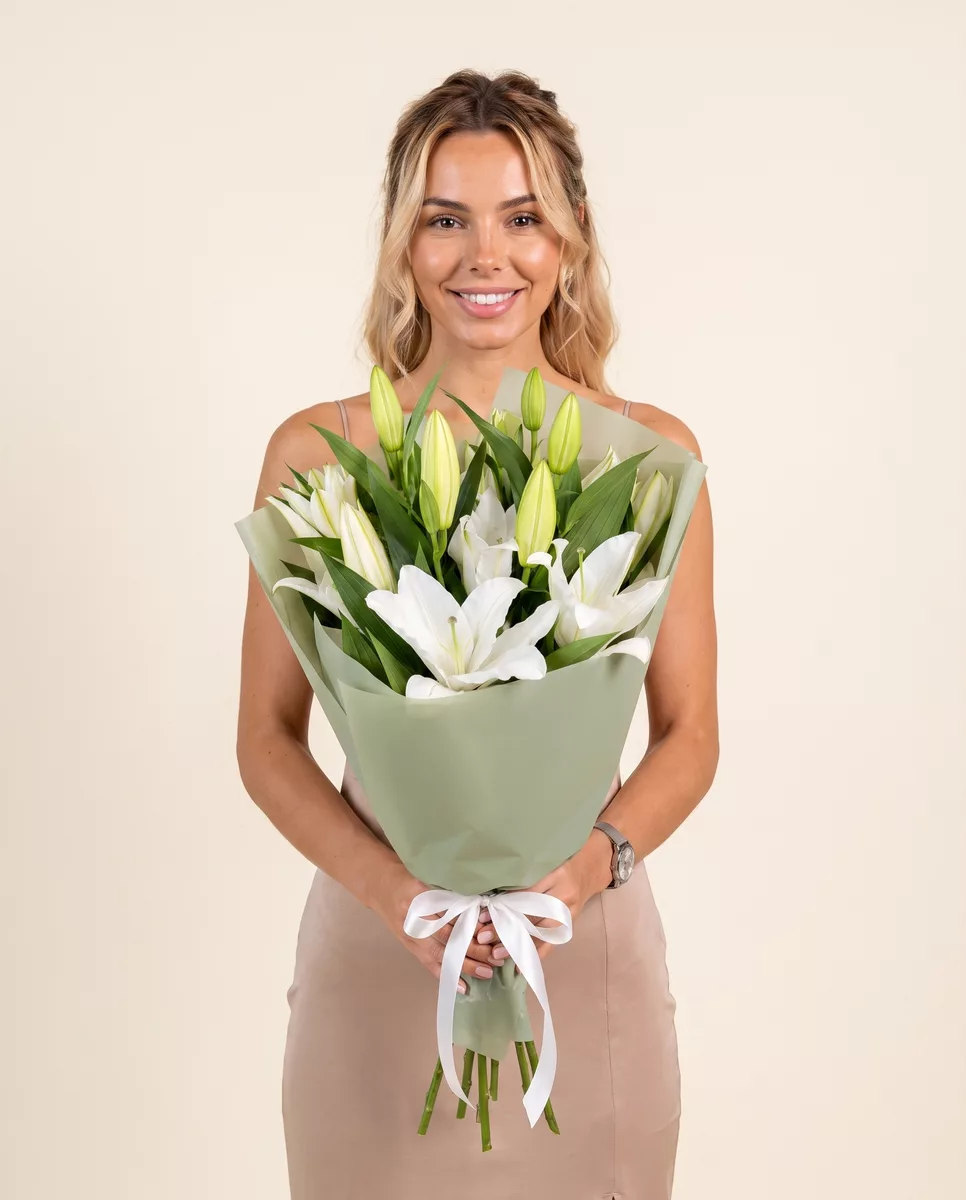
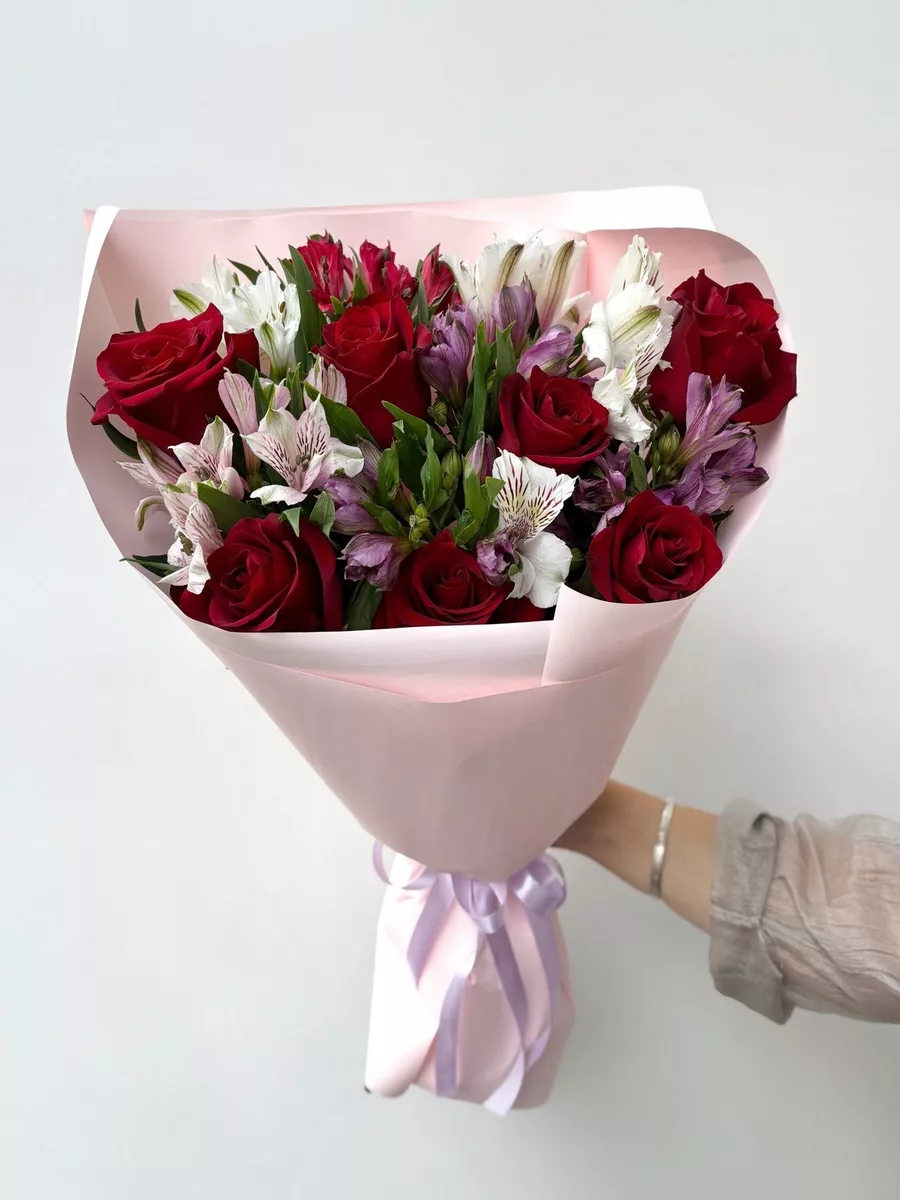
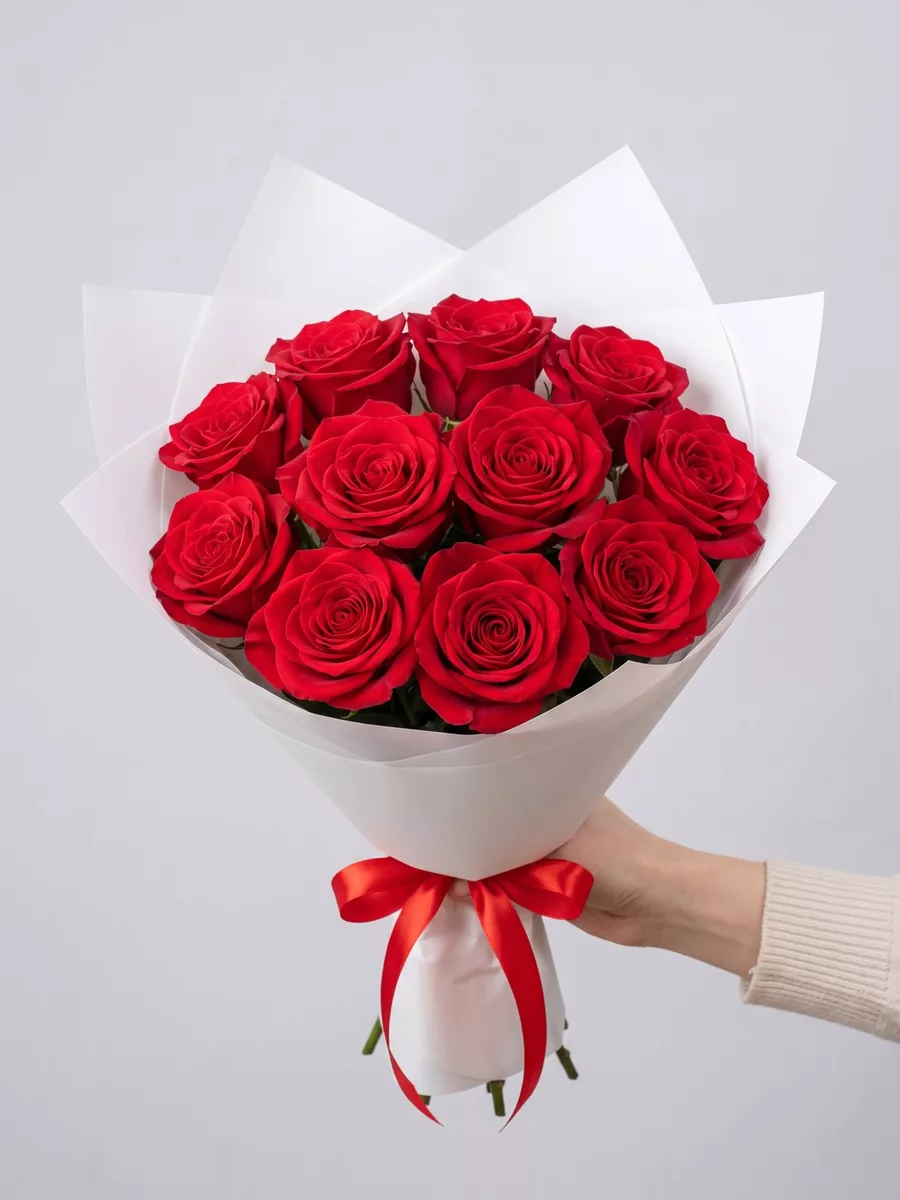
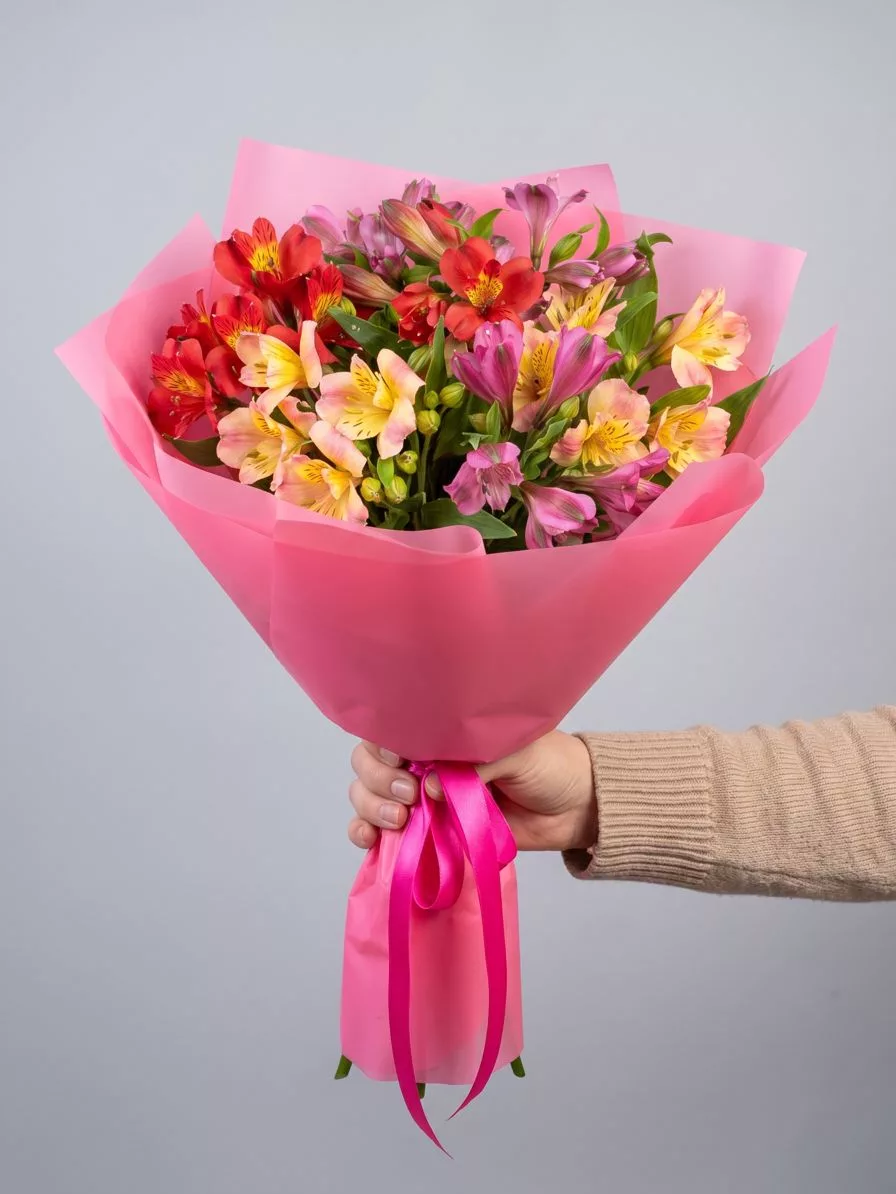
Bouquets we can deliver
What Happens to Flowers During Transit in Petrovsk's Climate
Petrovsk sits in the Saratov Oblast, which means summer temperatures regularly reach thirty-two to thirty-five degrees Celsius and winters drop to minus fifteen or colder. Both extremes are hard on cut flowers, and the problems they cause are different. In summer, roses and tulips are the most vulnerable: petals that looked perfect in the cooler shop can show heat stress within forty minutes in a warm car if the packaging is not insulated properly. We use dense kraft wrapping with an inner moisture layer for all summer deliveries, and drivers keep the air conditioning running throughout the route. In winter, the risk shifts to cold shock. Chrysanthemums and carnations handle low temperatures reasonably well, but tropical varieties — anthuriums, strelitzia, orchid stems — can blacken at the tips if exposed to sub-zero air even briefly. We wrap those in an additional insulating sleeve and ask recipients to unwrap the bouquet indoors rather than on the doorstep. Spring and autumn are the most forgiving seasons, and that is when we recommend ordering varieties that would not survive a July afternoon delivery, such as sweet peas, anemones or garden-cut peonies when they are in season. Customers who have had a bad experience with wilted flowers in summer should try ordering in the morning slot before eleven o'clock, when road temperatures are lower and the flowers spend less time in a warm vehicle.
Bouquets That Work Well for Petrovsk Deliveries
Not every bouquet is equally suited to a delivery route, and in Petrovsk specifically the road surface on some outer-zone streets means that delicate open blooms take a physical beating in transit. Roses in bud stage travel far better than fully open roses — a bud that arrives firm will open beautifully over the next two days, whereas a fully open rose can lose petals on a bumpy stretch of road. We recommend roses, spray chrysanthemums, alstroemeria and lisianthus as the most reliable choices for Petrovsk deliveries across all seasons. Lisianthus in particular is underused: it resembles a peony in appearance, holds for ten to fourteen days in water, and survives temperature swings far better than actual peonies do. For milestone occasions — anniversaries, birthdays, new baby visits — a mixed bouquet built around roses with alstroemeria as filler gives the recipient something that looks substantial and lasts. Tulips are popular in spring and arrive well when ordered between February and April, but outside that window they are harder to source at the quality we require and we will say so honestly when you call. Hydrangea heads are beautiful but heavy and moisture-dependent; they work best in orders where the recipient is home and can put the bouquet in water within the first thirty minutes. If you are ordering a surprise delivery where no one is confirmed to be home, stick to hardier varieties and leave a note in the order comments so the driver knows to leave the bouquet in a shaded spot rather than in direct sun.
How to Place an Order and What Information We Need
The ordering process is straightforward but there are three pieces of information that, when missing, cause most of the delays we see. First is the full address: street, building number, apartment number, and entrance number for multi-entry buildings. Second is a working phone number for the recipient — not necessarily their personal number, but a number that will actually be answered at the delivery time. Third is the delivery window: a two-hour window is realistic, a single minute is not, and customers who write a specific time and then wonder why the driver arrived fifteen minutes later are usually the ones who did not read the window confirmation in their order summary. Orders placed through the website go into our system immediately, but for same-day delivery in Petrovsk we strongly recommend calling us directly to confirm availability, especially for orders placed after four in the afternoon. Evening deliveries are possible until nine o'clock, but the last slot fills quickly on weekends. Payment is confirmed at the point of order, not at delivery, which protects both sides and means the driver carries no cash. If the recipient is not home at the agreed time, the driver will call the contact number and wait up to ten minutes before moving to the next stop; we then reschedule the delivery to the next available slot rather than leaving the flowers unattended outside. For corporate orders or large volumes — think office congratulations or event arrangements — contact us a minimum of forty-eight hours ahead so we can source the quantities needed without compromising quality.
Seasonal Availability and What Changes Month to Month
One of the most common misunderstandings we encounter is the assumption that any flower shown on the website is available year-round at the same quality. That is not how cut flowers work. Roses, spray chrysanthemums, carnations and alstroemeria are genuinely consistent across all twelve months because they are grown in controlled greenhouse conditions and imported through reliable supply chains. Most other varieties follow a seasonal curve. Tulips peak between January and April; ordering them in August means accepting a product that has travelled further and costs more for lower quality. Peonies are available from late April through June depending on the year; outside that window we substitute with lisianthus or garden roses, which we will explain clearly rather than silently swap. Sunflowers are at their best from July through September. Anemones come in from November through March when the temperature in transit actually helps rather than hurts them. Customers planning an order weeks ahead should call or message us to confirm what will be in peak condition on their target date rather than assuming the website photo reflects current stock. We update availability regularly but no website refreshes fast enough to reflect a supply disruption that happened yesterday. Knowing the season also helps you get more for your budget: a bouquet built around what is abundant right now will always look fuller and fresher than one built around an out-of-season centerpiece flower that had to be air-freighted at premium cost.
Giving Flowers in Russia: Customs Worth Knowing
If you are ordering for someone in Petrovsk and you are not familiar with Russian flower-giving customs, a few points are worth knowing so you do not accidentally send the wrong signal. The most important one: always give an odd number of stems. Even numbers of flowers are associated with funerals and mourning in Russian tradition, so a bouquet of twelve roses reads very differently than a bouquet of eleven or thirteen. This is not a superstition most Russians will explain unprompted, but it is one they will notice immediately. When you order through us, our florists count stems with this in mind automatically, but if you request a specific number, make sure it is odd. Yellow flowers carry a mixed reputation in Russia — some people associate them with separation or bad luck, while others simply see them as cheerful sunflowers or mimosa. If you are unsure of the recipient's feelings, mix yellow with white or orange rather than sending a purely yellow bouquet. Red roses are universally understood as romantic, which is fine if that is your intention, but sending them to a colleague or a friend's parent can create an awkward moment. For professional or friendly occasions, mixed-color bouquets with roses, chrysanthemums or alstroemeria read as warm and celebratory without any romantic implication. Card messages in Russia tend to be brief and sincere rather than elaborate, and many customers simply write a first name and a warm phrase. We can include a printed card with your message in Russian or English — specify your preference in the order comments.
What to Check After the Bouquet Arrives
A bouquet arriving in good condition is the goal, but what happens in the first hour after delivery determines how long it lasts. The most important step the recipient can take is to trim the stems by one to two centimetres at a diagonal cut and place them in clean, room-temperature water immediately. Tap water in Petrovsk is fine; no additives are needed beyond the sachet of flower food included with every bouquet we send. That sachet contains a mix of sugar, acidifier and a mild bactericide — dissolve the whole sachet in the water rather than saving half of it, because the ratio matters. Change the water every two days and re-trim the stems each time. Keep the bouquet away from direct sunlight, heating radiators and drafts from open windows, all of which accelerate wilting. Roses and alstroemeria will typically last seven to ten days under these conditions. Tulips are shorter-lived at four to six days but will straighten out and open fully if the stems are kept long and the vase is tall enough to support them. If any individual stem wilts faster than the others, remove it promptly so it does not release ethylene gas that accelerates aging in the remaining flowers. Customers who receive a bouquet and feel it arrived below the quality they expected should photograph it and contact us within four hours of delivery. We take quality complaints seriously and will arrange a replacement delivery in Petrovsk rather than offering a discount voucher as a substitute for actually fixing the problem.
Delivery to Petrovsk is something we handle regularly, and the customers who have the smoothest experience are the ones who share a complete address, confirm someone will be home during the delivery window, and choose varieties suited to the season. The flowers themselves are only part of the equation — timing, packaging and a minute of attention from the recipient after arrival determine whether a bouquet is remembered fondly or forgotten by Tuesday. Call us if you are unsure about any of it; a working florist answering the phone is faster and more useful than any FAQ. We deliver bouquets across Russia in 1–2 hours.
Frequently asked questions
Can you deliver flowers to Petrovsk on the same day I order?
Yes, same-day delivery in Petrovsk is available for orders confirmed before four in the afternoon on weekdays and before two in the afternoon on weekends. For orders placed later in the day, we recommend calling us directly to check the last available slot rather than assuming the website checkout will flag a problem automatically.
What if the recipient is not home when the driver arrives?
The driver calls the contact number provided and waits up to ten minutes. If there is no answer, we reschedule the delivery to the next available slot. We do not leave bouquets unattended outside, especially in summer heat or winter cold, because the flowers would not survive the wait in good condition.
Do you deliver to addresses on the outskirts of Petrovsk?
We cover most of the city including outer residential districts, but dacha addresses and locations beyond the city boundary need to be confirmed before you order. Call us with the full address and we will tell you honestly whether we can reach it and approximately how long the delivery will take from the moment of dispatch.
Why do Russian bouquets always have an odd number of flowers?
Even numbers of flowers are traditionally associated with mourning in Russia and are used at funerals. Giving an even-numbered bouquet for a celebration or as a gift reads as an error at best and an ominous sign at worst. Our florists count stems automatically with this in mind, so every bouquet we assemble follows this convention unless you specifically request otherwise.
Which flowers last the longest after delivery in Petrovsk's summer heat?
Spray chrysanthemums, alstroemeria and lisianthus are the most heat-tolerant cut flowers and consistently last the longest after delivery in warm conditions. Roses in bud stage also hold well if placed in water immediately. Fully open roses, tulips and hydrangeas are the most vulnerable to summer temperatures and are better ordered for morning delivery slots.
Ready to send a bouquet?
Pick a city, choose the flowers, and we will hand them over with a photo confirmation.
Choose a city →