
Flower Delivery in Pokrov: Zones, Timing and What to Expect
Customers calling from Pokrov often ask the same opening question: can you actually get here in time? The answer depends on which part of the city you are in, what you are ordering, and how far in advance you place the request. This article lays out exactly how delivery to Pokrov works — zones, realistic windows, which flowers travel well on that route, and the small details that decide whether a bouquet arrives in perfect condition or with bent stems and browning petals.
Where We Deliver in Pokrov and How the City Is Split
Pokrov sits in Vladimir Oblast, roughly 80 kilometres east of Moscow along the M7 highway, and the city itself is compact enough that most addresses fall within a single delivery zone rather than the layered zones you see in larger cities. The central streets around Sovetskaya and the older residential blocks near the monastery church are our standard coverage area. Outlying villages and dachas attached to the Pokrov postal district are a different matter — distances stretch, road conditions vary by season, and we ask customers to confirm the exact address rather than just the city name. A dacha 12 kilometres outside the ring road is not the same logistical task as a flat on Lenina Street. When you place an order, the operator will ask for the full street address including building number and, if relevant, entrance and flat number. Russian apartment buildings often have multiple entrances numbered separately, and a courier who arrives at entrance one when the recipient is in entrance four loses 10 to 15 minutes on a timed delivery. That gap matters most in summer, when cut flowers are sitting in a warm vehicle. Give the complete address at the point of order, not as an afterthought in a follow-up message.
Bouquets we can deliver

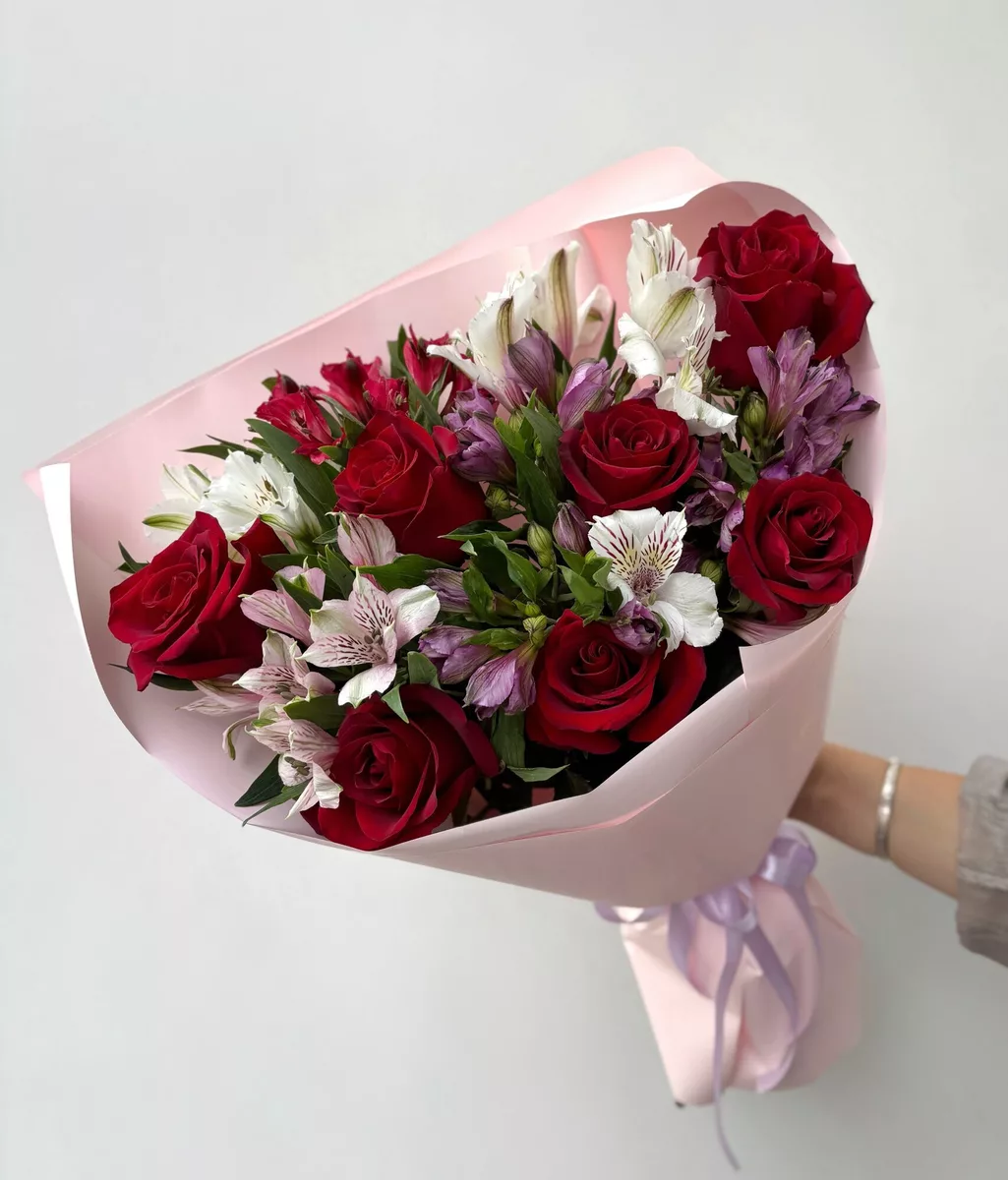


Realistic Delivery Windows for Pokrov Orders
The phrase on our homepage — fresh flowers across Russia within one to two hours — applies to Saint Petersburg itself and to cities where we have established fast routes. Pokrov is a longer-distance delivery, so the honest timing conversation starts differently. Orders placed before noon on a weekday typically arrive the same day in the afternoon window, between 14:00 and 18:00 local time. Orders placed after 15:00 are more reliably scheduled for the following morning, with a 10:00 to 13:00 slot being the most dependable. Weekend orders follow the same logic but with slightly reduced staffing on the logistics side, so Friday evening orders for Saturday morning delivery should be placed no later than 20:00 Friday. Customers who need a specific hour — a birthday dinner at 19:00, a work anniversary presentation at 12:00 — should state that time explicitly when ordering and confirm it with the operator. We do not guarantee to-the-minute delivery on long-distance routes, but a two-hour window is realistic and we call ahead when the courier is 30 minutes out. The call goes to the recipient's phone unless you specify otherwise, which matters if the delivery is a surprise. Tell us at checkout whether to call the sender or the recipient — that single instruction prevents most surprise-ruining moments we hear about after the fact.
Which Flowers Survive the Journey to Pokrov in Good Shape
Not every variety handles a two-to-three-hour transit well, and the choice of flowers is one of the most practical decisions in a long-distance order. Roses are the obvious starting point — large-headed varieties like Explorer or Mondial close tightly in transit and open gradually over 24 to 48 hours after delivery, which actually works in your favour on a longer route. Spray roses with multiple small heads per stem are slightly more vulnerable to bruising in packaging but still travel acceptably. Chrysanthemums, both single-headed and spray types, are among the most durable cut flowers available and arrive looking almost identical to how they left the shop. Alstroemeria is another solid choice: the buds are closed at cutting, the stems are sturdy, and the flower continues opening for days. Carnations, often underestimated, have a tough stem and a long vase life and they do not wilt in mild warmth the way tulips can. Tulips are the most temperature-sensitive option on this list. In winter they travel fine in a cool vehicle, but in July or August a tulip bouquet needs refrigerated transport and should be ordered only if you are confident the recipient can put them in water within 30 minutes of arrival. Orchid stems — specifically cut cymbidium — are a premium option that travels well because the flowers are already open and the stems are hydrated before packaging. If you are ordering for a formal occasion and want something unusual, that is the variety to ask about.
Seasonal Considerations: Summer Heat and Winter Cold on the M7 Route
The road between Moscow and Pokrov runs through open agricultural land with little shade, which means vehicle cabin temperatures in July and August can climb even with air conditioning running, especially during stop-and-go traffic near the Moscow ring road. We pack summer bouquets in insulated kraft paper with a water-gel sachet at the stem ends, which keeps cut ends hydrated for up to four hours. Even so, summer orders should be placed for morning delivery slots when outside temperatures are below 25 degrees Celsius rather than for afternoon runs when the road heats up. Customers ordering in June through August should avoid varieties with very large open blooms — fully open peonies, for instance, are gorgeous in the shop but they bruise against packaging material in a warm vehicle. Order peonies in bud and they will open beautifully in the vase. Winter brings the opposite problem. Temperatures along the M7 drop below minus 15 degrees Celsius in January and February, and flowers left in an unheated vehicle for more than a few minutes will show frost damage on petals. Our couriers use insulated carry bags and move bouquets into the heated cabin immediately after loading. The recipient should be home or reachable by phone so the handover happens quickly at the door — a bouquet left on a cold doorstep for 20 minutes in January is a different object than one handed directly to a person. Confirm recipient availability before scheduling a winter delivery.
Packaging, Water and What Happens at the Door
Every bouquet leaving our shop is wrapped in its outer layer of kraft or fabric paper, with the stem ends in a water-retaining base — either a small water vial sealed with a rubber cap or a hydrogel sachet depending on stem diameter and transit time. The outer packaging is not purely decorative; it protects petals from contact with the vehicle interior and maintains a slightly cooler microclimate around the flower heads. When the courier hands over the bouquet, the recipient does not need to unwrap it immediately, but they should transfer it to a vase with fresh water within the first hour. Before placing stems in water, cut two to three centimetres off each stem at a 45-degree angle using sharp scissors or a knife — a diagonal cut increases the surface area absorbing water. Do not use a tearing or crushing motion; crushed stem ends block the water channels inside the stem. Remove any leaves that would sit below the waterline, because submerged leaves rot within a day and contaminate the water. Change the vase water every two days and re-cut the stems each time. These steps are not complicated but they double vase life, and we mention them because customers sometimes contact us saying flowers wilted after two days when the issue is almost always stagnant water and sealed stem ends. A note with care instructions is included in every delivery, but it helps to know the reasoning behind each step.
What to Check Before Confirming Your Order
The most common issues we see with Pokrov deliveries come down to four things left unconfirmed at the point of order. First, the recipient's availability: someone who is at work until 19:00 cannot receive a 15:00 delivery, and a missed delivery on a long-distance route is a significant problem. Confirm the recipient's schedule before choosing a time slot, or select an evening window. Second, the phone number: we need a working mobile number for the recipient, not a landline, because the courier calls ahead and the call needs to be answered. If the delivery is a surprise, give us the sender's number and instruct us to call you when the courier is 20 minutes away so you can manage the handover remotely. Third, the occasion date: for birthdays and anniversaries, the date is fixed and the order should be placed at least 24 hours in advance for a Pokrov destination. Same-day orders are possible before noon but carry more scheduling risk. Fourth, the bouquet composition: if you have a preference for specific colours or want to avoid a particular flower — some recipients are allergic to strongly scented lilies, for example — state that in the order comments. Our florists work with what is available that day, and a note in the order is the only reliable way to shape the final result. Checking these four points before clicking confirm takes three minutes and prevents the majority of problems we are asked to resolve after the fact.
Prices, Payment and What Affects the Final Cost
We do not list prices in this article because they change with the season, with wholesale market prices for specific varieties, and with the complexity of the arrangement. What we can explain is the structure of what you are paying for. The bouquet price covers flowers, assembly by a florist, packaging materials including water retention, and a gift card if requested. The delivery fee is calculated separately based on distance and time slot — a morning weekday slot to a central Pokrov address costs less than an evening slot or a weekend run. Customers sometimes ask why a bouquet of 15 roses costs more in February than in October. The answer is straightforward: Valentine's Day and International Women's Day on March 8th drive wholesale rose prices sharply upward across Russia, and that cost passes through to retail. Ordering roses in the first two weeks of February costs noticeably more than the same bouquet in November. If budget is a concern around those dates, chrysanthemums and carnations hold their price better because they are grown domestically year-round rather than imported in bulk for peak holidays. Payment is accepted by card online or by card to the courier on delivery — we do not take cash. If you are ordering as a corporate client for a company event or recurring office deliveries, contact us directly to discuss invoicing arrangements. Individual orders follow the standard checkout process on the site, which takes under five minutes from variety selection to confirmed order.
Pokrov is a straightforward delivery destination when the order is placed with a full address, a confirmed recipient schedule, and a realistic time window in mind. The flowers that travel best on this route are the ones with closed or semi-open buds and sturdy stems — roses, chrysanthemums, alstroemeria, carnations — and the care steps at the receiving end are simple enough that anyone can follow them without prior experience. Place the order before noon for same-day afternoon delivery, or the evening before for a guaranteed morning slot. The bouquet will arrive packaged for the journey and ready to go straight into a vase. We deliver bouquets across Russia in 1–2 hours.
Frequently asked questions
Can I order flowers to Pokrov for same-day delivery?
Yes, same-day delivery to Pokrov is available for orders placed before 12:00 noon. The delivery window in that case is typically between 14:00 and 18:00 local time. Orders placed after noon are more reliably scheduled for the following morning. If your deadline is firm, place the order the evening before to avoid scheduling risk.
Which flowers should I avoid ordering for a long-distance summer delivery?
Avoid fully open peonies and open-bloom tulips in summer months, as heat during transit causes petal bruising and wilting. Order peonies in tight bud — they open beautifully in the vase. Tulips in July and August require refrigerated conditions and should only be chosen if the recipient can put them in water within 30 minutes of arrival.
How do I make sure the delivery is a surprise without the courier calling the recipient?
When placing your order, provide the sender's mobile number as the contact for the courier call, and add a note in the comments stating that the delivery is a surprise. We will call you when the courier is approximately 20 minutes away so you can coordinate the handover. This works reliably as long as you are reachable at the time of delivery.
Why do roses cost more in February than in other months?
Valentine's Day creates a sharp spike in wholesale rose demand across Russia and internationally. Importers raise prices, and that increase passes through to retail. If budget matters in early February, chrysanthemums and carnations are grown domestically year-round and hold a steadier price. They are also durable travelers and have a long vase life.
What should the recipient do immediately after receiving the bouquet?
Cut two to three centimetres off each stem at a 45-degree angle, remove leaves that would sit below the waterline, and place the stems in a clean vase with fresh water. Change the water every two days and re-cut the stems each time. These steps take under five minutes and reliably extend vase life from two or three days to a full week or more.
Ready to send a bouquet?
Pick a city, choose the flowers, and we will hand them over with a photo confirmation.
Choose a city →