
Flower Delivery in Revda: Zones, Timing and What to Expect
Revda sits in the Sverdlovsk Oblast, roughly 40 kilometres west of Yekaterinburg, and customers ordering flowers there for the first time almost always ask the same three things: will the bouquet actually arrive today, what happens to it in cold weather, and which flowers survive a long transit. This article answers all three in plain terms, based on real orders rather than marketing copy.
Where in Revda We Deliver and How the Zone Is Drawn
Revda is a compact industrial city with a population of just under 60,000, and its street grid is straightforward enough that most residential addresses fall within a single delivery zone. The central districts around Chapayeva Street, the area near the metallurgical plant, and the newer residential blocks on the eastern side of the city are all reachable without additional surcharges. Outlying villages and dacha settlements that share a Revda postal index but sit several kilometres outside the city boundary are treated as a separate zone and require advance notice of at least a day. If you are unsure whether a specific address qualifies, the safest move is to give us the full postal address including the building number when you place the order, not just the street name. Apartment buildings with coded entrance doors are common in Revda, as they are across Russia, so always include the intercom code or ask the recipient to wait near the entrance at the agreed time. Industrial zones around the plant are accessible but couriers cannot enter restricted sections of the facility, so deliveries to employees there need to be arranged to the nearest public entrance or the factory gate. Getting the zone confirmed at the order stage saves everyone time and keeps the flowers in good condition because the courier is not circling unfamiliar streets.
Bouquets we can deliver
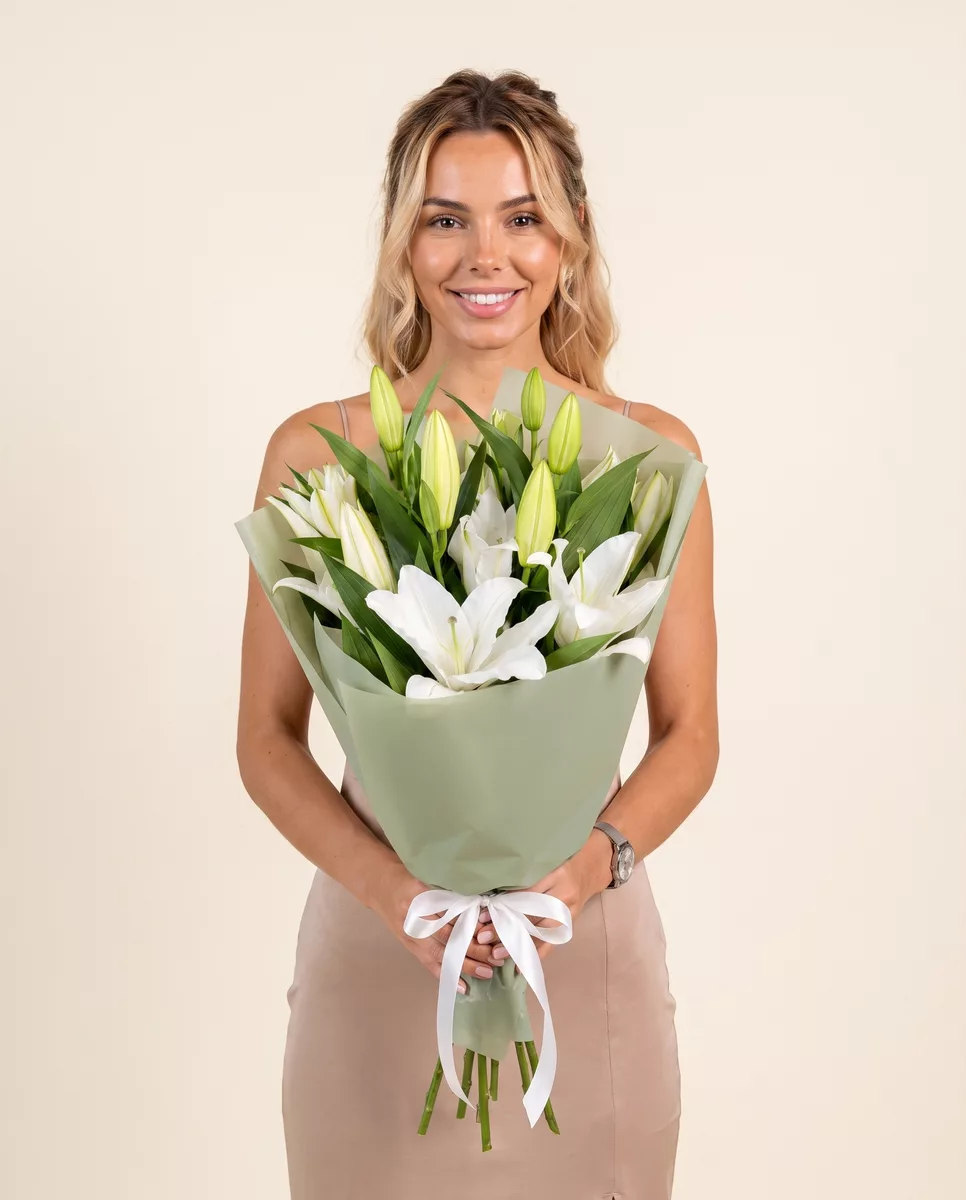
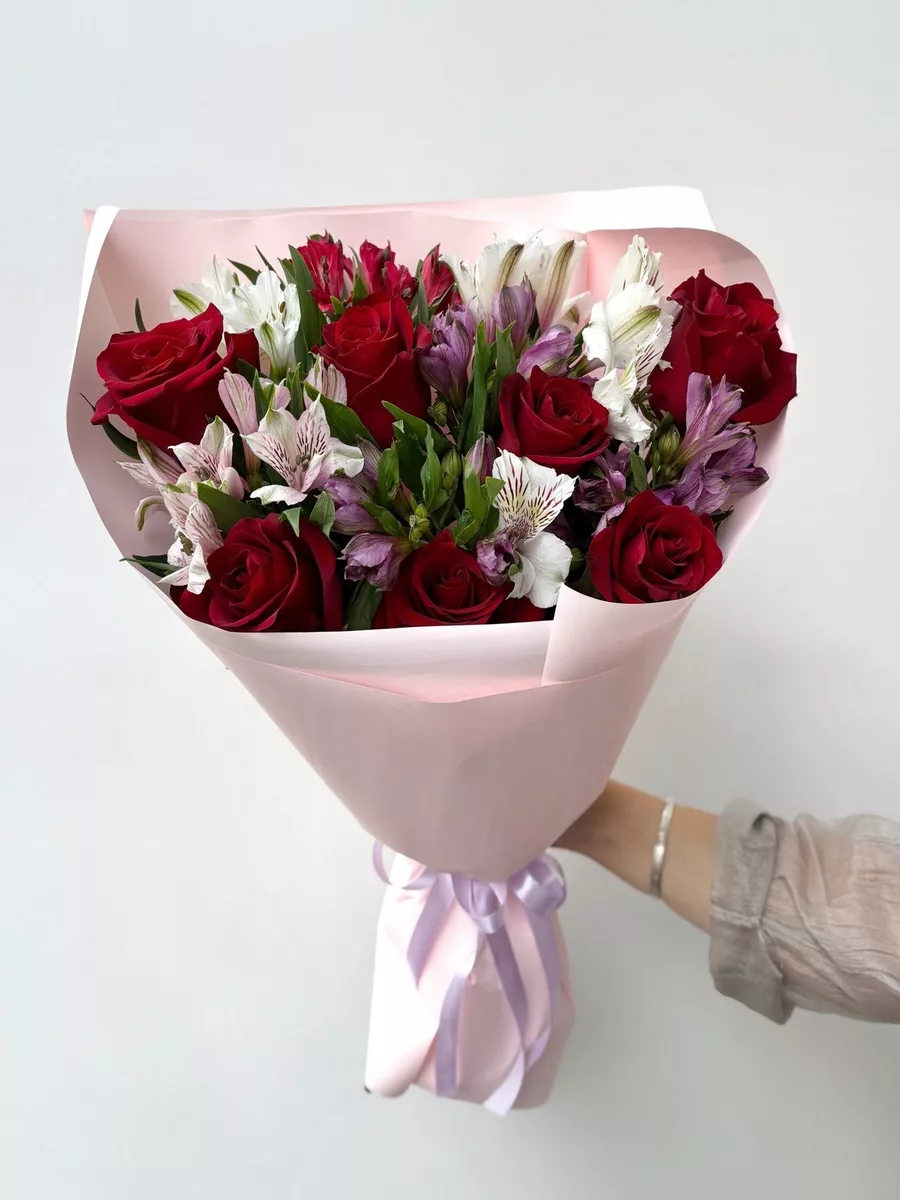
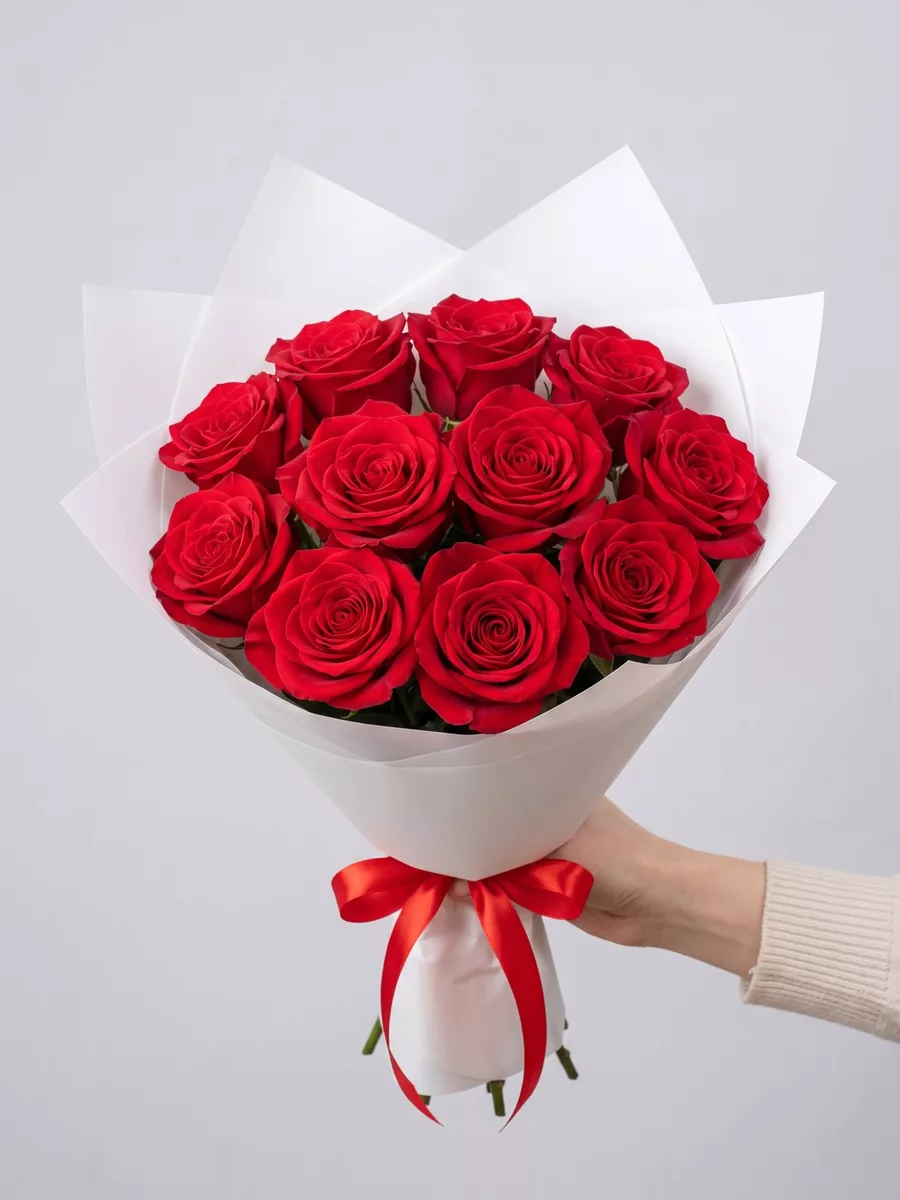

Transit Time from Saint Petersburg and What That Means for Freshness
Flowers ordered for Revda travel from our shop in Saint Petersburg, which means the logistics chain is longer than a same-city delivery. The total transit time from cutting to doorstep typically runs between 24 and 36 hours depending on the dispatch window and road conditions on the federal route through the Urals. We cut and condition stems on the day of dispatch, not the day before, and every bouquet is packed in temperature-controlled packaging that holds moisture and keeps stems upright during the journey. Roses, spray chrysanthemums, alstroemeria and carnations are the varieties that handle this distance best because their cell walls are dense enough to resist the mechanical stress of road transport. Delicate open blooms such as garden ranunculus or fully open peonies are more vulnerable and we actively advise against ordering them for long-distance delivery in summer when temperatures inside vehicles spike. Tulips are a borderline case: in autumn and winter they travel acceptably, but in warm months they open too fast in transit and arrive fully blown. The 24-to-36-hour window is not a defect in the service; it is the honest reality of delivering from one end of Russia to the other, and knowing it helps you pick an order time that lands the bouquet at the right moment rather than six hours too early.
Which Bouquets and Compositions Work Best for Revda Deliveries
The bouquets that consistently arrive in the best condition for Revda are those built around closed or half-open buds rather than fully open blooms. Dutch roses in bud stage, particularly varieties in the 60-centimetre and 70-centimetre stem lengths, are the most reliable choice because the bud protects the petals during transit and the flower opens beautifully within a day of arrival. Spray roses are similarly robust and add volume without fragility. Eustoma, also sold under the name lisianthus, is an excellent filler that travels well and gives bouquets a slightly romantic, layered look that customers in Revda frequently request for birthdays and anniversaries. Chrysanthemums in both single-head and spray form are nearly indestructible in transit and are a sensible anchor for mixed compositions. Gypsophila, statice and dried decorative elements like cotton stems or dried eucalyptus add texture without adding fragility. What we recommend avoiding for Revda orders: open garden roses, fully bloomed hydrangea heads, and any tropical blooms like strelitzia if the order is placed for summer delivery, because heat in the cargo hold accelerates deterioration faster than any packaging can compensate. Foliage such as ruscus and salal holds up well and keeps the arrangement looking full even after a long journey. Asking for a bouquet with a mix of bud-stage focal flowers and sturdy filler greens is the single most reliable formula for a Revda delivery that looks fresh at the door.
Seasonal Factors: Cold Winters, Warm Summers and What Changes
Revda has a continental climate with winters that regularly drop below minus 20 degrees Celsius and summers that push above 30 degrees. Both extremes create specific challenges for flower delivery that are worth understanding before you order. In winter, the primary risk is frost damage during the final few hundred metres from the courier vehicle to the recipient's door. We wrap winter bouquets in insulating kraft paper and a moisture-retaining inner sleeve, but the recipient should unwrap the bouquet indoors immediately after receiving it and not leave it in an unheated hallway or on a balcony. Flowers that freeze and then thaw quickly develop dark patches on petals and wilted stems that cannot be reversed. Carnations and chrysanthemums tolerate brief cold exposure better than roses, which is worth knowing if you are ordering in January or February. In summer, the challenge reverses: heat accelerates the respiration rate of cut flowers and depletes their water reserves faster than normal. We add extra hydration gel to summer packages and recommend recipients place the bouquet in cool water immediately on arrival rather than leaving it in a warm room while they find a vase. Spring and autumn are the most straightforward seasons for Revda delivery because temperatures on the route stay in a range that neither freezes nor overheats the flowers, and a wider range of varieties is available without the seasonal caveats that apply in July or January.
Ordering Windows and the Difference Between Same-Day and Next-Day
Because Revda is not a same-city delivery, the terminology of same-day and next-day works differently than it does for orders within Saint Petersburg. When we say next-day delivery to Revda, we mean the bouquet departs on the day you order and arrives at the Revda address the following day, typically in the morning or early afternoon slot. To qualify for this, the order needs to be placed before the daily dispatch cutoff, which our order page shows in real time. Orders placed after the cutoff move to the following dispatch and arrive a day later, which is a common source of confusion for first-time customers who assume that placing an order at 11 pm will result in a morning arrival the next day. It will not. The cutoff exists because flowers need to be cut, conditioned, arranged and packed before the logistics window closes, and rushing that process produces worse results. For significant occasions like milestone birthdays or anniversaries, placing the order two days in advance is strongly recommended rather than cutting it close to the cutoff. This buffer also gives us room to contact you if a specific variety you requested is not available at peak freshness on that particular day and offer an alternative before the bouquet is assembled. Planning ahead is not a bureaucratic requirement; it is simply how flowers stay fresh across a 1,500-kilometre journey.
What to Check When You Place the Order
There are five things that cause the most problems with Revda deliveries, and all five are fixable at the order stage if you know to look for them. First, confirm the recipient's phone number is current and that they will answer an unknown number, because couriers call ahead before arrival and an unanswered call can delay or redirect a delivery. Second, specify the apartment number, floor, and intercom code for residential buildings; leaving this blank is the most common reason a courier cannot complete a delivery on the first attempt. Third, double-check the delivery date against the calendar rather than typing it from memory, particularly around long Russian public holidays when date confusion is frequent. Fourth, if the delivery is a surprise, note that in the order comments and indicate whether the courier should call the sender rather than the recipient when approaching the address. Fifth, check the card message for spelling, particularly for names, because we print what you type and cannot verify the correct spelling of a person's name independently. Beyond these five points, the main thing to communicate is any access restriction at the delivery address, such as a gated residential compound or a workplace with a security checkpoint that requires advance registration of visitors. Giving us this information upfront means the courier arrives prepared rather than having to call you from outside a locked gate with flowers in hand.
What Happens After Delivery: Caring for the Bouquet in Revda
A bouquet that has traveled from Saint Petersburg to Revda needs a few minutes of attention on arrival to reach its best condition. The first step is to cut the stems at a 45-degree angle under running water or while the stem ends are submerged, removing about two centimetres from each stem. This reopens the vascular channels that may have compressed slightly during transit and allows the flower to draw water efficiently from the vase. Use clean, cool water in a clean vase and add the flower food sachet that comes with every bouquet from our shop; the sachet contains a biocide that slows bacterial growth in the vase water and an acidifier that helps water travel up the stem. Keep the bouquet away from direct sunlight, radiators and drafts, all of which accelerate water loss from the petals. In Revda's heated winter apartments, where radiators often run at high output, placing the bouquet on a windowsill away from the heat source is the best position. Change the vase water every two days and re-cut the stems each time. Roses and eustoma typically last seven to ten days with this care, carnations can reach twelve to fourteen days, and chrysanthemums often outlast everything else in the arrangement. Flowers that arrive in bud will open over the first two days and the bouquet will look fuller on day three than it did on day one, which is a normal and expected part of the process rather than a sign of a problem.
Ordering flowers to Revda from Saint Petersburg is straightforward once you understand the timeline and choose varieties suited to the journey. The customers who have the best experience are those who place the order a day or two ahead, provide a complete address with all access details, and select bouquets built around robust, bud-stage flowers rather than fully open blooms. The distance is real and the transit takes time, but the flowers that arrive are fresh-cut the day they leave our shop, packed to survive the Ural climate, and assembled by florists who know which combinations hold up and which ones do not. We deliver bouquets across Russia in 1–2 hours.
Frequently asked questions
Can I order flowers to Revda for delivery on the same day I place the order?
Not in the same-city sense. Revda is a long-distance destination from Saint Petersburg, so the earliest realistic arrival is the following day if your order is placed before our daily dispatch cutoff. The cutoff time is shown on the order page. Orders placed after the cutoff will arrive a day later, so checking the cutoff before you order is essential for time-sensitive occasions.
Which flowers are safest to order for a winter delivery to Revda?
Carnations, spray chrysanthemums and closed-bud roses handle cold transit best. We insulate winter bouquets, but brief exposure to minus temperatures during the final walk from vehicle to door is unavoidable. Ask the recipient to unwrap the bouquet indoors immediately. Avoid ordering open garden roses or fully bloomed hydrangea in January and February as they are more vulnerable to frost damage.
What if the recipient is not home when the courier arrives?
The courier calls ahead before arriving. If there is no answer, a second attempt is made within a reasonable window. If the address remains inaccessible, we contact the sender to arrange an alternative time or handoff point. To avoid this situation, let the recipient know a delivery is coming, or note in the order that they should be available in a specific time slot.
Can I include a personalised card message with the bouquet?
Yes, there is a card message field in the order form. We print exactly what you type, so check the spelling of names before submitting. If the delivery is a surprise and you do not want the recipient to see the sender's name on the card, you can omit it or use a nickname. The card is placed inside the packaging so it is not visible during transit.
Do flowers from Saint Petersburg arrive fresh after such a long journey?
Yes, when varieties are chosen correctly. We cut stems on the day of dispatch and pack bouquets in moisture-retaining, temperature-controlled packaging. Roses, alstroemeria, eustoma and chrysanthemums are selected specifically because they handle 24-to-36-hour transit well. Avoiding delicate open blooms and following the care instructions on arrival ensures the bouquet looks its best for a full week or more.
Ready to send a bouquet?
Pick a city, choose the flowers, and we will hand them over with a photo confirmation.
Choose a city →