
Flower Delivery to a Russian Apartment Building: Entrances, Intercoms and Floor Details
About a third of failed first-attempt deliveries from our Saint Petersburg shop come down to the same thing: the sender gave a street address and apartment number but forgot that a typical Russian residential block has multiple entrances, a locked intercom panel, and sometimes a concierge on the ground floor. The courier arrives with a box of garden roses or a wrapped arrangement of ranunculus and lisianthus, stands at the wrong door, and cannot get through. Knowing exactly what information to include when you order takes two minutes and saves the whole delivery.
Why Russian Apartment Buildings Need More Than a Street Address
A Russian mnogokvartirnyy dom — a multi-unit residential block — is almost never a single entrance building. Most Soviet-era and post-Soviet blocks were built with between two and twelve separate stairwells, each called a podezd, or entrance. Apartment numbers are distributed across these entrances sequentially, so apartment 47 might be in entrance three while apartment 48 is in entrance four. From the outside, each entrance looks nearly identical: a metal door, a numeric keypad or button panel, and a small speaker grille. A courier who does not know the entrance number has to either guess or call the recipient, which defeats the purpose of a surprise delivery entirely. In cities like Saint Petersburg, where Khrushchev-era panel blocks and later brick series sit side by side, the numbering logic varies by construction decade and developer. Some buildings number apartments from the ground floor up within each entrance; others number them in a continuous run across the whole block starting from entrance one. Neither system is universal. When you place an order, the address field on our form has a dedicated box for entrance number — podezd — precisely because this single piece of information is the most common gap we see. Filling it in correctly means the courier walks directly to the right door rather than circling a building that may be 80 or 100 metres long.
Bouquets we can deliver
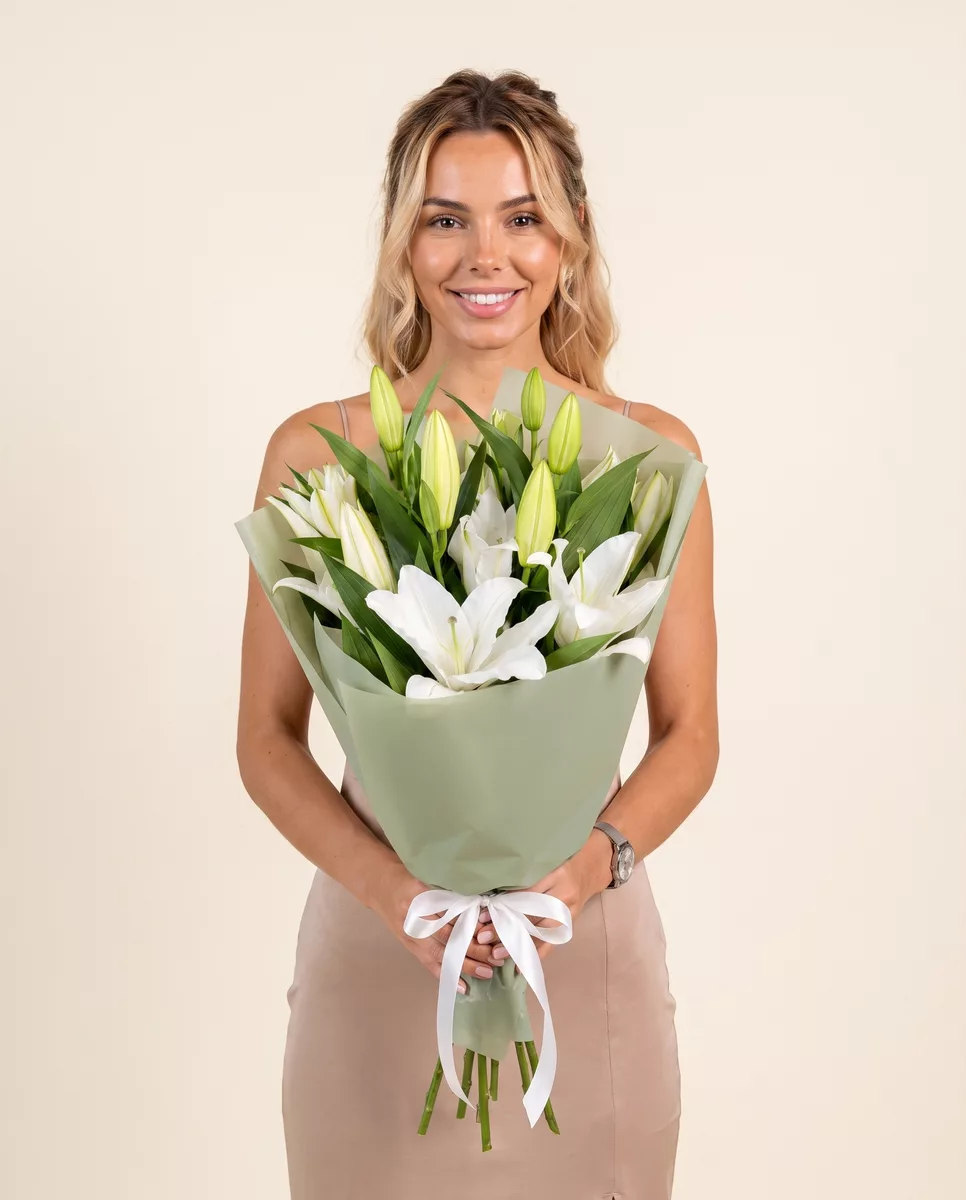
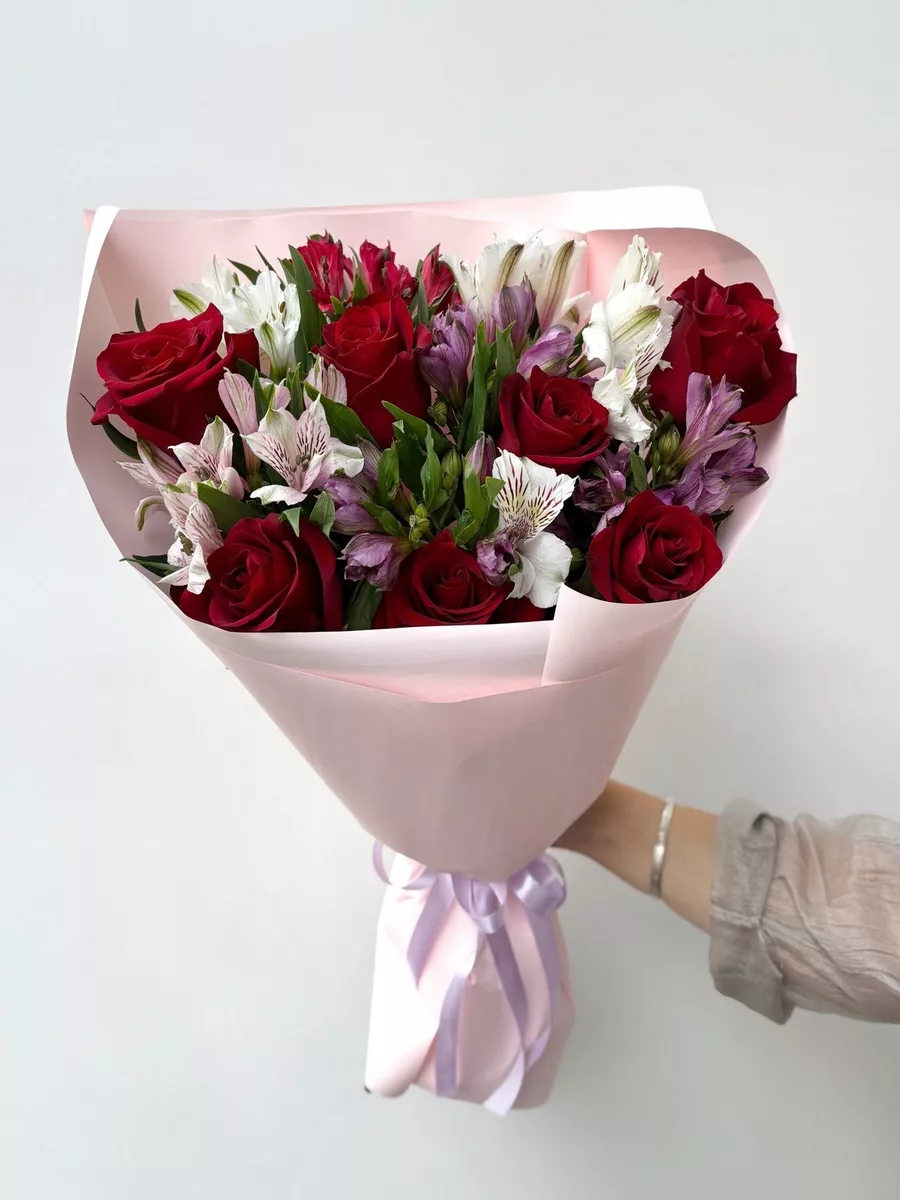

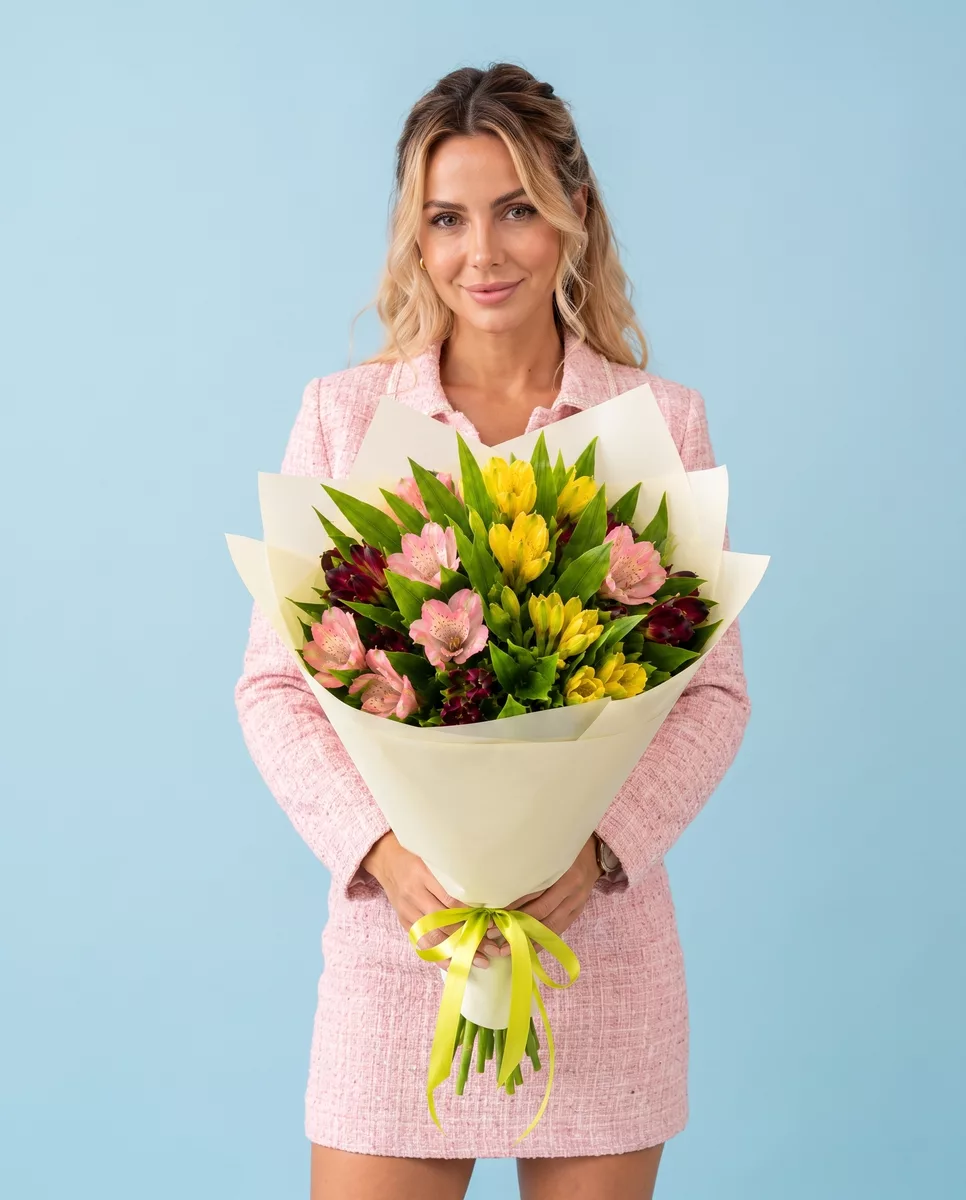
Intercom Codes: What They Are and Where to Find Them
The intercom panel at each entrance accepts a four-digit apartment number followed by a call button, or in older installations a dedicated code that differs from the apartment number. These codes were introduced when building managers wanted to prevent unsolicited visitors from simply dialling any apartment. In practice, many residents of Saint Petersburg and other Russian cities have a secondary code — sometimes just a short numeric sequence like 1234K or a single-digit prefix — that opens the door without ringing anyone's flat. This is the code you need to give the courier. Without it, the courier must press the recipient's apartment button on the intercom, the recipient's phone rings, and if they do not answer immediately the door stays locked. For a surprise bouquet of peonies or spray chrysanthemums, that intercom call ruins everything. The best source for the code is the recipient themselves if the delivery is not a surprise, or a family member who lives there. If you genuinely cannot get the code, write that clearly in the order notes so the courier knows to call you, not the recipient, before pressing any buttons. Some newer buildings use a smartphone app or a QR fob system rather than a numeric keypad. If the building is a recently built zhiloy kompleks — a gated residential complex — there may also be a security booth at the vehicle entrance where the courier will need to state the flat number. Mention this in your notes too.
Entrance Numbers Versus Apartment Numbers: Avoiding the Confusion
The single most common mistake senders make is writing the entrance number in the apartment field or vice versa. On a Russian postal address the standard sequence is: street, building number, sometimes a korpus or liter suffix for a block within a compound, then apartment number — kvartira or kv. The entrance number does not appear in the official postal address at all, which is why people forget it exists. When you write kv. 15, podezd 2 you are giving two separate pieces of information: the flat is number 15, and it is reached through entrance two. If you only write kv. 15, the courier must guess or calculate from a building plan which of several identical doors to try. Buildings that have a korpus suffix add another layer: korpus 1 and korpus 2 of the same street number are physically separate buildings that may share a courtyard. Confirm which korpus the recipient lives in before ordering. For bouquets containing temperature-sensitive flowers — garden roses, tulips in spring, hydrangeas in summer — every extra minute standing outside a locked entrance matters. Roses begin to show stress above 25°C within 20 minutes of leaving a cool van. Getting through the right door immediately protects the flowers as much as it protects the delivery schedule. Double-check the entrance number by asking the recipient casually, or by looking at any previous delivery confirmation they may have sent you.
Floor and Lift Details That Speed Up the Final Metres
Once the courier is inside the building, floor and lift information becomes relevant. Most Russian residential blocks built before 1990 have a single small lift, sometimes wide enough for one person and a bicycle but not for a large bouquet box held at arm's length. Newer buildings often have two lifts, one of which is a cargo lift. If the recipient lives on a high floor — anything above the sixth — and the passenger lift is out of service, which happens regularly in older stock, the courier will carry flowers up the stairs. A tall arrangement of gladioli or a box containing an orchid plant needs to be kept upright throughout. Knowing the floor in advance lets the courier plan the carry and keep the arrangement stable. In our order form, the floor field is optional but strongly recommended for anything above the fourth floor. Some buildings also have a concierge — konserzh — who sits in a booth just inside the entrance door. Concierges in Saint Petersburg residential buildings are usually retired residents employed by the building management company. They will ask the courier for the recipient's name and flat number before letting them proceed to the lift. This is normal and not a problem as long as the courier has the correct flat number. If the recipient has a different surname from the person who placed the order — common when sending flowers to a partner or colleague — note both names in the order comments so the concierge does not turn the courier away.
Gated Courtyards and Barrier Systems in Modern Complexes
Saint Petersburg has seen significant construction of enclosed zhilye kompleksy — residential complexes — since the early 2000s. These developments typically surround a private courtyard with a vehicle barrier, a pedestrian gate on a magnetic fob or code, and sometimes a separate entrance for deliveries. Our couriers are familiar with these layouts, but they still need the pedestrian gate code or the name of the complex as it appears on the intercom directory, not just the street address. The street address of a large complex may list only the main road frontage, while the actual entrance used by residents is on a side lane or through a numbered gateway. When you order, include the name of the complex if it has one — something like ZhK Severnyy or ZhK Baltiyskaya Zhemchuzhina — because our dispatch team can cross-reference it against the correct gate approach. For deliveries of large arrangements or plant compositions in ceramic pots, the courier may need vehicle access to the courtyard. If the barrier requires a resident to open it remotely, arrange this with the recipient or a neighbour in advance. Trying to pass a 60-centimetre arrangement of sunflowers and eucalyptus through a narrow pedestrian turnstile is not practical. A two-minute call to the recipient beforehand — framed as confirming the delivery time rather than revealing the flowers — solves this without spoiling any surprise.
What to Do When the Delivery Is a Surprise
Surprise deliveries to apartment buildings require the most preparation from the sender, because the courier cannot simply call the recipient to ask which entrance to use. The information has to be complete before the order is dispatched. Start by getting the entrance number and intercom code from someone who has visited the recipient before — a mutual friend, a family member, or even the recipient's building management company if you explain you are sending a delivery. Management company contact numbers are usually posted in the entrance hallway or on the building's notice board and are publicly available. If you can only confirm the apartment number, ask the courier to call you, not the recipient, if they encounter a locked door. Put your mobile number in the order notes as the contact for access questions. We hold flowers in a cool van during the final approach — typically between 6°C and 10°C depending on the variety — so a five-minute wait for a callback is manageable for robust flowers like alstroemeria or carnations. For more delicate varieties such as sweet peas in summer or anemones in early spring, minimising waiting time is important. If you are sending a large seasonal bouquet with garden roses, peonies or ranunculus, and you genuinely cannot get the access details, consider scheduling the delivery for a time when the recipient is reliably home and awake rather than relying on a neighbour to let the courier in. A known delivery window of 30 minutes gives the recipient time to be near the door.
Filling In the Order Form: A Field-by-Field Check
When you reach the address section of our order form, work through it systematically rather than typing the full address as a single line of text. Street and building number go in the first field. If the building has a korpus designation — korp. 2 or lit. A — include it here, not in the apartment field. The apartment number goes in its own field: write only the number, no abbreviations needed. The entrance number — podezd — has its own box; if you do not know it, write unknown rather than leaving it blank, so dispatch knows to flag the order. The intercom code field accepts free text: write the exact sequence the courier should press, for example 47 then the call button, or 1234 then the key symbol. If the door uses a key fob and there is no code, write fob only and we will arrange a callback approach. Floor goes in the next field. The comments box at the bottom is for anything that does not fit the structured fields: a concierge who needs the recipient's name, a barrier that requires a remote opening, a lift that is out of service, or a dog in the hallway that barks at the door. Our dispatch team reads every comment before the order goes out. Completing all fields takes under three minutes and directly determines whether a bouquet of, say, 25 garden roses wrapped in kraft paper and ribbon arrives looking exactly as it left our workroom, or spends an extra fifteen minutes warming up outside a locked entrance on a July afternoon.
Getting flowers through the door of a Russian apartment building is a logistics problem with a straightforward solution: entrance number, intercom code, floor, and any notes about gates or concierges. These four pieces of information cost you two minutes to collect and give the courier everything needed to deliver without interruption. The flowers — whether a tight bunch of ranunculus, a tall mixed arrangement with lisianthus and eucalyptus, or a single-variety rose bouquet — leave our workroom in good condition. The address details you provide determine whether they arrive that way. We deliver bouquets across Russia in 1–2 hours.
Frequently asked questions
What if I do not know the entrance number for the recipient's building?
Write 'unknown' in the entrance field rather than leaving it blank. Our dispatch team will flag the order and call you before the courier departs. For surprise deliveries, try asking a mutual friend or family member who has visited the address. The entrance number is the single most useful piece of information for a multi-entrance block.
Can the courier call the recipient directly if the intercom does not work?
Yes, but tell us in the comments whether you want the courier to call the recipient or to call you first. For surprise deliveries, always list your own mobile as the access contact. If neither option is available and the door is locked, the courier will wait up to ten minutes before the order is rescheduled, so complete access details prevent that outcome.
What does korpus mean and how is it different from the entrance number?
Korpus — abbreviated korp. — is a separate building within a compound that shares a single street address. It is not the same as the entrance. A site might have korpus 1 and korpus 2 as two physically separate blocks. The entrance number refers to the individual stairwell door within one korpus. Both details are needed if the address includes a korpus designation.
How long can a courier wait outside a locked entrance before the flowers are affected?
For hardy varieties like alstroemeria, spray carnations or solidago, a ten-minute wait in mild weather is not critical. For garden roses, peonies, ranunculus or sweet peas, prolonged exposure to heat above 20°C accelerates wilting noticeably. Summer deliveries are most at risk. Complete access information eliminates waiting time entirely and is the best protection for delicate flowers.
Does a concierge in the building cause problems for delivery?
Not usually. Concierges ask for the recipient's flat number and sometimes their name before allowing access. Include both the recipient's name and flat number in your order, and note in the comments that the building has a concierge. If the recipient uses a different surname from the sender, mention that too so the courier is not turned away on a name mismatch.
Ready to send a bouquet?
Pick a city, choose the flowers, and we will hand them over with a photo confirmation.
Choose a city →