
Sending Flowers to Snezhnogorsk from Abroad: What You Need to Know
Snezhnogorsk sits on the Kola Peninsula inside a closed military zone, and that single fact changes almost everything about sending flowers there from outside Russia. Customers calling from Germany, Israel, the United States and Finland ask us the same cluster of questions every week: can you actually get flowers into a restricted town, which varieties survive the Arctic cold, and how do you pay from a foreign bank account? The answers are specific and worth knowing before you place an order, because a mistake at any of these points means the bouquet either never arrives or arrives looking nothing like what you intended.
What Makes Snezhnogorsk Different from Other Russian Cities
Snezhnogorsk is a closed administrative territorial formation, known in Russian as a ZATO. It was built to serve the Russian Northern Fleet and sits roughly 25 kilometres from Murmansk on the shore of the Kola Bay. Entry requires a pass issued by the military authorities, and this applies to delivery personnel just as it does to ordinary visitors. When you order flowers for a recipient in Snezhnogorsk, you are not ordering delivery to a standard residential address in a normal Russian city. The recipient or someone authorised by them may need to meet the courier at the checkpoint perimeter, or the delivery is arranged through a verified local route that the shop has established specifically for this zone. This is not unusual for ZATO deliveries in Russia — Severomorsk, Vidyaevo and Snezhnogorsk all operate under similar rules — but it does mean that the sender must provide accurate contact details for the recipient, including a working Russian mobile number. Without that number, coordination at the checkpoint becomes impossible and the order fails. Customers sometimes assume that a street address is enough, as it would be in Berlin or Tel Aviv. In Snezhnogorsk it is necessary but not sufficient. The recipient's full name as it appears on their internal documents is also required, because the checkpoint registers deliveries by name. Confirm these details with your recipient before you place the order, not after, because correcting them mid-process adds hours to the delivery timeline.
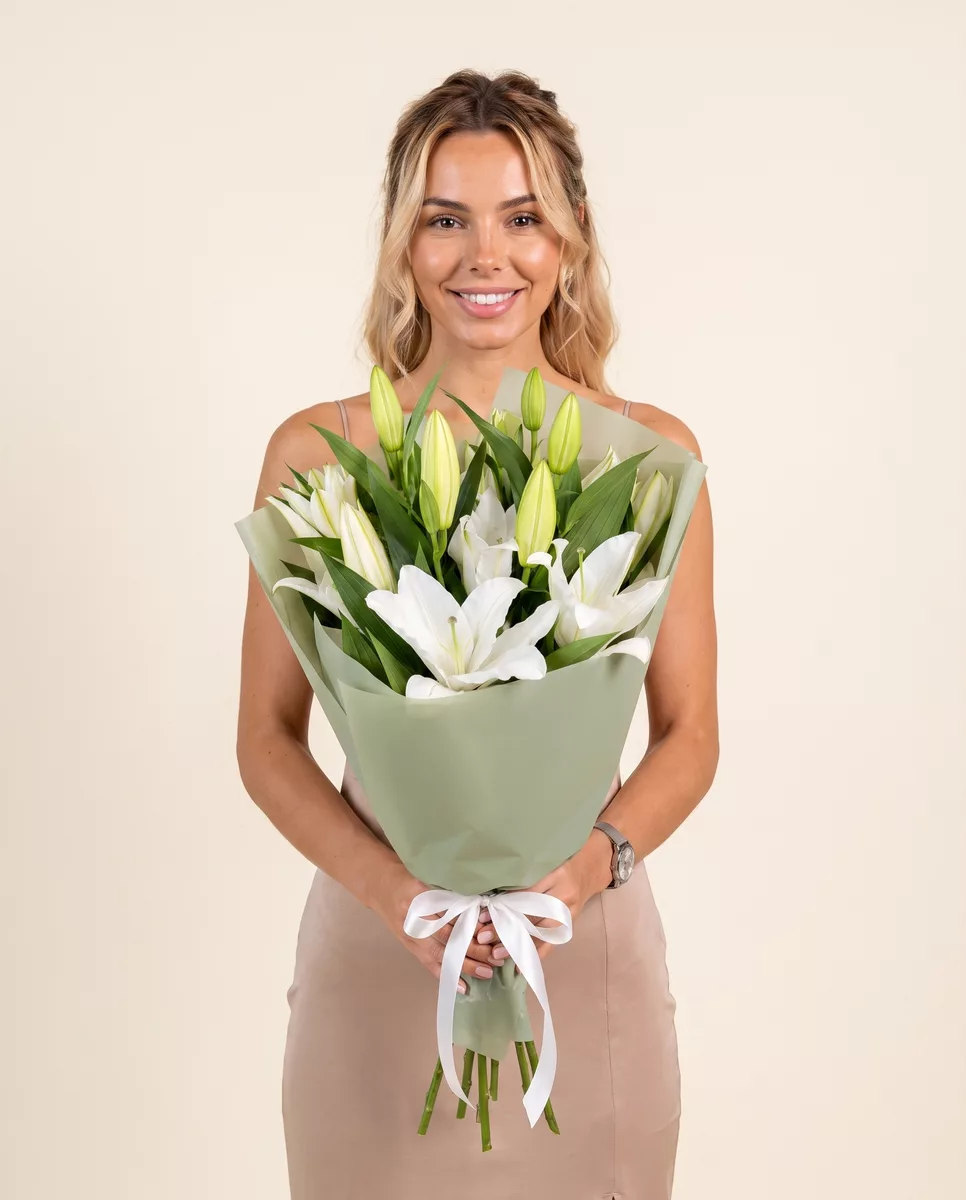
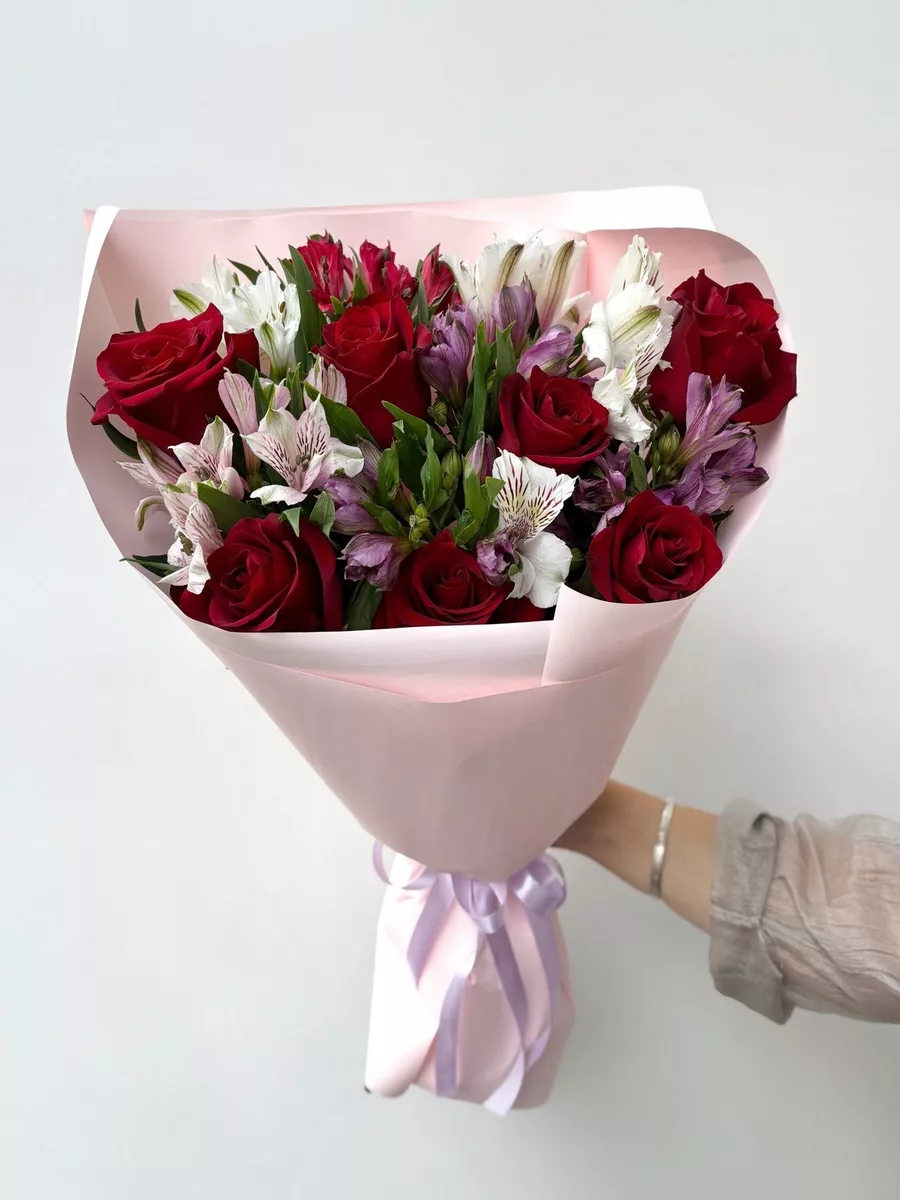
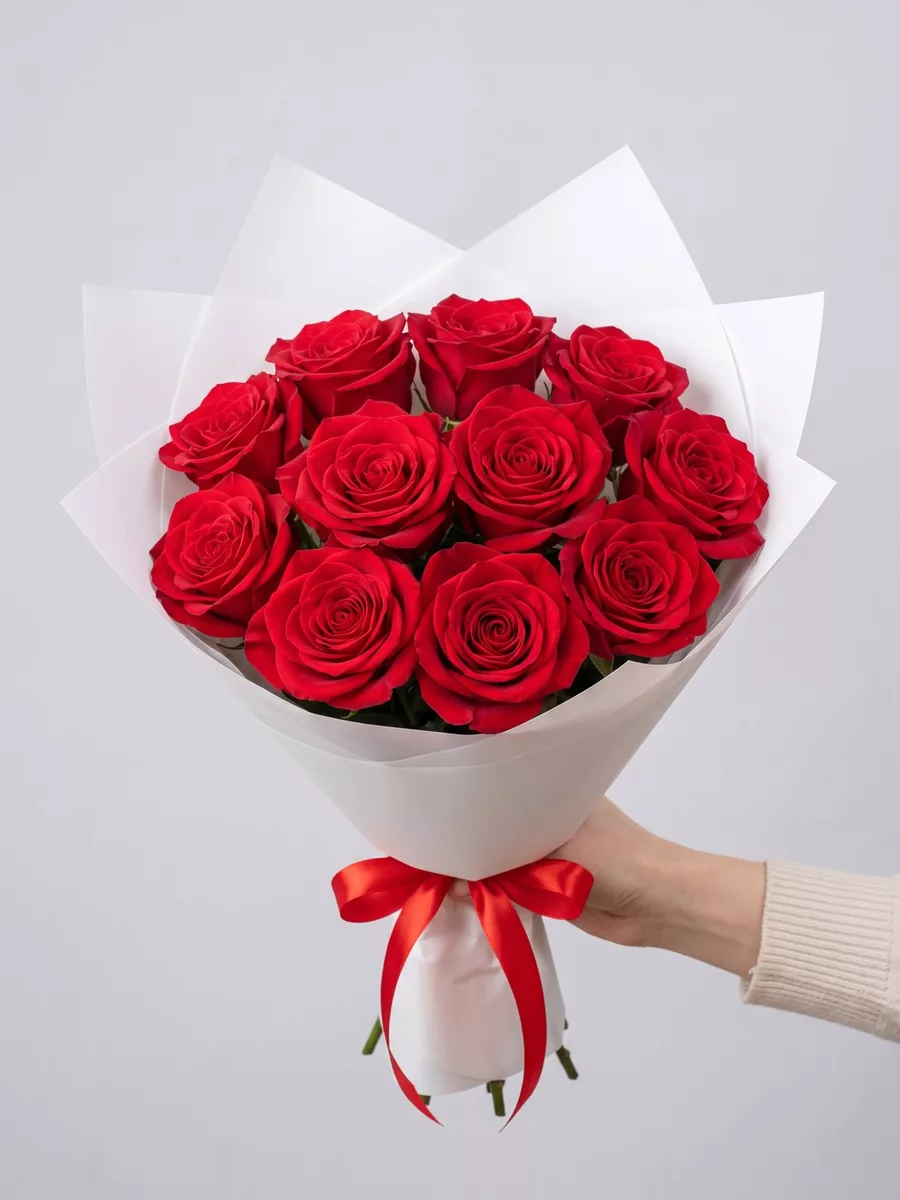
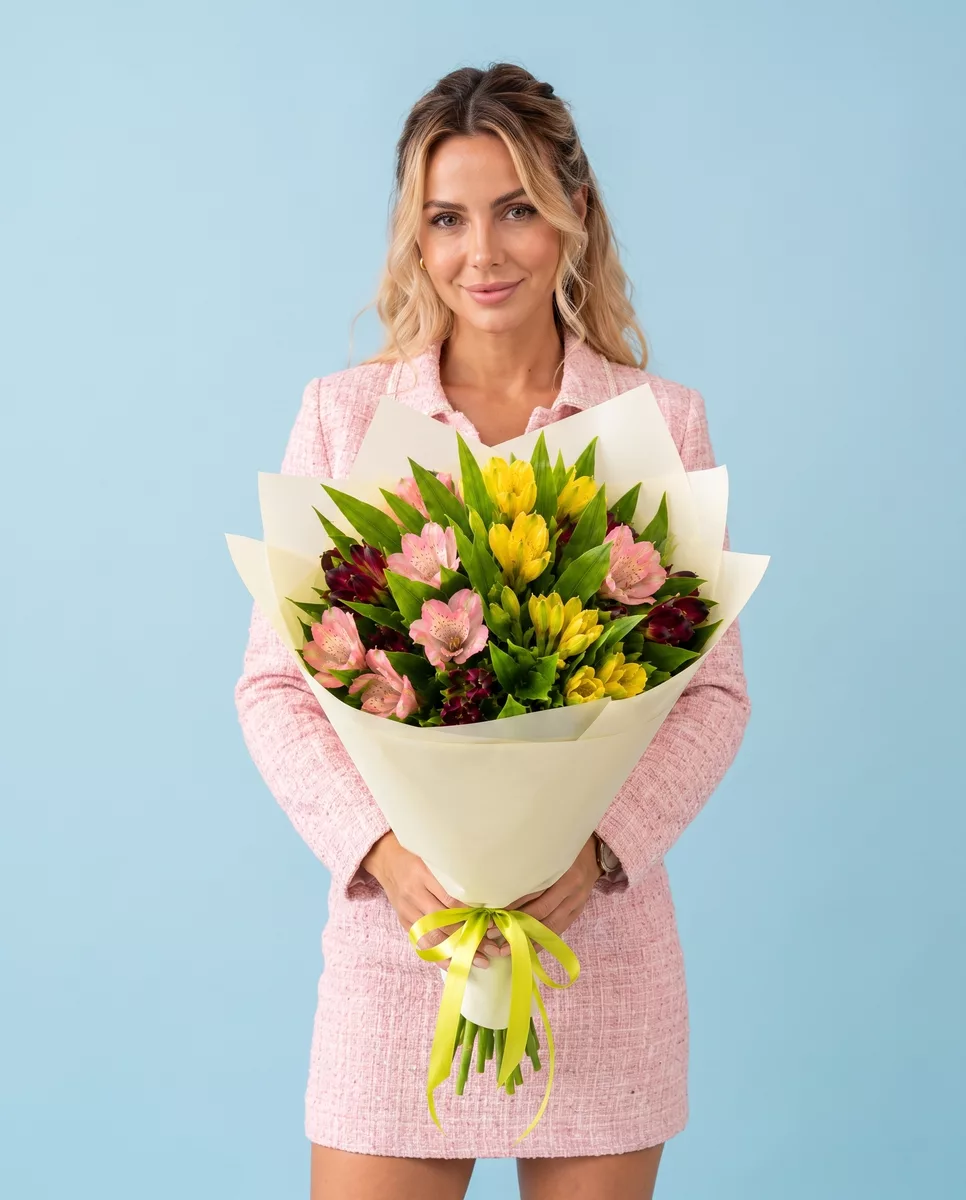
Bouquets we can deliver
Climate, Temperature and Which Flowers Actually Survive the Journey
The Kola Peninsula experiences subarctic conditions for most of the year. From October through April, outdoor temperatures in Snezhnogorsk regularly drop below minus fifteen degrees Celsius and can reach minus twenty-five during cold snaps. This matters enormously for flower selection. Tropical and subtropical varieties — anthuriums, bird of paradise, certain orchid types sold loose rather than potted — suffer visible cold damage within minutes of exposure at those temperatures. Petals turn translucent, stems go soft and the bouquet looks burned by the time it reaches the door. The varieties that travel well in these conditions are roses with dense petal counts, spray chrysanthemums, alstroemeria, lisianthus and carnations. Roses hold up particularly well when the stems are properly conditioned and the bouquet is wrapped in several layers of kraft paper with an insulating sleeve. Tulips are manageable in late winter and spring but need careful handling because their stems are hollow and freeze faster than solid stems. Gerberas are borderline — they can make the journey in November if temperatures are above minus ten, but in January they are a poor choice. Hydrangeas are surprisingly resilient in cold if the heads are fully open and the water content in the stems is high. In summer, from late June through August, the temperature problem reverses: Snezhnogorsk gets genuine warmth and even midnight sun, and the concern shifts to flowers wilting in transit rather than freezing. During those months the full seasonal range opens up, including garden roses, peonies in June and early July, and sunflowers. Always tell the florist the current local temperature when you order in winter — it changes the wrapping and the variety recommendation immediately.
Timing: When to Place Your Order and What Affects the Delivery Window
Five Flowers delivers across Russia within one to two hours as a standard window for most cities, but Snezhnogorsk adds logistical steps that extend this. The checkpoint coordination, the distance from Murmansk and the need to confirm recipient details mean that same-day delivery to Snezhnogorsk is realistic when the order is placed before noon Moscow time. Orders placed in the afternoon can often still be fulfilled the same day, but this depends on the day of the week and the current checkpoint schedule. Saturday and Sunday deliveries are possible but require earlier order placement — by ten in the morning Moscow time is a safe rule. Public holidays in Russia, particularly New Year from the 31st of December through the 8th of January, Victory Day on the 9th of May, and International Women's Day on the 8th of March, are the busiest periods and also the periods when checkpoint staffing can be irregular. For the 8th of March specifically, which is the single largest flower-giving day in Russia and far bigger than Valentine's Day in terms of volume, orders for Snezhnogorsk should be placed at least two days in advance. Customers sending from abroad often underestimate the time zone gap. Moscow is three hours ahead of Central European Time and ten hours ahead of the United States East Coast. When you are placing an order at nine in the evening from New York, it is already seven in the morning the next day in Moscow, which is actually a good time to order — but when you order at midnight New York time, it is nine in the morning Moscow time and the florist team is already in the middle of the morning rush. Factor the time zone into your planning every time.
Paying from a Foreign Bank Card: What Works and What Does Not
Payment from abroad is one of the most common friction points for international customers sending flowers to Russia. Since 2022, the international payment landscape for Russian retailers has changed substantially. Visa and Mastercard cards issued outside Russia do not process directly through Russian acquiring systems. This means a card issued by a bank in France, the United Kingdom, the United States or most European countries will be declined at the standard checkout. Customers who have experienced this are not doing anything wrong — the card simply cannot complete the transaction through the Russian payment gateway. There are several routes that do work. Customers with a Russian bank account or a Russian-issued card — which applies to many people who lived in Russia before emigrating — can pay directly. Customers without any Russian banking connection can use international transfer services that settle in roubles on the Russian side. Some customers arrange payment through a family member or friend in Russia who places the order on their behalf. When you contact the shop directly by phone or messenger before placing the order, the team can advise on the current payment options that are functioning at that moment, because this landscape changes and what worked in January may not work in March. The key practical step is to contact the shop before attempting to pay online, explain that you are ordering from abroad, and ask which method is currently active. This saves the failed transaction, the confusion and the delay. Wire transfers in roubles are sometimes possible for larger orders, and the shop can provide the necessary bank details on request.
What to Write on the Card and How Russian Gift Cards Work
A gift card accompanying flowers in Russia is a small paper card, usually no larger than a business card, attached to the bouquet or placed inside the wrapping. It is not a digital message and it is not read aloud by the courier — it is a physical note that the recipient reads privately after the delivery. This is worth knowing because customers from some countries expect the florist to deliver a verbal message or assume the card will be printed on a large decorative sheet. The text limit on a standard Russian gift card is roughly fifty to eighty words, and shorter is generally better because the card is small. You can write in Russian, English or any language your recipient reads. If you want the message in Russian but you are not confident writing it yourself, you can send the text in English and ask the florist to translate it — this is a common request and the team handles it regularly. Avoid abbreviations or references that only make sense in English, because something that reads warmly in English can sound strange when translated literally into Russian. Direct expressions work best: the recipient's name, the occasion if there is one, a specific warm sentence, and the sender's name. Snezhnogorsk recipients are not different from recipients in any other Russian city in terms of what they appreciate on a card — sincerity and specificity matter more than elaborate phrasing. If the occasion is a birthday, name day, anniversary or professional celebration, mentioning it directly is the right approach. Name days, called imeniny in Russian, are still observed by many people, particularly in older generations, and a card acknowledging a name day alongside a birthday is received warmly.
Bouquet Formats That Work Well for Snezhnogorsk Recipients
Snezhnogorsk is a compact city with a population of around fourteen thousand people, and most residents live in standard Soviet-era apartment blocks. Storage space is not abundant, and large elaborate arrangements with wide foam bases or tall branching structures are genuinely inconvenient for recipients who have to carry them through a checkpoint, up a stairwell and into a modest apartment. Round bouquets and hand-tied designs in kraft paper are the practical standard. A mono bouquet of fifteen or twenty-five roses in a single colour is the most universally appropriate format and also the one that travels best in cold weather because the wrapping can be tightly controlled. Odd numbers are the Russian convention for celebratory bouquets — even numbers are associated with mourning, so a bouquet of twenty roses would be an unusual choice and might confuse an older recipient. Mixed bouquets work well when the varieties are chosen for cold tolerance rather than just appearance. A combination of spray roses, alstroemeria and eucalyptus branches, for example, holds up through a winter delivery far better than a mixed bouquet built around gerberas and lisianthus. Potted plants are an option for recipients who want something lasting, and they have one advantage in the Snezhnogorsk context: they do not wilt, they do not need to be put in water immediately and they tolerate a short wait at the checkpoint without visible damage. Succulents, peace lilies and small orchid plants in ceramic pots are popular choices. Avoid large tropical potted plants because the cold transit is genuinely damaging to them and because they are impractical in a small apartment.
Checking Your Order Before Confirming: A Practical List
Before you confirm any flower delivery to Snezhnogorsk from abroad, run through the following points and do not skip any of them. First, confirm the recipient's full name as it appears on their Russian internal passport or military ID — this is what the checkpoint uses, and a nickname or shortened name can create a problem. Second, confirm a working Russian mobile number for the recipient, including the country code, and make sure the recipient knows to expect a call from a Russian number on the day of delivery. Third, check the current temperature in Snezhnogorsk — the Gismeteo website shows this in real time and it takes thirty seconds — and tell the florist when you place the order. Fourth, confirm the delivery date and the Moscow time by which you need the order placed, factoring in your own time zone. Fifth, ask the florist explicitly whether same-day delivery is possible for your chosen date, because on high-demand dates like the 8th of March it may not be. Sixth, confirm the payment method before you spend time selecting the bouquet, because a payment failure after you have built the order wastes everyone's time. Seventh, if you are writing a card message in English and want it translated, send the text to the florist before placing the order so there is time to translate it properly rather than rushing. Eighth, ask for a delivery confirmation — a photo of the bouquet before dispatch and a message when it has been handed over. This is a standard service and gives you certainty that the order completed, which matters especially when you are thousands of kilometres away and cannot check in person.
Sending flowers to Snezhnogorsk from abroad is genuinely achievable, but it requires more preparation than sending to an open Russian city. The closed-zone status, the Arctic climate, the payment landscape and the time zone gap between your location and Moscow all need to be accounted for before you place the order, not discovered during it. The florists who handle this route regularly know the checkpoint logistics, know which varieties survive a January delivery in minus twenty degrees and know how to coordinate with a recipient who may be waiting at a perimeter gate rather than at a front door. The sender's job is to provide accurate information — the full name, the working phone number, the correct date — and to make contact early enough that none of these details need to be rushed. We deliver bouquets across Russia in 1–2 hours.
Frequently asked questions
Can flowers actually be delivered inside Snezhnogorsk given that it is a closed city?
Yes, delivery into Snezhnogorsk is possible, but it requires coordination with the checkpoint. The recipient's full name as it appears on their official documents and a working Russian mobile number are mandatory. The recipient may need to meet the courier at the checkpoint perimeter. Providing accurate details before the order is confirmed is the step that makes this work.
Which flowers should I avoid ordering for a winter delivery to Snezhnogorsk?
Gerberas, anthuriums, bird of paradise and open-headed tropical varieties are poor choices when temperatures are below minus ten Celsius. Roses with dense petal counts, spray chrysanthemums, carnations, alstroemeria and lisianthus handle Arctic cold far better. Always tell the florist the current local temperature — it determines both the variety recommendation and the wrapping method used for the bouquet.
How far in advance should I order for the 8th of March delivery to Snezhnogorsk?
At least two days before the 8th of March is the safe minimum for Snezhnogorsk. This date is the busiest single day in the Russian flower calendar, significantly larger in volume than Valentine's Day. Checkpoint scheduling can also be irregular around public holidays. Placing your order on the 6th of March gives the shop time to plan the delivery route and confirm recipient details without pressure.
My bank card is issued outside Russia — how do I pay for the order?
Cards issued by non-Russian banks do not process through Russian payment gateways since 2022. Contact the shop directly before attempting online checkout to ask which payment method is currently available for international senders. Options vary and change over time. Some customers pay through a Russian-based family member; others use rouble transfer services. Asking first saves a failed transaction and delay.
Does the card message have to be written in Russian, or can I write in English?
You can write in any language your recipient reads. If you want the message in Russian but are not confident writing it, send the text in English and ask the florist to translate it — this is a routine request. Keep the message direct: the recipient's name, the occasion and a specific warm sentence work better than elaborate phrasing, which can lose meaning in translation.
Ready to send a bouquet?
Pick a city, choose the flowers, and we will hand them over with a photo confirmation.
Choose a city →