
Flower Delivery in Strunino: Zones, Timing and What to Expect
Customers ordering flowers to Strunino usually have one question before anything else: will they actually arrive fresh? Strunino sits in Vladimir Oblast, roughly 100 kilometres northeast of Moscow, and that distance shapes everything about how a flower order works — which varieties we send, how we pack them, and what window you should book. This article covers the practical side in full.
Where Strunino Sits in Our Delivery Map
Strunino is a small industrial town in the Alexandrov District of Vladimir Oblast, and it falls within the extended delivery zone we serve across central Russia. The town itself is compact — most residential addresses cluster around the textile mill area and the railway station on the Yaroslavl line — which actually makes address confirmation straightforward once the courier is in the area. What matters for your order is understanding that Strunino is not a same-day impulse zone the way central Saint Petersburg is. Orders going this distance require advance booking, ideally placed the evening before or at least six to eight hours ahead of the desired delivery window. We route couriers through the federal road network rather than relying on a single highway, so seasonal road conditions in late autumn and early spring can add time. Snow and frost are common from November through March, and that affects both driving pace and how we prepare the flowers for transport. The town has no large commercial district to navigate, which is a genuine advantage: couriers are not sitting in city-centre traffic. Street numbering in Strunino follows a standard Soviet-era block system, so addresses like Ulitsa Lenina or Komsomolskaya are easy to locate. Always include the full house number, building letter if there is one, and a mobile phone number for the recipient — missed calls are the single most common reason a delivery gets delayed at the final step.
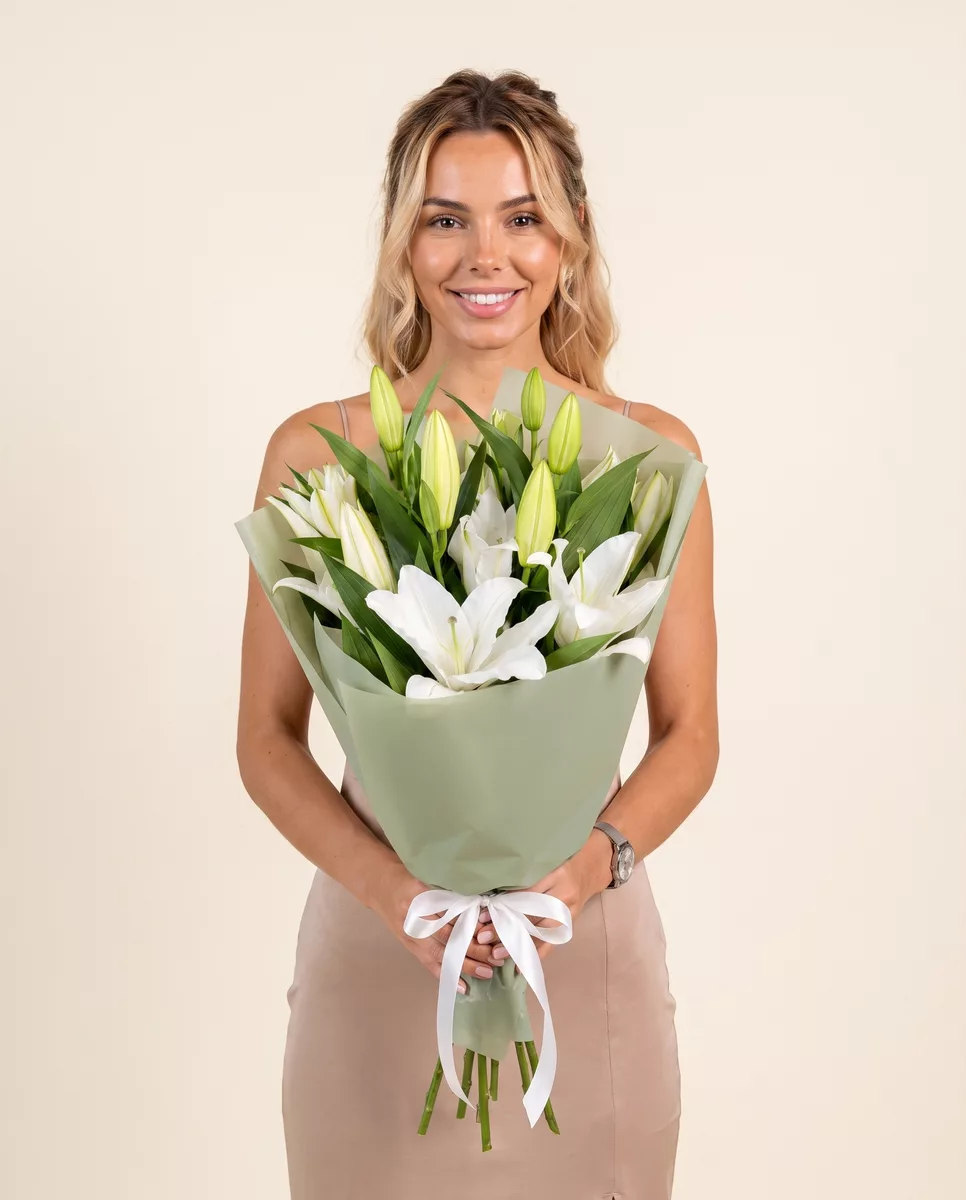
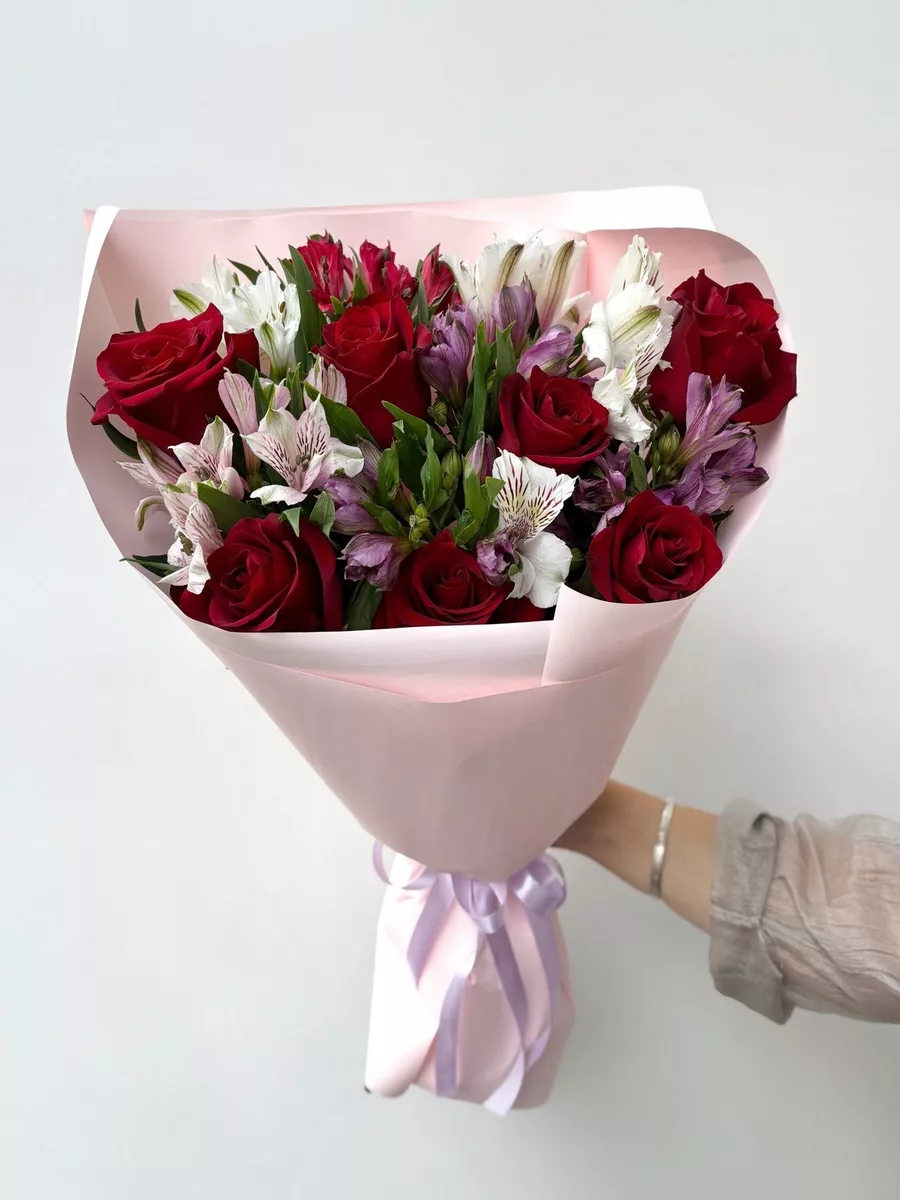
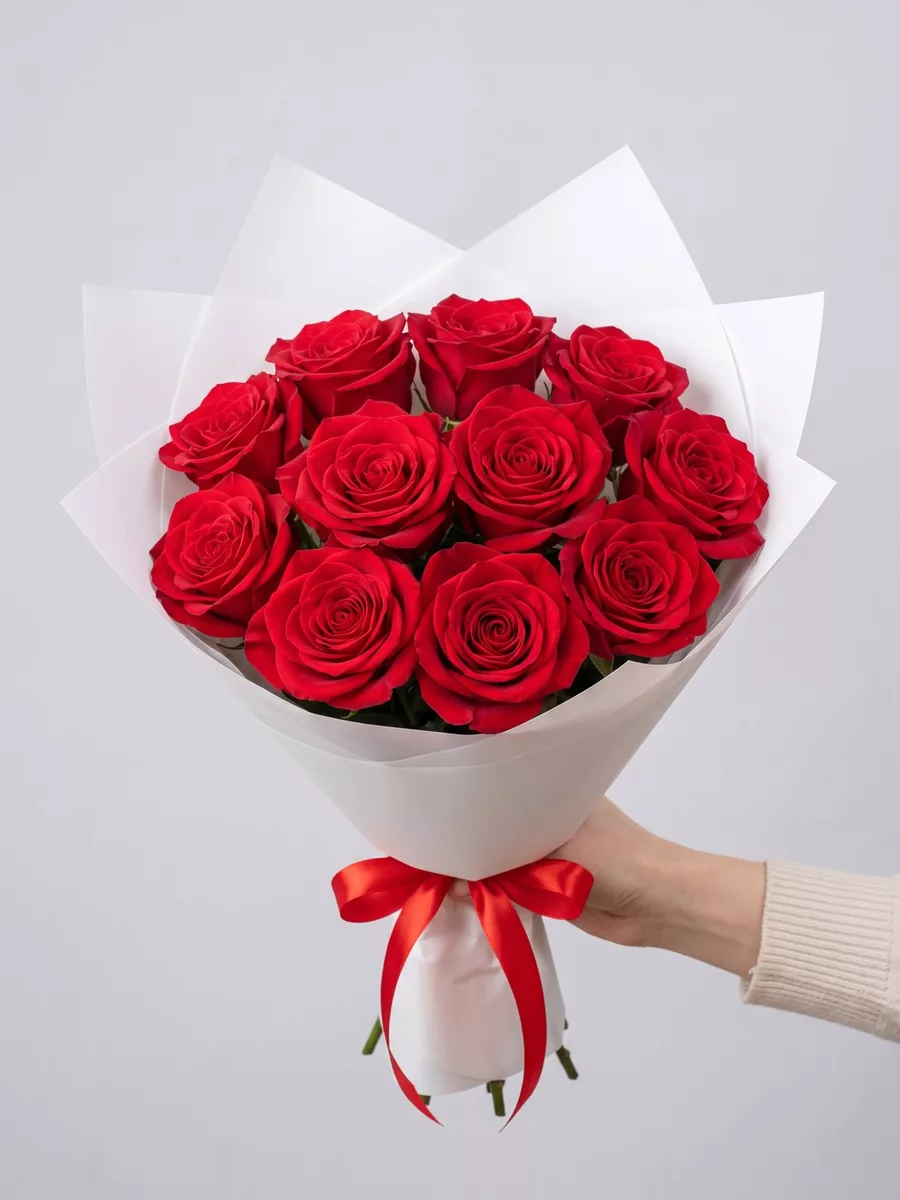
Bouquets we can deliver

Realistic Timing: What the Distance Means in Practice
The one-to-two-hour delivery window we offer in Saint Petersburg does not apply to Strunino, and we want to be clear about that rather than let customers discover it after ordering. The distance from our preparation facility to Strunino is significant, and the actual transit time depends on the route taken, traffic on the M8 and connecting roads, and weather. For Strunino, customers should plan for a same-day delivery window of four to six hours from order confirmation, or choose a specific time slot for the following day. The most reliable approach is to book a morning slot — flowers dispatched early arrive before midday heat builds up in summer, and the recipient is more likely to be home. Evening deliveries are possible but require the recipient to confirm they will be available, because leaving flowers on a doorstep in cold weather for more than twenty minutes risks chilling damage to tropical varieties like anthuriums or orchids. We confirm every Strunino order by phone before dispatch, which adds a short step but prevents wasted journeys. If the recipient is at work, we can arrange delivery to a workplace address — that is common practice and causes no problems as long as the building has a reception or a colleague who can accept the order. Birthdays and anniversaries in Strunino are the most frequent occasions we deliver for, and for those we strongly recommend booking the slot the day before rather than the morning of the event.
Which Flowers Travel Well to Strunino
Not every variety in our workshop is suitable for a long-distance delivery, and a florist who tells you otherwise is not being honest. For Strunino orders, we prioritise varieties with strong cell walls and low water loss during transport. Spray roses and standard garden roses in bud — not fully open — are excellent travellers. Chrysanthemums, both button and spider types, handle transit well and arrive looking almost exactly as they were packed. Alstroemeria is another reliable choice: the stems are sturdy, the buds open gradually over several days, and the flowers are not sensitive to brief temperature fluctuations. Eustoma, sometimes called lisianthus, works well if cut at the right stage — half-open buds rather than fully open flowers. What we avoid sending to Strunino in summer: fully open peonies, which bruise easily; open sunflowers, which wilt quickly without water; and delicate anemones, which are sensitive to vibration. In winter, tropical varieties such as bird of paradise and anthuriums need insulated packaging because they suffer chilling injury below eight degrees Celsius — we use thermal wrapping for all such orders when temperatures are below freezing. Tulips are popular for spring deliveries and travel acceptably well if packed upright and kept cool, but they continue to grow after cutting, so recipients should expect them to open within a day or two of arrival. For a mixed bouquet going to Strunino, a combination of spray roses, chrysanthemums and alstroemeria with seasonal filler greens is our most consistent recommendation.
Packaging for a Long Journey
Packaging for a Strunino delivery is more involved than for a local city order, and it is worth understanding what we do and why. Every bouquet is assembled with a water-retaining floral foam or wet cotton wrap at the stem ends, sealed in a moisture-retaining sleeve. This keeps stems hydrated for up to eight hours without a vase, which covers the full transit time with margin. The outer wrapping is kraft paper or a rigid box depending on the bouquet type — box arrangements are preferable for long distances because they prevent the flowers from shifting and bruising against each other. In summer, when cabin temperatures in a vehicle can rise quickly, we add a cooling insert for bouquets containing roses or eustoma. In winter, the insulated layer goes on the outside of the kraft paper wrap, and the courier is instructed to keep the bouquet away from direct heating vents. Ribbon and decorative elements are attached firmly so they do not come loose during the journey. If you are ordering a large arrangement — say, fifty or more stems — we split it into two separate wrapped units that are reassembled by the courier on arrival, because a single oversized bundle is harder to keep stable in a vehicle. Customers sometimes ask whether they should put flowers straight into water on arrival. The answer is yes, immediately: trim one to two centimetres from each stem at an angle with a clean knife, fill a clean vase with cool water, and remove any leaves that would sit below the waterline. This simple step adds three to five days to the vase life.
Seasonal Considerations for Strunino Orders
Vladimir Oblast has a proper continental climate, and Strunino follows it fully: cold winters with reliable snow cover, warm summers that can push above thirty degrees Celsius in July, and muddy shoulder seasons in March and October. Each season creates specific conditions that affect your order. In January and February, the main risk is cold damage during the short walk from the courier's vehicle to the door. We pack accordingly, but the recipient should meet the courier promptly rather than leaving flowers in a hallway entrance that may be unheated. In July and August, the risk reverses: heat speeds up the opening of buds and shortens vase life. For summer orders, we recommend morning delivery slots and varieties that are naturally heat-tolerant, such as chrysanthemums and alstroemeria. Autumn is actually one of the better seasons for long-distance delivery — temperatures are moderate, roads are clear, and the flower market has strong supply of dahlias, spray roses and seasonal greenery. Spring deliveries around International Women's Day on March 8th are our busiest period nationally, and Strunino is no exception. For that date specifically, we ask customers to place orders at least three days in advance, because demand across Russia peaks simultaneously and preparation time increases. Tulips dominate the March 8th market and travel well when ordered in bud. If you want something less expected for that occasion, ranunculus and muscari are available in early spring and make a distinctive alternative to the standard tulip arrangement, though they require more careful packaging.
How to Place the Order Correctly
A correctly placed order for Strunino has five pieces of information that must all be accurate: the full street address including house number and any building or apartment number, the recipient's mobile phone number, the preferred delivery window, the occasion if relevant, and any note to include with the bouquet. The address is the most common source of errors. Strunino has streets with similar names to streets in nearby Alexandrov and Karabanovo, so specifying the town explicitly in the address field matters. If you are sending flowers to someone who does not know they are coming — a surprise delivery — include a backup contact number, ideally your own, so the courier can reach someone if the recipient does not answer. We call to confirm every Strunino order before dispatch, typically within thirty minutes of the order being placed. If we cannot reach you or the recipient at that stage, the order is held until contact is made, which can shift the delivery window. Payment is completed at the time of ordering through the website. We do not offer cash on delivery for extended-zone orders. The note card is included at no extra charge and can carry a message in Russian or English — if you write in English, we transcribe it as given. One thing customers from outside Russia sometimes ask: is it appropriate to send flowers without a specific occasion? Absolutely yes. Flowers as a spontaneous gesture are entirely normal in Russian culture and are received warmly. You do not need a birthday or holiday to justify the order.
What to Do When the Bouquet Arrives
When the courier hands over the bouquet in Strunino, take a moment to check the flowers before the courier leaves. Look at the stems — they should be firm and green with no sliminess at the cut end. Petals should show no browning at the edges. If anything looks wrong, photograph it immediately and contact us: we address quality issues on the same day. Once inside, unwrap the bouquet carefully — kraft paper can be pulled apart at the seam rather than cut, which avoids accidentally cutting a stem. Remove the water-retaining wrap from the stem ends and cut the stems as described earlier. Use a clean vase, not one that had flowers last week without being properly washed, because bacterial residue in a vase shortens vase life dramatically. Fill with cool water — not cold, not warm — and add the flower food sachet if one was included in the packaging. Keep the arrangement away from direct sunlight, radiators and fruit bowls. The ethylene gas that ripening fruit releases accelerates flower ageing noticeably, particularly for roses and carnations. Change the water every two days and re-trim the stems each time. Chrysanthemums and alstroemeria regularly last ten to fourteen days with this routine. Roses typically give seven to ten days. If individual stems fade before others, remove them so they do not contaminate the water. Customers who follow these steps consistently get significantly longer vase life than those who simply put flowers in water and leave them. It takes about three minutes every two days and makes a real difference to how long the arrangement looks good.
Strunino is not the easiest destination we deliver to, but it is one we handle reliably when orders are placed with enough lead time and the right information. The practical checklist is short: book at least six to eight hours ahead, give us the complete address and a working phone number for the recipient, choose varieties suited to the season and the journey, and follow the care steps when the bouquet arrives. Flowers sent this way arrive in good condition and last well — which is the whole point of sending them. We deliver bouquets across Russia in 1–2 hours.
Frequently asked questions
Can I order flowers to Strunino for same-day delivery?
Yes, same-day delivery to Strunino is possible if you order before noon. The delivery window is typically four to six hours from confirmation rather than the one-to-two hours available within Saint Petersburg. We call to confirm every Strunino order before dispatch, so keep your phone available after placing the order.
Which bouquet is best for a long delivery to Strunino in summer?
In summer, choose spray roses in bud, chrysanthemums or alstroemeria. These varieties tolerate heat and transport vibration better than open peonies or fully open sunflowers. We add a cooling insert for summer long-distance orders. Avoid requesting fully open flowers — buds arrive in better condition and open beautifully over the following days.
What happens if the recipient is not home when the courier arrives in Strunino?
The courier will call the recipient's number. If there is no answer, they will call the backup number you provided at checkout. If neither contact responds, the order is held and we reschedule delivery. We do not leave flowers unattended outside in any weather. This is why providing two contact numbers when ordering to Strunino is strongly recommended.
Can I include a message card in English with a Strunino delivery?
Yes. Write your message in English in the note field at checkout and we include it exactly as written on the card. We do not translate or alter the text. If you would like the message in Russian but are not sure of the phrasing, write it in English and add a note asking us to translate — we will do that at no extra charge.
How should the recipient care for flowers after delivery in cold winter conditions?
Bring the bouquet indoors immediately and let it warm to room temperature for fifteen minutes before unwrapping — sudden temperature change from very cold to very warm can shock the stems. Then trim the stems, place in cool water and keep away from radiators. Tropical varieties like anthuriums need particular care; keep them in a room no cooler than eighteen degrees Celsius.
Ready to send a bouquet?
Pick a city, choose the flowers, and we will hand them over with a photo confirmation.
Choose a city →