
Flower Delivery to Venev from Abroad: Zones, Timing and What to Prepare
Venev is a small town in Tula Oblast, roughly 100 kilometres south of Moscow, and senders calling from Germany, the United States or Israel almost always ask the same first question: can you actually get fresh flowers there the same day? The honest answer is yes, but the window is narrower than for a big city, the address information you supply matters far more than it does in Saint Petersburg, and the choice of varieties has to match the season rather than whatever looked good on a website photo. This article covers everything a sender outside Russia needs to know before placing an order.
Where Venev Sits and Why It Affects Your Delivery Window
Venev belongs to Tula Oblast and sits on the Osetr River, a town of around 15,000 people that most international senders have never heard of until they need to send flowers there. Its distance from major logistics hubs means that same-day delivery is possible when an order arrives before noon Moscow time, which is UTC+3 year-round. Senders in Western Europe are three hours behind Moscow, so a call or online order placed at 9 a.m. in Berlin lands at noon in Moscow — right at the cut-off. Senders in New York are eight hours behind, meaning a 4 a.m. New York order still makes the window, but a relaxed evening order does not. The town itself has residential districts, a central area near the Assumption Cathedral, and scattered private house streets where numbering is not always sequential. Couriers navigate this without difficulty, but the sender must supply a full address including the apartment number or, for private houses, the gate colour or a landmark — Russian postal addresses for small towns often omit building wings and entrance numbers that are essential for finding the right door. Delivery to Venev typically takes one to two hours from dispatch, not from the moment you place the order, so factor in preparation time for the bouquet itself, which runs 30 to 60 minutes depending on composition. Orders for the following day face none of these time pressures and give the florist room to source specific stems.
Bouquets we can deliver
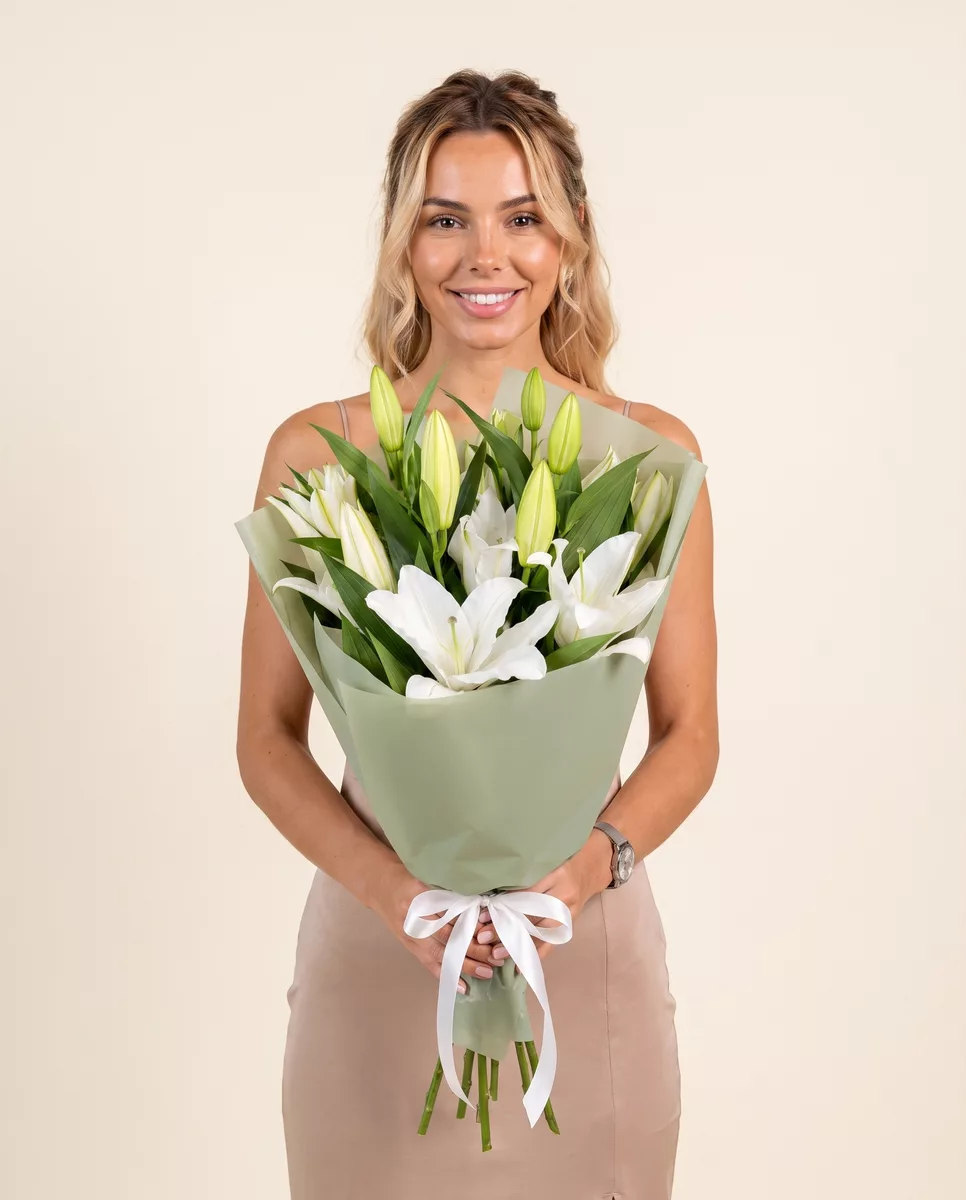
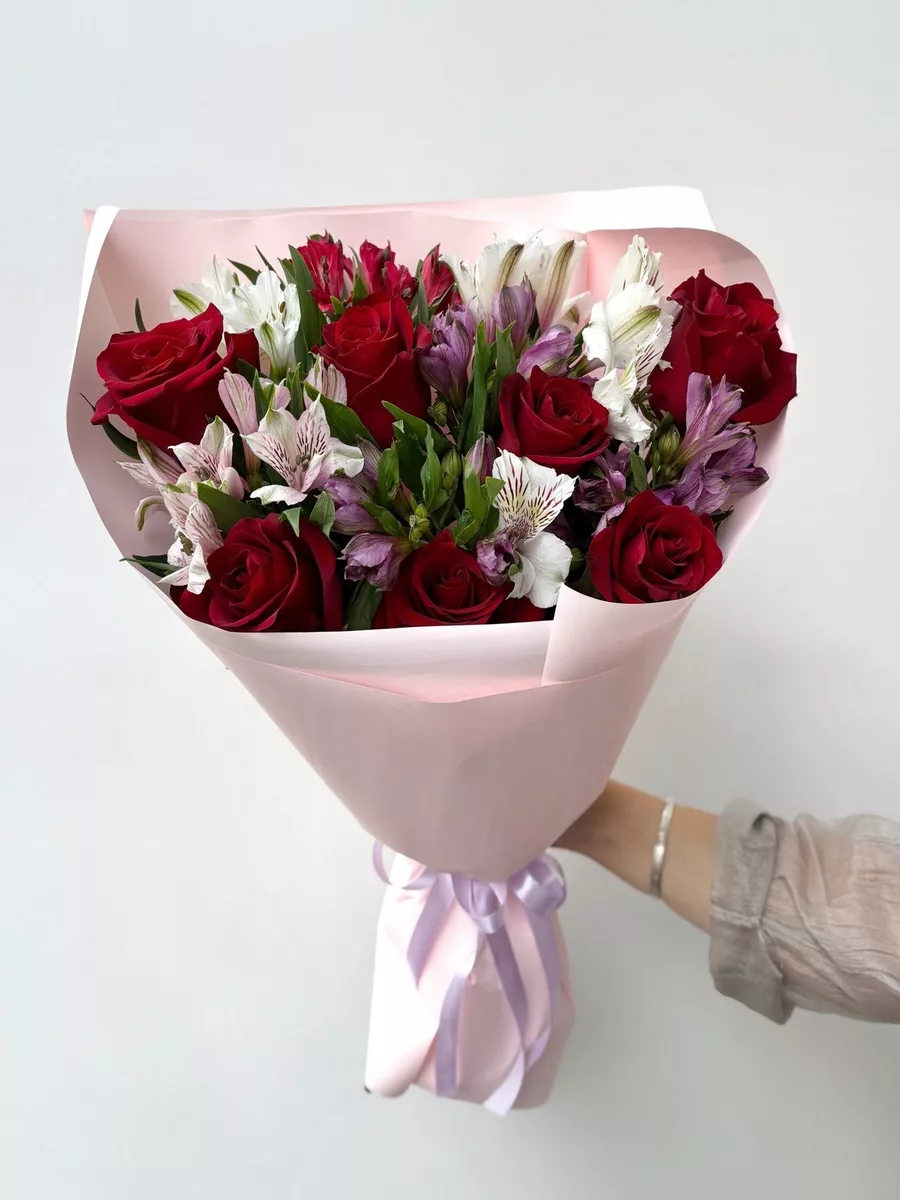
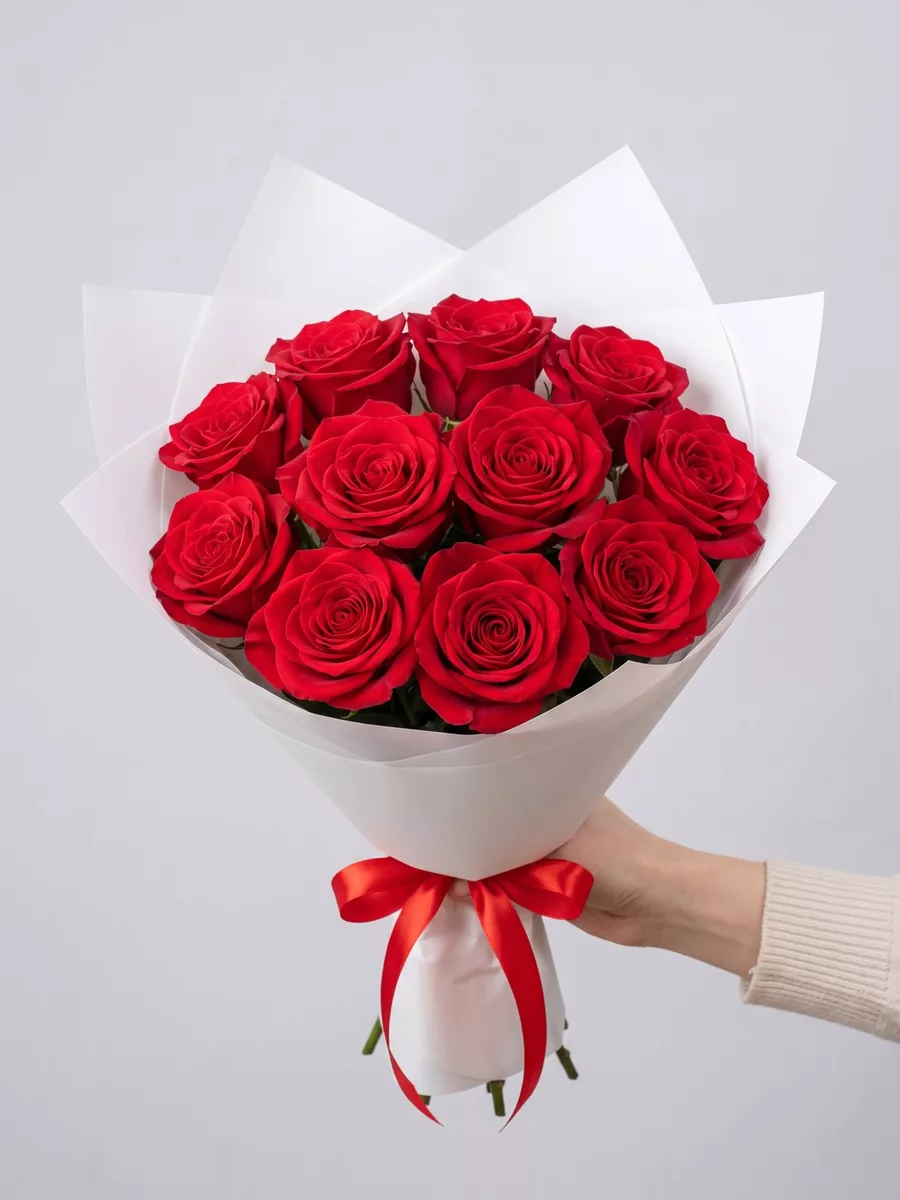

Which Varieties Travel Well to a Small Russian Town
Not every flower that looks spectacular in a Saint Petersburg cold room survives a two-hour road journey to Venev in July heat or January frost. Roses are the most reliable choice year-round: Dutch spray roses and large-headed Ecuadorian varieties such as Explorer, Red Naomi and Avalanche hold their shape through transit and open gradually once they reach the recipient. Chrysanthemums — both single-stem and spray types — are equally robust and carry no negative cultural associations in Russia despite what some foreign websites claim. Eustoma, sometimes called lisianthus, travels well when cut at the right stage and adds a delicate texture without the fragility of garden ranunculus. Tulips are excellent from November through April but wilt quickly above 20 degrees Celsius, so summer tulip orders to Venev are genuinely risky. Peonies are available from late April through June and are enormously popular with Russian recipients, but they must be ordered at bud stage for transit and will open fully within 24 hours of delivery. Orchid stems — cymbidium and dendrobium — are structurally tough and work well for compositions that need to last several days without fresh water. What to avoid in summer: garden hydrangeas, which drink enormous amounts of water and wilt within an hour in heat above 25 degrees; anemones, which are a cold-season flower; and any tropical variety that was not stored in refrigeration up to the moment of packing. The florist selects the freshest available stock on the day, so naming a variety and accepting a close substitute if it is unavailable is the most practical approach.
Seasonal Timing and What That Means for Venev Orders
Russia has four distinct seasons and flower availability shifts sharply between them, which international senders often underestimate because they are ordering from a country where imports smooth out the calendar. From December through February, the reliable staples are roses, alstroemeria, carnations, spray chrysanthemums and imported tulips from Dutch greenhouses. February 14 and March 8 — International Women's Day — are the two busiest dates in the Russian flower calendar by a wide margin. March 8 in particular drives demand that can triple normal order volumes, and Venev deliveries on that date should be placed at least 48 hours in advance from abroad to guarantee both the variety and the time slot. From March through May, tulips, daffodils, hyacinths and the first peonies become available and are strongly preferred by Russian recipients over imported roses, so a sender who specifies roses only may be missing what the recipient would actually love most. Summer brings sunflowers, lisianthus, matthiola and field flowers that work well in loose, garden-style bouquets. Autumn is the season for chrysanthemums in every form — pompom, spider, button — and for dahlias when available. Temperature is the practical constraint: in July and August, Tula Oblast regularly sees days above 30 degrees Celsius, and the courier vehicle must be climate-controlled for the run to Venev. In January, the opposite problem applies — flowers must be wrapped in insulating paper and never left on a cold doorstep. Both scenarios are standard for experienced couriers, but the sender should confirm that temperature protection is included when ordering during extreme months.
How to Give a Russian Address Correctly from Abroad
This is the section most international senders skip and most often regret. A Russian postal address for Venev follows a specific structure: country, region, city, street, building number, apartment or office number. In Russian practice, the building number can include a korpus — a secondary building on the same plot, written as k.2 or korpus 2 — and a stroenie, which is a further subdivision. Senders who write only the street name and a single number may be sending the courier to the wrong entrance of the wrong building. For private houses in Venev, the plot number and sometimes the name of the owner on the gate plate are more useful than the street number alone, because rural addressing in small Russian towns is inconsistent. The recipient's full name matters too: Russian names have three parts — first name, patronymic and family name — and couriers confirm identity by name when handing over flowers. A sender who supplies only a first name creates ambiguity in apartment buildings where multiple residents share that name. The mobile phone number of the recipient is not optional; it is how the courier confirms arrival and navigates the last hundred metres. International senders should provide a number with the Russian country code +7 if the recipient has a Russian SIM, or note clearly if the recipient uses a foreign number on roaming. If the recipient does not speak Russian, note that too — the courier can call the sender as an intermediary. Double-check the phone number digit by digit before submitting the order, because a single transposed digit means the bouquet cannot be delivered and will not be held indefinitely.
Payment from Outside Russia and What to Expect
International bank cards — Visa, Mastercard, American Express — have faced restrictions in Russia since 2022, and senders abroad cannot always complete a standard card payment on a Russian e-commerce site. The practical solutions vary by the sender's country. Senders from countries where Mir cards are accepted can use that system. Others use PayPal where the shop supports it, or wire transfer, or payment through a third-party platform that handles currency conversion. The shop's website or order manager will confirm which methods are currently active, and this is worth checking before you spend time composing the order. Currency is always Russian rubles at the point of charge; the sender's bank converts from their home currency at the daily exchange rate, and the sender bears any foreign transaction fee their bank imposes — this is not a shop markup. For senders who want to pay but cannot complete the transaction online, placing the order by phone or messaging app and confirming payment method with the manager directly is the standard workaround. Keep a screenshot or confirmation number of any transaction, because international payments occasionally take longer to clear and the order manager needs to match the payment to the order before dispatch. Senders in Israel, Germany, the United Arab Emirates and the United States have all successfully ordered this way; the process is slower than a domestic card tap but it works reliably when both sides communicate clearly. Ask for an order confirmation in writing — email or messenger — before the day of delivery so that there is a reference point if anything needs to be adjusted.
What to Write on the Card and How Russian Recipients Read It
A card with a bouquet is not decoration in Russia — it is read carefully, often kept, and sometimes shown to family members. The standard format is a short greeting, the occasion if there is one, and the sender's name. Russian recipients appreciate directness: a card that says exactly what the flowers are for and who sent them lands better than vague poetry. If you are writing in English and the recipient reads English, that is perfectly fine and often feels personal and international. If the recipient does not read English, write the message in whatever language you share with the florist — Russian, if you can — and the team can transcribe it to the card. Do not assume the florist will translate your English text into Russian without being asked; request that explicitly. For birthdays, the phrase with a wish for health, happiness and all the best is the conventional Russian formula and recipients expect some version of it. For professional milestones or anniversaries, a more specific acknowledgment of the achievement reads as more thoughtful than a generic greeting. Avoid religious references unless you know the recipient's faith, because Russia has a religiously diverse population and an assumption can feel awkward. The card is printed or handwritten depending on the order; a handwritten card for an international order is a small detail that recipients notice. Keep the message under 150 characters to fit neatly on a standard florist card. If you want a longer message, ask whether a separate note can be included — in most cases it can, printed on a folded sheet placed inside the wrapping.
Common Mistakes International Senders Make and How to Avoid Them
The single most common mistake is ordering too late. Senders in time zones far behind Moscow — the western United States, Canada, Latin America — often place orders in their morning, which is already evening in Moscow, and then are surprised that same-day delivery to Venev is no longer possible. The fix is simple: place the order the evening before your local time, which arrives in Moscow the following morning with the full day ahead. The second mistake is specifying a variety without a substitute and then being unavailable when the florist calls to say that variety is sold out. Fresh flower stock changes daily and a specific stem may simply not be available in the quality required for a two-hour delivery run. Always name a substitute or give the florist discretion to choose something of equal value and similar colour. The third mistake is providing an incomplete address and assuming the courier will figure it out. In Saint Petersburg, a courier might know a building by sight. In Venev, they will not. A fourth mistake is ordering flowers that are wrong for the season — garden roses in January, tulips in August — and being disappointed when the florist suggests an alternative. Trust the seasonal recommendation; it exists because those flowers will actually look good when they arrive. A fifth mistake, specific to international senders, is forgetting the time difference when the recipient is supposed to be home. Arrange delivery for a time when the recipient is actually at the address, and if that is uncertain, ask for the courier to call ahead — this is standard practice and costs nothing to request.
Sending flowers from abroad to a small Russian town like Venev is genuinely manageable when the order is placed with the right lead time, the address is complete down to the apartment number, and the variety choice reflects what is actually in season and what survives the road journey. The florist's job is to get a fresh, well-composed bouquet to the right door at the right time — the sender's job is to supply accurate information and not leave it to the last hour of the Moscow working day. Get those two things right and the distance between your city and Venev becomes irrelevant. We deliver bouquets across Russia in 1–2 hours.
Frequently asked questions
Can I order flowers to Venev on the same day from abroad?
Yes, if your order reaches us before noon Moscow time (UTC+3). Senders in Western Europe need to order by 9 a.m. their time; senders on the US East Coast by 5 a.m. their time. Orders placed after the cut-off are scheduled for the following day, which often produces a better result because the florist has more preparation time and a wider choice of fresh stock.
What flowers are most popular with recipients in small Russian towns?
Roses remain the most universally accepted choice year-round. Peonies are extremely popular from late April through June. Chrysanthemums are well-liked in autumn and winter. Tulips are a strong choice for spring and for March 8. Recipients in smaller towns tend to appreciate classic, recognisable varieties over avant-garde compositions, so a clean, generous bouquet of one or two varieties usually lands better than a complex mixed arrangement.
Do I need to speak Russian to place an order from abroad?
No. The order managers at Five Flowers handle inquiries in English. You can place an order by email, messaging app or phone. The one practical step is to have the recipient's details — full name, address and Russian mobile number — written out clearly before you contact us, because those details need to be exact and spelling them out in a second language over the phone takes longer than sending them in a message.
What happens if the recipient is not home when the courier arrives in Venev?
The courier calls the recipient's mobile number before arrival and again on arrival. If there is no answer, the courier will attempt a second delivery or hold the bouquet for a short period. Flowers cannot be left unattended outside in extreme temperatures. To avoid this situation entirely, confirm with the recipient that they will be at the address during the delivery window — you do not need to reveal the surprise, just ask them to be home.
Is there anything I should not send to Russia in a flower order?
Avoid including food items, liquids or personal documents in the same order as flowers, as these complicate delivery logistics. For the flowers themselves, avoid varieties that are genuinely unavailable in season — the florist will flag this. There are no customs issues with cut flowers delivered domestically within Russia. The bouquet travels entirely inside the country from our preparation point to Venev, so there are no import declarations required from the sender.
Ready to send a bouquet?
Pick a city, choose the flowers, and we will hand them over with a photo confirmation.
Choose a city →