
Flower Losing Petals: What It Means and What to Do
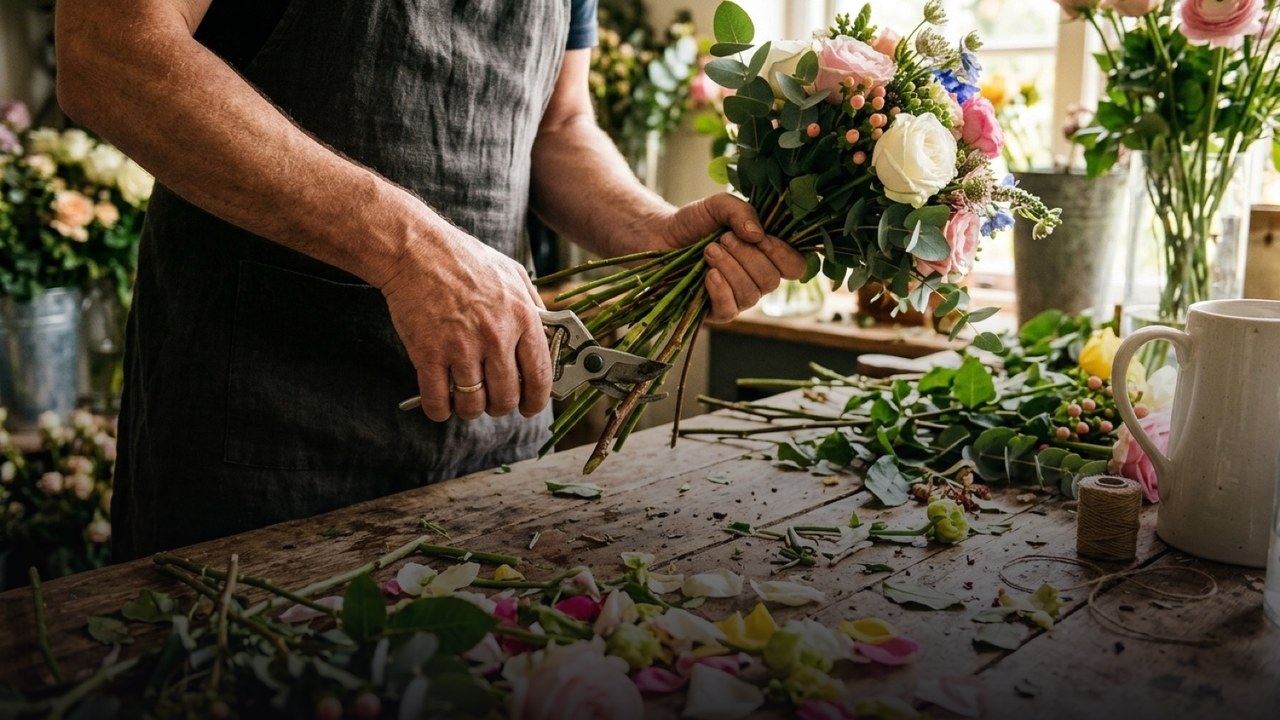
A flower losing petals is often reaching the end of its bloom, but dehydration, handling damage or a sudden change in conditions can also cause shedding. Check whether the fallen petals look fresh or dry, whether the stem is firm, and whether other flowers are affected. Care can support the remaining blooms, but it cannot reattach petals or reverse natural ageing.
When customers ask us about falling petals, the most useful detail is whether the flower is cut or still growing in a pot. A cut stem depends on clean vase water, while a potted plant needs its roots and growing conditions checked. At Pyat Tsvetov (5 Flowers), with flower shops in Saint Petersburg since 2011, we recommend assessing the whole flower before deciding that a few loose petals mean the bouquet is finished.
Read the pattern before changing the care
A fully open bloom dropping its outer petals while its stem and leaves remain firm is often simply ageing. In a mixed bouquet, different flowers may reach this stage on different days, so one fading head does not establish a problem with every stem. Look at the remaining buds and flowers individually rather than judging the arrangement by the petals beneath it. Photographing the bouquet once can make later changes easier to assess without repeatedly handling the heads.
Fresh-looking petals that fall after the bouquet has been moved can indicate physical disturbance, especially on an open bloom. Dry, papery petals alongside limp leaves suggest water stress, although appearance alone cannot confirm the cause. Soft brown tissue, visible mould or an unpleasant smell calls for prompt removal of the affected material and a thorough vase clean. For discolouration without obvious shedding, our guide to browning petal edges explains what else to inspect.
Give cut flowers clean water and a clear path to it
Start by lifting the bouquet out of the vase and checking the water, submerged stems and container walls. Empty the vase, wash it thoroughly and refill it with fresh water; remove leaves that would sit below the waterline. With a clean, sharp tool, make a fresh cut at the base of stems that remain sound, then return them to water promptly. Avoid crushing the ends or scraping the stems, because extra damage does not improve their ability to take up water.
If you have flower food intended for cut flowers, follow the packet’s dilution instructions rather than adding an estimated amount. Check the water daily, replenish it as needed, and change it when it becomes cloudy or develops an odour. Keep the arrangement away from radiators, direct sun and fruit bowls, since heat and ripening fruit can shorten the display life of susceptible flowers. These steps support surviving tissue; they will not make an already shedding flower grow a new set of petals.
Bouquets we can deliver




Separate natural ageing from damage and decay
Handle flower heads as little as possible while checking them, because squeezing or repeatedly brushing the petals can make shedding worse. Remove fallen petals from the table and any that have landed in the vase water, then inspect neighbouring blooms for contact with wet or decaying tissue. An isolated damaged petal does not always require discarding the whole stem, but a soft, deteriorating flower head is usually best removed. Wash your hands and tools after handling mouldy material before touching healthy stems.
Judge recovery by the condition of the remaining leaves, stems and petals rather than expecting the flower to look unopened again. A stem that becomes firmer after fresh water may still lose petals that were already ageing or damaged. If a flower keeps collapsing, smells unpleasant or sheds extensively whenever it is touched, remove it and rearrange the sound stems. A smaller display of healthy flowers is easier to maintain than an arrangement with decaying heads crowded between them.
Check roots and growing conditions for a potted flower
On a flowering houseplant, petals can fall naturally while the plant itself remains healthy and continues growing. Check the potting mix before watering: a dry surface alone does not tell you how much moisture remains around the roots. Use the plant’s identification and care requirements to guide watering, and empty water left standing in a decorative outer pot. Repeated watering in response to falling petals can worsen matters if the roots are already sitting in overly wet compost.
Consider recent changes, including a move to a darker room, a place beside a heater or a draughty windowsill. Inspect leaves, buds and the undersides of foliage for visible pests or other damage, rather than treating petal drop as a diagnosis by itself. Keep conditions steady while you identify the plant, and avoid immediately combining repotting, heavy feeding and a new watering routine. If the leaves remain healthy and only older flowers are fading, removing spent blooms may be all that is needed, depending on the species.
Decide what to keep, display or discard
Petal loss has no reliable meaning about the sender’s feelings, the recipient’s luck or the success of an occasion. Flowers are living material, and their condition changes as blooms develop and age. If the bouquet was a gift, you can acknowledge the gesture without treating the eventual fading as an etiquette problem. When discussing its condition with the sender or shop, describe observable details such as when shedding began, which stems are affected and how the flowers were kept.
You can shorten sound stems into a smaller clean vase as the arrangement thins, removing any leaves that would become submerged. For a keepsake, choose clean petals without mould and spread them out to dry in a ventilated place rather than sealing them while damp. Avoid scattering petals on fabric or polished furniture, where colour or moisture may leave marks. Our guide to what to do with flowers after the petals drop offers further ways to handle the remains of a bouquet.
Arrange a flower delivery to Russia with clear timing
If you are arranging a new gift from abroad, start with the bouquets catalogue and choose delivery timing that suits the recipient’s availability. We deliver flowers across Russia, with city delivery costing 500 RUB; the operator confirms the price for remote districts and suburbs when confirming the order. Express delivery in large cities is 1–2 hours after order confirmation, with exact-time delivery within plus or minus 30 minutes also available. Other options are the 09–12, 12–15, 15–18 and 18–21 windows, or pre-ordering 1–30 days ahead; delivery in Saint Petersburg operates around the clock.
Delivery is anonymous by default, so the courier does not name the sender; include your name in the free message card if you want the recipient to recognise the gift. The courier calls about 15 minutes before arrival, and if the recipient is absent, we agree a second delivery that day or a handover to a neighbour or concierge with the sender’s consent. Online checkout uses CloudPayments, so check the payment options displayed there without assuming that every foreign card will be accepted. See delivery and payment for ordering information, or call 8 (812) 507-67-05 with questions.
Frequently asked questions
Is a flower dead as soon as it starts losing petals?
Petal loss alone does not establish that the whole stem or plant is dead. A cut flower may be finishing its display, while a potted plant can shed an old bloom and continue growing.
Can I stop petals falling off a cut flower?
Clean water, a clean vase and suitable placement can support the remaining flower, especially if dehydration is involved. Petals already loosened by ageing or damage may still fall, and lost petals will not regrow on a cut bloom.
Should I water a potted plant more when its petals fall?
Check moisture around the roots and the care needs of the particular plant first. Falling petals can reflect normal flowering cycles, and adding water to already wet compost can harm the roots.
Should I remove one shedding flower from a mixed bouquet?
Remove it if the head is decaying, mouldy or collapsing, and clear loose petals from the water. If it is simply ageing and the stem remains sound, you can keep it briefly while monitoring the surrounding flowers.
Can I order flowers to Russia using a card issued abroad?
Online checkout uses CloudPayments; check the options displayed at checkout for your payment attempt. Acceptance of every foreign-issued card cannot be guaranteed.
Ready to send a bouquet?
Pick a city, choose the flowers, and we will hand them over with a photo confirmation.
Choose a city →