
Flowers That Grow in Russia: A Guide to Seasons and Bouquets
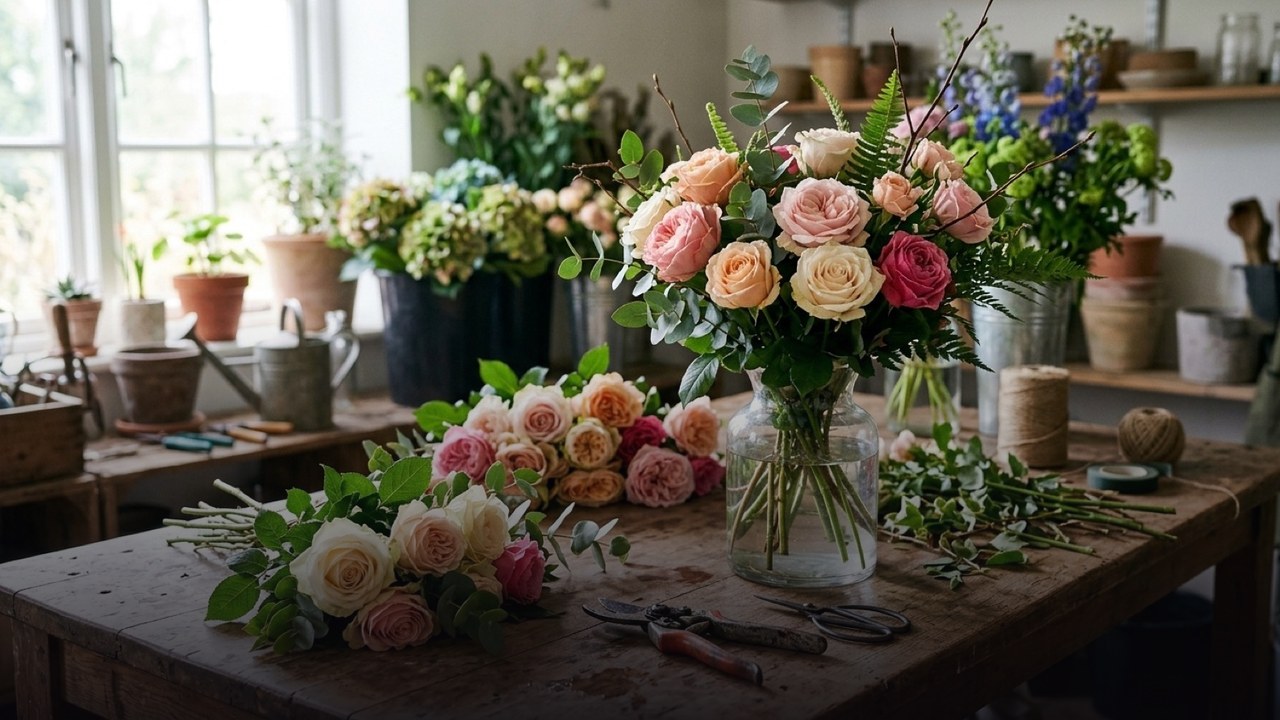
Flowers that grow in Russia include wild species such as fireweed, cornflowers and oxeye daisies, alongside cultivated favourites including tulips, peonies, roses, irises and chrysanthemums. Which flowers thrive depends on the region, habitat and variety: a garden near Saint Petersburg has different conditions from one in southern Russia. Some familiar bouquet flowers grow outdoors seasonally, but their presence in a flower shop does not establish where they were grown.
At Pyat Tsvetov (5 Flowers), customers often ask for flowers that remind someone of a Russian garden, a summer at the dacha or a particular family celebration. We have worked in Saint Petersburg since 2011, and those memories are useful starting points for choosing a bouquet. The practical distinction is between flowers growing in the landscape, plants cultivated in gardens and cut flowers suitable for a gift. Here is how to recognise the main groups and turn that knowledge into a thoughtful choice.
Wildflowers grow in different habitats across Russia
Fireweed is a recognisable summer flower in many parts of Russia, with tall stems carrying pink-purple blooms. It often grows in open ground, clearings and disturbed areas, while cornflowers are associated with fields and other open sites. Oxeye daisies have white rays around yellow centres and appear in meadows and grassland. These are examples of flowers found in Russia, rather than a list of species native to every region; distribution changes across the country's enormous range of landscapes.
The word “chamomile” needs particular care when identifying a flower from a photograph or a childhood memory. Several plants have a similar white-and-yellow appearance, and a large daisy-shaped flower is not necessarily medicinal chamomile. If you want that look in a bouquet, describe the flower's size, branching habit and overall shape instead of relying on the name alone. Avoid collecting unfamiliar wild plants: identification can be difficult, and protected species or protected areas may be subject to picking restrictions.
Flowers commonly cultivated in Russian gardens
Tulips, daffodils and crocuses are familiar spring garden flowers, followed by plants such as irises and peonies as the growing season progresses. Summer gardens may contain roses, lilies, phlox and dahlias, with asters and chrysanthemums contributing later colour. These groups contain many varieties with different requirements, so a familiar name does not mean every variety suits every Russian garden. For planting, the regional climate, soil drainage, available light and winter protection matter more than an image of a typical Russian flowerbed.
For a gift that recalls a dacha garden, begin with the recipient's actual favourites. Peonies suggest full, rounded flowers; phlox brings clusters of smaller blooms; irises give a more sculptural outline. A photograph of a remembered garden can communicate those preferences more clearly than a request for “Russian flowers”. If you are choosing from the bouquets catalogue, treat each listing as a particular arrangement and check its stated contents rather than assuming that every garden flower mentioned here is available.
Bouquets we can deliver
When flowers bloom, and what that means for a bouquet
Outdoor flowering follows the local season, with spring arriving at different times across Russia. Bulbs usually provide early garden colour, peonies are associated with late spring and early summer, and dahlias with the later part of the growing season. These are broad patterns, not fixed dates for every city or year. Weather, exposure and variety can shift flowering, so someone planning a visit around a favourite bloom should check conditions in the destination rather than use a single national calendar.
A flower's garden season and its availability as a cut stem are separate questions. Do not assume that seeing peonies outdoors means a particular peony bouquet can be ordered, or that a flower absent from winter gardens cannot appear in a catalogue. For a date-sensitive gift, choose from the options shown for your order and keep the desired colour or shape in mind if the exact flower is uncertain. Our guide to irises and their vase life is useful when weighing their distinctive shape against their relatively brief display.
Choosing flowers with Russian gift etiquette in mind
There is no single meaning shared by all flowers that grow in Russia. Personal associations often matter more than a symbolic dictionary: one person loves peonies because a parent grew them, while another prefers simple daisy-shaped flowers to a formal rose bouquet. For birthdays, visits and congratulations, Russian custom generally favours an odd number of flowers when individual stems are being counted. Even numbers are traditionally associated with mourning, so this distinction deserves attention when you select a simple, counted arrangement.
Colour meanings are less reliable as rules for choosing a gift. Yellow flowers can be associated with separation by some recipients, yet others enjoy them for their brightness; the recipient's known preference is the better guide. For a colleague or someone you do not know well, consider the size of their desk, their journey home and whether a strong fragrance would be welcome. A short card explaining the occasion makes the gesture clearer, and a card with your own text is free with our delivery.
How to care for cut garden-style flowers
Start with a clean vase and remove foliage that would sit below the waterline. Recut the stems with a clean, sharp tool before placing them in water, and follow any flower-food instructions supplied with the bouquet. Keep the arrangement away from radiators, direct sun and ripening fruit, then check the water each day and replace it if it becomes cloudy. Flowers grown in a garden and flowers bought as cut stems both benefit from clean handling, but their vase life still varies with the species and condition of the stems.
Give delicate flowers enough room instead of compressing every stem into a narrow vase. Handle iris petals gently, and allow space around peony heads as they open; remove fading stems before they begin to spoil the water. With lilies, keep the flowers and fallen material away from cats, as lilies can cause severe poisoning in them. Fragrance also deserves a separate decision: if you are considering scented stems, our matthiola guide explains the appeal of a flower whose scent can become a prominent part of the gift.
Sending a bouquet to someone in Russia
We deliver flowers across Russia; city delivery costs 500 RUB, while the operator confirms the price for remote districts and suburbs when confirming the order. In large cities, express delivery is available in 1–2 hours after order confirmation, alongside delivery at an exact time with a tolerance of plus or minus 30 minutes. The available time windows are 09–12, 12–15, 15–18 and 18–21, and orders can be placed 1–30 days ahead. Delivery in Saint Petersburg is around the clock; see delivery and payment when planning the timing of your gift.
Before ordering from abroad, have the recipient's address, telephone number and your card text ready, and choose the delivery timing using the recipient's local time. Delivery is anonymous by default: the courier does not name the sender, so sign the card if you want the recipient to know who sent it. The courier calls about 15 minutes before arrival; if the recipient is absent, we agree a second delivery that day or a handover to a neighbour or concierge with the sender's consent. Online checkout uses CloudPayments: check the payment options displayed there, since acceptance of every foreign card is not guaranteed; questions can be directed to 8 (812) 507-67-05.
Frequently asked questions
What flowers grow naturally in Russia?
Examples include fireweed, oxeye daisies and various wild irises, with the species present depending on the region and habitat. A flower found growing wild in Russia is not necessarily native throughout the country.
Do roses and peonies grow in Russian gardens?
Yes, both are cultivated in Russian gardens. Suitable varieties and care depend on local conditions, and some plants need winter protection.
Are Russian garden flowers available in bouquets all year?
Outdoor flowering seasons do not establish year-round bouquet availability. Check the current catalogue for the arrangement and flower contents offered for your order.
Can I order flowers to Russia from abroad?
You can place an order online for delivery across Russia. Checkout uses CloudPayments; check the options displayed there rather than assuming your foreign-issued card will be accepted.
Will the recipient be told who sent the flowers?
The courier does not name the sender because delivery is anonymous by default. Include your name in the free card text if you want the recipient to recognise the gift.
Ready to send a bouquet?
Pick a city, choose the flowers, and we will hand them over with a photo confirmation.
Choose a city →