
Giving Flowers at a Russian Birthday Party: Timing and Manner
Most mistakes happen in the first three minutes of a Russian birthday celebration — before anyone has touched the cake or poured a glass. Guests arrive holding bouquets, unsure whether to thrust them forward immediately or wait for a formal moment that never quite comes. Russian birthday etiquette around flowers is not complicated, but it is specific, and getting it right means knowing the sequence: when to hand over the flowers, exactly what to say while doing it, and what the birthday person is supposed to do next. This article walks through the whole exchange, from doorstep to vase.
Arrive on Time — the Bouquet Presentation Happens at the Door
In Russian birthday tradition, flowers are presented at the moment of arrival, not saved for a toast or a cake-cutting ceremony. The guest rings the bell, the door opens, and within the first thirty seconds the bouquet changes hands. This is not informal — it is the established sequence, and deviating from it creates a small but real awkwardness. If you walk in, set your coat down, pour yourself a drink, and then produce a bouquet twenty minutes later, the birthday person will accept it graciously but the moment will feel off to everyone in the room. The doorstep presentation is the norm because it lets the host immediately hand the flowers to someone who can find a vase, trim the stems, and get them into water before the flowers have been out of refrigeration for too long. A dense peony bouquet or a bunch of garden roses loses its shape quickly in a warm apartment, especially in summer, so prompt handover is practical as well as customary. Aim to arrive neither first nor last: the very first guest hands flowers to a host who is still arranging the table, which is fine, but arriving late means the presentation happens in a crowded hallway with everyone watching. Either way, do not delay the handover once you are through the door. Hold the bouquet at mid-height, stems down, and step forward rather than extending your arm from a distance.
Bouquets we can deliver



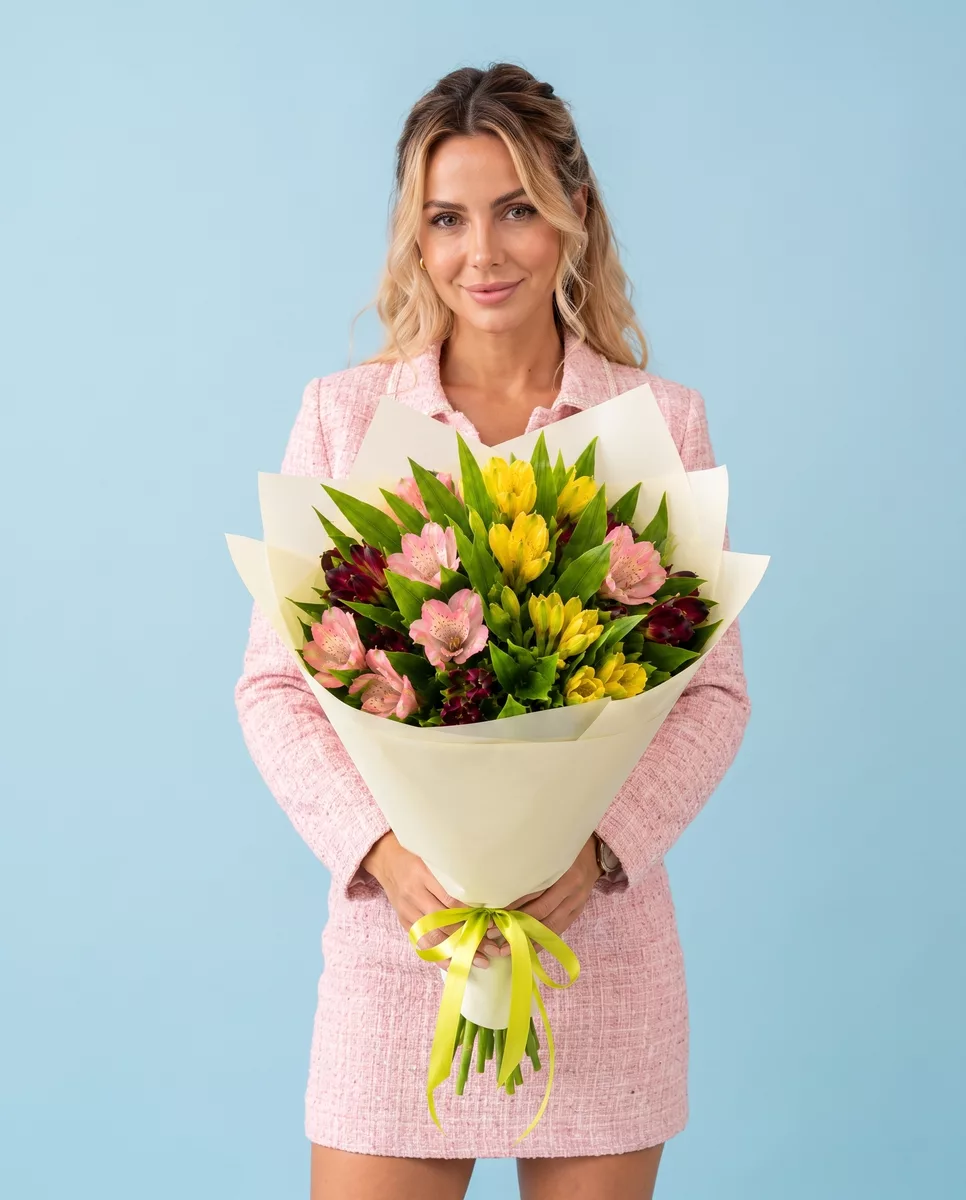
Odd Numbers Only — and Why Russians Count the Stems
Every working florist in Russia fields this question weekly: does the odd-number rule actually matter? It does, at least to a significant portion of customers and recipients. Even numbers of flowers — two roses, four tulips, six stems of anything — are associated with funerals and mourning in Russian tradition. Odd numbers are for the living and for celebration. The rule applies to the count of individual flower heads, not to the number of filler stems, leaves, or eucalyptus branches. A bouquet of eleven roses with a generous collar of pittosporum and three stems of white waxflower is counted as eleven — odd, correct, appropriate. A bouquet of twelve roses is even — avoid it for a birthday regardless of how well it is arranged. The most common birthday counts are five, seven, nine, eleven, fifteen, and twenty-one. Bouquets of twenty-five, thirty-one, or fifty-one stems are ordered for significant milestone birthdays — fiftieth, sixtieth — when a larger statement is expected. When you order from us, the stem count is confirmed before assembly, so there is no guessing at the door. If you are buying from a street stall and assembling your own, count before you wrap. Double-tulip varieties like Angelique or Columbus are counted by stem, not by the number of petals, so a bunch of ten double tulips is still ten — even, still wrong. Buy eleven.
What to Say When You Hand Over the Bouquet
The verbal component of the handover is short and direct in Russian custom. The standard phrase is a variation of pozdravlyayu s dnem rozhdeniya — congratulations on your birthday — followed immediately by a personal wish. The wish should be concrete and genuine: good health, happiness in the family, success in a specific project the person is working on, or simply many more years. What you do not say is nothing. Handing over flowers in complete silence is considered cold and strange. You also do not deliver a long prepared speech at the door — that comes later, during the toast at the table. The doorstep exchange is brief: the congratulation, one or two sentences of personal wishes, and then the flowers move from your hands to the host's. If you are not a Russian speaker and the birthday person understands English, a warm sentence in English is entirely acceptable and will be well received. The flowers themselves carry the message; the words are a frame around them. One thing to avoid: commenting on the price, the shop, or the logistics of getting the bouquet there. Saying the flowers were expensive or that delivery was complicated shifts attention away from the recipient and onto you. Keep the focus on the person. If the bouquet is wrapped in kraft paper with a ribbon, the birthday person will typically not unwrap it at the door — they will set it down and unwrap it when they have a moment, or ask a family member to handle it.
How the Birthday Person Is Expected to Respond
Russian birthday hosts have a clear set of expected responses, and knowing them helps guests understand what they are seeing. The first response is verbal: the host says spasibo — thank you — and almost always adds something specific, either about the flowers themselves or about the guest's presence. A host who says nothing and simply takes the flowers would be considered unusually cold. The second response is physical: the host smells the bouquet if it is fragrant, holds it for a moment, and then passes it to a family member or sets it somewhere visible. Garden roses, peonies in season, and freesias are the varieties most likely to prompt a genuine reaction because they actually have scent. Spray roses, hypericum, and most year-round chrysanthemums have little to no fragrance, so the host may admire them visually rather than smell them. The third response happens later: the flowers will be placed in a vase in the main room where guests can see them throughout the evening. A good host makes sure the bouquet is visible — it is part of the decoration for the party. If several bouquets arrive, they are typically grouped together rather than distributed around the apartment. Guests who notice their specific bouquet on display and comment on it are rewarded with a second round of thanks from the host. This is not accidental — it reinforces the social bond that the gift-giving ritual is meant to create.
Varieties That Hold Up Through a Long Evening
A birthday party in a Russian apartment typically runs four to six hours, sometimes longer. The flowers you bring will be sitting in a warm room — often twenty-two to twenty-four degrees Celsius — for that entire time, usually in a vase filled with tap water and no flower food. Choosing varieties that can handle these conditions is practical and shows care. Chrysanthemums, spray chrysanthemums, alstroemeria, and statice are the most durable options and will look presentable from arrival through the end of the evening. Standard roses hold well if they were kept cold before delivery and arrive with tight, firm buds — a bud that is already fully open at the time of delivery will be dropping petals by the time dessert is served. Lisianthus, also called eustoma, is a strong choice: it has a delicate appearance that reads as elegant but it lasts well in warm conditions. Peonies are the most requested birthday flower in Russia from May through July, but they are heat-sensitive — a fully open peony in a twenty-three-degree room will look tired within three hours. If you are ordering peonies for a summer birthday, specify that you want buds at the marshmallow stage — soft but not yet fully open — so they have time to develop during the party rather than peaking before the guests sit down. Avoid anemones and sweet peas for long evening events; both wilt quickly once out of cold storage.
Group Gifts and When Multiple Guests Bring Flowers
At larger Russian birthday gatherings — twenty or more guests — it is common for several people to arrive with bouquets independently. This is not considered excessive or redundant; the host will receive five or six bouquets and display all of them. Each guest still presents their flowers individually at the door, even if the previous guest arrived thirty seconds earlier with a similar arrangement. The individual handover matters more than the uniqueness of the bouquet. Where coordination does happen is in the case of a joint gift from a group of colleagues or close friends. In this situation, one person carries the flowers and presents them on behalf of the group, naming everyone who contributed. The verbal formula is roughly: this is from all of us — and then the list of names. The bouquet in this case is typically larger than a single-person gift — fifteen to twenty-five stems — because the combined contribution justifies a more substantial arrangement. If you are organizing a group bouquet and collecting money from colleagues, the per-person contribution is usually small, but the total budget should produce something that looks proportionate to the occasion. A sparse five-stem arrangement presented as a joint gift from eight people reads as careless. When several independent bouquets arrive at the same party, the host will sometimes arrange them together in a cluster of vases. A mix of roses, alstroemeria, and chrysanthemums from different guests actually works visually when grouped — the variety creates texture rather than conflict.
Ordering for Delivery Directly to the Party: What to Check
Sending flowers to a birthday party rather than bringing them yourself is common, especially when the guest cannot attend or is joining from another city. The delivery should arrive before the party starts — not during the meal and certainly not after the guests have left. When you place the order, specify the delivery window as thirty to forty-five minutes before the stated start time of the party. This gives the host time to put the flowers in a vase before the first guests arrive, which means your bouquet will be visible and fresh throughout the evening rather than arriving as an afterthought. Include a card with a message — the same warm, direct wish you would say in person. Keep it to two or three sentences. Confirm the delivery address carefully: Russian apartment buildings require a building number, an entrance number, and a floor, and a missing entrance number can delay delivery by fifteen minutes or more in a large residential complex. Check that someone will be home to receive the flowers — a birthday party sometimes moves to a restaurant after the home gathering, and if the delivery arrives at an empty apartment, the flowers sit in a warm hallway until someone returns. If the party is at a restaurant rather than a home, call ahead and confirm the venue accepts flower deliveries and that staff will put them in water. We deliver across Russia within one to two hours, and the same timing rules apply whether the destination is a private address or a venue.
The whole ritual — odd stems, doorstep handover, a short verbal wish, the host's response, the bouquet in a visible vase — takes less than two minutes and sets the tone for the entire evening. Getting it right is not about memorizing rules; it is about understanding that in Russian birthday culture, the flower exchange is a real moment of acknowledgment between guest and host, not a transaction to be completed quickly and forgotten. Choose varieties that will last through a long evening, order in time for the flowers to arrive before guests do, and say something genuine when you hand them over. The birthday person will remember the bouquet and the words, in that order. We deliver bouquets across Russia in 1–2 hours.
Frequently asked questions
Is it really important to bring an odd number of flowers to a Russian birthday?
Yes, and most Russian recipients will notice if you bring an even number. Even numbers are associated with mourning in Russian tradition. Stick to five, seven, nine, eleven, or fifteen stems. The count applies to flower heads only — filler greens and decorative branches are not counted. When you order from us, we confirm the stem count before wrapping.
Can I send flowers to a birthday party if I cannot attend in person?
Absolutely. Schedule delivery thirty to forty-five minutes before the party begins so the host can arrange the flowers before guests arrive. Include a card with a short personal message — the same two or three sentences you would say at the door. Confirm that someone will be at the address to receive the delivery, since birthday gatherings sometimes move locations during the evening.
What flowers should I avoid for a summer birthday party in a warm apartment?
Avoid anemones, sweet peas, and fully open peonies — all three deteriorate quickly above twenty-two degrees Celsius. If you want peonies, order them at the marshmallow bud stage so they open gradually during the party. Alstroemeria, spray chrysanthemums, lisianthus, and standard chrysanthemums hold their shape well through a four-to-six-hour evening in a warm room.
What do I say when I hand flowers to the birthday person?
Say congratulations on their birthday and add one or two specific wishes — good health, happiness, success in something you know matters to them. Keep it brief; the longer speech comes during the toast at the table. Do not comment on the price of the flowers or the difficulty of getting them there. If you are not a Russian speaker, a warm sentence in English is perfectly acceptable.
Is it rude if several guests bring the same type of flower?
Not at all. Russian birthday hosts expect multiple bouquets at larger gatherings and display all of them together. Five bouquets of roses from five different guests is not redundant — each handover is its own individual moment of acknowledgment. When grouped in vases, similar flowers from different guests actually look cohesive rather than repetitive.
Ready to send a bouquet?
Pick a city, choose the flowers, and we will hand them over with a photo confirmation.
Choose a city →