
How Long Do Lilies Live For in a Vase or Garden?
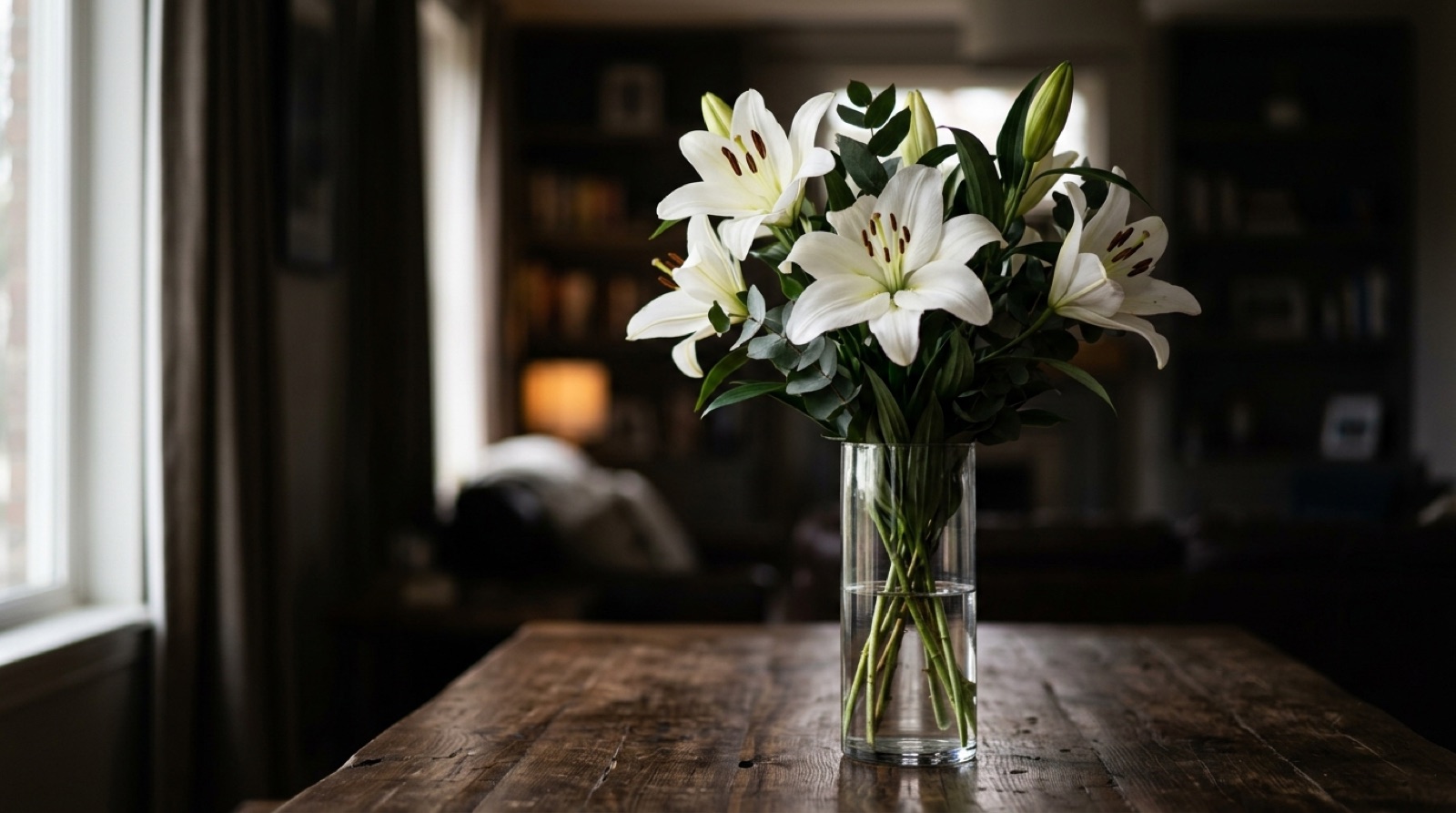
Cut lilies typically last about 7–14 days in a vase with suitable care, although their condition when received and the room environment can shorten that time. Each individual flower lasts only part of that period; unopened buds extend the display by opening in sequence. Garden lilies are perennial bulbs that can live for years, while their flowers usually provide a seasonal display lasting a few weeks, depending on the variety and growing conditions.
In our Saint Petersburg shops, customers often ask whether a lily bouquet will still look good for a birthday several days away, or whether closed buds mean something is wrong. The useful distinction is between the life of one flower, the display from an entire stem and the life of the bulb itself. At Pyat Tsvetov (5 Flowers), established in 2011, we explain lily longevity through those different stages. For a gift, the balance of open flowers and developing buds matters more than a single promised number of days.
What determines how long a cut lily bouquet lasts
A lily stem carries several flowers that do not necessarily open together, so its appearance changes throughout its vase life. A bouquet with developing buds may have a longer display ahead of it than one whose flowers are already fully open. However, a very small, immature bud may never develop successfully after cutting. Look for firm stems, healthy leaves and buds that are filling out, rather than treating the tightest possible buds as proof of freshness.
Warm rooms, direct sunshine and a position beside a radiator can make flowers develop and fade more quickly. Earlier handling and time without adequate water also affect the result, even when a bouquet initially looks attractive. The usual 7–14-day range is therefore a guide for cut lilies, not a guaranteed lifespan for every stem. Our guide to lily varieties, scent levels and vase life explains other differences worth considering before choosing a bouquet.
The first vase setup makes daily care easier
Start with a thoroughly washed vase so that old residue does not contaminate the fresh water. Remove any leaves that would sit below the waterline, then use a clean, sharp tool to recut the stem ends before putting them into water promptly. Choose a vase that supports the stems without squeezing them together, allowing room for the flowers to expand. If you have cut-flower food, mix it according to its instructions rather than making a stronger solution.
Check the water level every day because several substantial lily stems can use more water than expected. Replace the water regularly, and sooner if it becomes cloudy or smells unpleasant; clean the vase and recut the stems when needed. Keep the display in a cool part of the room, away from direct sun, heaters and ripening fruit. Avoid improvised additions such as sugar or aspirin, which do not provide the controlled balance of a properly prepared flower-food solution.
Bouquets we can deliver




How to manage buds, pollen and fading flowers
Closed buds on an otherwise healthy lily stem usually need time to develop, rather than forceful handling. Give them clean water and space, and avoid pulling the petals apart or placing the bouquet beside a heater to accelerate opening. Some buds open sooner than others, and the smallest may remain closed despite good care. For a celebration, allow for that uncertainty instead of planning around an exact hour when every flower must be open.
As each flower opens, you can carefully remove its pollen-bearing anthers before they shed, using a tissue and avoiding contact with the petals. This mainly helps prevent stains; it does not provide a dependable extension of vase life. If dry pollen lands on fabric, avoid rubbing it or immediately wetting it, and gently lift loose grains where the material allows. Remove faded flower heads individually while leaving healthy buds and stems in place, so the remaining display stays tidy.
Garden lilies live longer than their summer flowers
A garden lily is a perennial plant growing from a bulb, so the end of flowering does not normally mean the plant has died. An established bulb can return for years when its variety suits the site and its growing conditions remain suitable. The flowering period varies with the lily type, weather and number of buds, and individual flowers finish before the whole plant does. Different varieties can extend a garden's overall season, but one plant will not flower continuously throughout summer.
After flowering, remove spent flowers if you do not want seed production, but retain healthy leaves and stems while they remain green. That foliage helps replenish the bulb for future growth, so cutting the whole plant to the ground immediately after flowering can weaken it. Allow the foliage to die back naturally and avoid leaving bulbs in persistently waterlogged soil. A cut bouquet has been separated from this bulb-and-leaf cycle and cannot be expected to regrow simply by staying in a vase.
Choose lilies for the recipient as well as the occasion
Before choosing lilies, check whether the recipient shares their home with a cat. True lilies, including common Asiatic and Oriental types, are highly toxic to cats; pollen and vase water can also present a serious danger. Removing the anthers does not make the bouquet safe, so choose a different flower for a home with cats. If exposure is suspected, contact a vet immediately rather than waiting for symptoms or trying a home treatment.
Scent is another practical consideration: some lilies are strongly fragrant, while others have little fragrance, so the recipient's preferences matter in a bedroom or shared office. White lilies can suggest purity, sympathy or remembrance, but their meaning depends on the setting and the recipient's associations. For a birthday or romantic gift, a personal card can make the intention clearer without relying on flower symbolism alone. Calla lilies are botanically different from true lilies, so use separate care guidance rather than assuming that every flower called a lily has identical needs.
Time a lily gift to Russia around the occasion
When ordering from abroad, plan around the recipient's availability and the delivery city's local time, particularly if you want the flowers enjoyed on a specific day. We deliver across Russia: city delivery costs 500 RUB, while the operator confirms the price for remote districts and suburbs when confirming the order. In large cities, express delivery is available in 1–2 hours after order confirmation; other options include an exact time within ±30 minutes or windows of 09–12, 12–15, 15–18 and 18–21. You can pre-order 1–30 days ahead, and delivery in Saint Petersburg is available around the clock.
Choose through the bouquets catalogue and consult delivery and payment details when planning the order. Checkout uses CloudPayments; check the options displayed there rather than assuming that every foreign card will be accepted. Delivery is anonymous by default, with the courier not naming the sender, and a card with your text is free. The courier calls about 15 minutes before arrival; if the recipient is absent, we agree a second delivery that day or, with the sender's consent, handover to a neighbour or concierge. For questions about timing or the order, call 8 (812) 507-67-05.
Frequently asked questions
How long do lilies live for after they are cut?
Cut lilies typically last about 7–14 days in a vase, depending on freshness, variety and care. Individual flowers fade sooner, while developing buds can keep the stem attractive for longer.
Should I buy lilies with all the flowers closed?
Developing buds can give you more of the flowering sequence to enjoy, but very immature buds may fail to open. For an immediate presentation, a mixture of open flowers and well-developed buds offers a more visible display.
Does removing lily pollen make the flowers last longer?
Removing the pollen-bearing anthers mainly reduces the chance of staining petals, clothing and furniture. Clean water, suitable placement and healthy stems are more useful priorities for vase life.
Do garden lilies come back every year?
Garden lilies are perennial bulbs and can return for many years in suitable conditions. Leave healthy foliage after flowering so it can help replenish the bulb before dying back naturally.
Can I send lilies to Russia while living abroad?
You can order flowers for delivery across Russia through our catalogue. Online checkout uses CloudPayments; check the payment options shown at checkout for your card.
Ready to send a bouquet?
Pick a city, choose the flowers, and we will hand them over with a photo confirmation.
Choose a city →