
Flower Count in a Russian Bouquet: Stems, Occasions and What Actually Matters
The first thing almost every new customer asks is whether the number of flowers really matters in Russia — and the answer is yes, more than in most countries, but not quite in the way they expect. The odd-number rule is real and widely observed, but it is only the starting point. Florists here also think about stem count in relation to budget, the stage of a relationship, the formality of the occasion, and the specific varieties being used. A bouquet of 15 tulips reads very differently from a bouquet of 15 garden roses, and both differ from a mixed arrangement with 15 focal stems plus filler. This article walks through the conventions that shape those choices, so you can order with confidence rather than guessing.
The Odd-Number Rule: Where It Comes From and When It Applies
In Russia, even numbers of flowers are traditionally associated with mourning, so bouquets for living recipients are built on odd numbers: 3, 5, 7, 9, 11, 15, 21, 25, and so on. This is not a vague superstition — florists at the counter are asked about it daily, and recipients do notice. The rule applies most strictly to single-variety bouquets where every stem is visible and countable: a bunch of roses, a hand-tied group of peonies, a wrapped stack of tulips. If you order eleven red roses, anyone receiving them will likely count and appreciate that the number is correct. The convention is less rigid with mixed arrangements, where focal flowers, secondary blooms, and greenery are layered together and individual stem counts become harder to read at a glance. In those cases, most florists count only the focal variety — the roses or the lisianthus — and keep that number odd, while filler and foliage are not counted at all. Foreign customers sometimes arrive with a number in mind — a dozen roses, for instance, which is a perfectly normal gift in Western Europe and North America — and are surprised when the florist suggests eleven or thirteen instead. Both work, but eleven or thirteen will feel more considered to a Russian recipient. The safest approach is to tell the florist the occasion and let them set the count, because they are calibrating for local expectation automatically.
Bouquets we can deliver

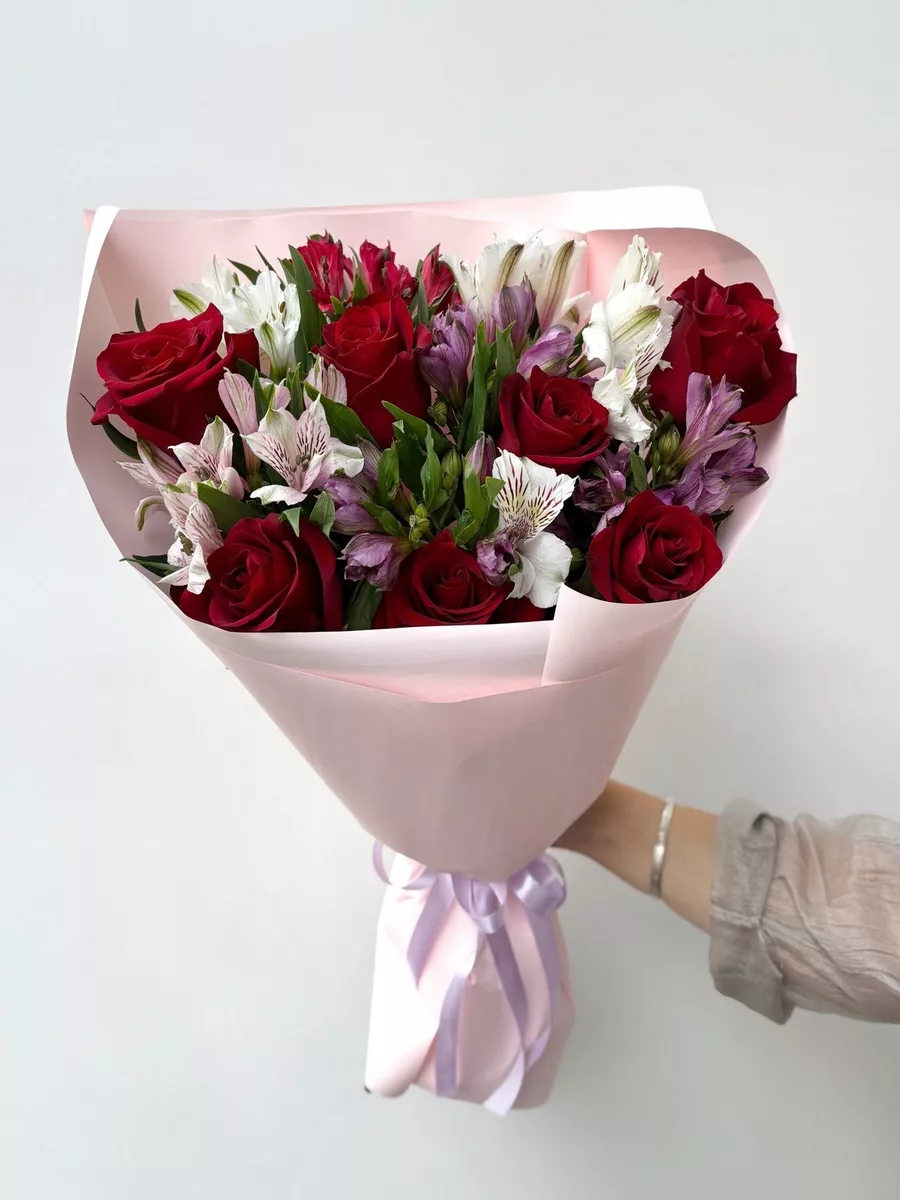


Small Bouquets: 3 to 9 Stems and What They Signal
A bouquet of three to nine stems is not a lesser gift in Russia — it is a specific one. Three stems of a premium variety, such as large-headed garden roses or double tulips, wrapped in kraft paper with a ribbon, is a classic florist's choice for a first date or a casual thank-you. It reads as intentional rather than minimal, provided the flowers themselves are top grade. Five and seven stems occupy the middle of this small range and are the most common counts for everyday gestures: a birthday for a colleague, a thank-you to a teacher, a visit to a friend. At seven stems of spray roses or alstroemeria, the bouquet fills the hand nicely without becoming a formal presentation piece. Nine stems starts to cross into something more considered — it is a number that signals effort without the weight of a larger arrangement. Varieties matter here because a small bouquet lives or dies on the quality of each individual stem. Ranunculus, with their layered petals, read as generous at five stems in a way that standard carnations at five stems do not. Freesias at seven stems bring fragrance that amplifies the gift beyond its visual size. The practical timing consideration with small bouquets is that they dry out faster once unwrapped because there is less stem mass to hold water. If delivery is going to a warm office or apartment, ask for the stems to be cut short and placed in a water-retaining wrap so the flowers arrive in good condition even after an hour in transit.
Mid-Range Counts: 11 to 21 Stems for Most Occasions
Eleven to twenty-one stems covers the widest range of occasions in Russian gifting practice and is where most orders actually land. Eleven roses is the standard birthday bouquet for someone you know well — a mother, a close friend, a partner of several years. It is large enough to require a vase, which means the recipient will engage with the flowers over several days rather than placing them in a glass and forgetting them. Fifteen stems is a step up in formality: it suits a significant birthday, a professional milestone, or a romantic anniversary in the first year or two of a relationship. At fifteen large-headed roses, the bouquet is visually substantial and will last five to seven days in a cool room if the stems were conditioned properly before delivery. Twenty-one is a number with clear romantic weight in Russian culture. It is not subtle. A bouquet of twenty-one red or cream roses is understood as a serious declaration, and florists see it ordered most often for Valentine's Day, March 8th, and anniversary milestones. Mixed bouquets in the eleven-to-twenty-one focal-stem range allow more variety: a florist might combine seven peonies with four stems of ranunculus and four stems of sweet peas, keeping the focal count at fifteen while the arrangement looks abundant. The mistake customers make in this range is choosing a large count of a small-headed variety, such as spray chrysanthemums, and wondering why the bouquet looks sparse. Count and visual volume are not the same thing, and a good florist will flag the mismatch before the order is placed.
Large Bouquets: 25, 35, 51 and Above — Occasions and Practicalities
Twenty-five stems and above moves the bouquet into statement territory. These counts appear at significant birthdays — the round numbers of 30, 40, 50 — at graduation ceremonies, at major professional celebrations, and at milestone anniversaries. Thirty-five roses in a hand-tied bouquet is a serious physical object: it weighs several kilograms, requires a large vase, and takes real skill to arrange so that all stems are supported and none are crushed. Florists at this count spend considerable time on conditioning — removing lower leaves, re-cutting stems under water, and allowing the flowers to hydrate for several hours before the arrangement is assembled — because a bouquet this large cannot recover gracefully if the flowers arrive stressed. Fifty-one is a count with specific romantic symbolism in Russia: it is used to signal a serious long-term commitment, most often in proposals or at significant wedding anniversaries. The number itself is the message. At this scale, variety choice becomes partly a structural question. Roses hold their shape in large bunches; peonies, which are top-heavy and fragile, become difficult to manage above about twenty-five stems without the arrangement losing structure by the time it is delivered. Garden roses are a better choice than standard hybrid tea roses for very large bouquets because their smaller, denser heads pack more naturally. Customers ordering above thirty-five stems should specify the delivery address carefully — a large bouquet carried up four flights of stairs in July heat needs to travel in a cooled vehicle and be handed over quickly.
Matching Stem Count to the Stage of a Relationship
Russian gifting culture reads stem count as a signal of relationship depth, and getting that calibration wrong in either direction creates awkwardness. Three to five stems from a premium variety is appropriate for early-stage romantic interest — it is generous without being pressuring. Moving to eleven or fifteen stems implies an established connection, and most recipients will interpret it that way. This matters when ordering for someone you do not know well: a new business contact, a recent acquaintance, a colleague you see twice a year. In those cases, seven to nine stems of a neutral variety — white or cream spray roses, mixed seasonal flowers, lisianthus — is socially safe. It reads as thoughtful without implying intimacy. For a long-term partner, the count can climb freely, and many couples develop their own conventions over time: the same number every anniversary, a count that matches a meaningful date. Florists hear these stories regularly and are happy to build a bouquet around a specific number even if it is unusual. The variety and presentation carry as much meaning as the count in these cases. Where customers go wrong is in two directions: ordering too few stems for a high-stakes occasion because they are watching budget, or ordering a very large count for a relatively new relationship and overwhelming the recipient. Both mistakes are fixable at the ordering stage. If you describe the occasion and the relationship plainly when placing the order, the florist can suggest a count that fits the context and the budget simultaneously.
What to Check When Ordering: Count, Variety and Delivery Conditions
When placing an order, three things determine whether the stem count you choose actually lands well: confirming the count with the florist, specifying the variety or at least the type of flower, and thinking about the delivery conditions at the receiving end. On count: always state the number explicitly rather than choosing a size category like small, medium, or large, because those categories vary between shops and the resulting bouquet may not match your expectation. If you are ordering for a Russian recipient and you are not certain about the odd-number convention, just ask — the florist will tell you immediately whether your chosen number is appropriate. On variety: different flowers have very different visual weights, and a count that looks generous in roses may look sparse in tulips and overwhelming in sunflowers. If you have a specific look in mind, describe it; if you do not, give the florist the occasion and let them choose the variety that works best at your chosen count. On delivery conditions: a large bouquet delivered to an office in summer needs to arrive in a cooled state and be placed in water immediately. If the recipient is in a meeting or otherwise unavailable for an hour after delivery, the flowers will suffer. For warm-weather delivery of large arrangements, ask whether the shop uses chilled transport and whether the bouquet can be left with a receptionist who will put it in water. At Five Flowers, delivery across Saint Petersburg and to other Russian cities is handled directly, and the team can advise on timing and packaging for specific destinations before the order is confirmed.
Stem count in Russia is a genuine part of the language of flowers, not a technicality to worry about and then ignore. The odd-number rule is the foundation, but the more useful skill is understanding how count, variety, and occasion interact — a bouquet of seven peonies for a close friend's birthday and a bouquet of twenty-one roses for a partner's anniversary are both correct choices, and both communicate something specific. The customers who get the most out of working with a florist are the ones who share the occasion, the relationship, and the budget plainly, and then let the professional make the final call on which variety at which count will actually look and last the way they want. We deliver bouquets across Russia in 1–2 hours.
Frequently asked questions
Is it really a problem to give an even number of flowers in Russia?
It is a widely observed convention, not a strict rule, but most Russian recipients will notice an even count and associate it with mourning. For a living recipient, stick to odd numbers. In mixed arrangements where stems are layered and harder to count, it matters less, but for single-variety bouquets — roses, tulips, peonies — keep the count odd.
What stem count makes sense for a first date in Russia?
Three to seven stems of a premium single variety is the most common choice: three large garden roses or five double tulips wrapped simply. It reads as deliberate and tasteful without implying a level of seriousness that may not yet exist. Avoid very large bouquets on a first meeting — they can feel pressuring rather than romantic in Russian social context.
Does the stem count change if I am ordering a mixed bouquet rather than a single variety?
In a mixed arrangement, most florists count only the focal flowers and keep that number odd, while secondary blooms and foliage are not counted. So a bouquet with nine roses, four stems of lisianthus, and several eucalyptus branches reads as a nine-stem bouquet. Tell the florist your intended count and they will structure the arrangement accordingly.
What is the largest practical bouquet size for delivery across Russia?
Bouquets of up to fifty-one stems are delivered regularly, but above thirty-five stems the logistics become more demanding. Large arrangements need chilled transport, careful packaging, and a recipient who can place them in water within minutes of arrival. For cities outside Saint Petersburg, discuss the delivery conditions with the florist before confirming a very large order.
Are there varieties that look more generous at lower stem counts?
Yes. Peonies, large garden roses, and ranunculus have dense, multi-layered heads that read as abundant even at five or seven stems. Tulips and standard roses look more sparse at low counts. Freesias and sweet peas add visual complexity and fragrance without requiring many stems. If budget is a consideration, variety choice can do more work than stem count.
Ready to send a bouquet?
Pick a city, choose the flowers, and we will hand them over with a photo confirmation.
Choose a city →