
How Much Should You Fill a Vase for Flowers?
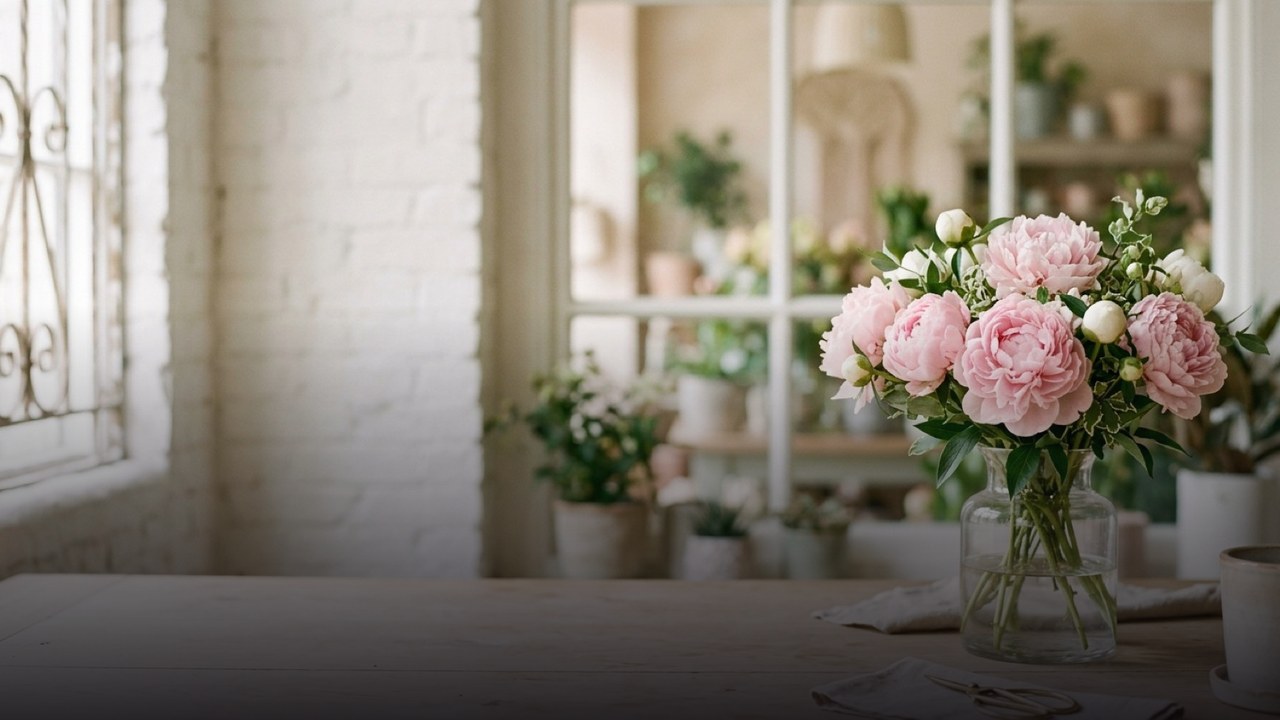
Customers often ask how much to fill a vase for flowers: for most mixed bouquets, start with the vase about halfway to two-thirds full. Keep every cut stem end submerged, remove any leaves below the waterline, and leave space below the rim. Adjust that starting level to suit the flowers and vase shape, following any care instructions supplied with the bouquet.
The useful measure is the depth around the stems once the flowers are in place, because the bouquet itself raises the water level. A tall vase can look underfilled while providing plenty of water; a shallow, crowded vessel may run low surprisingly quickly. At Pyat Tsvetov (5 Flowers), with flower shops in Saint Petersburg since 2011, we encourage recipients to check the actual stem ends rather than judge by appearance alone.
Set the water level after placing the bouquet
Begin with a clean vase, add water, then lower the prepared stems into it gently. Check that the shortest stem reaches comfortably below the surface, especially in a bouquet arranged at different heights. Leave enough room to lift and reposition the flowers without spilling water over the rim. If you add more water after arranging, pour slowly down the inside of the vase so you can watch the level rise.
A percentage is a starting point, not a rule for every container. In a very tall vase, filling two-thirds of its height may submerge unnecessary foliage; in a broad bowl, filling halfway may leave only a shallow layer around the cut ends. Choose a vessel that gives the stems adequate depth and supports the arrangement without squeezing it tightly. Our guide to stems, vases and bouquet support explains how the container affects the way flowers stand.
Adjust the amount for the flowers you have
Roses and many mixed bouquets benefit from a reasonable water reserve, particularly when several stems share one vase. Start within the halfway-to-two-thirds range if the vase proportions allow it, then check consumption during the first day. A large bouquet can use water faster than a few stems, so the initial fill should never replace daily checks. Remove lower leaves rather than letting them sit underwater to accommodate a deeper fill.
Tulips and calla lilies are often kept in shallower water than a leafy mixed bouquet, with the level checked frequently. If these flowers arrive with specific care directions, use those rather than applying a general deep-water routine. A mixed arrangement needs enough depth to cover every cut end, even when the individual flowers would usually be displayed differently on their own. For a closer comparison, see water levels by flower type.
Bouquets we can deliver




Prepare the stems before adding more water
Unwrap the bouquet enough to inspect the lower stems and remove any packaging that would sit in the water. Keep a binding in place if it holds the arrangement together, provided it does not prevent you from cleaning and trimming the stems. Remove submerged leaves carefully without stripping healthy foliage above the waterline. Leaves left in the vase water decay and make it harder to keep the container clean.
Use a clean, sharp cutting tool to make a fresh cut on each stem before placing it promptly in water. Trim only enough to refresh the ends and fit the vase, preserving the bouquet's intended proportions where possible. Avoid crushing or hammering the stems as a routine treatment, since this damages tissue and adds debris to the water. If the shortest stems barely reach, choose a more suitable vase instead of filling to the brim.
Use clean water and measure flower food correctly
Ordinary clean drinking water is a practical starting point for most cut bouquets. Use room-temperature water unless the flowers come with different instructions, and keep petals and flower heads out of it during normal vase care. If a flower-food sachet is supplied, follow its stated water volume rather than estimating the dose from the height of the vase. A measured jug is helpful because two vases filled to the same height can hold very different amounts.
Do not empty a sachet intended for a larger volume into a small vase of water. Prepare the correct dilution in a separate container if that makes measuring easier, then use the amount your vase needs. Avoid improvised mixtures of sugar, household cleaners or other additives when you do not have reliable instructions for the flowers concerned. Clean water, a clean vessel and regular attention are more useful than an uncertain homemade recipe.
Check daily, and replace dirty water promptly
Check the water level at least once a day, and more often at first if the bouquet is large or the room is warm. Look through the vase where possible, or gently move the stems aside to see the surface in an opaque container. Top up before any cut ends become exposed, using the correct dilution again if you are following a flower-food programme. Do not assume that yesterday's fill is still sufficient simply because the flowers look upright.
Replace water promptly if it becomes cloudy, develops an unpleasant smell or contains fallen leaves. As a routine without specific flower-food instructions, change the water every day or two, washing the vase and rinsing away loose debris before refilling. Support the bouquet while lifting it out, and refresh the stem cuts when needed with a clean tool. Keeping the vase away from direct sun, radiators and ripening fruit also helps reduce avoidable stress on the flowers.
Help a recipient in Russia get the flowers into water
When sending flowers to someone else, choose a delivery time when they can receive the bouquet and put it in a vase soon afterwards. We deliver across Russia; city delivery costs 500 RUB, while the operator confirms the price for remote districts and suburbs when confirming the order. In large cities, express delivery is available in 1–2 hours after order confirmation, with exact-time delivery within plus or minus 30 minutes and windows of 09–12, 12–15, 15–18 or 18–21 also available. Orders can be placed 1–30 days ahead, and delivery in Saint Petersburg is around the clock.
Choose flowers from our bouquets catalogue, enter the delivery details and check the payment options shown at checkout, which uses CloudPayments. Delivery is anonymous by default, so include your name in the free card if you want the recipient to know who sent the flowers; you can also add a brief reminder to place them in clean water. The courier calls the recipient about 15 minutes before arrival, and if they are absent, we agree a second delivery that day or a handover to a neighbour or concierge with the sender's consent. For questions about arranging your order, call 8 (812) 507-67-05. We deliver bouquets across Russia in 1–2 hours.
Frequently asked questions
Should I fill a flower vase all the way to the top?
Usually, no: leave room below the rim and keep leaves above the waterline. For most mixed bouquets, halfway to two-thirds full is a useful starting point, adjusted so every cut end stays submerged.
How many litres of water does a bouquet need?
There is no fixed volume for every bouquet because vase width, stem length and the number of flowers vary. Use enough to cover all the cut ends comfortably, and measure the volume if you are adding flower food.
Should I top up the vase or change all the water?
Top up when the level drops and the water remains clean, following any flower-food instructions. If the water is cloudy, smells unpleasant or contains decaying material, empty it, wash the vase and refill.
Can too much water harm cut flowers?
An unnecessarily high level can submerge leaves and encourage decay in the vase. Remove foliage below the surface and follow any specific shallow-water guidance for the flowers you have.
What should I do if the vase has run dry?
Clean the vase, give the stems fresh cuts with a clean, sharp tool and return them promptly to fresh water. Some flowers may recover, but the result depends on their condition and how long they were without water.
Ready to send a bouquet?
Pick a city, choose the flowers, and we will hand them over with a photo confirmation.
Choose a city →