
How to Care for Lilies in a Vase, from Bud to Final Bloom
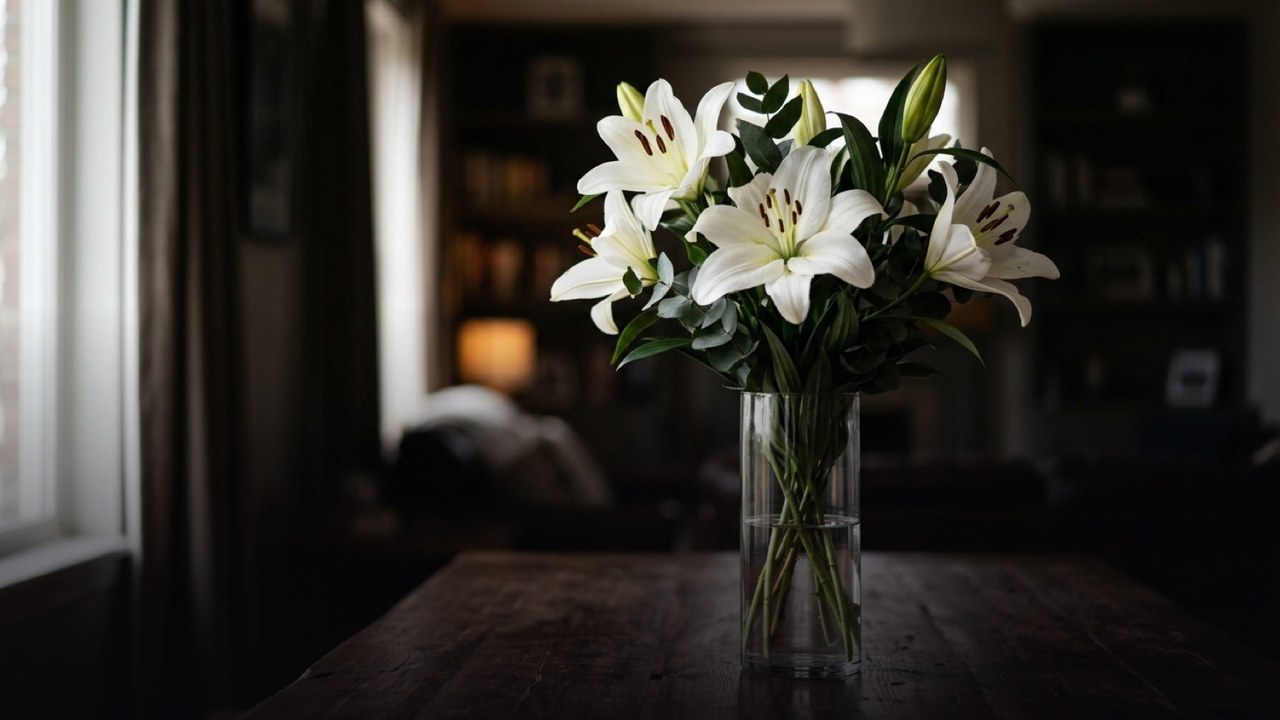
To care for lilies in a vase, use a clean container, trim the stem ends with a sharp tool and remove every leaf that would sit below the waterline. Add cut-flower food according to its packet, check the water daily and replace it whenever it becomes cloudy, cleaning the vase each time. Keep the arrangement away from direct sun, heaters and ripening fruit, and remove fading flowers as they decline.
Customers at Pyat Tsvetov (5 Flowers) often ask about closed buds, falling pollen and how much water lilies need once the bouquet reaches home. Our Saint Petersburg flower shops have been serving customers since 2011, and the most useful advice starts with the recipient's room and routine. A stable vase, accessible waterline and suitable position matter more than an elaborate care ritual. Before choosing lilies for someone else, also check whether their household has cats or whether strong floral fragrance would be unwelcome.
Prepare the vase and stems before arranging
Wash the vase with washing-up liquid, rinse it thoroughly and remove any residue left by an earlier bouquet. Choose a container with a broad enough base to support the stems as the flowers open and become heavier. The neck should hold the arrangement without squeezing the stems into a tight bundle. Fill it with fresh, room-temperature water, leaving enough space to keep all remaining foliage above the surface.
Unwrap the bouquet carefully and remove any packaging that would enter the water, while supporting the stems rather than pulling them apart. With clean, sharp secateurs or a suitable knife, cut roughly 1–2 cm from each stem end and place the stems into water promptly. Make a clean cut without crushing or splitting the stem; an angled cut can help prevent the end from resting flat against the vase base. Remove submerged leaves individually, keeping healthy leaves higher up the stems.
Keep the water clean and check its level every day
Check the waterline every day, particularly in the first few days, because a full vase at breakfast may need topping up later. Keep the cut ends submerged, but avoid raising the water above the lowest leaves. If you use cut-flower food, follow the stated ratio of powder or liquid to water instead of adding an entire packet to a small vase. Keep the remaining instructions so that you can mix the next batch correctly.
Replace the water every one or two days, and sooner if it looks cloudy, smells unpleasant or contains fallen plant material. Lift the stems out together, wash and rinse the vase, then refill it with fresh water and correctly measured flower food if available. Recut a small amount from the ends if they have become discoloured or slimy, cleaning the cutting tool before use. Plain clean water is preferable to guessed mixtures of sugar, bleach, aspirin or other household products.
Bouquets we can deliver




Choose a position that supports gradual opening
Place the vase in a comfortably cool room with indirect light, away from radiators, fireplaces and sunny windowsills. Avoid the direct stream from an air conditioner or a draughty doorway, where petals can dry or stems can be knocked. A position that looks shaded in the morning may receive strong afternoon sun, so check it later in the day. Keep the bouquet away from ripening fruit, which releases ethylene that can accelerate ageing in sensitive cut flowers.
Firm buds showing some colour may continue opening after the bouquet is arranged, while very small, tight green buds may never develop fully. Leave them space and maintain clean water rather than peeling back petals or applying heat to force a result. If several blooms face the same direction, gently adjust the stems without twisting the flower heads. For differences between lily groups, fragrance and opening habits, see our guide to lily varieties and vase life.
Manage pollen carefully and keep lilies away from cats
As each flower opens, look for the pollen-bearing anthers at the ends of the slender filaments inside the bloom. If you want to reduce staining, gently remove the anthers with a tissue before they release loose pollen, taking care not to bruise the petals. Support the flower lightly and keep the tissue away from clothing and upholstery. Removing anthers helps prevent mess; it does not make the flowers safe for pets or reliably remove their fragrance.
If dry pollen falls on fabric, avoid rubbing it or immediately adding water, which can work the pigment further into the fibres. Lift loose particles gently with adhesive tape, then follow the fabric's care instructions or seek advice from a professional cleaner for a delicate item. True lilies, including common Asiatic and Oriental types, are highly toxic to cats, and pollen and vase water can also be dangerous. Choose a different flower for a home with cats; if exposure is suspected, contact a vet immediately rather than waiting for symptoms.
Remove spent blooms and respond to changes
Inspect individual flowers as you check the water, because blooms on the same stem rarely finish together. When a flower wilts or its petals begin dropping, snip off that spent flower without removing nearby buds or healthy leaves. Collect fallen petals before they land in the water or stain the surface beneath the arrangement. Keep the remaining stem in the vase while it still carries healthy flowers or developing buds, and remove stems that are rotting.
If several flowers suddenly droop, first check whether the water has run low, whether stem ends are slimy and whether the vase has been standing near heat. Refresh the water, clean the container and recut affected stems before returning the bouquet to a suitable position. These steps may help flowers affected by poor water uptake, but they cannot reverse advanced ageing or damaged petals. Vase life varies with lily type, freshness and room conditions; our lily vase-life guide explains why a fixed number of days is not a reliable promise.
Send lilies to Russia with the recipient's routine in mind
When sending flowers abroad, choose around the recipient's preferences: lilies can feel formal or celebratory, while white lilies may also carry religious or memorial associations. A short personal message helps explain the occasion without relying on flower symbolism, and a card with your text is free. Browse the bouquets catalogue, then consider when the recipient can receive the flowers and put them into water. We deliver across Russia; city delivery costs 500 RUB, and the operator confirms the price for remote districts and suburbs when confirming the order.
In large cities, express delivery is available within 1–2 hours after order confirmation; other options include an exact time with a ±30-minute allowance, windows of 09–12, 12–15, 15–18 or 18–21, and pre-ordering 1–30 days ahead. In Saint Petersburg, delivery is available around the clock, and the courier calls the recipient about 15 minutes before arrival. Delivery is anonymous by default, so the courier does not name the sender; include your name in the card if you want the recipient to know who sent it. Online checkout uses CloudPayments: check the payment options displayed there, consult delivery and payment details, or call 8 (812) 507-67-05 with questions.
Frequently asked questions
How much water should I put in a vase of lilies?
Use enough water to keep the cut stem ends well submerged, with every leaf above the waterline. Check daily and top up as needed; the right level depends on the vase and stem length rather than a fixed quantity.
Why are my lily buds not opening?
Very immature buds, poor water uptake and ageing can all prevent opening. Refresh the water, check the stem ends and provide indirect light, but do not peel the buds apart or assume every green bud will bloom.
Should I remove the pollen from lilies?
You can gently remove the pollen-bearing anthers as flowers open to reduce staining. This does not make lilies safe for cats, and the flowers should still be kept out of households where cats could encounter them.
Can I keep cut lilies in direct sunlight?
Choose indirect light instead, because direct sun can heat the vase and speed water loss. Keep the arrangement away from heaters and check whether its position becomes sunny later in the day.
Can lilies be delivered without revealing the sender?
Yes, delivery is anonymous by default and the courier does not name the sender. A card with your text is free, so you can include a personal message and decide whether to sign it.
Ready to send a bouquet?
Pick a city, choose the flowers, and we will hand them over with a photo confirmation.
Choose a city →