
How to Properly Cut Flower Stems at Home
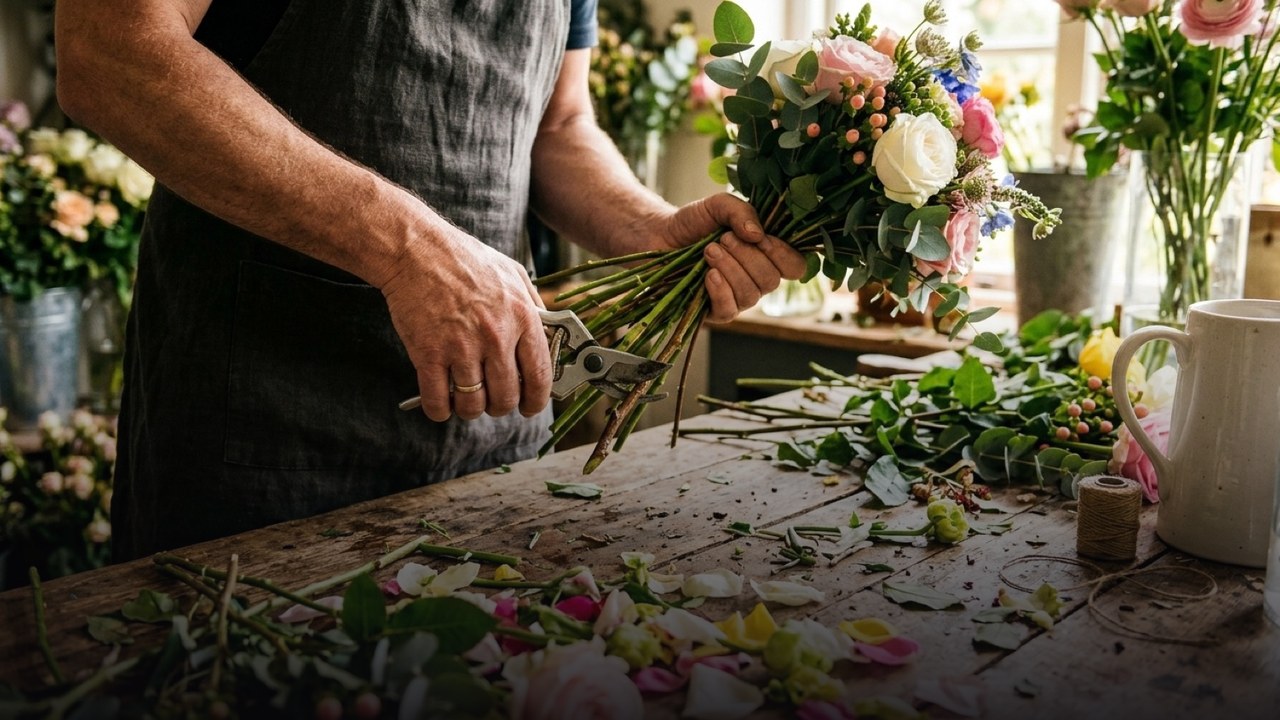
To properly cut flower stems, use a clean, sharp blade or secateurs to remove about 1–2 cm from each base, making a slight diagonal cut without crushing the stem. Strip off leaves that would sit below the waterline, then place each stem promptly into a clean vase of fresh water. If the base is damaged, trim above the affected area rather than following a fixed measurement.
Customers at Pyat Tsvetov (5 Flowers) often ask whether ordinary scissors will do and how much of a bouquet they should shorten. In our Saint Petersburg flower shops, open since 2011, the useful starting point is the condition of the stems and the vase they will stand in. A fresh cut helps water uptake, but it works alongside clean water, suitable support and careful handling. Here is a practical routine for preparing a new bouquet and refreshing it later.
Prepare the vase and tools before you cut
Wash the vase with detergent, rinse it thoroughly and fill it before trimming the bouquet. Residue around the base or inside a narrow neck can contaminate fresh water, so use a bottle brush where needed. Choose a vase that supports the stems without packing them tightly together. A bouquet that is squeezed into the opening is harder to inspect and clean.
For most soft stems, use sharp floral snips; for firmer stems, choose sharp secateurs that make a clean cut. Ordinary household scissors can pinch a thick stem before cutting through it, particularly if the blades are blunt. A sharp knife also works, but only if you can control it safely and cut away from your hand. Wipe away plant residue and clean the tool before starting.
Set out the bouquet beside the prepared vase so the cut ends spend as little time exposed to air as practical. Remove any packaging that prevents the stems from sitting freely in water. If the bouquet has a structural tie, keep it until you can support the arrangement while working. Handle stems individually rather than forcing the whole bunch through one cut.
Make a clean cut and choose the right length
Hold a stem securely above the point you intend to cut, without squeezing it flat. For a freshly received bouquet with sound bases, removing roughly 1–2 cm is a useful starting point. Make one clean, slightly diagonal cut through healthy tissue. If the end is split, slimy or badly bruised, remove enough to reach a firm, intact section.
The diagonal cut helps keep the opening from resting flat against the bottom of the vase. You do not need to measure a precise 45-degree angle or create a long, fragile point. The condition of the cut matters more than achieving a particular slope. Our guide to cutting flower stems at an angle explains this part in more detail.
Check the intended height before shortening every stem, especially with a shallow or narrow-necked vase. Leave enough stem inside the vessel to support the flower heads, then adjust individual lengths to keep the arrangement balanced. Place each freshly cut stem into water promptly as you work. Repeatedly trimming a bouquet to make all the bases identical wastes length without necessarily improving its shape.
Bouquets we can deliver




Remove submerged leaves and adapt to the stem
Remove leaves from the portion of each stem that will be underwater. Submerged foliage deteriorates and adds debris to the vase, making water care more difficult. Keep healthy leaves above the waterline unless they crowd the arrangement or are damaged. Use your fingers or snips carefully so you do not tear long strips from the stem surface.
Soft or hollow stems need a sharp tool and a gentle grip because their walls can collapse under pressure. Make a modest diagonal cut and avoid squeezing the base to test it afterwards. Firm, woody stems need secateurs capable of cutting through them cleanly. Do not hammer, mash or peel their ends as a general treatment; these actions damage tissue and leave more debris in the water.
Some flowers need separate handling before they join a mixed arrangement. Freshly cut daffodils release sap that can affect other flowers, so condition them separately first and follow any flower-specific care instructions supplied. Avoid recutting them immediately before transferring them into a mixed vase, because that releases sap again. For an unfamiliar flower, identify it before trying treatments such as hot water, flame or stem splitting.
Put the fresh cut into water and keep the vase clean
Fresh, clean tap water is a practical starting point for most everyday bouquets. If flower food is supplied, use the dilution printed on its packet rather than estimating a stronger mixture. Check that the cut ends are submerged and that no leaves sit in the water. Do not assume that adding extra powder, sugar or household chemicals will improve the result.
Check the water level daily, since a full bouquet can lower it noticeably. Change the water when it becomes cloudy or develops an unpleasant smell, and wash the vase rather than simply adding more water to it. When lifting the flowers out, hold the stems together gently to preserve the arrangement. Remove fallen leaves and any decaying material before returning the bouquet.
Place the vase away from direct sun, radiators and strong draughts, and avoid keeping it beside ripening fruit. These choices reduce avoidable stress on cut flowers while you maintain their water supply. A new cut cannot compensate for a dirty vase or a location that makes the bouquet lose water quickly. For more background on the role of the cut itself, see why flower stems should be cut before going into water.
Recut when needed and assess drooping realistically
Inspect the bases whenever you change the water instead of shortening the bouquet automatically every day. If the ends have deteriorated or the flowers have spent time out of water, make a fresh cut above the affected area. Use clean tools again and return the stems to the washed, refilled vase promptly. Take off only what is needed, because repeated large cuts soon leave the arrangement too short for its vessel.
A drooping flower may have difficulty taking up water, but it can also be ageing or physically damaged. Start by checking the water level, the cleanliness of the vase and whether the stem is bent or crushed. Refreshing the water and recutting a sound stem may help, but recovery is not certain. Our guide to drooping stems explains how to assess the common causes.
If a stem has a clear kink, its flower head may remain unsupported even after the base is recut. Shortening it above the damaged point can make it usable in a smaller vase, provided enough healthy stem remains. Remove flowers that are decaying so their debris does not stay among the healthy stems. Avoid treating every wilted head with a deeper cut, since cutting cannot reverse all forms of deterioration.
Arrange flower delivery in Russia and share simple care advice
When sending a bouquet to someone in Russia, choose a delivery time when they can receive it and put it into water. You can browse our bouquets catalogue and add a free card with your own text. A short note such as “Trim the stems and place in a clean vase” gives the recipient a useful first step. Delivery is anonymous by default: the courier does not name the sender, so sign the card if you want to identify yourself.
We deliver flowers across Russia, with city delivery costing 500 RUB; the operator confirms the price for remote districts and suburbs when confirming the order. Express delivery in large cities is available 1–2 hours after order confirmation. You can also arrange delivery at an exact time with a tolerance of 30 minutes either way, choose the 09–12, 12–15, 15–18 or 18–21 window, or pre-order 1–30 days ahead. In Saint Petersburg, delivery is available around the clock.
The courier calls the recipient about 15 minutes before arrival, so provide a number they can answer. If the recipient is absent, we agree a second delivery the same day or, with the sender’s consent, hand the flowers to a neighbour or concierge. Online checkout uses CloudPayments; check the options displayed there for your card, as acceptance of every foreign card is not guaranteed. For questions about an order, call 8 (812) 507-67-05. We deliver bouquets across Russia in 1–2 hours.
Frequently asked questions
How much should I cut off flower stems?
For fresh stems with healthy bases, start with about 1–2 cm. Remove more if necessary to get above a damaged or deteriorated section, while keeping enough length for the vase to support the flowers.
Can I cut flower stems with kitchen scissors?
Sharp, clean scissors may cut thin, soft stems adequately, but blunt scissors can crush them. Use floral snips or suitable secateurs when scissors cannot make a clean cut in one controlled movement.
Do flower stems have to be cut underwater?
Underwater cutting is not necessary as a general home routine. Prepare the vase first, make a clean cut with a sharp tool and place the stem promptly into fresh water.
Should I recut flower stems every day?
Daily recutting is not a universal requirement. Check the water daily and inspect the bases when changing it, then trim if the ends have deteriorated or the stems have been left out of water.
Will cutting the stems revive a wilted bouquet?
Recutting may help if poor water uptake is contributing to wilting, particularly when combined with a clean vase and fresh water. It cannot reliably restore flowers affected by ageing, decay or serious stem damage.
Ready to send a bouquet?
Pick a city, choose the flowers, and we will hand them over with a photo confirmation.
Choose a city →