
How to Revive Dying Flowers and Recognise What Can Recover
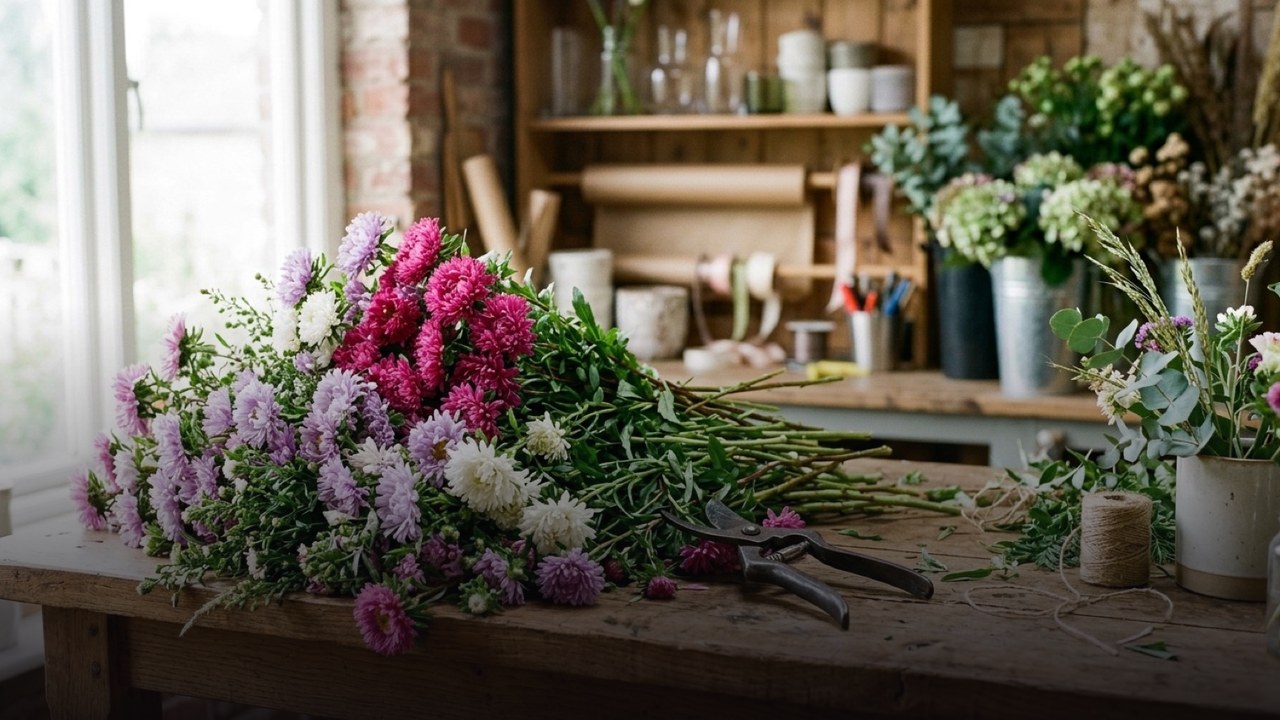
To revive dying cut flowers, wash the vase, remove leaves below the waterline, trim the stem ends with a clean, sharp tool and return the stems promptly to fresh water. Keep the bouquet in a cool place away from direct sunlight and give it several hours to rehydrate before judging the result. Limp stems and slightly wilted petals may recover, but brittle petals, mould and rotten stems cannot be restored.
At Pyat Tsvetov (5 Flowers), customers often ask whether a drooping bouquet needs more water or has simply reached the end of its vase life. The useful distinction is between flowers that cannot take up enough water and flowers whose tissues are already deteriorating. Our Saint Petersburg flower shops have been serving customers since 2011; the advice below concerns cut bouquets in a vase, because potted plants need a different diagnosis.
Check which flowers still have a chance
Unwrap the bouquet enough to inspect the stems, leaves and flower heads without pulling them apart roughly. Flexible stems, soft leaves and petals that still hold together are reasons to try rehydration, especially if the vase ran dry. A bent stem, however, may have a crease that interrupts water movement rather than a simple shortage of water. Check each flower separately: one failing stem does not mean the entire bouquet is beyond saving, and a mixed arrangement rarely ages at one uniform rate.
Remove flowers with fuzzy mould, extensive mushy tissue or a stem that collapses when handled gently. A few dry outer petals can be removed for appearance, but peeling away layers will not make an ageing flower young again. Slimy stem ends and an unpleasant smell mean the vase needs cleaning immediately, even if some blooms still look presentable. If a flower head is dry, papery and shedding petals, concentrate on protecting the healthier stems instead of repeatedly treating the exhausted one.
Clean the vase and reopen the stem ends
Lift the flowers out and empty the old water rather than topping it up. Wash the vase with dishwashing liquid, clean the inside thoroughly and rinse away the residue; use another clean container if you cannot reach a dirty narrow neck. Remove any leaves that would sit under water, since decaying foliage makes it harder to keep the vase clean. Also remove loose leaves or petals floating between the stems, taking care to preserve healthy foliage above the waterline.
With a clean, sharp knife or suitable flower snips, remove roughly 1–2 cm from each stem end, cutting back further if the base is visibly damaged. Aim for a clean cut that leaves the stem open rather than crushed; an angled cut suits many firm stems but is less important than using a sharp tool. Do not hammer, split or scrape stems as a general revival treatment. Place each freshly cut stem promptly into water, and make sure shorter stems actually reach it once the bouquet is arranged.
Bouquets we can deliver




Use fresh water and allow a calm recovery
Fill the clean vase with fresh, room-temperature drinking water, deep enough to cover the cut ends while keeping foliage out of it. If you have a sachet of cut-flower food, follow its stated dilution and measure the water rather than guessing. A concentrated mixture is not a stronger rescue treatment, and a partly filled vase may need less product than a full one. If no flower food is available, use plain clean water and pay close attention to cleanliness instead of improvising with sugar, aspirin or household cleaners.
Set the vase somewhere cool, out of direct sun and away from radiators, strong draughts and ripening fruit. Leave the flowers upright and undisturbed for several hours, checking that the stems remain in water as the level falls. Improvement may appear as firmer leaves or a head that gradually lifts, rather than a dramatic change in the whole bouquet. Our guide to first aid for wilted flowers offers a focused sequence for assessing a tired arrangement without repeatedly handling it.
Adapt the treatment for roses, gerberas and mixed bouquets
A rose with a drooping head may benefit from a fresh cut and a quiet period of rehydration if its stem remains sound. If the neck is sharply creased, supporting the head may improve its position but cannot repair the damaged tissue. Keep the bloom dry while watering the stem, especially when petals are tightly packed or already marked. For a rose bouquet that has just arrived, see how to revive wilted roses after delivery before trying more intensive treatments.
Gerberas need particularly gentle handling because their stems can bend or become soft near the base. Use a clean vase that supports them without forcing a bend, keep only the lower stem ends in water, and check the level frequently so they do not run dry. In a mixed bouquet, separate stems temporarily if one type needs different water depth or support. The guide to why gerberas droop in a vase helps distinguish a hydration problem from damage that water alone cannot correct.
Avoid harsh rescue tricks and keep checking the water
Boiling water, ice baths and complete submersion are not universal remedies for a failing bouquet. Heat can damage living tissue, while soaking flower heads can leave moisture trapped between petals and encourage deterioration. Do not put an entire mixed arrangement through a treatment intended for one particular flower or stem condition. For an unidentified bouquet, the sensible first attempt is a clean vase, fresh cuts, suitable water and a cool resting place; repeating stronger treatments can damage flowers that were still recoverable.
After the initial recovery period, check the vase daily and replace the water whenever it becomes cloudy or develops an odour. Clean the container again if it feels slippery inside, and remove individual flowers as they deteriorate so fallen material does not collect in the water. Recut a stem when its base is discoloured or no longer taking up water well, rather than shortening every stem repeatedly without a reason. If sound stems show no improvement after several hours or overnight, inspect for damage and accept that some flowers have reached the end of their vase life.
Arrange a fresh bouquet for someone in Russia
If you are abroad and the bouquet is with a friend or relative in Russia, send them the short care sequence first: clean vase, fresh cuts, clean water and a cool position. If you decide to send fresh flowers, choose through our bouquets catalogue and plan delivery around when the recipient can receive them. We deliver flowers across Russia; city delivery costs 500 RUB, while the operator confirms the price for remote districts and suburbs when confirming the order. In large cities, express delivery is available in 1–2 hours after order confirmation.
You can also choose an exact delivery time with a tolerance of plus or minus 30 minutes, a window of 09–12, 12–15, 15–18 or 18–21, or pre-order 1–30 days ahead. Delivery in Saint Petersburg is available around the clock, and the courier calls the recipient about 15 minutes before arrival. Delivery is anonymous by default, meaning the courier does not name the sender; add your name to the free message card if you want the recipient to know who sent it. Online checkout uses CloudPayments, so check the payment options displayed there; for questions, call 8 (812) 507-67-05. We deliver bouquets across Russia in 1–2 hours.
Frequently asked questions
Can dying flowers come back to life?
Wilted cut flowers may regain firmness if dehydration is the cause and their tissues are still sound. Dead, rotten or thoroughly dried tissue cannot recover, even when other stems in the same vase respond to fresh water.
How long should I wait after recutting the stems?
Give the flowers several hours in fresh water in a cool position, and reassess by the next morning if necessary. Check the water level during that time, because newly cut stems must remain submerged.
Should I add sugar to revive a bouquet?
Use commercial cut-flower food at the dilution on its packet if you have it. Sugar alone does not provide a balanced vase solution and can encourage microbial growth, so plain clean water is a better fallback.
Will removing wilted petals save the flower?
Removing a few damaged outer petals can improve its appearance, but it does not fix a hydration problem or reverse ageing. Handle petals sparingly and remove the whole flower if mould or extensive decay is present.
Can I order flowers to Russia with a foreign bank card?
Our online checkout uses CloudPayments; check the payment options shown there for your card. Acceptance of every foreign-issued card cannot be guaranteed.
Ready to send a bouquet?
Pick a city, choose the flowers, and we will hand them over with a photo confirmation.
Choose a city →