
How to Trim Flower Stems: A Practical Florist’s Guide
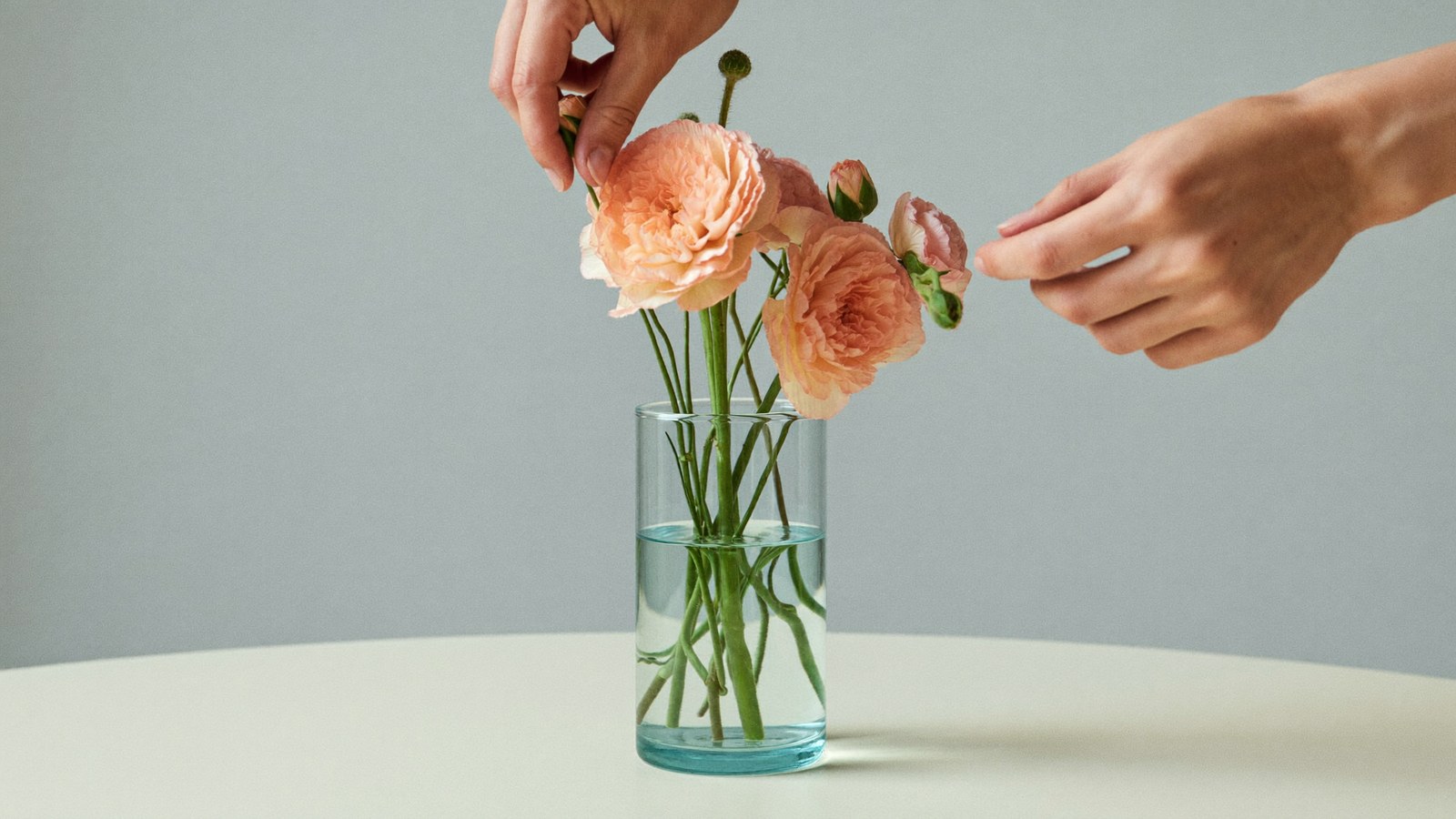
To trim flower stems, use clean, sharp scissors or secateurs to remove about 1–2 cm from the bottom, then place the flowers promptly in a clean vase of fresh water. Cut firm stems such as roses at roughly a 45-degree angle; soft tulip stems can be cut straight across. Remove any leaves that would sit below the waterline, and avoid crushing or splitting the stem ends.
Customers at Pyat Tsvetov (5 Flowers) often ask how much stem to remove and whether every flower needs the same treatment. In our Saint Petersburg flower shops, open since 2011, the practical starting point is the condition of the bouquet and the vase it will occupy. A fresh, firm stem needs only a small trim, while a damaged base needs cutting back to sound tissue. Keep the arrangement’s balance in mind, but give each stem a clean cut and enough water before adjusting its final position.
Prepare the vase and cutting tools before unwrapping
Wash the vase with washing-up liquid, rinse it thoroughly and fill it before you start cutting. Residue from an earlier bouquet can contaminate fresh water, so pay attention to the bottom and the inside of a narrow neck. Choose a vase that supports the stems without squeezing them into a tight bundle. If your bouquet came with flower food, use the amount of water stated on its packet rather than guessing a stronger mixture.
Use sharp secateurs for firm, woody stems and sharp scissors for softer stems that they can cut cleanly. Blunt household scissors may flatten the base before they sever it, leaving crushed tissue instead of an open cut. Clean the blades before use and after cutting through visibly decayed material, then rinse or dry them as appropriate. Set out a container for trimmings and keep the filled vase within reach so freshly cut stems can go directly into water.
Measure first, then make one clean cut
Hold a stem beside the vase to judge the finished height before removing a large section. The flower head should have enough support to stay in position, while the lower end must reach well into the water. Begin by removing about 1–2 cm from a fresh stem; if it needs shortening for the arrangement, include that extra length in your first cut. Work stem by stem, keeping the rest of the bouquet in water where practical, rather than leaving the whole bunch on a dry worktop.
For roses and other firm stems, make a single diagonal cut at roughly 45 degrees without sawing or twisting. The angled end helps prevent the cut surface from resting flat against the vase base, but an exact angle matters less than a clean, undamaged cut. Put the stem into water promptly instead of laying it aside while you finish the bunch. Routine home trimming does not require cutting beneath water; a clean tool and immediate placement in the prepared vase are easier to manage.
Bouquets we can deliver




Adjust the technique for roses, tulips and soft stems
Rose stems can be tough enough to resist ordinary scissors, especially near the base, so use secateurs if the blades struggle. Cut above a crushed, split or discoloured end, checking that the remaining tissue feels firm. Avoid stripping away the outer surface of the stem or removing every thorn merely for appearance, as this can create unnecessary wounds. For a drooping bouquet, our guide to reviving wilted roses after delivery explains the next care steps.
Tulips have softer stems and can be trimmed straight across with a sharp blade or scissors that do not squash them. Their stems may continue to lengthen and bend in the vase, so allow room for the arrangement to change shape rather than repeatedly cutting it back to a rigid outline. Use a gentle grip on hollow or easily bruised stems such as gerberas, and avoid pushing the blades through a whole handful at once. Never hammer or split stem ends as a general care technique.
Clear the waterline and arrange without crowding
Remove leaves from the portion of each stem that will be submerged, while preserving healthy foliage above the waterline. Wet leaves can decay and make the water dirty, so check the finished arrangement from the side after filling the vase. Snip stubborn leaf stalks carefully instead of pulling a long strip of skin down the main stem. On roses, remove a low thorn only if it obstructs handling or positioning, taking care not to gouge the surrounding tissue.
Keep the stems loose enough that you can check their bases and replace the water. If the bunch is too dense for the vase neck, use a wider vase or divide it between two containers instead of forcing it in. Remove decorative wrapping that would become wet or prevent you from checking the water level; handle any binding carefully so the stems do not spring apart. Our guide to stems, vases and bouquet support helps you choose a practical arrangement.
Refresh the water and recognise when to trim again
Check the water daily and top it up before any stem ends become exposed. Change it promptly if it looks cloudy, contains fallen plant material or develops an unpleasant smell; wash the vase during the change. When lifting the flowers out, inspect the lower stems and make a small fresh cut if the ends have dried out or deteriorated. If using flower food again, follow the packet instructions for the fresh volume of water instead of adding an unmeasured extra dose.
A flower that droops does not always need another large section cut away. First check whether its stem reaches the water, whether the base is damaged and whether the flower head or stem has been bent during handling. Remove decaying flowers so they do not sit among healthy stems, and place the vase away from direct sun, heaters and ripening fruit. Repeated trimming cannot reverse advanced decay or a broken stem, so stop shortening once the remaining length no longer suits the vase.
Send flowers to Russia with useful care instructions
When ordering for someone abroad, a short care message can be more useful than a complicated list of rules: prepare a clean vase, trim the ends and keep leaves out of the water. Choose a bouquet from our bouquets catalogue, and use the free card for your personal message or a brief care reminder. Delivery is anonymous by default, so the courier does not name the sender. If you want the recipient to know who sent the flowers, include your name in the card text.
We deliver flowers across Russia; city delivery costs 500 RUB, while the operator confirms the price for remote districts and suburbs when confirming the order. In large cities, express delivery is available 1–2 hours after confirmation; other choices include an exact time within ±30 minutes, windows of 09–12, 12–15, 15–18 or 18–21, and pre-orders 1–30 days ahead. Saint Petersburg delivery operates around the clock, and the courier calls the recipient about 15 minutes before arrival. See delivery and payment for ordering information; online checkout uses CloudPayments, and customers should check the payment options displayed there.
Frequently asked questions
How much should I trim off flower stems?
For fresh, firm stems, start with about 1–2 cm, allowing extra length if you need to fit the vase. Cut past a damaged or decaying base until you reach firm tissue, provided enough usable stem remains.
Do all flower stems need a 45-degree cut?
No. A diagonal cut is useful for firm stems such as roses, while soft tulip stems can be cut straight across. Sharp, clean blades and an uncrushed stem end matter more than achieving a precise angle.
Can I trim flowers with kitchen scissors?
Yes, if the scissors are clean, sharp and able to cut the stem without flattening it. Switch to secateurs when a firm stem resists the blades.
Should I recut flower stems every day?
Daily cutting is usually unnecessary. Check the water every day and inspect the ends when changing it, trimming again when the bases have dried out or deteriorated.
Can I order flowers to Russia from another country?
You can order flowers for delivery across Russia through our website, with online payment through CloudPayments. Check the options shown at checkout rather than assuming a particular foreign card will be accepted; questions can be directed to 8 (812) 507-67-05.
Ready to send a bouquet?
Pick a city, choose the flowers, and we will hand them over with a photo confirmation.
Choose a city →