
Orchids in Russia: Cut Stems vs. Potted Plants for Gift Delivery
Customers call us every week asking for 'an orchid' without realizing they are describing two completely different products. One is a cut stem — a single branch of flowers harvested from the plant and used inside a bouquet — and the other is a living potted plant in soil, roots intact, meant to be kept and re-bloomed. Both arrive at the door looking spectacular for the first hour, and then their paths diverge completely. Getting this wrong means the recipient either watches a beautiful arrangement wilt in four days or struggles to keep a plant alive on a windowsill she never wanted. This article lays out the practical difference so you can order with confidence.
What a Cut Orchid Stem Actually Is
When florists talk about orchid stems in a bouquet, they almost always mean Cymbidium or Dendrobium cut stems. A Cymbidium stem carries large, waxy flowers — often ten to fourteen blooms per spike — and is harvested when most of the buds are open. A Dendrobium stem is thinner, with smaller flowers arranged more densely along the branch. Both are cut at a growing farm, conditioned in water, and shipped to the flower market, where they arrive already separated from any root system. They will never re-root or grow again. What you are buying is essentially a long-lasting bloom on a stem, not a plant. In a well-kept vase with clean water changed every two days and no direct sunlight, a Cymbidium stem holds for three to four weeks. Dendrobium is slightly shorter at two to three weeks. Temperature matters enormously: anything above 22 degrees Celsius accelerates petal drop, which is why florists keep these stems in cold storage at 6 to 10 degrees right up until the bouquet is assembled. Cut orchid stems are most commonly used as focal flowers inside mixed bouquets, paired with greenery or roses, or arranged as a single-variety stem bouquet for a clean, architectural look. They travel well in a wrapped bouquet because the flowers sit firmly on a rigid spike and do not bruise the way rose petals do. For a same-day delivery across Saint Petersburg, a cut-stem orchid bouquet is straightforward to prepare and arrives in excellent condition.
Bouquets we can deliver
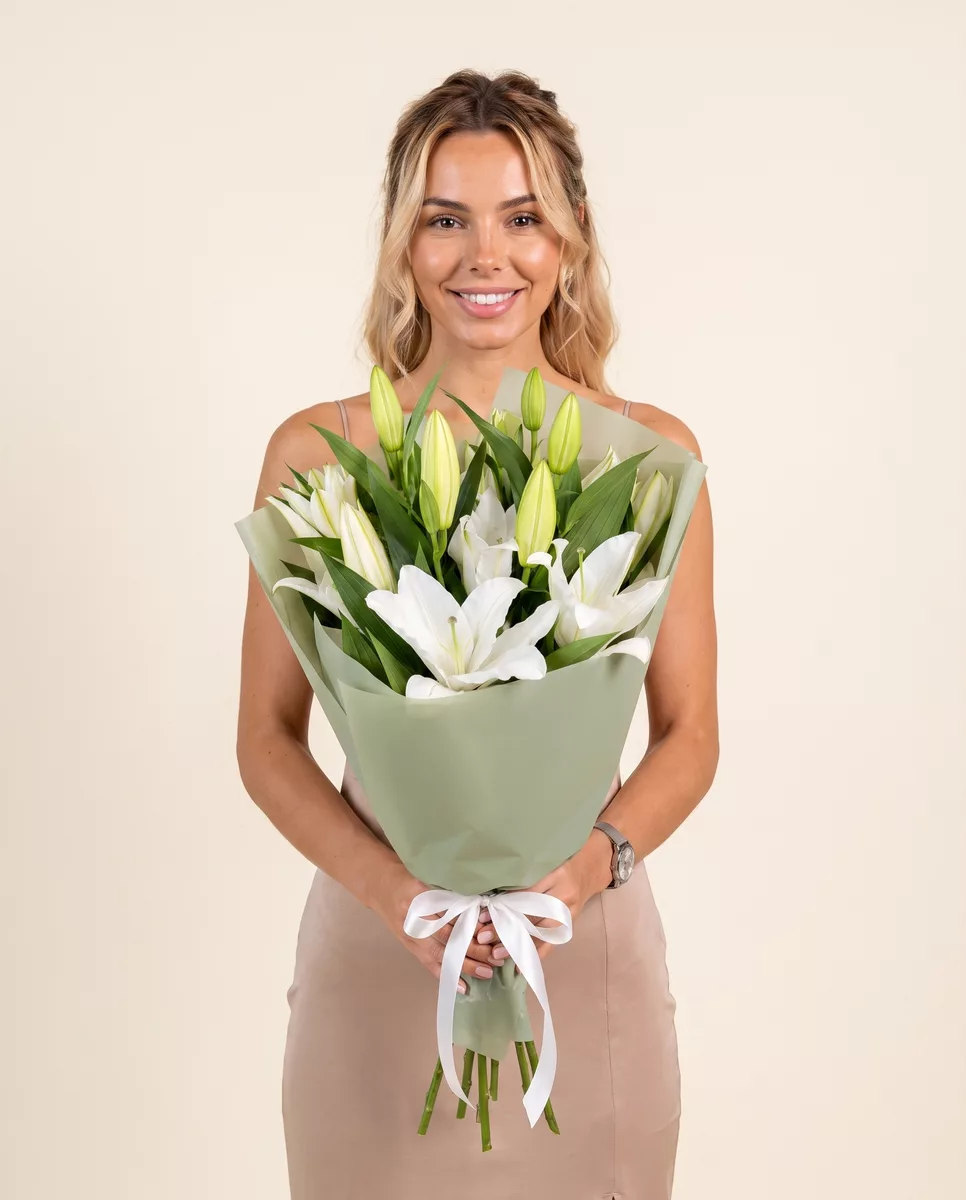
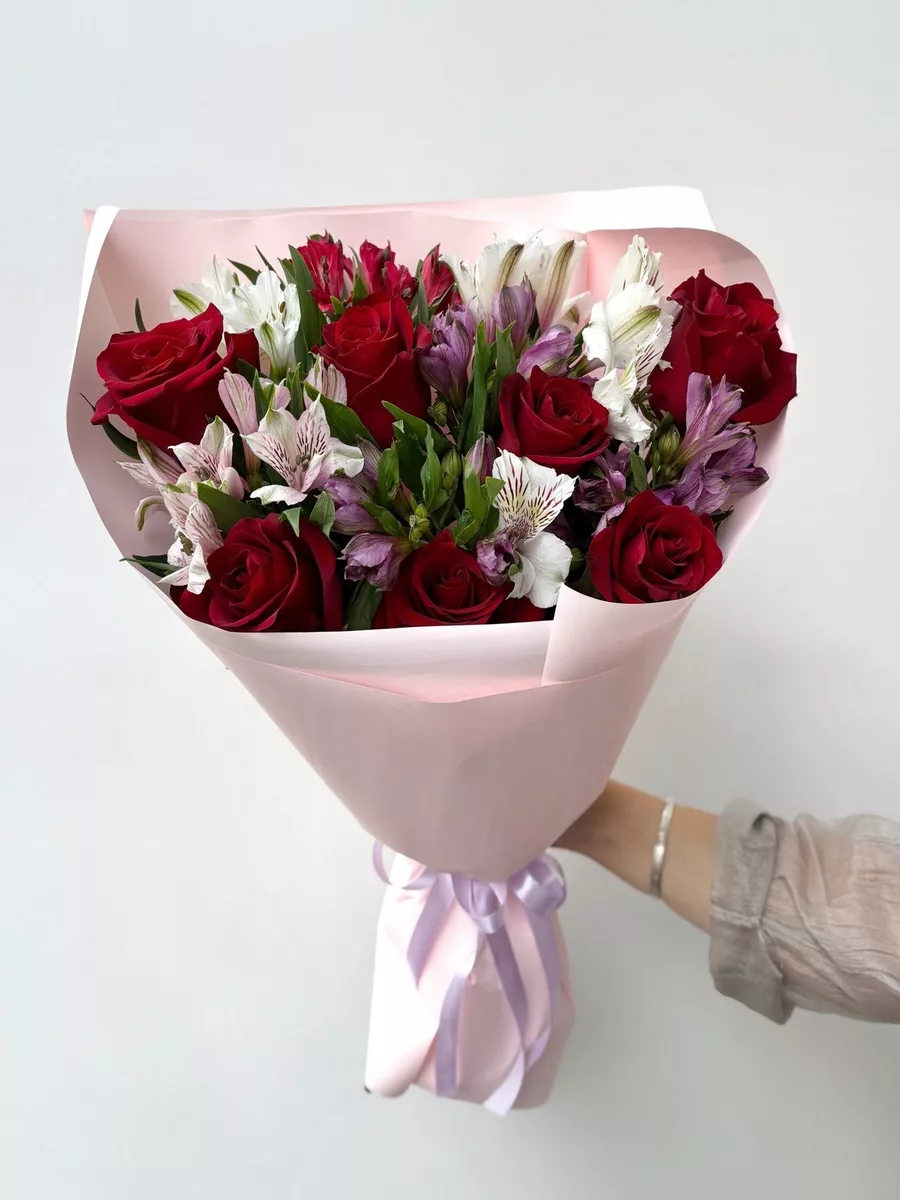
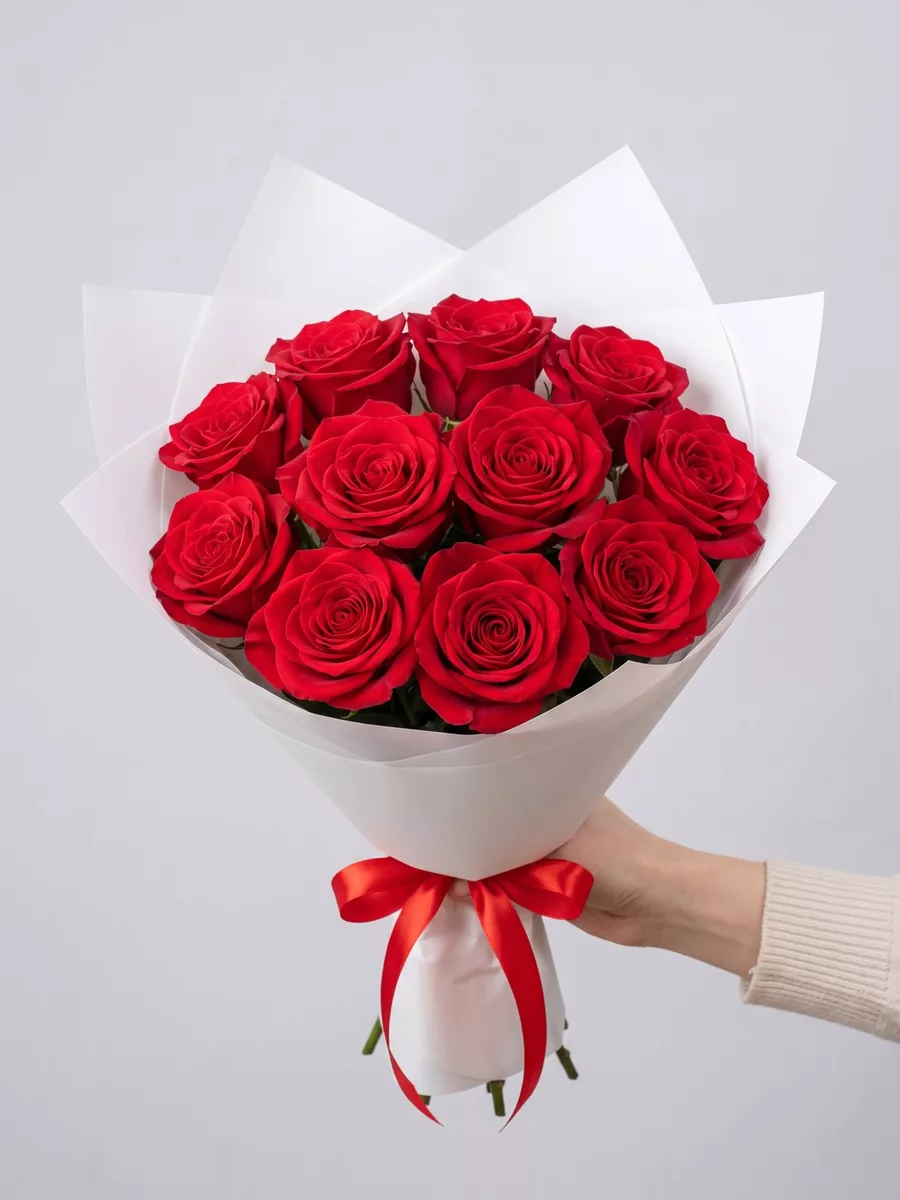
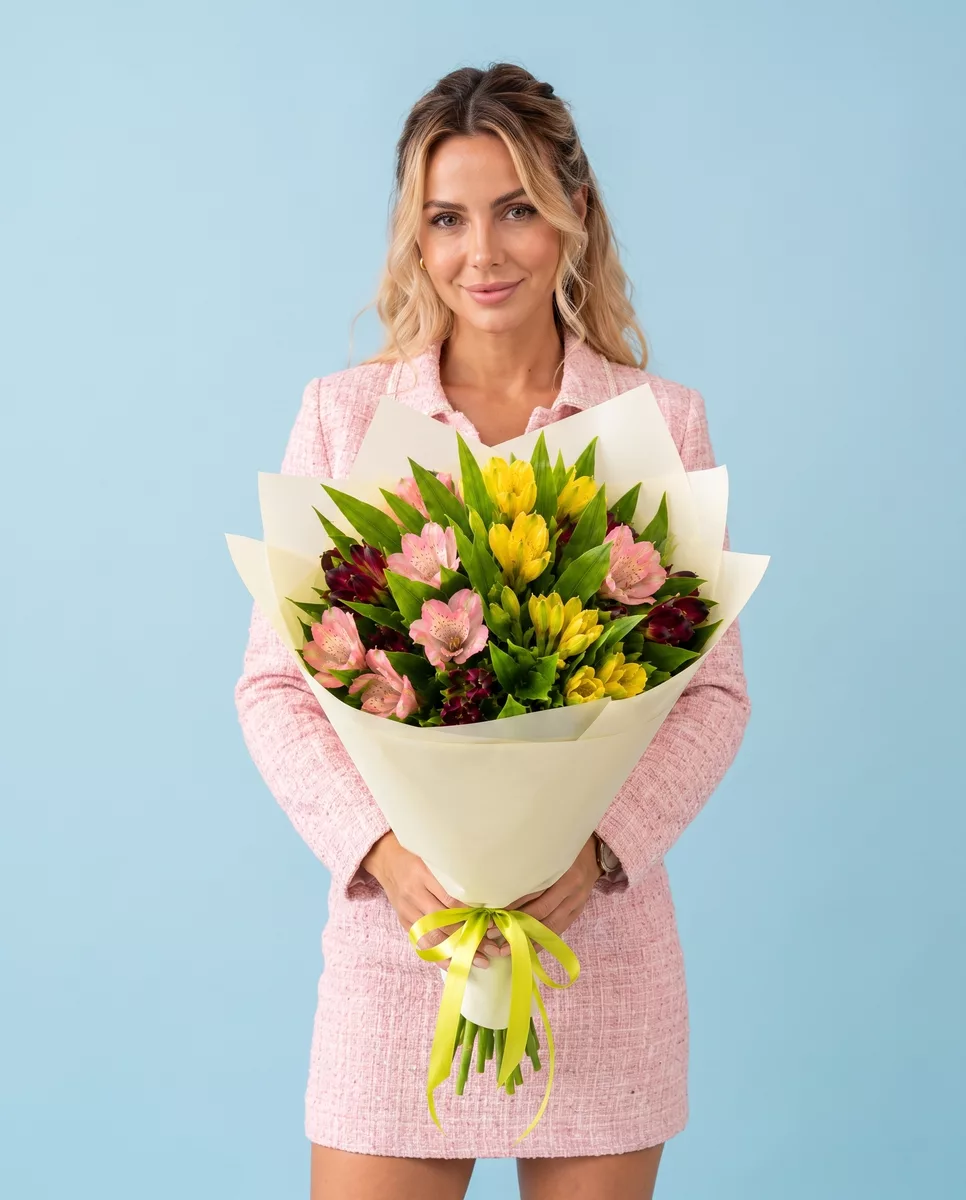
What a Potted Orchid Plant Is and Why It Travels Differently
A potted orchid sold in Russian flower shops is almost always Phalaenopsis, the moth orchid, which accounts for the vast majority of the market. You recognize it by the broad, arching spike carrying flat-faced flowers in white, pink, purple, or bicolor patterns. The plant sits in a transparent plastic pot inside a decorative outer pot, with roots visible through the sides — those roots are meant to see light, and covering them completely stresses the plant. What makes delivery complicated is not the flowers but the whole living system: soil, roots, and a stem that has been trained to curve with a support stake. During transport, any sharp jolt can snap the flower spike at the base, which kills the entire display even if the roots survive. Cold is also a serious risk. Phalaenopsis originates from tropical Asia and suffers permanent damage below 10 degrees Celsius; in Saint Petersburg winters, a plant sitting in an unheated delivery vehicle for more than twenty minutes can show wilting or black spotting within two days. Reputable delivery services wrap the pot and keep it upright in a padded box, but the window of safe transport is much shorter than for a cut bouquet. A potted Phalaenopsis in good condition blooms for six to ten weeks and, if the recipient re-pots it correctly after flowering, can produce a second spike the following year. That longevity is the main argument for choosing it as a gift — but only when the logistics are handled properly and the recipient actually wants a houseplant.
Russian Gifting Customs Around Orchids — What Visitors Should Know
Orchids carry no negative symbolism in Russia, unlike yellow flowers, which many Russians associate with separation or bad luck. An orchid gift is read as elegant and relatively expensive — a step above standard roses in perceived effort. Potted Phalaenopsis plants became widely popular as gifts around the mid-2000s when Dutch imports became affordable, and they are now a standard choice for women's birthdays, March 8th (International Women's Day, the biggest flower holiday in the Russian calendar), and housewarming gifts. Cut orchid stems in bouquets are more associated with formal occasions: graduations, corporate events, and anniversary celebrations where the bouquet is meant to be photographed and displayed for a week or two. One thing that surprises non-Russian customers is how seriously recipients take the number of flowers in a bouquet. The Russian convention is that even numbers of flowers are for mourning — so a bouquet should contain an odd number of stems or blooms: three Cymbidium stems, five, seven. This applies to cut orchid stems exactly as it does to roses. If you are ordering a bouquet with orchid stems mixed with other flowers, ask your florist to confirm the total count is odd. For a potted plant, this convention does not apply because a plant is not counted by stem. If you are sending a gift to a Russian recipient and are unsure of her preferences, a potted Phalaenopsis in white or pale pink is the safest choice — it reads as thoughtful without being too personal.
Varieties You Will Actually Find in Saint Petersburg
The Saint Petersburg flower market runs on a relatively predictable rotation of orchid varieties, and knowing what is realistically available saves you from ordering something the shop cannot source. Among cut stems, Cymbidium is available year-round in colors from cream and chartreuse to deep burgundy. The variety names you will encounter most often are standard commercial Cymbidium hybrids sold under trade names like Cooksbridge and Showoff — florists rarely label them by cultivar, but the color range is wide. Dendrobium cut stems, particularly Dendrobium nobile hybrids in white, lavender, and yellow, arrive from Thailand and are consistently available from October through May; summer supply can be thinner. Mokara, a compact three-way hybrid with small star-shaped flowers, appears occasionally in mixed bouquets and is worth requesting if you want something less common. Among potted plants, Phalaenopsis dominates almost completely. You will find standard two-spike plants with large flowers and mini Phalaenopsis in smaller pots, which are popular for desk gifts. Occasionally, potted Dendrobium and Cattleya appear around major holidays, but supply is not guaranteed. Vanda orchids — the dramatic, bare-root type suspended in glass vases — are available as a specialty item and are cut stems arranged in water without soil. They are visually striking but require specific care instructions to be passed on to the recipient. Asking your florist to confirm current availability before placing an order, especially for anything outside the Phalaenopsis and Cymbidium range, is always the right move.
Shelf Life, Care, and What the Recipient Needs to Know
A cut Cymbidium stem needs a clean vase, water reaching halfway up the stem, and a spot away from radiators and drafts. Change the water every two days and trim the stem end by one centimeter each time. Do not refrigerate it at home — household refrigerators run too cold and too dry. At room temperature between 18 and 21 degrees Celsius, the blooms last three to four weeks without any additives. If one flower drops early, the rest of the spike is unaffected; just remove the fallen bloom. A potted Phalaenopsis requires more attention. Water it once every seven to ten days by setting the inner pot in water for fifteen minutes and letting it drain completely — never leave it sitting in a saucer of water, which rots the roots. It needs bright indirect light, ideally an east-facing windowsill, and temperatures between 18 and 28 degrees Celsius during the day. After the blooming period ends and the spike turns yellow, cut it just above the second node from the base; this sometimes triggers a secondary bloom. Many recipients in Russia are experienced with Phalaenopsis because the plant has been popular for nearly two decades, but if you are sending one to someone who has never kept orchids, include a short printed care card with the delivery. At Five Flowers we include care instructions with every potted plant order automatically. The difference in ongoing effort between a cut stem and a potted plant is significant, and it should factor into your choice.
Which Option Suits a Same-Day Delivery Better
For same-day delivery within Saint Petersburg, cut orchid stems in a bouquet are the more reliable choice in almost every situation. The bouquet is assembled, wrapped, and handed to the courier in a condition that does not change significantly during a one-to-two-hour transit. Temperature fluctuations during transit affect a wrapped bouquet far less than they affect a living plant. The recipient unwraps it, places it in a vase, and the job is done. A potted Phalaenopsis requires more careful handling at every stage: the pot must be upright, the spike must be protected from impact, and in cold months the plant must be insulated against low temperatures in the vehicle. We deliver potted plants successfully every day, but the margin for error is smaller. If the recipient is not home and the plant sits in a cold entrance hall for an hour, damage is possible. With a bouquet, a brief wait in a cool hallway is not a problem. The other factor is surprise deliveries. If you are sending flowers without warning and do not know whether the recipient is home, a bouquet is more forgiving — it can be left with a neighbor or building concierge without risk of cold damage. A plant left with a concierge in a cold lobby in February is a different story. For planned deliveries where someone will be home, where the recipient is known to enjoy gardening or houseplants, and where the occasion calls for something lasting — a birthday, a housewarming — the potted plant is the stronger gift. For spontaneous gestures, anniversaries, and corporate occasions, go with cut stems.
What to Check Before You Place the Order
Before confirming any orchid order, run through four practical checks. First, confirm the current availability of the specific variety or color you want — Cymbidium in burgundy and Dendrobium in yellow are not always in stock simultaneously, and a florist who tells you otherwise without checking the cold room is guessing. Second, if you are ordering a potted plant in the period from November through March, ask specifically how the shop insulates plants during winter delivery. A thermal bag and a padded box are the minimum; anything less in sub-zero temperatures is a risk you are taking with the recipient's gift. Third, check the total stem count in a mixed bouquet if it includes cut orchid stems — confirm it is an odd number if you are following Russian convention. Fourth, clarify whether the delivery address has a concierge or a secure entry system. Potted plants and large Cymbidium bouquets cannot be left outside a door the way a small envelope can. If no one will be home, discuss a backup plan with the shop before the courier leaves. At Five Flowers, we contact the recipient by phone before arrival, which solves most access problems, but the customer should still flag any building access complications at the time of ordering. One more thing worth checking: if the potted plant is a gift for an apartment rather than a house, confirm the recipient has a suitable windowsill. A Phalaenopsis on a north-facing window in a Saint Petersburg winter, where daylight is limited to six hours, will survive but will not re-bloom without supplemental lighting. That is not a reason to avoid the gift — it is simply useful information to pass along.
The choice between a cut orchid stem bouquet and a potted Phalaenopsis comes down to three things: how long the gift needs to last, how much the recipient wants to care for a plant, and how straightforward the delivery logistics are. Cut stems give you a dramatic, structured bouquet that holds for three to four weeks with minimal effort from the recipient. A potted plant gives you something that can outlast the occasion by months or years, but it requires the right conditions during transit and genuine interest from the person receiving it. Both are excellent choices when matched to the right situation. The mistake is treating them as interchangeable — they are not the same product, and they do not suit the same moments. We deliver bouquets across Russia in 1–2 hours.
Frequently asked questions
Can cut orchid stems be delivered in winter without damage?
Yes. Cut Cymbidium and Dendrobium stems handle cold transit well when wrapped correctly because they are already detached from a root system. A brief exposure to temperatures between 5 and 10 degrees Celsius during delivery does not harm them. The flowers may look slightly closed on arrival but open fully within an hour at room temperature.
How long does a potted Phalaenopsis stay in bloom after delivery?
A healthy Phalaenopsis in full bloom at the time of delivery typically continues flowering for six to ten weeks. The exact duration depends on the care it receives — consistent watering, indirect light, and temperatures above 18 degrees Celsius extend the bloom period. Plants that experience cold shock during delivery or are placed near a radiator drop flowers earlier.
Is it true that yellow orchids are inappropriate as gifts in Russia?
The concern about yellow flowers in Russia applies mainly to yellow roses and some other cut flowers, which many Russians associate with separation. Yellow orchids — particularly yellow Cymbidium stems — are generally not treated the same way and are used in bouquets without issue. If you are uncertain about the recipient's views, white or pink is always a safe color choice.
What is the difference between a Vanda orchid and a Phalaenopsis as a gift?
Vanda orchids are sold as cut stems suspended in a glass vase with water covering the bare roots — they have no soil. They are visually dramatic and last two to three weeks. Phalaenopsis is a living potted plant meant to be kept long-term. Vandas require the water in the vase to be changed regularly; Phalaenopsis requires soil watering on a weekly schedule. They suit different recipients.
Can I request a specific number of Cymbidium stems to follow the odd-number rule?
Yes, and you should. When placing the order, specify the exact stem count — three, five, or seven are the most common for Cymbidium bouquets. If you are combining orchid stems with roses or other flowers, ask the florist to confirm the total bloom or stem count across the entire bouquet is odd. We accommodate this as a standard request, not a special one.
Ready to send a bouquet?
Pick a city, choose the flowers, and we will hand them over with a photo confirmation.
Choose a city →