
Red Roses in Russia: What the Colour Actually Signals
Customers call us every week asking whether red roses are appropriate for a birthday, a teacher, a colleague, or a mother. The answer is almost never simple, because in Russia red roses carry a weight that most other countries spread across several colours. Get it wrong and a well-meant gesture reads as a romantic declaration to someone who was not expecting one. Get it right and nothing else comes close for impact. This article explains exactly how Russians read red roses, which situations invite them, which ones do not, and what to check before you place an order.
Why Red Roses Carry Such a Specific Weight in Russian Culture
In many Western countries red roses sit alongside red tulips or red gerberas as broadly romantic flowers. In Russia the signal is narrower and stronger. Red roses, particularly long-stemmed ones, are understood by most Russians as a direct statement of romantic love or serious romantic interest. This is not a recent trend or a marketing invention — it runs through Soviet-era cinema, poetry, and the visual language of public holidays. When a man hands a woman a bouquet of red roses in a Russian context, onlookers read it as a declaration, not a general compliment. The same applies in reverse, though it is less common. This cultural compression means that red roses are one of the most reliable flowers in the shop when used correctly, and one of the most awkward when used carelessly. A bouquet sent to a female colleague for her work anniversary, a teacher on Knowledge Day, or a grandmother on her birthday can produce real discomfort if it is built around red roses. Russians are not prudish about flowers, but they are precise about what red roses mean. Florists here see the confusion most often with international customers ordering for Russian recipients, or Russians living abroad who have absorbed different local conventions and then send flowers back home. The safest mental rule: if you would not want the recipient to think you are in love with them, do not lead with red roses.
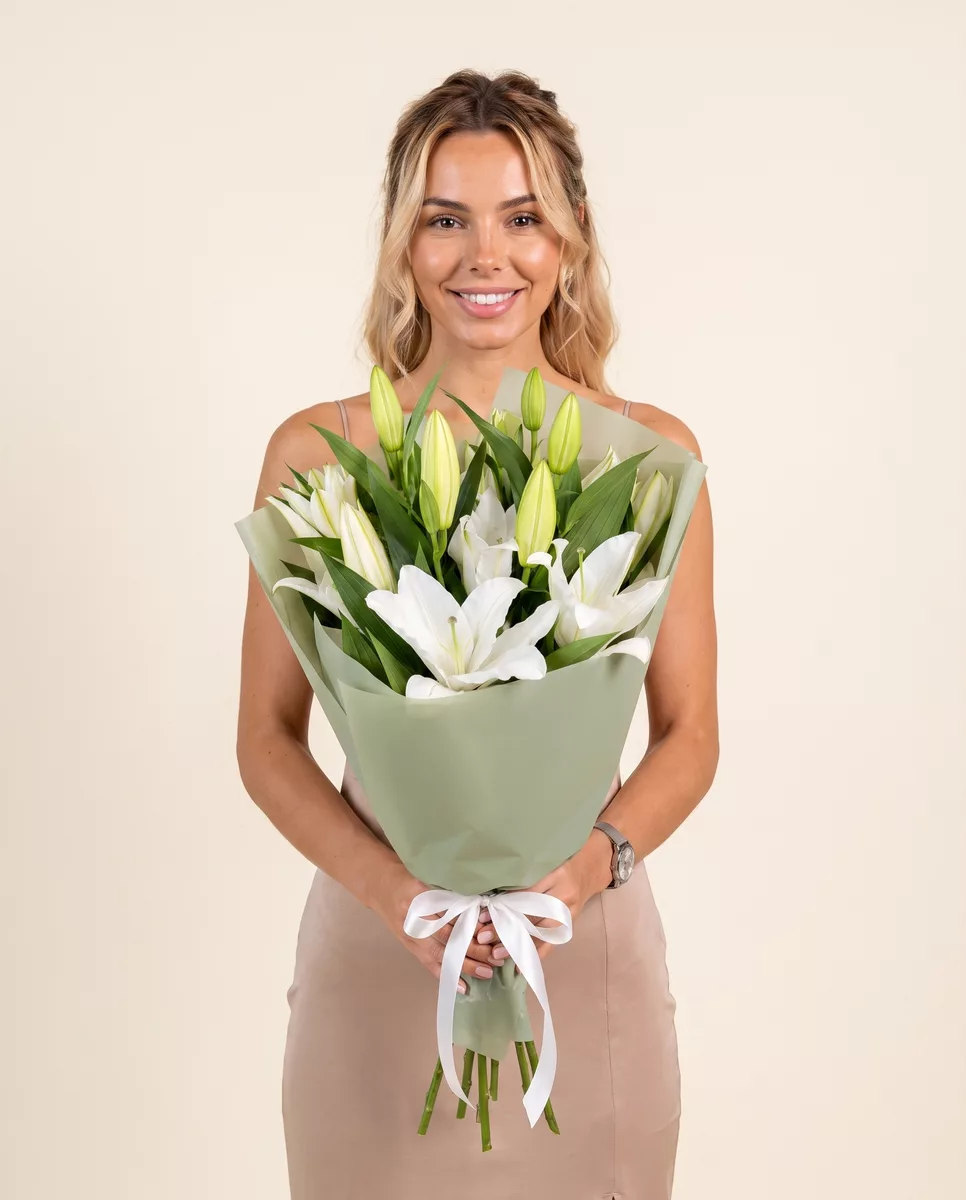
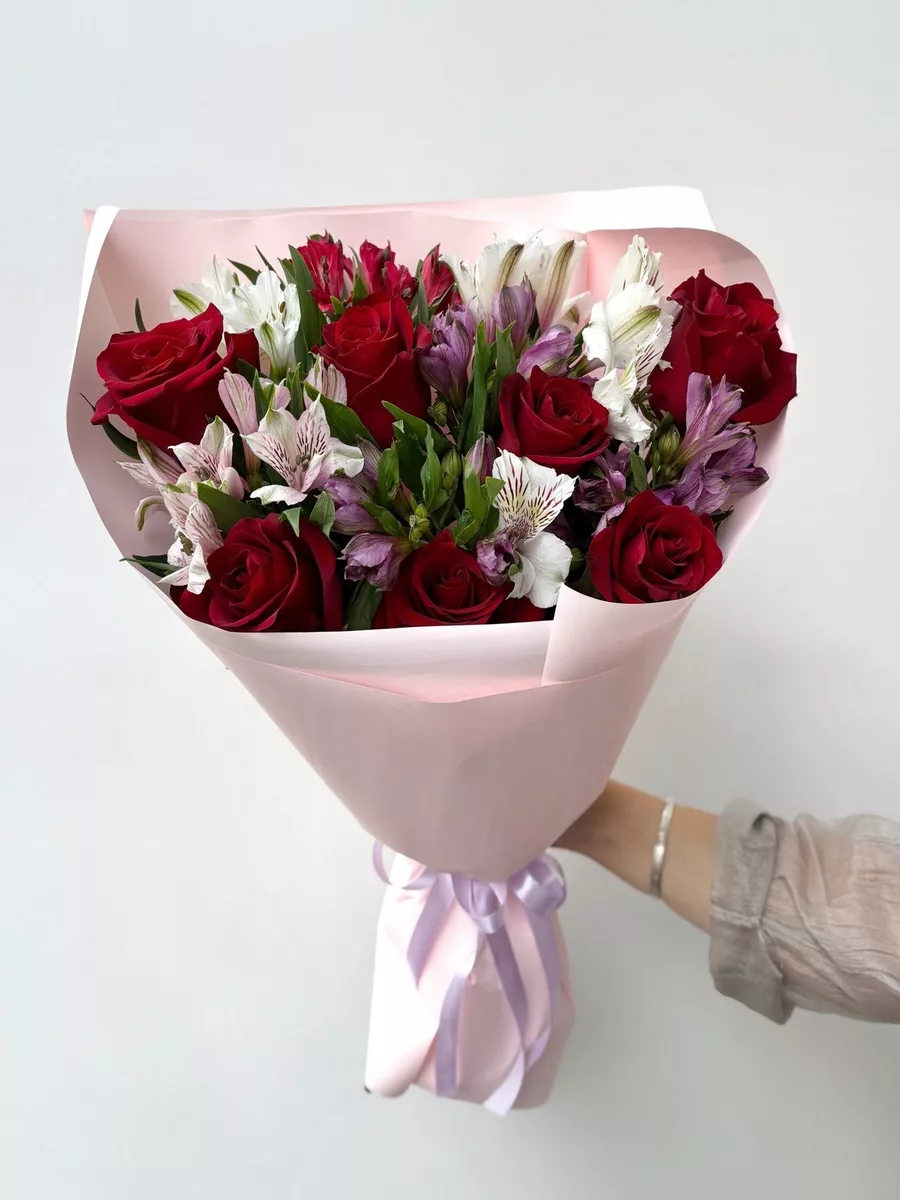
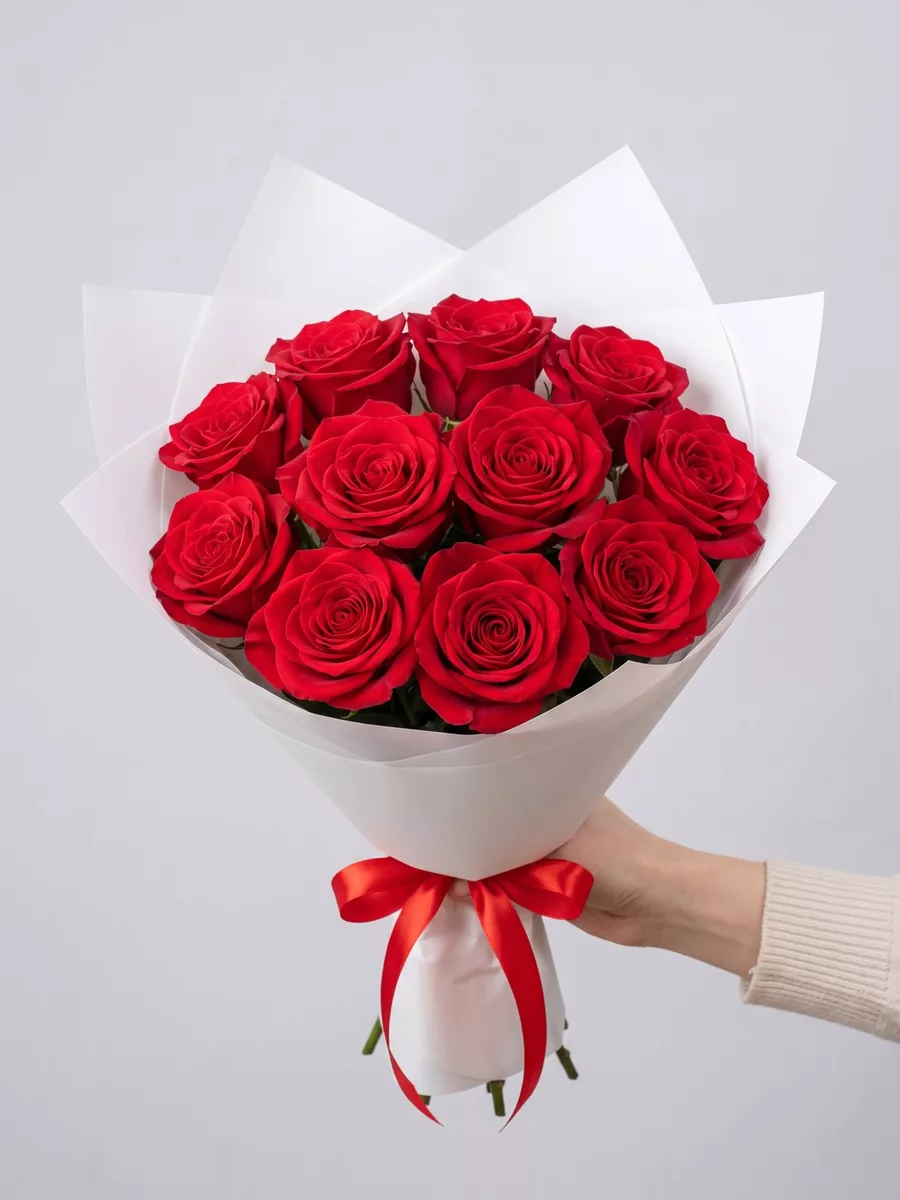
Bouquets we can deliver

Occasions Where Red Roses Are Exactly Right
Red roses are the correct choice when the romantic message is the point. Valentine's Day on 14 February is the obvious peak, but in Russia the volume is actually higher around 8 March, International Women's Day, when men send flowers to the women they love rather than to every woman in their life. A single man sending red roses to his partner on 8 March is unremarkable and expected. Anniversaries, proposals, and the early stages of courtship are all strong fits. A bouquet of 25 or 51 long-stemmed red roses for a first anniversary lands exactly as intended — the odd number follows Russian tradition, and the quantity signals seriousness. Varieties matter here. Explorer and Freedom are the two red roses our customers order most for romantic occasions: Explorer has a deep, near-black red bud that opens slowly over four to five days, while Freedom is a more classic crimson with a large head that photographs well. Both hold in a warm Moscow or Saint Petersburg apartment for seven to ten days if the stems are cut on arrival and the water is changed every two days. For a proposal or a significant anniversary, stem length matters too — 70 cm or 80 cm stems change the visual weight of the bouquet entirely compared with standard 50 cm stems. If the occasion is genuinely romantic, red roses are not just acceptable in Russia — they are the expected choice.
Situations Where Red Roses Create the Wrong Impression
The list of situations where red roses misfire in Russia is longer than most foreign customers expect. Sending red roses to a female boss, a university professor, or a colleague you respect professionally will almost certainly be read as inappropriate, regardless of your intention. The same applies to a friend's mother, an aunt, or any older female relative who is not your own romantic partner. Russians navigate this by switching to white or cream roses, pink roses, or mixed seasonal bouquets for these relationships. Red roses are also a poor fit for children's celebrations and school events. On 1 September, Knowledge Day, teachers across Russia receive enormous quantities of flowers — gladioli and dahlias are traditional, and mixed bouquets in yellow, orange, or white are common. A child arriving with a bouquet of red roses for a teacher would cause genuine embarrassment. Birthday bouquets for male recipients are another area where red roses rarely appear. Russian men do receive flowers — it is more common than in many other countries — but the colours tend toward white, yellow, or mixed rather than red. Sending red roses to a male friend for his birthday risks confusion about the sender's intentions. The practical takeaway for anyone ordering from outside Russia: if you are unsure of the relationship category, describe it to us when you order and we will suggest varieties and colours that carry no unintended signals.
Stem Count, Odd Numbers and What Russians Actually Count
Russian flower etiquette around numbers is specific enough that it catches out many first-time senders. The rule is that living flowers given as a gift should come in odd numbers — 1, 3, 5, 7, 11, 15, 19, 25, 51, 101. Even numbers are associated with memorial occasions and are avoided for gifts to living recipients. This applies to every flower type, not just roses. For red roses in a romantic context, the quantities carry additional meaning that Russians broadly understand: a single red rose is a personal, intimate gesture; 11 roses is a popular choice for early-stage romance or a first date; 25 and 51 are anniversary and serious-commitment numbers; 101 is a grand statement. These are not rigid rules — people deviate from them — but they are widely enough recognised that the number you choose adds a layer of meaning on top of the colour. Practically, this affects how you should order. If you ask for a round number like 10 or 20, a good florist will ask whether you want to add one stem. We always check this with customers who are not familiar with the convention. The stem length also changes the total price significantly: a bouquet of 51 Freedom roses at 80 cm stems is a different commitment from 51 at 50 cm, and both are correct choices depending on how dramatic the occasion is. When ordering for delivery across Russia, specify the count explicitly — do not leave it to be rounded.
Keeping Red Roses Fresh After Delivery Across Russian Distances
Russia's geography means that even fast delivery involves temperature swings that affect cut flowers. In winter, roses travel from a temperature-controlled van into a building entrance that may be minus fifteen outside. In summer, the risk runs the other way — an unventilated hallway in July can reach thirty degrees. Both extremes shorten vase life, and red roses are slightly more sensitive to heat than white or yellow varieties. Explorer and Freedom, the two varieties mentioned earlier, both handle temperature variation reasonably well compared with more delicate varieties, which is part of why they dominate the commercial market. When a bouquet arrives, the recipient should unwrap it immediately, cut the stems at a diagonal under running water, and place it in a clean vase with fresh cold water. Flower food sachets, which we include with every order, extend vase life by slowing bacterial growth in the water. The vase should sit away from direct sunlight, heating radiators, and fruit bowls — ethylene gas from ripening fruit accelerates petal drop. In a Saint Petersburg apartment in winter, where central heating keeps rooms at twenty-two to twenty-four degrees, red roses will last seven to nine days with correct care. In a hot summer delivery, expect five to seven days. If the recipient is not home when the bouquet arrives, we ask for a cool indoor handoff location — a building concierge point or a shaded entrance — rather than leaving flowers outside.
Ordering Red Roses for Delivery: What to Confirm Before You Pay
Several details trip up customers ordering red roses for delivery in Russia, and most of them are easy to resolve at the order stage rather than after the fact. First, confirm the stem count and check that it is an odd number if the gift is for a living recipient. Second, specify stem length — 50 cm, 60 cm, 70 cm, or 80 cm — because the default varies by shop and the difference in visual impact is significant. Third, name the variety if you have a preference: Explorer for a darker, more dramatic bud, Freedom for a classic full-bloom look. If you do not specify, we choose based on what arrived freshest from the grower that morning, which is usually the right call, but some customers have strong preferences. Fourth, check the delivery window against the recipient's schedule. Red roses left in a warm hallway for three hours lose a day of vase life. We deliver within one to two hours of order confirmation across our zones, and we can schedule a specific window if the recipient has a predictable arrival time. Fifth, consider the card message. In Russian culture, a card that says nothing personal with a bouquet of red roses leaves the recipient to interpret the flowers alone — which, as this article explains, they will read as romantic. If the intention is different, a warm but clearly non-romantic message on the card does a lot of work. Tell us the relationship, the occasion, and any constraints, and we will help you build an order that lands exactly as you intend.
Red roses in Russia are not a default gift — they are a deliberate one. The colour, the stem count, the variety, and the occasion all combine into a message that Russian recipients read precisely and immediately. When the message is romantic, nothing in the shop competes with a well-chosen bouquet of Explorer or Freedom roses at the right stem length and the right count. When the occasion is professional, familial, or social, switching to a different colour or a mixed seasonal bouquet removes the ambiguity entirely. The florist's job is to make sure the flowers you send say exactly what you mean, and that starts with understanding what red roses actually signal before you place the order. We deliver bouquets across Russia in 1–2 hours.
Frequently asked questions
Can I send red roses to a female friend in Russia without it seeming romantic?
It depends on your friendship and her expectations, but the risk is real. Most Russians will read a bouquet of red roses from a male sender as romantic interest. If the friendship is close and long-established, a mixed bouquet with some red roses is safer than a single-colour red arrangement. When in doubt, ask us to build something with red accents rather than an all-red bouquet.
What is the most popular red rose variety for delivery in Russia?
Freedom and Explorer are the two varieties our customers order most. Freedom has a large, classic crimson head and opens fully over three to four days. Explorer is darker, almost burgundy when closed, and opens more slowly. Both hold well in heated Russian apartments. Explorer tends to be chosen for proposals and significant anniversaries; Freedom is the everyday romantic standard.
Why do Russians give odd numbers of flowers?
Even-numbered bouquets are associated in Russian tradition with memorial and mourning occasions, so they are avoided for gifts to living recipients. Odd numbers — 1, 3, 5, 11, 25, 51, 101 — are the norm for celebrations, romance, and personal gifts. The specific count also carries meaning: 11 roses suggests early romance, while 51 or 101 signals a serious, lasting commitment.
How long will red roses last after delivery in Russia during winter?
With correct care — diagonal stem cut, clean cold water, flower food sachet, away from heat sources — red roses last seven to nine days in a typical Russian winter apartment heated to around twenty-two degrees. The main risks are radiators placed near the vase and fruit left on the same surface. Summer delivery shortens vase life to five to seven days due to higher ambient temperatures.
Is it acceptable to send red roses to a Russian woman for her birthday?
Yes, if you are her romantic partner. If you are a friend, relative, or colleague, red roses for a birthday will likely be read as a romantic declaration rather than a birthday wish. For non-romantic birthday gifts to women, Russian florists typically recommend white, cream, or pink roses, or a mixed seasonal bouquet that avoids the romantic association entirely.
Ready to send a bouquet?
Pick a city, choose the flowers, and we will hand them over with a photo confirmation.
Choose a city →