
Russian Birthday Etiquette: When to Deliver Flowers and What to Write
Every week we take orders from people calling from Berlin, Tel Aviv, Toronto or New York, trying to send flowers to a parent or friend in Saint Petersburg for a birthday. The questions are always the same: should I send them the morning of the birthday or the evening before, does the number of stems really matter, and what on earth do I write on the card so it does not sound like a translation from English. This article answers all three questions with the same directness we use on the shop floor.
Why Timing the Delivery Is the First Decision You Make
In Russian birthday culture, receiving flowers on the actual day of the birthday is strongly preferred. Delivering the day before is considered premature and, in more traditional households, carries a mild superstitious weight — some older recipients will feel uncomfortable accepting a bouquet before the date arrives. Delivering the day after is simply late and reads as an afterthought, regardless of the reason. The sweet spot is a morning delivery, ideally between 9 and 11 in the morning, so the recipient has the flowers on the table when guests or colleagues start calling to congratulate them. If the birthday person works outside the home, an office delivery between 10 and 13 works well because it creates a visible, social moment. Evening deliveries after 19:00 are possible and we do them regularly, but they suit a more intimate setting — a dinner at home, a small gathering — rather than a general congratulation. When you place your order from abroad, account for the time difference carefully. Saint Petersburg runs on Moscow Time, which is UTC plus three hours with no daylight saving adjustment, so a sender in New York is five to eight hours behind depending on the season. Place your order at least three to four hours before the intended delivery window, and for morning slots on weekends or public holidays, ordering the evening before is safer. We hold refrigerated stock overnight for confirmed morning orders, so the roses or peonies you choose will be just as fresh at 10 in the morning as they were when the order was placed.
Bouquets we can deliver

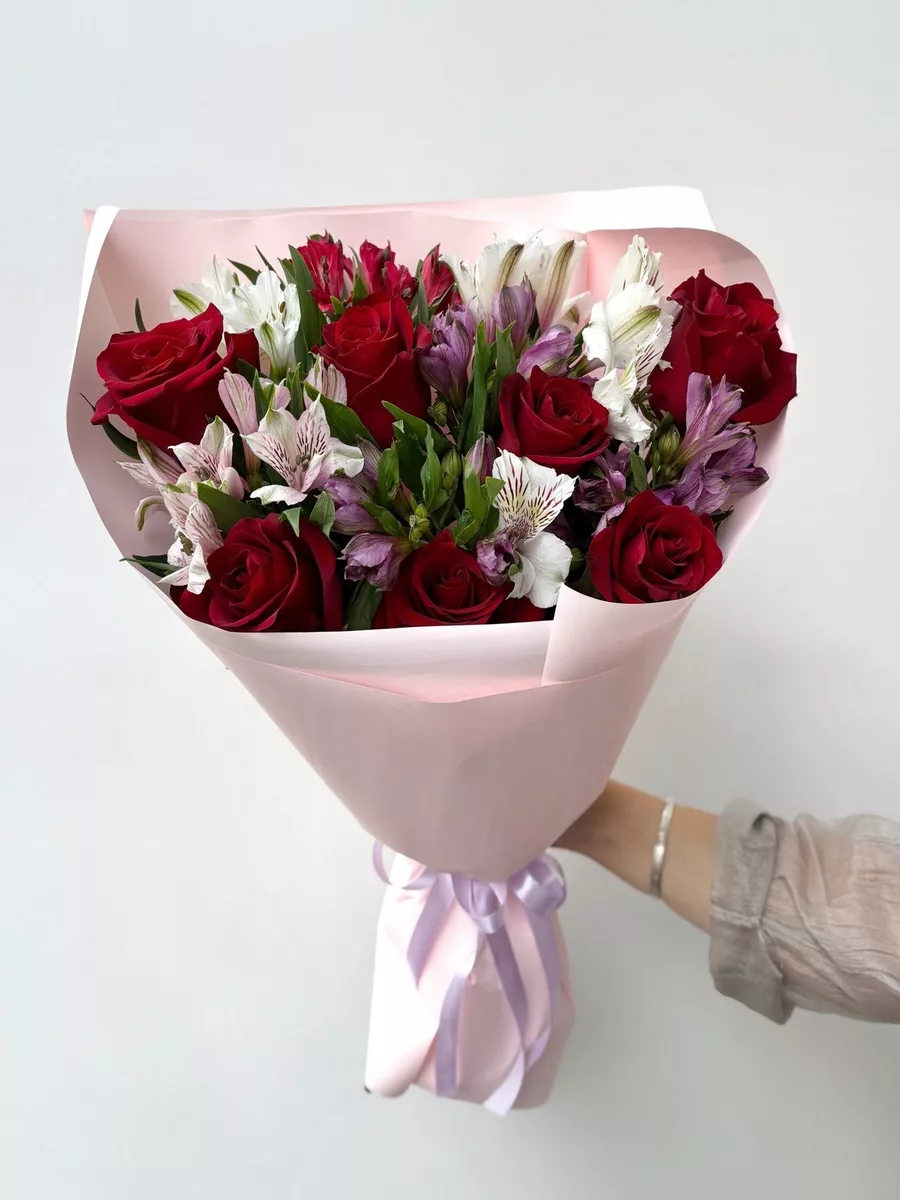

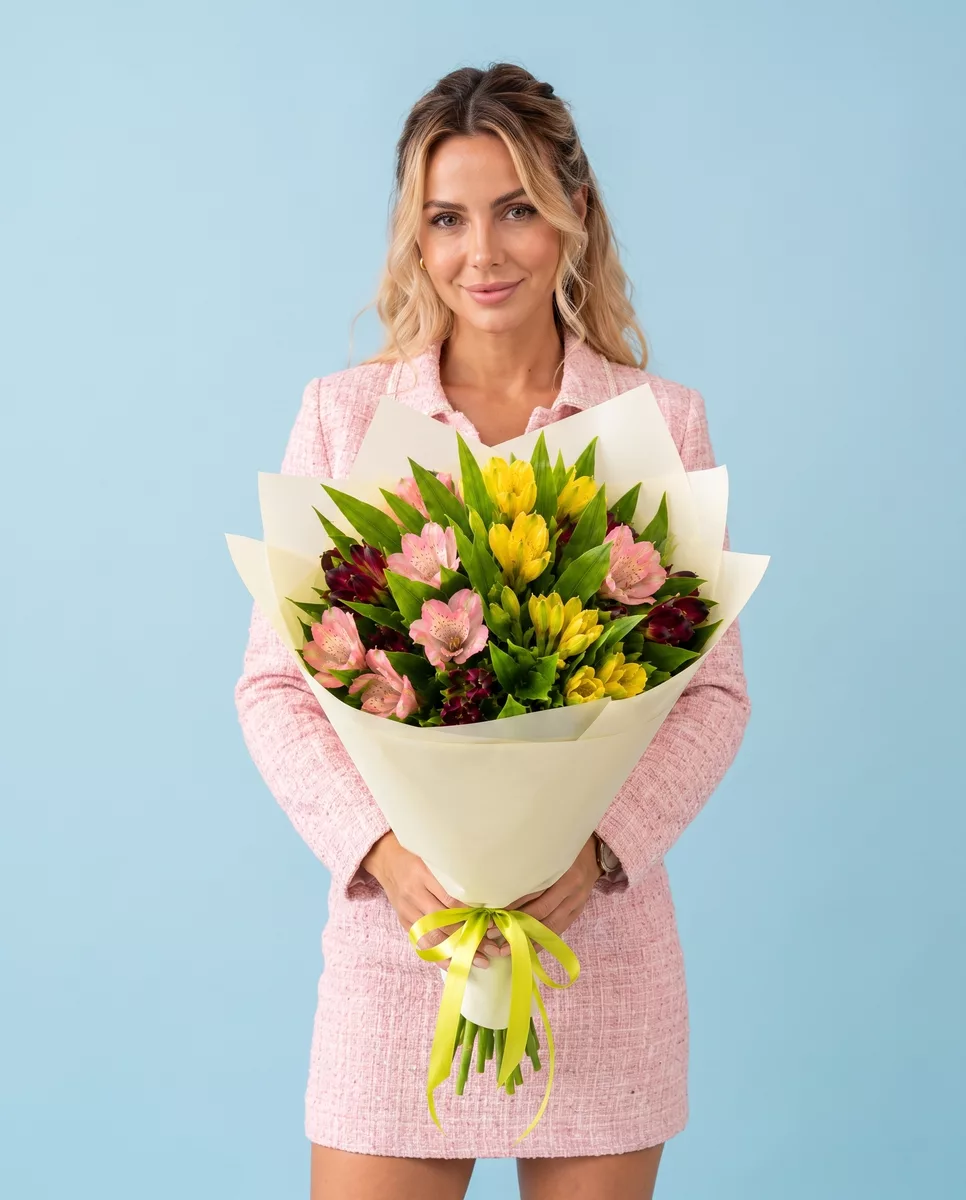
The Odd-Number Rule: What It Actually Means in Practice
The rule that flowers given as a gift must come in an odd number is real, widely observed, and not going away. Even-numbered bouquets — two, four, six, ten stems — are associated with funeral tributes in Russian tradition, and presenting them at a birthday will unsettle almost any recipient over the age of thirty, even if they consider themselves unsentimental. The rule applies to the total stem count of the main flowers in the bouquet, not to every element of the arrangement. A bouquet of eleven roses with three eucalyptus branches and two stems of wax flower is fine; the eucalyptus and filler are not counted. Where people go wrong most often is when they try to match a budget to a round number of stems. A sender wants ten roses because it sounds tidy, or twenty because it sounds generous. We redirect those orders to nine, eleven, or nineteen stems without hesitation. The practical range for a birthday bouquet that reads as genuinely celebratory rather than minimal is between seven and twenty-five stems for roses, ranunculus, or tulips. Fifteen stems of garden roses or seventeen stems of spray roses are both common and well-received. For peonies, which are bulkier, seven to nine stems is already a substantial and impressive bouquet. Single-variety bouquets in odd numbers are the easiest to execute correctly and the easiest for the recipient to display, since they fit standard vases without arrangement skill. If you want a mixed bouquet, tell us the varieties you like and we will compose it to an odd total automatically.
Choosing Varieties That Land Well for a Russian Birthday
Roses remain the dominant birthday flower in Russia and that is not changing. The varieties that perform best for delivery — meaning they travel without bruising and open evenly in a warm apartment — include large-headed garden roses such as David Austin types when in season, standard hybrid tea roses in red, white, cream, and coral, and spray roses for a softer, more contemporary look. Peonies are intensely popular from late May through July and a bouquet of nine coral or white peonies is one of the most reliably well-received gifts we send. Outside peony season, ranunculus in pink, peach, or burgundy fill a similar role — they are full-headed, they read as luxurious, and they last well in water. Tulips are a strong spring choice, particularly parrot tulips and double tulips, which look more substantial than single-petal varieties. Chrysanthemums are worth a brief note: large single-headed chrysanthemums in Russia are more strongly associated with cemetery visits than in Western Europe, so we steer birthday orders toward spray chrysanthemums or pompons, which carry no such association. Orchid stems — cymbidium or dendrobium — work well when the recipient is known to prefer architectural, long-lasting arrangements over traditional bouquets. Lilies are popular but have a strong scent that some people find overpowering in an apartment, so they are better chosen when you know the recipient enjoys them. If you are unsure of personal preference, a mixed bouquet built around roses with seasonal accent flowers is the safest and most universally appreciated option.
What Russian Recipients Actually Expect from a Card Message
The card message is where diaspora senders most often freeze up or produce something that reads strangely. Russian birthday card language has its own conventions, and a direct translation from English often sounds either too casual or oddly formal. The standard opening is a direct congratulation — in Russian this is Pozdravlyayu tebya s dnyom rozhdeniya or the plural Pozdravlyayu Vas for a formal relationship or an elder. When you write your card in English for us to include, we can transliterate or translate it, but knowing the conventions helps you write something we can work with. Russian birthday messages typically wish the recipient specific, concrete good things: health, happiness, success in work, love, and prosperity. Vague English phrases like wishing you all the best or hope you have a great day translate into Russian as thin and impersonal. Specificity reads as warmth. A message that says I wish you good health, joy in your family, and success in everything you are working toward is culturally much stronger than a short cheerful line. Humor works well between close friends and siblings but should be used carefully across generations. A message from a child abroad to a parent in Saint Petersburg benefits from genuine warmth and a personal reference — something only you would know about them. Keep the card to three to five sentences. Long messages on small cards look crowded and are hard to read. If you write to us in English and ask for a Russian translation, we will produce one that reads naturally rather than literally, which is the most useful service we can offer for this part of the order.
Morning Versus Evening Delivery: Which Slot to Choose
The choice between morning and evening delivery depends almost entirely on the recipient's daily schedule and the social context of their birthday. A morning delivery to a home address works best for someone who is at home during the day — a retiree, someone working remotely, or a person taking the day off for their birthday. The flowers arrive early, the recipient has them for the whole day, and when guests come in the evening the bouquet is already open and at its best. A morning delivery to a workplace is a different dynamic: it is public, it signals to colleagues that someone abroad remembered, and it creates a social moment that many people enjoy. If you are unsure whether the recipient would welcome a public delivery, a home delivery is always safer. Evening deliveries, typically between 18:00 and 21:00, suit birthday dinners or gatherings. The flowers arrive as the celebration begins rather than hours before it, which has a different emotional rhythm — more of a surprise entrance than a morning greeting. The practical consideration is that evening slots fill faster on Fridays and Saturdays, so book them at least a day in advance. One mistake we see regularly: senders in North America place an order at 22:00 their time without checking the Saint Petersburg time, which is already the following morning. The birthday has already started or, worse, already ended. Check the time conversion before you confirm the slot, and if you are uncertain, write the intended local delivery time explicitly in the order notes.
Wrapping, Presentation and What Arrives at the Door
Russian birthday bouquet presentation has shifted noticeably in the last ten years. The traditional tight cellophane cone wrapping is still used but increasingly shares space with kraft paper, linen ribbon, and open-style wrapping that shows the stems. For a birthday, most recipients respond well to a full, generous presentation — the bouquet should look abundant rather than minimal. We wrap birthday orders with the stem ends sealed in water-retaining material so the flowers stay hydrated during transit, which matters especially in summer when Saint Petersburg temperatures can reach 25 to 30 degrees Celsius, and in winter when a bouquet moving from a cold delivery bag into a warm apartment needs time to adjust. The recipient should be advised to cut the stems at an angle, remove any leaves that would sit below the waterline, and place the bouquet in cool water immediately. Including care instructions on the back of the card is something we do automatically for out-of-town senders, because the person receiving the flowers may not know that the sender is not available by phone to explain. Packaging for premium orders can include a box format rather than a wrapped bouquet, which travels more securely and photographs well — a relevant consideration since the recipient will almost certainly share a photo on social media or send one to the sender. Box arrangements work particularly well for roses and ranunculus. For peonies, open wrapping is better because the heads need room and a box can compress them. When you place the order, tell us if the recipient is likely to be away from home and a neighbor or building concierge will accept the delivery — we note this and adjust the handoff procedure.
Common Mistakes Diaspora Senders Make and How to Avoid Them
The most frequent mistake is ordering too late. A sender in London decides at noon on the birthday day to send flowers, which is already 15:00 in Saint Petersburg, and wants a morning delivery that has already passed. We can almost always execute a same-day delivery within three to four hours of a confirmed order, but the morning slot is gone. Order at least the evening before if you want a morning delivery, and for major dates like milestone birthdays — fortieth, fiftieth, sixtieth — order two to three days ahead so we can source the specific varieties you want rather than substituting from available stock. The second mistake is writing an address incompletely. Russian addresses require the city, street, building number, apartment number, and the entry code for the building intercom if there is one. Many apartment buildings in Saint Petersburg have a door code or a concierge system, and a delivery cannot be completed without it. Ask the recipient's family member for this information rather than guessing. The third mistake is choosing flowers based on a photograph from a different season. A sender sees peonies on our site in January and orders them; we have to explain that peonies are not available and offer an alternative. Seasonal availability matters: roses and chrysanthemums are available year-round, peonies and tulips are seasonal, and some garden rose varieties are only sourced in summer. The fourth mistake is writing a card message in English and assuming it will be read in English. If the recipient reads Russian primarily, a Russian-language message lands better. Tell us the language preference when you order and we will handle the card accordingly.
Sending birthday flowers from abroad to someone in Saint Petersburg is a straightforward process once you know the three things that actually matter: the delivery timing relative to the birthday day and the recipient's schedule, the odd stem count that signals the gift is for a celebration rather than a condolence, and a card message specific enough to feel personal rather than generic. The variety and presentation choices follow from knowing the recipient — their age, their taste, the season — and we can guide you through those on the phone or in the order notes. The logistics of refrigerated transport, timed delivery slots, and address verification are our side of the work. Your side is placing the order early enough and writing something on the card that the person you love will recognize as coming from you. We deliver bouquets across Russia in 1–2 hours.
Frequently asked questions
Can I send an even number of flowers if the bouquet is very large?
No — the odd-number rule applies regardless of bouquet size. A hundred roses would need to be ninety-nine or one hundred and one. We adjust the count automatically when an order comes in with an even number, and we always confirm the final stem count with the sender before processing. There are no exceptions in a birthday context.
What is the latest I can order for a same-day birthday delivery in Saint Petersburg?
We accept same-day orders up to three to four hours before the desired delivery time, depending on the delivery zone within the city. For morning slots starting at 9 or 10, ordering by 21:00 the previous evening is the safest approach. For afternoon or evening slots, ordering by midday Saint Petersburg time on the day usually works, but earlier is always better for specific variety requests.
Should the card message be written in Russian or English?
Write in whichever language feels most natural between you and the recipient. If the recipient reads Russian primarily and you want the message to land warmly, ask us to translate — we will produce a natural Russian version rather than a literal one. If English is the language of your relationship, an English card is perfectly appropriate and will be understood.
Are there flowers I should avoid for a Russian birthday?
Large single-headed chrysanthemums are strongly associated with cemetery visits in Russia and are best avoided for birthdays. Yellow flowers, particularly yellow roses, are sometimes considered unlucky in traditional households, though this varies by generation and region. When in doubt, red, white, coral, or pink roses and seasonal blooms like peonies or ranunculus are universally safe choices.
What information do I need from the recipient's side before placing an order?
You need the full address including apartment number, the building entry code or intercom number if the building has one, and a local phone number for the recipient or a family member who can receive the delivery. Knowing the recipient's work schedule helps you choose the right delivery window. Without the entry code, delivery to many Saint Petersburg apartment buildings cannot be completed.
Ready to send a bouquet?
Pick a city, choose the flowers, and we will hand them over with a photo confirmation.
Choose a city →