
Russian Birthday Flowers: How Many Stems and Which Colours
Every week someone calls us and asks why the florist refused to make a bouquet of ten roses, or why their recipient looked uncomfortable receiving a white arrangement. Russia has a specific set of customs around birthday flowers that catch most foreign buyers off guard, and even some Russian buyers who grew up outside the tradition. The rules are not complicated once you know them, but breaking them creates awkward moments that nobody wants on a birthday. This article covers the odd-number rule, what different colours actually signal in a Russian context, and which varieties hold up best when the bouquet needs to travel across the city and sit in a warm apartment for a week.
The Odd-Number Rule and Where It Comes From
In Russia, even numbers of flowers are reserved for funerals and mourning, full stop. A bouquet of two, four, six, eight, ten or twelve stems reads as a condolence gift, not a celebration. This is not a vague superstition that older generations follow — it is a live convention that people across all age groups in Russian cities observe. If you hand someone a birthday bouquet with an even stem count, the reaction will range from polite confusion to genuine discomfort, and the person will almost certainly count the flowers before putting them in water. The rule applies to the total number of individual stems, not to the number of varieties or the visual weight of the arrangement. A single large sunflower paired with two smaller spray roses gives you three stems total, which is perfectly acceptable. The exception that sometimes comes up is large arrangements above twenty-five stems, where the count becomes less strict in practice because the gesture of abundance overrides the arithmetic. However, at Five Flowers we always default to odd numbers regardless of bouquet size, because there is no upside to ambiguity here. When you order online and choose a stem count, double-check the number before confirming. Many default configurations on flower sites are set to round numbers for inventory reasons, and a quick adjustment from ten to eleven or from twenty to twenty-one costs almost nothing and removes all risk. The most common birthday counts in Saint Petersburg right now are eleven, fifteen, nineteen and twenty-five stems.
Bouquets we can deliver



What White Flowers Signal in a Russian Birthday Context
White flowers occupy complicated territory in Russian gifting culture. They are not categorically forbidden for birthdays the way even numbers are, but they carry a strong association with formal occasions, weddings and, critically, mourning. A mono-bouquet of white chrysanthemums or white lilies sent to a birthday recipient will make many Russians pause, because both of those varieties appear heavily at funerals. The concern is not universal — younger urban Russians are increasingly comfortable with white roses and white ranunculus in mixed arrangements — but if you do not know the recipient's age, background or aesthetic preferences well, defaulting to white as a neutral safe choice is the wrong instinct in this context. The practical workaround is to use white as a supporting element rather than the dominant colour. White waxflower as filler, white veronica as a texture accent, or a few white freesias tucked into a predominantly pink or red bouquet all work without triggering any associations. White garden roses mixed with peach or blush tones read as romantic and contemporary rather than formal. If someone specifically requests an all-white bouquet because they know the recipient loves that aesthetic, we make it without hesitation — personal preference always overrides general convention. The point is simply not to assume white is universally safe. Cream tones, which read differently from stark white, are a reliable middle ground and work particularly well with varieties like Cappuccino roses, Caramel Antike roses, or cream-toned lisianthus.
Red, Pink and Orange: the Colours Russians Actually Give
Red roses remain the single most requested birthday flower in our shop, and the demand is not driven by cliché alone — red genuinely reads as celebratory and generous in Russian culture without any of the ambiguity that white carries. The varieties that hold best for birthday delivery are Explorer, Red Naomi and Freedom roses, all of which have dense petal counts and vase lives of seven to ten days when conditioned properly. A bouquet of eleven or fifteen red roses in tight bud stage will open gradually over five days in the recipient's home, which customers appreciate because the display lasts. Pink is the second most popular colour family and covers an enormous range of signals depending on shade. Deep magenta or hot pink reads as energetic and festive; pale blush reads as affectionate and gentle. Varieties like Aqua, Sweetness and Pink Floyd roses give you that range within a single colour family. Orange and coral tones have grown steadily in popularity over the past three years, particularly among customers ordering for women in the thirty-to-fifty age range. Varieties like Naranja, Wow and Spicy roses deliver genuine orange without tipping into red, and they photograph extremely well, which matters because birthday bouquets get photographed constantly. Yellow is cheerful and friendly rather than romantic, and works well for colleagues, teachers and older relatives. Avoid yellow for romantic birthdays unless you know the recipient specifically prefers it, as yellow flowers in some older Russian regional traditions carry a note of separation or jealousy — not universally held, but worth knowing.
Popular Varieties Beyond Roses for Birthday Bouquets
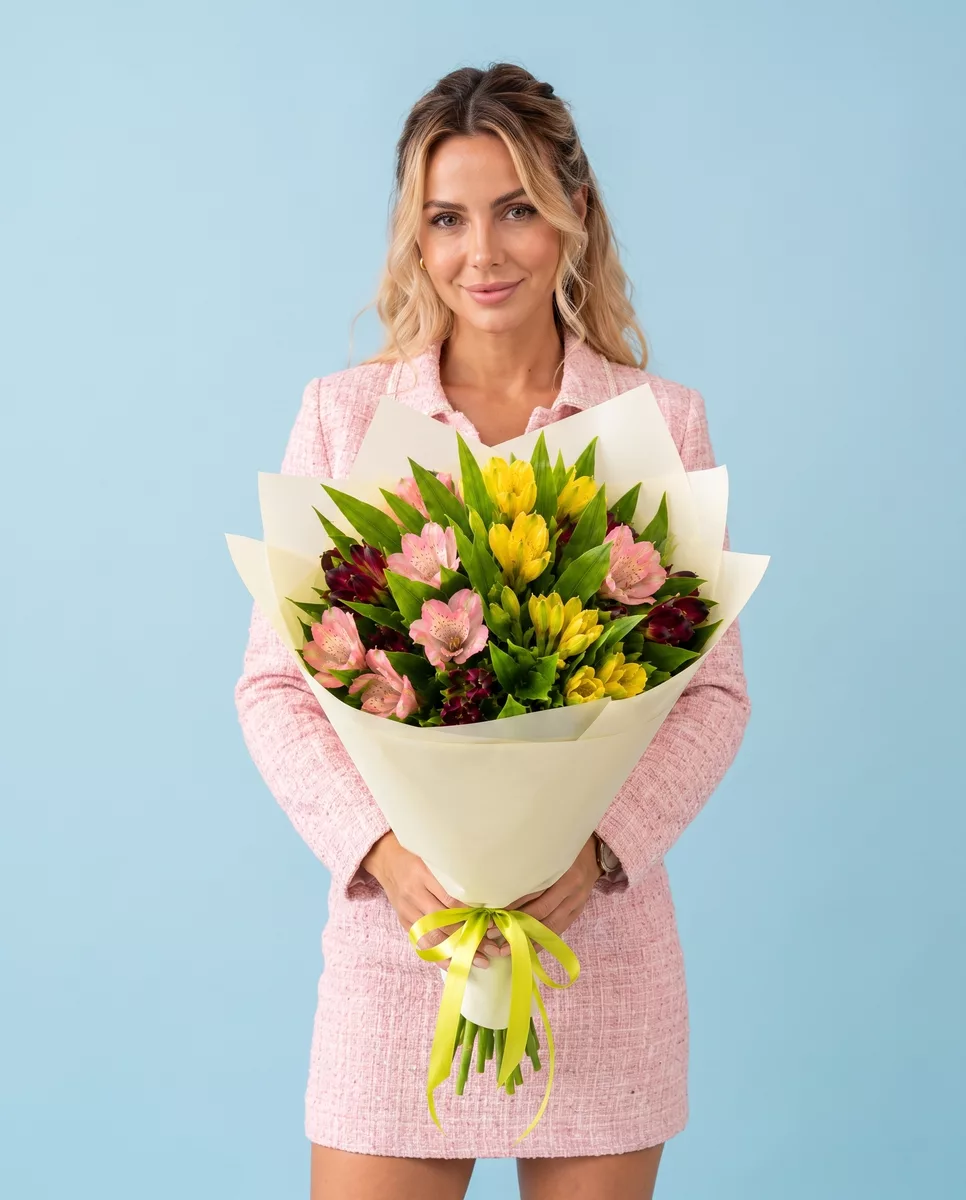
Roses dominate birthday orders but they are far from the only strong choice, and mixed bouquets with supporting varieties often look more generous and last longer than single-variety arrangements. Peonies are enormously popular for birthdays from late May through July when Russian-grown and Dutch-imported stock overlaps and prices are reasonable. Coral Charm and Sarah Bernhardt are the two varieties we receive most consistently, and both have enough structure to survive a two-hour delivery window in summer heat if the stems are conditioned in cold water the night before. Outside peony season, ranunculus is the closest substitute for dense, multi-petalled texture, available year-round from Dutch growers and particularly strong in pink, apricot and white. Lisianthus, sometimes sold under the name eustoma, is underused in birthday contexts despite being one of the best value-for-visual-impact flowers available. A single stem carries multiple blooms and the flower holds for eight to twelve days in a vase. It works in purple, white, pink and bicolour varieties and adds an airy, romantic quality to mixed bouquets. Spray roses — small-headed roses with multiple blooms per stem — are useful for filling volume without raising cost, and varieties like Lydia, Viviane and Princess spray roses are reliably available through the year. Alstroemeria is another high-longevity option that customers often overlook because it looks modest in the shop but lasts two weeks in a vase, which makes it genuinely practical for recipients who travel or have busy schedules. Tulips work well in spring but require careful handling in warm apartments.
Seasonal Timing and What Is Actually Available Month by Month
Ordering a birthday bouquet in Russia means working with what Dutch auction houses and domestic greenhouse growers can supply on a given week, and that supply shifts significantly by season. January through March is the strongest period for roses and spray roses — Dutch growers run full greenhouse capacity and prices are competitive. This is also when tulips flood the market ahead of International Women's Day on March 8, so if the birthday falls in February or early March, tulips in any colour are an excellent and affordable choice. April through June brings ranunculus, anemones and the beginning of the peony season, which peaks in late May and June. A birthday bouquet built around peonies and garden roses in this window looks genuinely luxurious without a luxury price. July and August are the hardest months for flower quality in Russia because heat degrades cut flowers faster than any other factor. We condition all stems in refrigerated water at two to four degrees Celsius before delivery, but a bouquet that sits in a thirty-degree apartment will lose a day or two of vase life regardless of conditioning. For summer birthdays, shorter-stemmed, compact varieties like spray roses, alstroemeria and chrysanthemum poms are more durable choices than large-headed garden roses. September through November brings dahlias, which are spectacular for birthday bouquets — Café au Lait, Labyrinth and Black Wizard are reliable varieties with strong stem structure. December is strong for amaryllis, which delivers dramatic visual scale with just five or seven stems, making it ideal for recipients who prefer bold, architectural arrangements over traditional mixed bouquets.
Bouquet Sizes, Stem Counts and What Each Signals
In Russian birthday culture, the stem count communicates the level of celebration as clearly as the flower variety does. A bouquet of three or five stems is a small, personal gesture — appropriate for a colleague or a neighbour, but likely to feel understated for a close friend or family member. Eleven stems is the most common entry point for a meaningful birthday bouquet and the size where the arrangement starts to look full and generous rather than token. Fifteen and nineteen stems cover the middle range and suit most birthday occasions, from close friends to romantic partners, without requiring a significant budget conversation. Twenty-five stems signals a major celebration — a significant birthday, a milestone anniversary of age, or a gesture from a group of people. Bouquets at this size and above benefit from mixed compositions because a mono-variety arrangement of twenty-five large roses becomes difficult to arrange in a standard vase and can look stiff. When customers ask what size to order without much other information, we typically recommend fifteen stems for a close friend and eleven for a colleague, then adjust based on budget. The mistake we see most often is customers choosing a large stem count but a low-cost variety to save money, which results in a visually thin bouquet because the stems are narrow. A tighter bouquet of eleven large-headed roses looks more impressive and photographs better than nineteen thin alstroemeria stems, even though the latter has more stems. The visual density of the individual flower matters as much as the count, and a florist can advise on which varieties give the most presence per stem at a given price point.
What to Check Before Confirming a Birthday Flower Order
Three things cause the most problems with birthday flower deliveries in Russia, and all three are checkable before you confirm the order. First, verify the stem count is odd. Look at the final order summary, not just the product image, because images are often representative rather than exact. If the count is even, call or message the shop to adjust by one stem. Second, check the delivery window against the birthday schedule. A bouquet delivered at nine in the morning when the recipient has already left for work will sit at a door for hours in summer heat or winter cold, and both extremes damage flowers quickly. At Five Flowers we deliver within a one-to-two hour window across Saint Petersburg, and we ask for a contact number so the courier can coordinate arrival. If the recipient is at an office or a restaurant, confirm the address accepts flower deliveries and that someone will be present to receive them. Third, check the colour composition if you are ordering a pre-set bouquet rather than a custom one. Many pre-set arrangements are photographed with one batch of flowers and assembled with whatever is freshest that day, which can shift the colour balance. If you need a specific colour story — for example, all warm tones for someone who hates pink — specify that in the order notes or call to confirm. A quick check on these three points takes two minutes and prevents the situations that generate complaints: the even-numbered bouquet, the undeliverable address and the wrong colour landing on someone's birthday table.
Russian birthday flower customs are specific but not complicated: odd numbers always, white used carefully, and colour chosen with the recipient's age and relationship in mind. The variety matters as much as the colour — a well-conditioned stem of Red Naomi rose or a fresh Café au Lait dahlia will outlast a cheaper substitute by several days and make the gesture feel considered rather than automatic. When in doubt about stem count, round up to the next odd number. When in doubt about colour, lean into warm pinks, corals and reds, which carry no ambiguous signals in Russian gifting culture and suit almost every birthday occasion from a close friend to a grandparent. The flowers are the easy part once you know the rules. We deliver bouquets across Russia in 1–2 hours.
Frequently asked questions
Can I send an even number of flowers if the bouquet is very large?
Even in large arrangements, we recommend staying with odd numbers. Above twenty-five stems the convention relaxes slightly in practice, but there is no reason to risk the association. Adjusting from twenty to twenty-one or from thirty to thirty-one costs almost nothing and removes any possibility of the recipient feeling uncomfortable when they count the stems, which many Russians do automatically.
Are white roses acceptable for a Russian birthday?
White roses in a mixed arrangement with pink, peach or coral tones are widely accepted and look elegant. An all-white bouquet of roses is less problematic than all-white chrysanthemums or lilies, which have stronger funeral associations. If the recipient is under forty and has a contemporary aesthetic, an all-white rose bouquet is unlikely to cause concern. When uncertain, add a warm accent colour.
Which flowers last longest after delivery in a warm Russian apartment?
Alstroemeria, lisianthus and chrysanthemum poms consistently last ten to fourteen days in a vase when stems are cut at an angle and water is changed every two days. Spray roses last seven to ten days. Large-headed garden roses and peonies are shorter at five to seven days but make a stronger visual impression. For recipients who travel or forget to change water, alstroemeria is the most forgiving choice.
What is a good birthday bouquet for a male recipient in Russia?
Men in Russia receive flowers on birthdays more often than many foreigners expect. Single-variety bouquets of eleven or fifteen red or orange roses are the most common choice. Sunflowers work well for informal occasions. Avoid anything that reads as overly delicate or pastel. A structured arrangement with strong stems and deep colours — burgundy, deep orange, rich yellow — is generally well received and avoids any awkwardness.
How early should I order for a birthday delivery in Saint Petersburg?
For same-day delivery, ordering by noon gives us the most flexibility to source the freshest available stems and schedule the courier within your preferred window. For a specific morning delivery, ordering the evening before is better. If the birthday falls on March 8 or February 14, order at least three days ahead — demand on those dates is extremely high and popular varieties like red roses and tulips sell out quickly.
Ready to send a bouquet?
Pick a city, choose the flowers, and we will hand them over with a photo confirmation.
Choose a city →