
Flower Delivery to Elektrogorsk from Abroad: What You Need to Know
Elektrogorsk sits about 80 kilometres east of Moscow, and every week we take orders for it from people calling or messaging from Germany, the United States, Israel, the UAE and a dozen other countries. The questions are always the same: will it actually arrive today, what flowers survive the road, and how do I pay from a foreign card? This article answers all of that in plain terms, so you can place the order with confidence and your recipient gets something worth receiving.
Where Elektrogorsk Is and Why It Matters for Delivery
Elektrogorsk is a small town in the Moscow Oblast, officially part of the Orekhovo-Zuevsky district. Its population is around 20,000, which means it is not a large hub, but it is fully reachable as a delivery destination. The town sits on the eastern edge of the oblast, roughly 80 kilometres from the Moscow Ring Road, and that distance is the single most important fact for anyone ordering from abroad. Delivery to addresses within the Moscow city limits typically runs one to two hours. Elektrogorsk adds road time on top of that, so the realistic window for same-day delivery is tighter. Orders placed before noon Moscow time have the strongest chance of arriving the same day. Orders placed in the afternoon, especially from time zones that are many hours behind Moscow, often land the following morning. If you are calling from New York at 9 a.m. your local time, it is already 4 p.m. or 5 p.m. in Moscow depending on the season, and that affects what is possible. The practical advice is simple: if the occasion is fixed — a birthday, an anniversary — place the order the evening before your local time, which usually means morning Moscow time. That gives the shop room to prepare the bouquet properly and route the courier without rushing. Rushing leads to flowers being pulled from the cooler before they have fully hydrated, and that shortens vase life noticeably, sometimes by two or three days.
Bouquets we can deliver



How to Place an Order from a Foreign Phone Number or Card
The first thing international senders get wrong is assuming that a Russian phone number is required to place an order. It is not. You can reach Five Flowers by WhatsApp, Telegram or email using any number registered in your home country. When you make contact, have the recipient's full address ready in Russian if possible, or in transliterated Latin letters if not. The shop can handle both, but a precise address — building number, apartment number, entrance code if there is one — cuts down on delivery delays significantly. Payment is the second sticking point. Many foreign-issued Visa and Mastercard cards stopped processing Russian transactions after 2022. The practical workarounds that customers use include paying via PayPal where accepted, using a card issued by a bank in a country that still processes Russian payments, or asking a friend or family member inside Russia to pay on your behalf and reimbursing them separately. It is worth asking the shop directly about current payment options when you make contact, because the situation has shifted over time and what worked six months ago may have changed. Sending the recipient's name in the correct form also matters. Russian has grammatical cases, and a card that reads a name in the wrong form can feel slightly off to a native speaker. If you know how to write the name in Russian, include it. If not, write it in Latin and the florist will handle the phrasing. A short message of up to three or four lines fits comfortably on a standard gift card.
Which Flowers Travel Well to Elektrogorsk
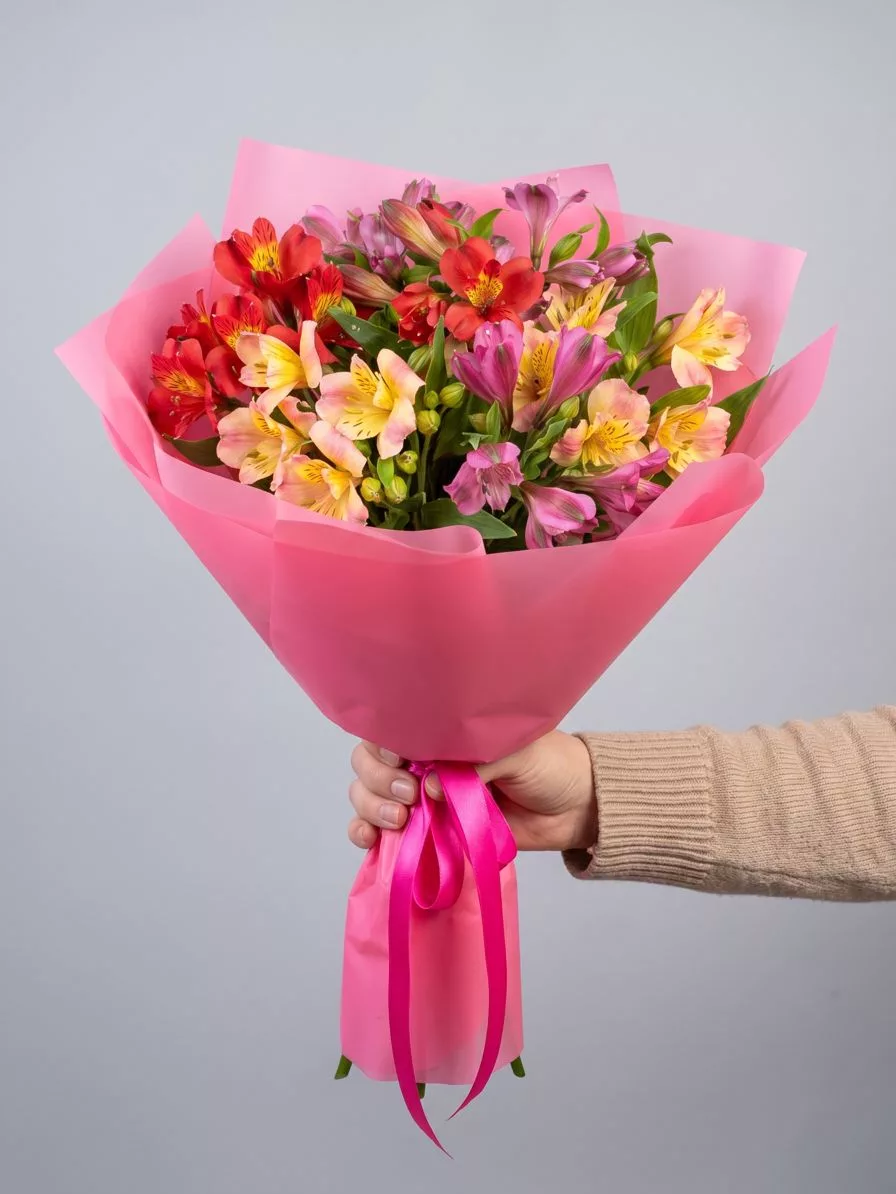
The extra road time to Elektrogorsk compared to a central Moscow address means variety choice matters more than it would for a short city delivery. Roses are the most reliable option. Varieties with denser petal packing — think classic red or white garden-style roses with high petal counts — hold their shape better over a longer transit than thin-petalled spray roses. Ecuadorian roses, which are the standard for most premium Russian florists, are bred for long stem length and durability and they perform well. Chrysanthemums, both single-headed and spray types, are extremely road-tolerant and arrive looking almost identical to how they left the shop. Alstroemeria is another strong choice: the buds open gradually, so even if some petals are slightly stressed by the journey they recover quickly in water. Carnations are underrated for this reason too — they are tougher than they look and hold colour well. What to avoid for a long-distance delivery: open garden peonies in full bloom, which bruise easily and drop petals under vibration; fully open ranunculus for the same reason; and any flower that has already been out of water for a long time before the courier picks it up. In warmer months — roughly May through September — heat is a real factor on the road east of Moscow. A bouquet that leaves the shop at 30 degrees Celsius outside needs to travel in a cooled vehicle, and it is reasonable to ask whether that is the case when you order in summer. In winter, the risk flips: frost damage can occur if a bouquet sits in an unheated vehicle or is left at a door in sub-zero temperatures.
Seasonal Timing and What That Changes
Russia has four distinct seasons and they affect flower delivery in concrete ways that a sender from a milder climate might not anticipate. In winter, from November through March, temperatures in the Moscow Oblast regularly drop to minus 15 or minus 20 degrees Celsius. Flowers exposed to that kind of cold for even ten minutes can suffer cell damage that shows up as blackened petal edges or wilting within hours of arrival. Responsible delivery in these conditions means wrapping the bouquet in insulating kraft paper or a thermal sleeve and minimising time between the vehicle and the recipient's door. If the recipient is not home, the courier will not leave the bouquet outside. This is standard practice, not an extra service, and it means someone needs to be available to receive the delivery. Summer brings the opposite problem. Direct sun through a car window can raise the temperature inside the vehicle to 50 degrees or more, which is lethal for cut flowers within minutes. Ask about vehicle conditions when ordering in July or August. Spring, specifically late March through May, is when tulips and hyacinths are at their peak availability in Russia and they are priced accessibly during this window. Tulips travel reasonably well if they are cut at the bud stage rather than in full bloom. Autumn is a strong season for chrysanthemums, which are abundant and fresh, and for dahlias if you want something with more visual weight. Knowing the season when you order lets you ask for what is genuinely in good condition rather than relying on a website photo taken months earlier.
Writing the Delivery Address Correctly
This is the section that prevents the most failed deliveries. Russian addresses follow a specific order that differs from Western convention, and getting it wrong causes real problems. The correct order is: postal code, region, city or town, street name, building number, apartment number. For Elektrogorsk, the postal code is 142530, the region is Moskovskaya oblast, and the town name is Elektrogorsk. A full address written correctly might look like this: 142530, Moskovskaya oblast, g. Elektrogorsk, ul. Lenina, d. 5, kv. 12. The abbreviations matter: ul. means ulitsa, which is street; d. means dom, which is building; kv. means kvartira, which is apartment. If the building has a separate entrance code or an intercom number, include it. Many Russian apartment buildings have a locked main entrance with a numeric code or a buzzer system, and a courier without that code will stand outside unable to deliver. If you do not know the entrance code, ask the recipient to send it to you before you place the order, or include the recipient's phone number in the order details so the courier can call on arrival. Including a phone number for the recipient is strongly recommended regardless. It gives the courier a direct line if the address has any ambiguity, and it means the recipient gets a call when the bouquet is minutes away, which helps ensure someone is home. Do not write the address only in English. Even if the street name transliterates cleanly, a courier navigating a Russian town with a Latin-script address is working harder than necessary and mistakes become more likely.
What Russians Actually Expect When Flowers Arrive
If you are sending flowers to someone in Russia for the first time, a few cultural points are worth knowing so the gift lands the way you intend. Odd numbers of flowers are the norm for celebratory occasions. Even numbers are associated with mourning and funerals, so a bouquet of ten roses or twelve tulips would strike most Russian recipients as an odd choice for a birthday or anniversary. Bouquets of five, seven, nine, eleven or fifteen stems are all standard and appropriate. This rule is widely observed across generations and regions, including smaller towns like Elektrogorsk, so it is not a Moscow-specific quirk. Packaging matters more in Russia than in some Western markets. A well-wrapped bouquet with a consistent colour scheme in the paper or ribbon signals that the sender paid attention, and recipients notice. Plain cellophane with no additional wrapping reads as a budget choice even if the flowers themselves are expensive. When you order, ask for proper decorative wrapping rather than assuming it is included by default. Gift cards are expected and appreciated. A bouquet arriving with no card at all can feel impersonal, and the recipient may not immediately know who sent it, which diminishes the impact. Write something specific rather than just a name. Even a single sentence about why you are sending the flowers gives the recipient something to hold onto. Finally, white flowers are not exclusively associated with mourning in Russia the way they are in some East Asian cultures — white roses and white chrysanthemums are perfectly appropriate for birthdays and celebrations.
Confirming the Order and Tracking What Happens Next
Once you have placed the order, ask for a confirmation that includes the estimated delivery window, the bouquet composition and the recipient's address as the shop has recorded it. Reading that address back to yourself against what you provided is a simple check that catches most errors before the courier leaves. If you are in a time zone many hours behind Moscow, consider what happens while you are asleep. An order confirmed at 10 p.m. your time might be going out for delivery at 6 a.m. Moscow time, and if there is a problem — the recipient is not home, the address has an error — the shop will try to reach you and find you unavailable. The solution is to leave a secondary contact: either a phone number for the recipient that the shop can call directly, or a contact inside Russia who can make decisions if something comes up. Most problems that arise with deliveries to smaller towns like Elektrogorsk are address-related rather than flower-related, and they are almost always solvable in the moment if someone is reachable. After delivery, the shop can typically confirm that the bouquet was handed over. If you want a photo of the delivered bouquet, request that when you place the order rather than asking afterwards. Some couriers take a confirmation photo as standard; others do so only when specifically asked. For an international sender who cannot be there in person, a delivery photo provides real peace of mind and is a reasonable thing to request. Keep the order confirmation message until you have heard from the recipient, so you have the reference details if any follow-up is needed.
Sending flowers to Elektrogorsk from abroad is entirely manageable once you understand the geography, the timing windows and the few customs that differ from what you may be used to. The key decisions are placing the order early enough in Moscow time, choosing varieties that travel well over the longer road distance, writing the address correctly with an apartment number and entrance code, and keeping odd stem counts for any celebratory occasion. Everything else — payment, card wording, wrapping — the shop handles with you directly when you get in touch. We deliver bouquets across Russia in 1–2 hours.
Frequently asked questions
How far in advance should I place an order from abroad to guarantee delivery to Elektrogorsk on a specific date?
Place the order at least 24 hours before the date you want, 48 hours if you are ordering over a weekend or Russian public holiday. Elektrogorsk is 80 kilometres from central Moscow, so the courier run alone takes time. Same-day is possible if you contact us before 10 AM Moscow time, but it depends on what is in stock that morning.
Which rose varieties hold up best on the road from Moscow to Elektrogorsk?
Ecuadorian large-head roses are the standard choice for this route. Varieties like Explorer or Freedom have dense petal packing and thick stems that survive an 80-kilometre van transit without wilting. Avoid spray roses and garden-style open-bloom varieties for this delivery distance, especially between May and August when the van interior heats up significantly.
What does a bouquet for Elektrogorsk delivery typically cost when ordered from abroad?
A composed bouquet of 15 Ecuadorian roses runs roughly 4,500 to 6,000 roubles including delivery to Elektrogorsk. The delivery surcharge for addresses outside Moscow reflects the road distance and is usually 800 to 1,200 roubles on top of the bouquet price. Payment from a foreign card is handled separately through an alternative link we send on request.
Can I write the delivery address in Latin letters if I do not have it in Russian?
Yes. Provide the street name, building number, apartment number and the recipient's phone number in any transliteration you can manage. The shop converts it before passing the address to the courier. A working Russian mobile number for the recipient is more important than perfect spelling, because the courier will call ahead before arriving.
What flowers are actually available for Elektrogorsk delivery in winter, and does cold weather damage them?
From November through March the range narrows to cold-tolerant cuts: Ecuadorian roses, chrysanthemums, alstroemerias and carnations. These travel well in low temperatures and are packed in insulated kraft wrapping for the winter run. Tropical varieties like orchid stems or anthuriums are not offered for Elektrogorsk delivery in winter because a single unheated loading bay stop can blacken them irreversibly.
Ready to send a bouquet?
Pick a city, choose the flowers, and we will hand them over with a photo confirmation.
Choose a city →