
Flower Delivery to Nikolaevsk-Na-Amure: What Senders Abroad Must Know
Nikolaevsk-Na-Amure sits at the far eastern edge of Russia, about 970 kilometres north of Khabarovsk, and most people contacting us from Germany, Israel, the United States or South Korea have no idea how remote that actually is until they try to send flowers there. The questions we hear most often are the same: can you really deliver same-day, what will survive the journey, and how do I pay from outside Russia? This article answers all of that in plain terms, with the specifics a sender abroad genuinely needs before placing an order.
Where Nikolaevsk-Na-Amure Is and Why It Changes Everything
Nikolaevsk-Na-Amure is a small city of roughly 20,000 people in Khabarovsk Krai, positioned at the mouth of the Amur River where it meets the Tatar Strait. It is not a transit hub. There are no direct rail connections to the rest of Russia, and road access from Khabarovsk is seasonal and unreliable for most of the year. The city depends heavily on river transport during summer and air connections year-round, which means the flower supply chain to this destination is genuinely different from delivering to Moscow, Saint Petersburg or even Vladivostok. When you order from abroad, you need to understand that the logistics here involve real distance and real cold. Winter temperatures in Nikolaevsk-Na-Amure regularly fall below minus 25 degrees Celsius, and even in April the overnight lows can damage unprotected blooms. Summer, roughly June through August, is the most reliable window for sending delicate varieties. During winter months, hardier flowers — spray chrysanthemums, alstroemeria, standard carnations and single-variety rose bouquets — handle the temperature exposure far better than open garden roses or ranunculus. Senders abroad often picture the Russian Far East as a place similar to Siberian cities they have heard of, but Nikolaevsk-Na-Amure is more isolated than most of those. Factoring in the time zone difference — the city runs on UTC plus 10, which is three hours ahead of Moscow — is also essential when you are placing an order from Europe or the Americas, because the window for same-day delivery closes earlier than you might expect.
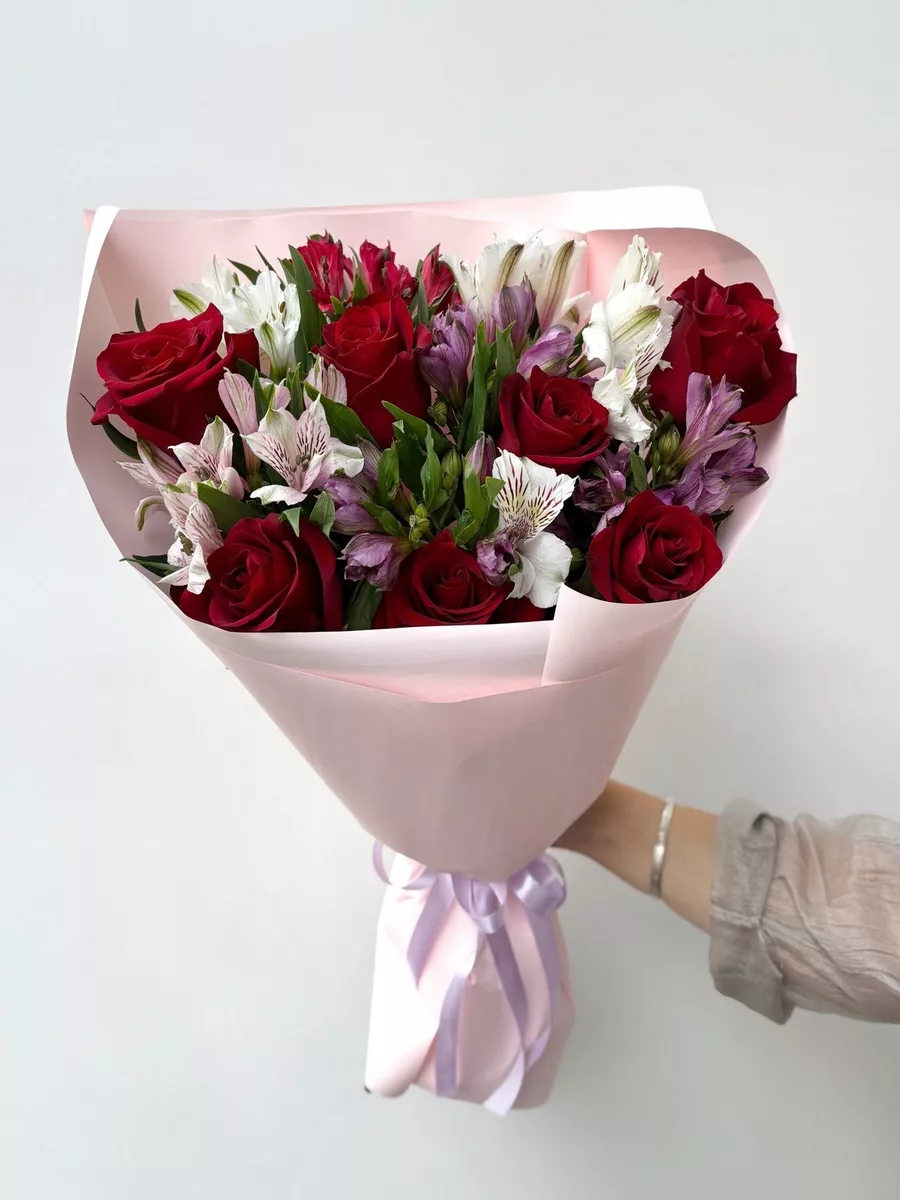
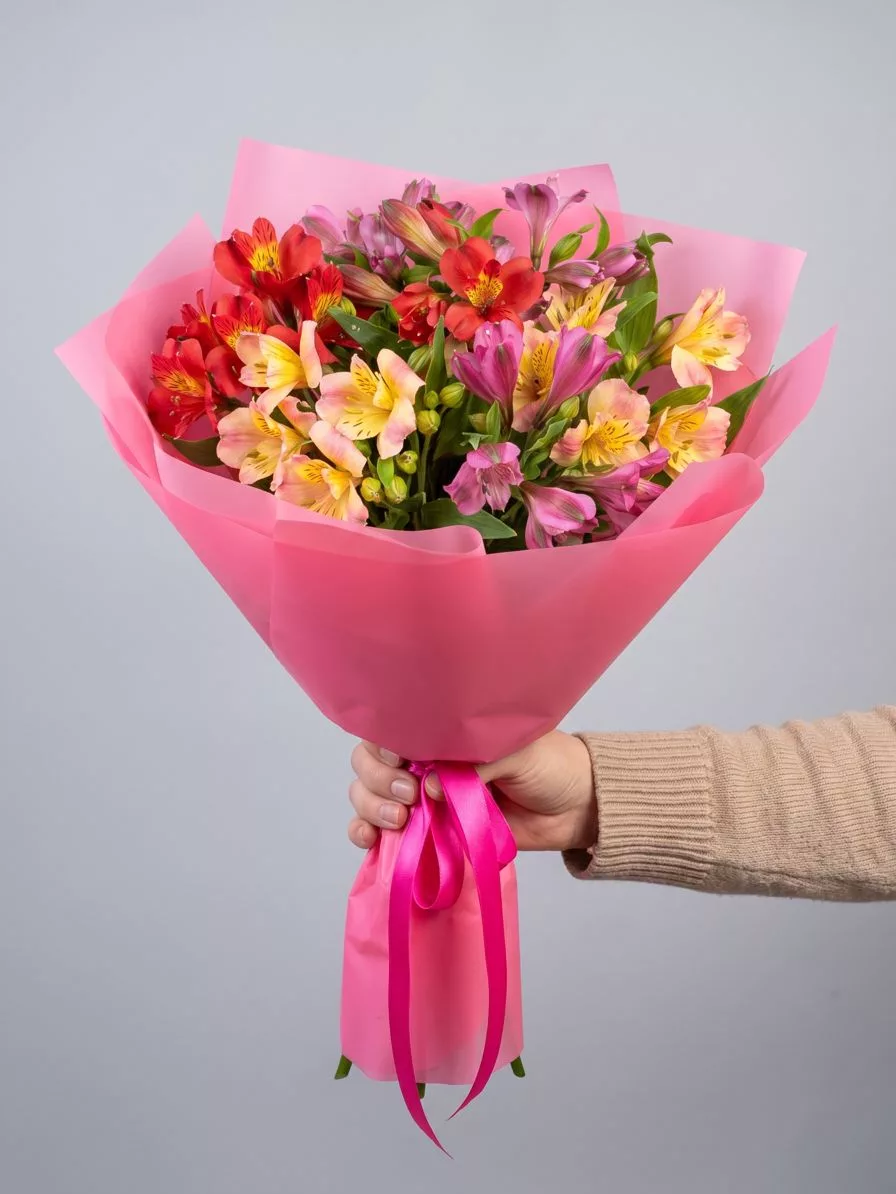
Bouquets we can deliver


Time Zones and the Order Window for International Senders
The single most common mistake from senders in Europe is placing an order at what feels like a reasonable afternoon hour and then being surprised that delivery cannot happen the same calendar day in Nikolaevsk-Na-Amure. When it is 14:00 in Berlin, it is already 21:00 in the city on the Amur. When it is 09:00 in New York, the recipient in Nikolaevsk-Na-Amure is already well into the following morning. This gap is not a minor inconvenience — it is the difference between a birthday bouquet arriving on the day and arriving the morning after. The practical rule for senders in Western Europe is to place your order before 10:00 local time if you want same-day delivery at the destination. For senders on the East Coast of North America, the cut-off is roughly 02:00 to 03:00 local time, which effectively means ordering the evening before the intended delivery date. Senders in Israel and the Gulf states have a narrower but workable window: placing an order before 12:00 noon local time usually keeps same-day delivery within reach. We strongly recommend that international senders confirm the recipient's address and phone number before reaching this cut-off, because attempting to clarify details after the window closes means the order shifts to the following day. The recipient's mobile number is not optional — our courier calls ahead in Russian, and if nobody answers, the delivery is held. If your recipient does not speak Russian, note that in the order comments and we will send a text message instead of calling.
Which Flowers Actually Arrive in Good Condition
Not every variety that looks beautiful in a Saint Petersburg display case is a sensible choice for Nikolaevsk-Na-Amure. The further a bouquet travels and the colder the transit conditions, the more the selection narrows to flowers with genuinely robust cell structure and tight petals. Spray roses are a reliable choice across all seasons: the small blooms on multi-stem branches open slowly, tolerate temperature fluctuation better than large-headed garden roses, and hold their shape through the final courier leg. Standard roses in red, white and yellow — varieties like Explorer and Avalanche — are bred for long stems and long vase life, which matters here. Alstroemeria is one of the most practical choices for distant deliveries: the buds arrive closed and open over five to seven days, so even if transit adds a few hours, the recipient gets fresh-looking flowers rather than blown-open blooms. Carnations, particularly the multi-flowered spray carnation types, are similarly resilient and available in a wide colour range. Chrysanthemums in button and spider forms hold well in cold conditions. What tends to suffer: open peonies, which bruise easily; ranunculus, which collapse quickly when temperatures fluctuate; and tropical flowers like anthuriums, which are damaged by anything below plus 10 degrees Celsius. Tulips are seasonal — they work well in spring but are not stocked year-round in the quantities needed for large bouquets. If you are ordering in November through February, lean toward the hardier varieties above and avoid requesting anything described as garden-style or open-bloom.
How to Place an Order from Outside Russia
International senders regularly tell us they expected the process to be more complicated than it is, and they are relieved when it turns out to be straightforward. You do not need a Russian phone number, a Russian bank account or a local contact to place an order. The order form on the site accepts international payment cards, and the communication with you happens in the language you write to us in. What you do need to provide accurately is the recipient's full name as it appears on any documents — this matters if the building has a security desk that checks ID — the complete street address including apartment number and building entrance number if applicable, and a working mobile number for the recipient with the Russian country code prefix. Nikolaevsk-Na-Amure addresses follow the standard Russian format: street name, house number, apartment number. If you have the address in Russian Cyrillic, paste it exactly as given — do not try to transliterate it yourself, as mistakes in transliteration cause delays. If you only have the address in Latin characters, write it clearly and we will handle the formatting. The card message is written by you in whatever language you choose; we print it and include it with the bouquet. There is no requirement for the message to be in Russian. Payment failures are the most common technical issue for cards issued outside Russia — if your card is declined, try a different card or contact your bank to pre-authorise the transaction, as some international banks flag Russian merchant charges automatically.
What Russian Flower Customs Mean for Your Order
Senders from outside Russia sometimes choose quantities or colours that carry unintended meaning within Russian cultural tradition, and a brief explanation helps avoid awkward moments. The most important rule is the odd-number convention: bouquets for living recipients are always given in odd numbers of stems — 1, 3, 5, 7, 11, 15, 25, 51. Even numbers of flowers are associated with funerals and mourning, so a bouquet of 10 roses would strike most Russian recipients as deeply inappropriate regardless of the occasion. Our site automatically structures bouquets in odd counts, but if you are requesting a custom composition, keep this in mind. Colour conventions are less rigid than the odd-number rule but still worth knowing. Yellow flowers are sometimes associated with separation or infidelity in older Russian tradition, though this belief is much weaker among younger generations in cities. If you want to be safe and the recipient is over 50, choose a mixed palette or a single strong colour like red, white or pink rather than an all-yellow arrangement. White flowers are perfectly acceptable for birthdays, name days and professional occasions — unlike in some Western European traditions, white is not reserved for mourning in Russia. Red roses remain the most universally understood romantic gesture. Name days, called imeniny in Russian, are celebrated similarly to birthdays and are a completely appropriate occasion to send flowers — if you know your recipient's name day date, it is a thoughtful alternative to a birthday delivery.
Packaging and Cold-Weather Protection
One detail that surprises international senders is that the packaging we use for winter deliveries in the Russian Far East is not the same as what you might receive from a European florist. Bouquets going to Nikolaevsk-Na-Amure in autumn and winter are wrapped in insulating kraft paper with a thermal inner layer, and the stems are secured in water-retaining floral foam rather than just a wet paper wrap. This adds bulk to the package but protects the flowers through the courier's outdoor transit between their vehicle and the recipient's building entrance, which in January can mean exposure to minus 20 degrees Celsius for several minutes. We do not use decorative cellophane wrapping as the outer layer in cold months because it provides no insulation and can cause condensation damage when the bouquet moves from cold outdoor air to a heated interior. The hat-box format — a round box with a lid — is popular for gifting and works well in cold weather because the box itself insulates the arrangement. If you are ordering a hat-box composition, specify whether you want the flowers arranged facing upward in a dome style or in a low flat arrangement; both are available and the choice affects which varieties we can include. For summer orders, the packaging options open up considerably: open-top arrangements with decorative paper and ribbon are appropriate from May through September. If you have a packaging preference, note it in the order comments — we accommodate requests when the variety and season allow.
Checking Your Order Before You Confirm
The final step before confirming an order from abroad is the one most people rush, and it is where the majority of delivery problems originate. Read through the recipient address one more time and check that the apartment number is present — in Russian apartment buildings, the courier needs the apartment number to ring the correct intercom, and a building with 200 units cannot be searched door to door. Confirm the recipient's phone number includes the correct Russian country code, which is plus 7, followed by the city or mobile prefix and the local number. Nikolaevsk-Na-Amure uses the area code 42135 for landlines, but most recipients today use mobile numbers beginning with plus 7 followed by a ten-digit mobile number. Check the delivery date against the time zone difference one more time — write out both the local time where you are and the corresponding time in Nikolaevsk-Na-Amure to make sure you are ordering for the right calendar day. If the delivery is for a specific event time, such as a morning birthday or an evening celebration, note the preferred delivery window in the comments. We work within a two-hour delivery window and will do our best to match your timing, though exact-minute delivery cannot be guaranteed. Finally, check that the card message reads the way you intend — once the order is confirmed and the bouquet is assembled, changes to the card text require a new print and may delay dispatch. A correct order placed calmly is always faster than a corrected order placed in a hurry.
Sending flowers to Nikolaevsk-Na-Amure from abroad is entirely possible, and we do it regularly for customers in Europe, North America and across Asia. The keys are straightforward: order early enough to account for the ten-hour time zone offset, choose varieties suited to the season and the cold, provide a complete address with apartment number and a working Russian mobile number, and stick to odd stem counts. Get those four things right and the rest of the process is as simple as ordering flowers to any other Russian city. We deliver bouquets across Russia in 1–2 hours.
Frequently asked questions
Can I order flowers to Nikolaevsk-Na-Amure if I don't speak Russian?
Yes. The order form works in any language and you can write your card message in English, German, Hebrew or any other language — we print it exactly as you write it. Communication with you as the sender happens in the language you use to contact us. The only Russian-language interaction is between our courier and your recipient, which is handled by us.
What is the latest I can order from Germany for same-day delivery?
Nikolaevsk-Na-Amure is seven hours ahead of Germany in summer and eight hours ahead in winter due to daylight saving differences. To be safe, place your order before 10:00 Berlin time for same-day delivery. Orders placed after that time are typically scheduled for the following day. If you are close to the cut-off, contact us directly before confirming.
Is it true that even numbers of flowers are inappropriate in Russia?
Yes, this is a firmly held convention across Russia. Even numbers of stems are associated with funerals, and presenting a living person with an even-numbered bouquet is considered a serious social error. Our standard bouquets are always assembled in odd counts. If you request a custom quantity, make sure it is an odd number — 5, 7, 11, 15, 25 and 51 are all common choices.
What happens if the recipient is not home when the courier arrives?
Our courier calls the recipient's mobile number before arrival. If there is no answer, a second call is made. If the recipient remains unreachable, the order is held and we contact you as the sender to arrange a new delivery time. This is why a correct, active mobile number for the recipient is essential — without it, the bouquet cannot be delivered and may deteriorate waiting for a rescheduled attempt.
Are there flowers I should avoid ordering in winter for this city?
In winter, avoid open peonies, ranunculus, open garden roses and tropical varieties like anthurium or bird of paradise — all are damaged by temperatures below plus 10 degrees Celsius. Stick to spray roses, alstroemeria, standard carnations, spray chrysanthemums and closed-bud rose varieties. These handle cold transit well and arrive in good condition even when outdoor temperatures in Nikolaevsk-Na-Amure are severely below freezing.
Ready to send a bouquet?
Pick a city, choose the flowers, and we will hand them over with a photo confirmation.
Choose a city →