
How to Send Flowers to Saint Petersburg from Abroad: A Florist's Guide
You are sitting in Berlin, Toronto, or Dubai, and someone you love is celebrating a birthday in Saint Petersburg tomorrow morning. You want real flowers on their doorstep, not a voucher in an inbox. The good news is that ordering a same-day delivery to Saint Petersburg from anywhere in the world is genuinely straightforward when you know what to look for. This guide walks you through every practical detail, from choosing the right blooms for the Russian climate to understanding what your recipient will feel when the doorbell rings.
Understanding the Saint Petersburg Climate and What It Means for Flowers
Saint Petersburg sits on the Gulf of Finland at roughly the same latitude as southern Alaska. That geography matters enormously for flowers. From November through March, outdoor temperatures regularly drop to minus ten or fifteen degrees Celsius, and a bouquet left on an unheated staircase landing for even twenty minutes can suffer frost damage to delicate petals. Roses, ranunculus, and lisianthus are particularly vulnerable to freezing; their cell walls rupture and the blooms turn translucent and limp within hours. A good delivery service wraps bouquets in insulating kraft paper and moves quickly between the van and the building entrance during winter months.
In summer the situation reverses. July and August in Saint Petersburg can bring humid warmth above twenty-five degrees, and flowers sitting in a delivery vehicle without climate control will wilt faster than you expect. Hydrangeas and garden roses are especially sensitive to heat stress. Spring and autumn are the most forgiving seasons for sending flowers, with temperatures that keep stems fresh during transit without any drama.
When you order from abroad, ask yourself what season it is in Saint Petersburg right now, not where you are sitting. A sender in Singapore in January may be sweating in thirty-degree heat while their recipient in Saint Petersburg is bundled in a winter coat. Choosing seasonally appropriate, sturdy varieties, such as spray chrysanthemums, alstroemeria, or freesia, reduces the risk of disappointment regardless of the weather outside.
Bouquets we can deliver
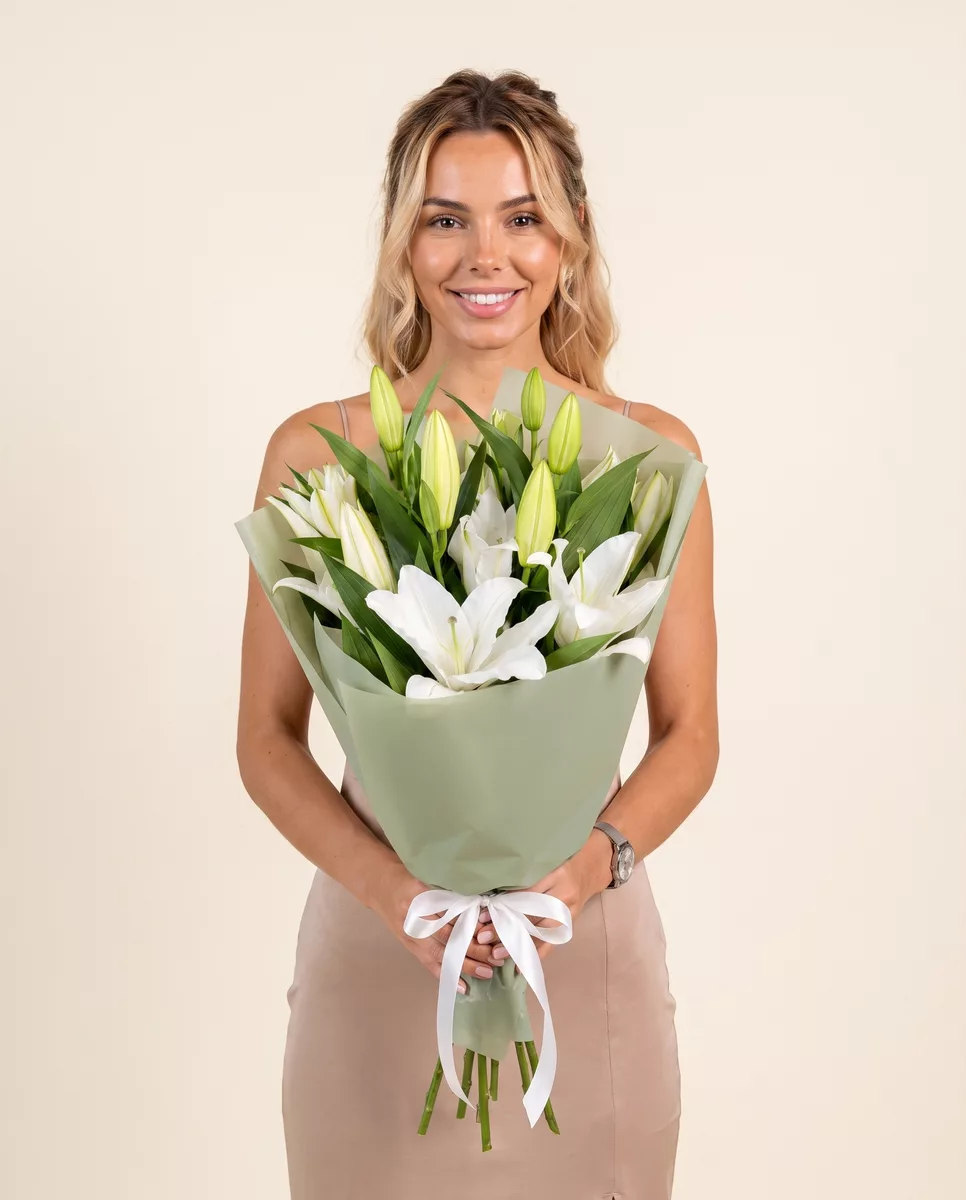
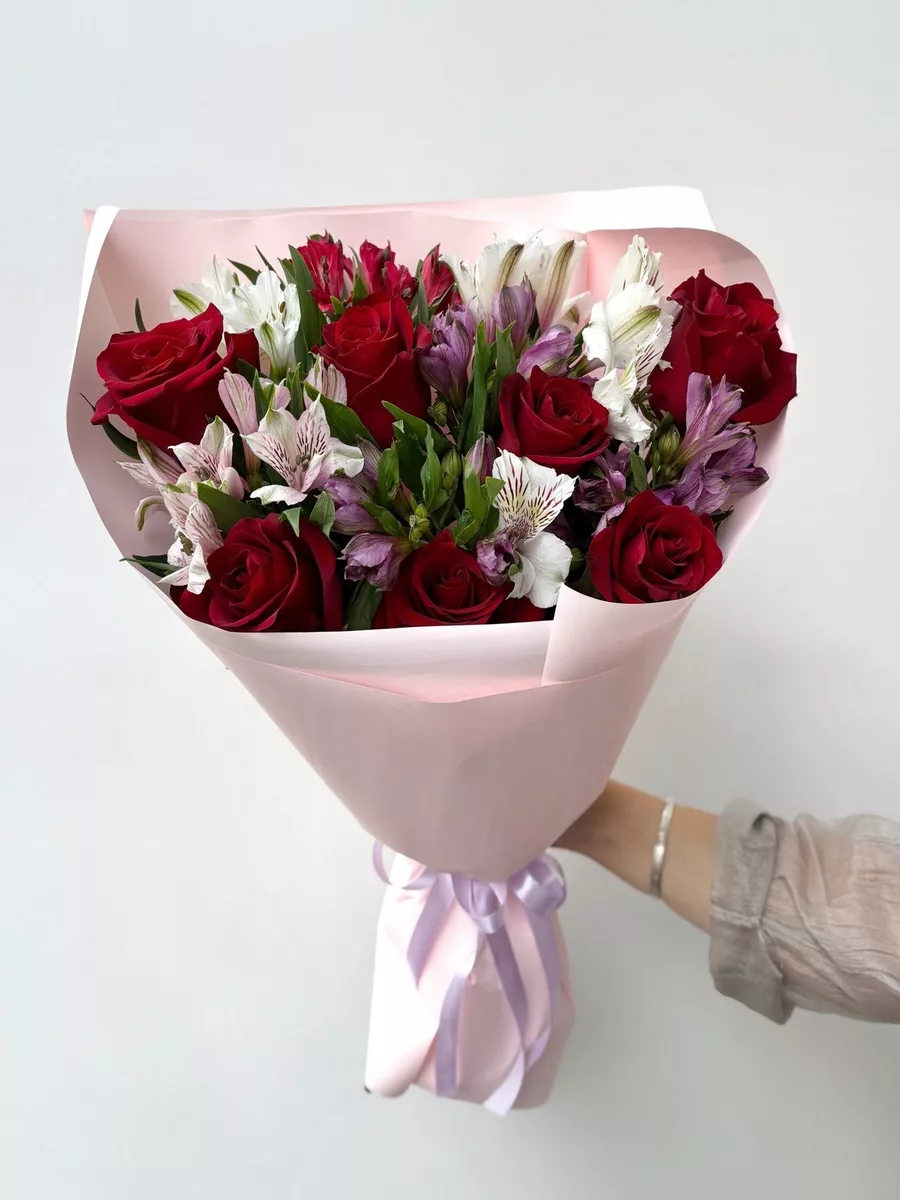
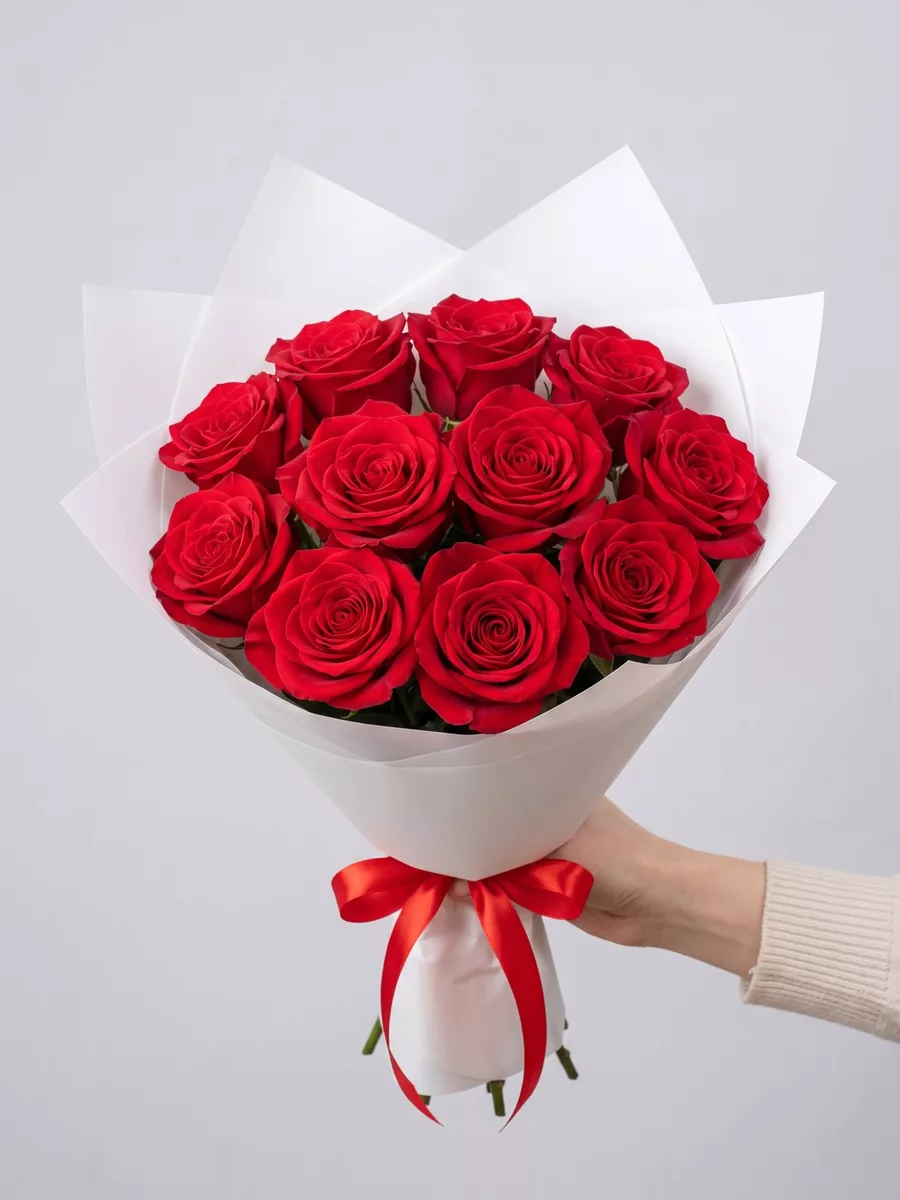

Choosing the Right Flowers: Varieties That Travel and Delight
Not every flower that looks beautiful in a photograph survives the last mile of delivery in a northern city. As a florist, I always steer international senders toward varieties with proven staying power and genuine emotional impact.
Roses remain the most universally loved choice and hold up well when properly conditioned. Ecuadorian long-stem roses, with their dense heads and thick stems, are the workhorses of the industry for good reason. Peonies, available from late May through July, are extraordinarily popular in Russia and carry a sense of luxury that photographs cannot fully capture. If your occasion falls in that window, they are almost always the right call.
Tulips are deeply associated with spring celebrations in Russia and sell in enormous quantities around International Women's Day on the eighth of March, a date that functions like Mother's Day, Valentine's Day, and a general celebration of femininity rolled into one. If you are sending flowers around that date, order at least three to four days in advance because demand is intense.
For a more contemporary, artistic arrangement, consider compositions built around seasonal foliage, garden-style blooms like scabiosa or lisianthus, and textural elements such as eucalyptus or dried pampas grass. These arrangements photograph beautifully and feel genuinely considered rather than generic. Avoid sending flowers that are deeply associated with mourning in Russian tradition, specifically, avoid all-white arrangements without any colour accent, as they can carry an unintended message at a joyful occasion.
Navigating Russian Customs Around Flowers: What Every Sender Should Know
Russia has a rich and specific flower culture that can surprise people from Western Europe or North America. Understanding a few key customs will help you choose the right bouquet and avoid accidental missteps.
The most important rule is the odd-number principle. In Russia, even numbers of flowers are traditionally associated with funerals, while odd numbers are given to the living as a celebration. A bouquet of twelve roses, perfectly normal in France or the United States, would strike many Russian recipients as unusual and potentially unsettling. Always aim for an odd count: eleven, fifteen, nineteen, or twenty-five stems. A good florist will handle this automatically, but if you are specifying quantities in your order notes, keep this in mind.
Yellow flowers carry mixed associations in Russia. Some people, particularly older generations, associate yellow blooms with separation or infidelity. This is not a universal belief, and younger recipients in a cosmopolitan city like Saint Petersburg are often completely unbothered by yellow flowers, but if you are unsure about your recipient's sensibilities, mixing yellow with other colours rather than sending a monochromatic yellow bouquet is a safe approach.
Flowers are given on a very wide range of occasions in Russia: birthdays, anniversaries, professional achievements, first meetings, school graduations, and simply as a spontaneous gesture of affection. Sending flowers without a specific occasion is considered warm and thoughtful rather than odd. A handwritten card message in Russian, even a short one, will be genuinely appreciated, and most reputable flower services can include one on your behalf.
How to Place an Order from Abroad: Practical Steps and Common Mistakes
Ordering flowers internationally sounds complicated but is usually a matter of thirty minutes and a reliable internet connection. Here is what the process looks like in practice and where things most often go wrong.
First, confirm the recipient's full address including the apartment number, entrance number, and floor. Saint Petersburg apartment buildings, especially older ones in the historic centre, frequently have multiple entrances numbered separately, and a delivery driver who arrives at entrance one when the recipient lives near entrance four will lose significant time. Russian addresses are written in a specific order, and it is worth double-checking that the address you have is complete.
Second, provide a working Russian mobile number for the recipient. Delivery couriers will call ahead to confirm arrival, and a number that does not work in Russia, such as a foreign SIM that is not active, will cause delays. If your recipient is a Russian resident, they will have a local number. If they are a foreign visitor staying in the city, confirm they have roaming enabled.
Third, account for the time zone difference. Saint Petersburg operates on Moscow Time, which is UTC plus three. If you are ordering from Los Angeles at nine in the evening your time, it is already eight in the morning the following day in Saint Petersburg. Many international senders accidentally schedule deliveries for the middle of the night because they forget to convert. A one-to-two-hour delivery window means nothing if the order is placed at the wrong local time.
Finally, write your card message in advance. Leaving it blank because you cannot type in Russian is a missed opportunity. Most services accept messages in English or can transliterate a short phrase for you.
Timing Your Order: Occasions, Lead Times, and Peak Periods
Saint Petersburg has several dates in the calendar when flower demand surges dramatically, and an international sender who does not account for them may find that next-day delivery is simply not possible at standard lead times.
The eighth of March, International Women's Day, is by far the busiest day of the year for every florist in Russia. Demand begins building from the fifth of March, and by the seventh, same-day slots fill up entirely. If you want a delivery on or around this date, place your order no later than the fourth or fifth of March and specify your preferred delivery window clearly.
The fourteenth of February sees a surge in demand as Valentine's Day has become widely celebrated in Russian cities, particularly among younger people. The twenty-third of February, Defender of the Fatherland Day, is a holiday when flowers are sometimes given to men, though the tradition is less flower-heavy than Women's Day.
Birthdays and anniversaries, of course, have no seasonal pattern, but same-day delivery within one to two hours is the realistic standard for a city like Saint Petersburg when you order during business hours. If the celebration falls on a Sunday or a public holiday, confirm availability when placing your order rather than assuming the same service window applies.
For corporate gifting or large arrangements sent to mark a professional achievement, a lead time of two to three days gives the florist time to source the best available stems, condition them properly, and design something genuinely impressive rather than assembling whatever happens to be on hand that morning.
Making the Moment Memorable: Cards, Packaging, and the Recipient's Experience
The physical experience of receiving flowers matters as much as the flowers themselves. When someone opens their door to a courier holding a beautifully wrapped bouquet, the packaging, the card, and the condition of the blooms all contribute to the emotional impact of your gesture.
Packaging in Saint Petersburg flower culture tends toward elegant kraft paper wrapping, often with a ribbon and a branded sticker rather than the cellophane-heavy presentation common in some other countries. This style looks sophisticated and feels considered. If you have a preference for a particular colour palette or aesthetic, mention it in your order notes. Florists who care about their craft will do their best to honour it.
The card message is your voice arriving with the flowers. Even a short sentence carries enormous weight. If you write in English, most recipients in Saint Petersburg, especially anyone under forty-five, will read it without difficulty. If you want the message in Russian and do not speak the language, a simple phrase transliterated phonetically, or translated with a tool and then reviewed by a native speaker, will feel far more personal than a blank envelope. Consider writing something specific to the occasion rather than a generic greeting.
Ask for a confirmation photo once the delivery is complete. Most professional services will send one as a matter of course, showing the bouquet at the recipient's door or in their hands. This small detail gives you, sitting thousands of kilometres away, the satisfaction of knowing that your gesture arrived exactly as intended, fresh, beautiful, and on time.
Sending flowers from the other side of the world to Saint Petersburg is one of those gestures that lands with disproportionate warmth precisely because it requires a little thought and effort. When the bouquet arrives fresh, wrapped beautifully, and accompanied by a card that clearly came from someone who cared, the distance between sender and recipient collapses entirely. The practical details, the time zone, the odd-number rule, the winter packaging, the peak-season lead times, are all manageable once you know about them. And once you have sent flowers to Saint Petersburg successfully, you will understand why people do it again and again: few things express affection as directly, as sensory, and as joyfully as a well-chosen arrangement of fresh flowers delivered to someone's door. We deliver bouquets across Russia in 1–2 hours.
Frequently asked questions
Which flower varieties hold up best during a same-day delivery to Saint Petersburg in winter?
Spray chrysanthemums, alstroemeria, and freesia are the most reliable choices between November and March. They tolerate brief exposure to cold staircase landings far better than ranunculus or lisianthus. If you want roses, ask the florist for garden-type or high-petal-count varieties with tight outer petals, which close against the cold rather than bruising immediately on contact with frost.
What is a realistic delivery window when ordering from a different time zone?
Most Saint Petersburg florists who accept international orders can deliver within one to two hours of confirmed payment during business hours, roughly 9am to 9pm local time. Saint Petersburg runs on UTC plus three year-round. If you are ordering from Toronto or Vancouver, calculate the gap carefully — a well-intentioned lunchtime order from North America can land at 2am local time, which no florist will fulfill until morning.
How much should I expect to pay in euros or dollars for a decent bouquet delivered in Saint Petersburg?
A presentable seasonal bouquet of fifteen to twenty stems — alstroemeria, freesia, or spray roses — typically costs the equivalent of thirty to fifty euros including same-day delivery. A larger arrangement with imported Dutch roses or peonies in season runs sixty to ninety euros. Payment by international Visa or Mastercard is accepted by most services that cater to overseas senders, though confirm this before you finalize the order.
Is it worth ordering hydrangeas or peonies for a Saint Petersburg delivery, or are they too fragile for the journey?
Peonies are genuinely worth ordering from late May through June when they are locally sourced and travel a short distance from wholesaler to doorstep. Outside that window they are imported and more expensive, around eight to twelve euros per stem. Hydrangeas are risky in July and August heat but fine in spring and autumn. Ask the florist directly whether the variety you want is currently in local supply before committing.
What information do I need to provide to guarantee the delivery actually reaches the right address in Saint Petersburg?
Saint Petersburg addresses require the street name, building number, corpus or block number if applicable, apartment number, and the entry code for the intercom if the building has one. Without the intercom code, couriers are frequently left outside. Also provide the recipient's mobile number in Russian format starting with plus seven — florists call ahead to confirm someone is home, which is standard practice in the city.
Ready to send a bouquet?
Pick a city, choose the flowers, and we will hand them over with a photo confirmation.
Choose a city →