
Flower Delivery to Shimanovsk from Abroad: Zones, Timing and Varieties
Shimanovsk sits in the Amur Oblast, roughly eight time zones ahead of Moscow, and that gap catches almost every international sender off guard. People call us from Germany, the United States, South Korea and Israel expecting same-day delivery to a city they know mainly from a relative's address. The good news is that delivery to Shimanovsk is genuinely possible; the catch is that it requires planning around the time difference, seasonal temperature swings that can hit minus thirty in January, and a recipient who may not be home during a narrow delivery window. Get those three things right and the bouquet arrives fresh.
Where Shimanovsk Is and Why the Time Zone Matters Most
Shimanovsk is a small city in the Amur Oblast of the Russian Far East, population roughly twenty thousand. It sits on the Trans-Siberian Railway line, which matters because courier logistics in the region follow rail and road corridors rather than hub airports. When you are ordering from Western Europe, North America or East Asia, the first thing to establish is the local Shimanovsk time: it runs at UTC plus nine, the same as Tokyo. If you are in London and it is nine in the morning, it is already six in the evening in Shimanovsk. That means a bouquet you want delivered for a birthday lunch needs to be ordered the evening before by your clock, not the morning of. We receive orders around the clock through the website, but the cutoff for same-day Shimanovsk delivery is typically mid-morning Moscow time, which translates to very early morning in Central European Time and the previous evening in New York. Missing that window by even two hours pushes the delivery to the following day. International senders consistently underestimate this. The safest approach is to treat Shimanovsk as if it were a different calendar day: decide when you want flowers to arrive, count back nine hours from UTC, then subtract another hour as a buffer, and that is your order deadline. Confirming the recipient's schedule for that specific day also prevents a wasted trip, because redelivery in a smaller city takes longer than in a metropolitan area.
Bouquets we can deliver
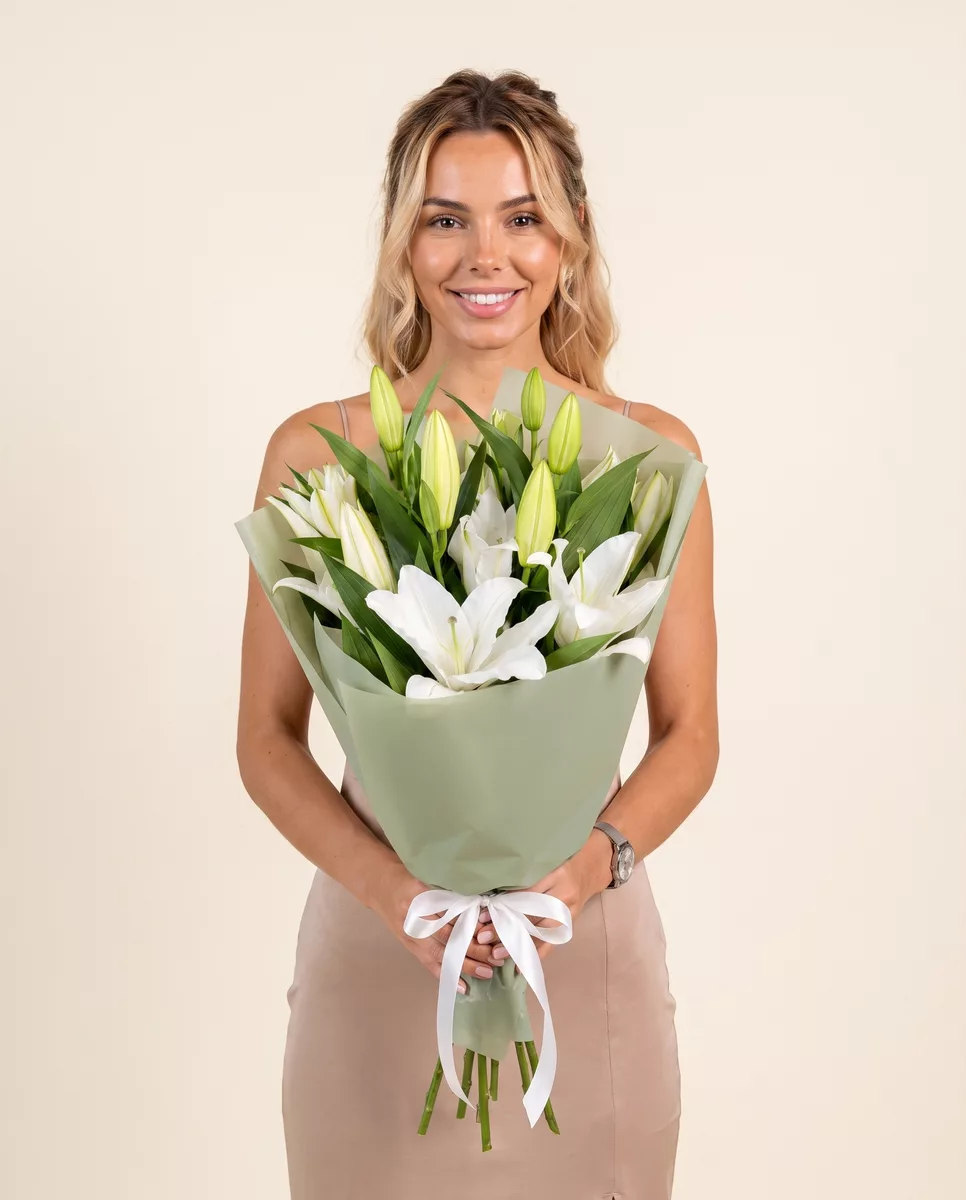
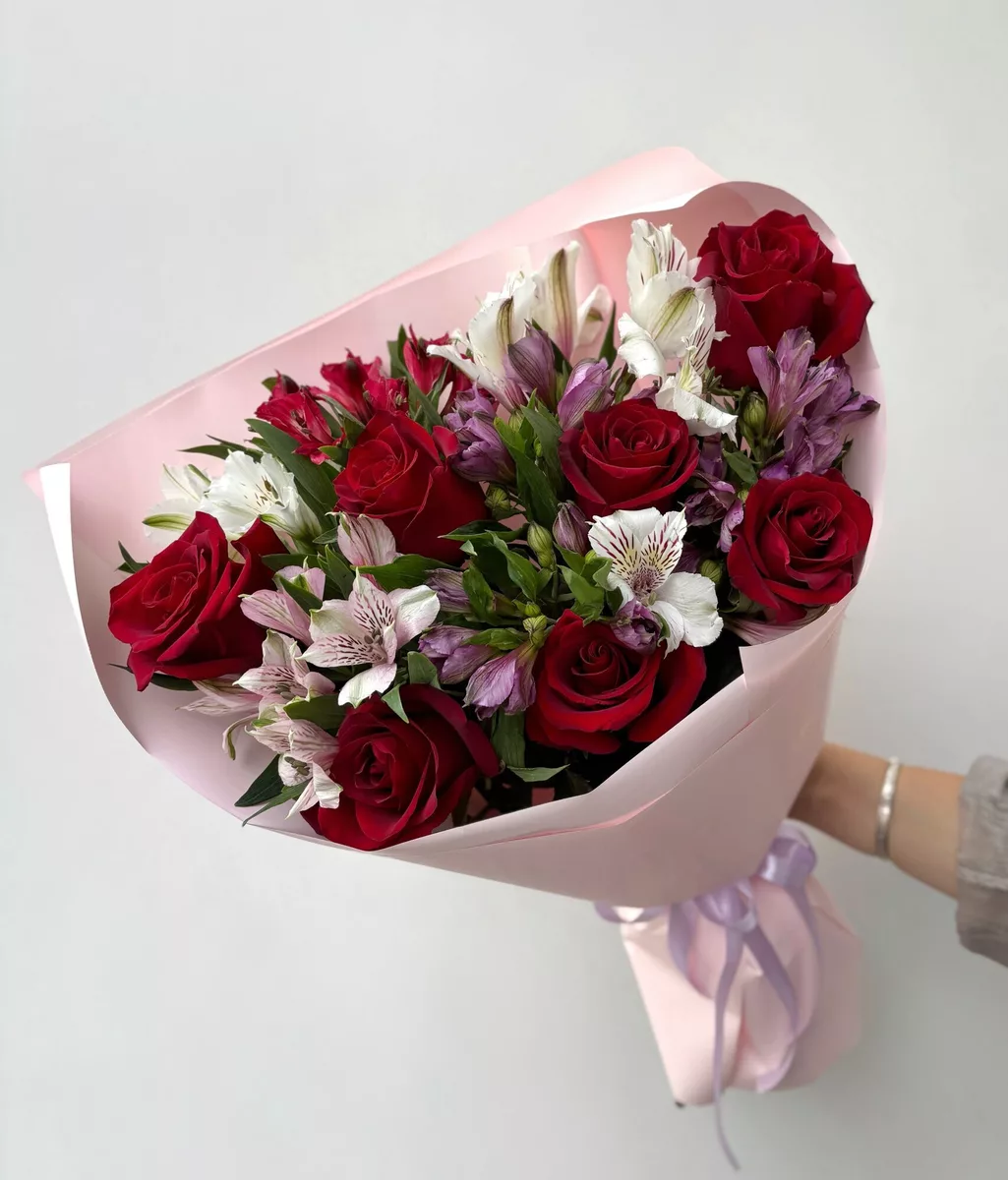
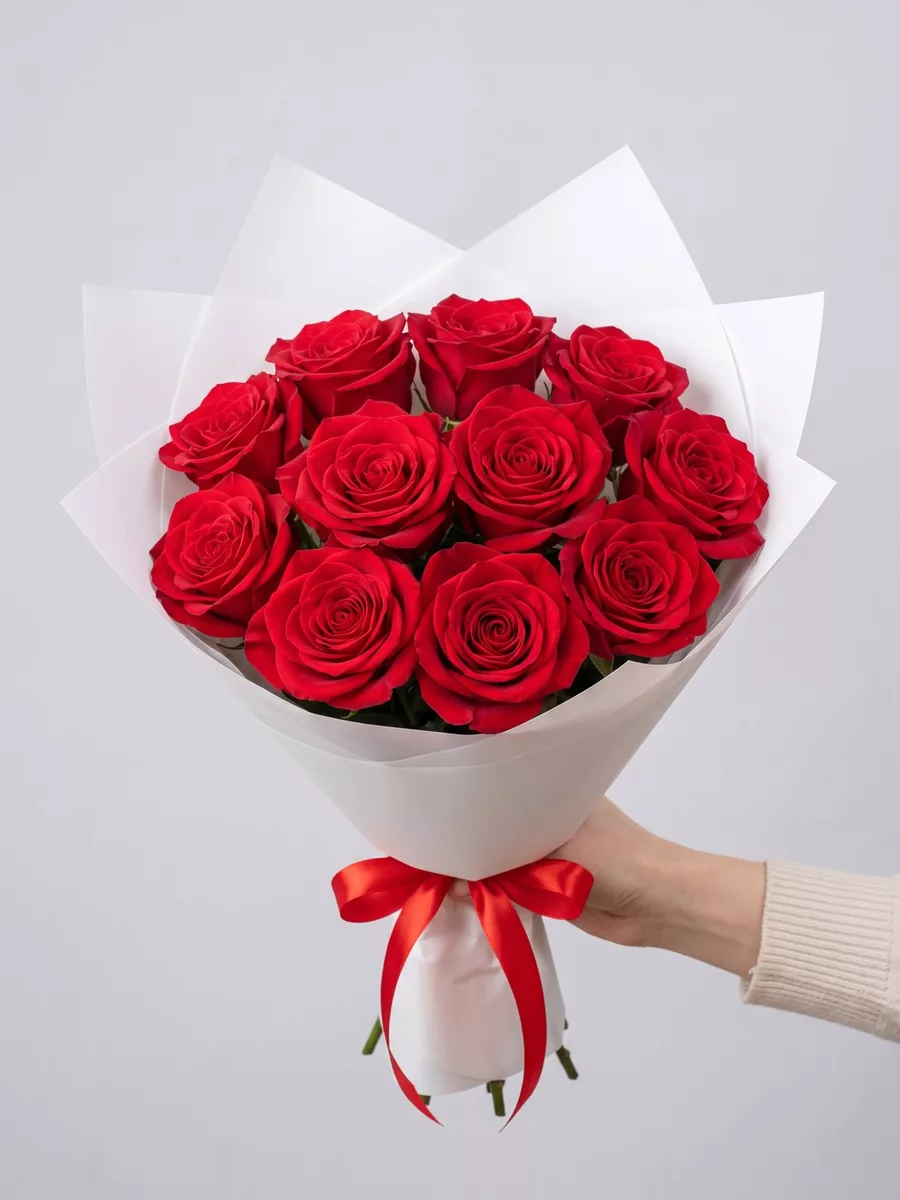

What the Climate Does to Flowers in Shimanovsk
The Amur Oblast has a sharply continental climate. Winters are long and genuinely cold, with temperatures regularly dropping to minus twenty-five or minus thirty degrees Celsius between November and March. Summers are short but can be surprisingly warm, reaching plus thirty in July and August. Both extremes create real problems for cut flowers in transit. In winter, roses, ranunculus and anemones are the most vulnerable: even five minutes in unprotected outdoor air at minus twenty will blacken petals and collapse stems. We pack cold-season orders in insulated thermal sleeves and time the handoff so the courier moves the bouquet from a heated vehicle directly to a heated entrance. Customers ordering from abroad sometimes ask whether they should specify a hardier flower for winter. The honest answer is yes: chrysanthemums, spray carnations, alstroemeria and waxflower handle brief cold exposure better than open garden roses or delicate ranunculus. In summer, the concern flips: Shimanovsk can be humid and warm, which accelerates bacterial stem rot. We cut stems at an angle and use hydration gel packs for summer deliveries, but the recipient should still trim stems and change water within a few hours of receiving the bouquet. Mentioning this in the order note is useful because not everyone knows the routine. Spring, roughly April to May, and early autumn, September, are the most forgiving seasons for flower delivery in the region: moderate temperatures, lower risk of frost or heat stress, and a wider selection of varieties available from our Saint Petersburg cold-storage supply.
Varieties That Travel Well to the Far East
Not every flower that looks beautiful in a Saint Petersburg cooler arrives in the same condition after transit across several thousand kilometres. For Shimanovsk orders, we work from a curated list of varieties with proven shelf life and structural durability. Garden roses with high petal counts, such as David Austin-style varieties, are popular but fragile; we substitute them with standard hybrid tea roses or spray roses, which have tighter bud structures and tolerate handling better. Lisianthus, also called eustoma, is an excellent choice for Shimanovsk delivery: the buds open slowly, the stems are sturdy, and the flower reads as elegant without requiring the careful handling of a peony. Peonies are available May through July and ship well when cut at the tight bud stage, but they are not a reliable year-round option. Alstroemeria is our most consistent recommendation for international senders who want colour variety without worrying about transit: it lasts ten to fourteen days from cut, tolerates a wide temperature range, and comes in white, yellow, orange, pink, red and purple. Hypericum berries, eucalyptus and ruscus add volume and last as long as the flowers, which matters when the recipient may not have a local shop nearby to supplement the arrangement. Tulips are available October through May and ship well when cut short and kept cool, but they continue to grow after cutting and will lean dramatically if the recipient does not trim and rehydrate them immediately. Orchid stems, specifically cymbidium, are worth considering for milestone occasions: they last three weeks and are nearly impossible to damage in transit.
How to Write the Delivery Address Correctly
This is the section where international orders most often go wrong. Russian addresses follow a specific sequence that differs from Western formats, and an incorrectly written address causes delays even when the city and street are right. The correct order in Russian postal convention is: country, postal code, region, city, street, building number, apartment number, recipient name. For Shimanovsk, the postal code begins with 676300 for the central part of the city, though specific streets may vary. When filling out the order form on our website, use the fields as labelled rather than pasting a single block of text into the address line, because our dispatch system reads each field separately. If you know the address only in English transliteration, that is fine for the order form, but include the Russian-script version in the comments field if you have it, because our courier will be reading building signs in Cyrillic. Apartment buildings in Russian cities use a system of podyezd, meaning stairwell entrance, plus floor and flat number. If the recipient lives in a multi-entrance building and you omit the podyezd number, the courier has to call the recipient to locate the right door, which adds time and can feel intrusive if the delivery is meant to be a surprise. For a surprise delivery, the safest approach is to have the recipient's phone number on the order and allow the courier to call from outside the building. We do not ring doorbells without calling first in Russian practice, so a phone number is not optional.
Payment from Outside Russia: What Actually Works
International payment for Russian flower orders became more complicated after 2022, and senders from Europe and North America frequently ask which methods work reliably. We accept payment through our website using cards issued outside Russia, though the specific card networks and processors that clear successfully depend on the issuing bank and change periodically. The most reliable approach for an international sender is to use the payment page on the website and, if a card is declined, to try a different card or contact us directly for alternative arrangements. PayPal is not available for Russian merchants under current regulations. Cryptocurrency is not accepted. Some customers from countries with active Russian diaspora communities, such as Germany, Israel and the United States, use a Russian-issued card belonging to a family member to complete the payment, which works smoothly. When paying in a foreign currency, the conversion happens at the rate set by the payment processor on the day of the transaction; we do not add a currency surcharge on our end, but your bank may apply its own foreign transaction fee. The order confirmation arrives by email in Russian and English. If you do not receive a confirmation within fifteen minutes of payment, check your spam folder before contacting us, because automated emails from Russian domains are sometimes filtered aggressively by international mail providers. Keep the order number from the confirmation: it is the fastest way for our dispatch team to locate your order if you need to make a change or check status. Changes to delivery time or address are possible up to two hours before the scheduled delivery window.
Customs Around Giving Flowers in Russia That International Senders Should Know
Russia has a specific and widely observed tradition around flower count that surprises many international senders. Flowers given to a living person should always be in an odd number: one, three, five, seven, eleven, and so on. Even numbers are reserved for mourning contexts, and presenting an even-numbered bouquet at a birthday or anniversary will be noticed by the recipient and their family. This is not a superstition that only older generations follow; it is current and consistent across age groups and regions, including the Far East. When you use our website, the bouquets are composed to the correct odd count by default, but if you are requesting a custom arrangement and specifying stem counts, keep this in mind. A second custom worth knowing is the tradition of giving flowers on the eighth of March, International Women's Day, which is the single largest flower-giving day in Russia. If you are planning a delivery around that date, order at least a week in advance: demand in smaller cities like Shimanovsk is high relative to supply, and same-day availability narrows sharply. Yellow flowers carry no negative meaning in Russian tradition, contrary to what some guides claim about Eastern European customs; yellow roses and yellow tulips are given freely for birthdays and professional occasions. White flowers are neutral and appropriate for any positive celebration. Red roses are strongly associated with romantic love and would be an unusual choice for a colleague or acquaintance, so consider the relationship before selecting a monochrome red bouquet.
What to Check Before You Confirm the Order
Run through this list before you click the final confirm button, because changes after dispatch are difficult and sometimes impossible. First, verify the recipient's phone number is in international format with the Russian country code plus seven, or in local format starting with eight; our couriers call from Russian numbers, and a recipient who sees an unknown Russian number may not answer. Second, check that the delivery date reflects Shimanovsk local time, not your local time: write the date you want the flowers to arrive in Shimanovsk in the comments field if you are at all uncertain about the time zone calculation. Third, confirm the street address includes the building number, building letter if applicable, podyezd number for apartment buildings, and flat number. Fourth, if the recipient works during the day, specify a delivery window that matches their schedule: most people in Shimanovsk who work standard hours are home after six in the evening local time, and we can accommodate evening delivery windows. Fifth, check the flower selection against the season: if you are ordering in January and the bouquet you want contains open garden roses or peonies, ask us to suggest a seasonal substitute rather than insisting on the original choice, because out-of-season flowers that have been in transit longer are visibly different from fresh-cut stock. Sixth, add a card message in the comments field in Russian if you can, or in English if you cannot; we will transliterate it to Cyrillic for the printed card at no extra charge. A card with no message is a common regret among international senders who assumed the flowers would speak for themselves.
Shimanovsk is not a city most flower delivery services think about, but the distance is manageable when the order is structured correctly. The time zone is the first thing to solve, the address format is the second, and the flower selection for the season is the third. Get those three right and the logistics follow. We have delivered to the Amur Oblast in January frost and July heat, and the variables are known and manageable. The recipient does not need to know any of this; they just need to open the door to a courier holding something fresh. We deliver bouquets across Russia in 1–2 hours.
Frequently asked questions
Does the eight-hour time difference between Germany and Shimanovsk affect when my order is actually processed?
Yes, and it is the most common mistake on international orders. If you place an order at 9 a.m. Berlin time, it is already late afternoon in Shimanovsk. Orders received after roughly 3 p.m. local Shimanovsk time move to the next working day. Always convert to Amur Oblast time before deciding whether your order qualifies for the date you want.
Can hybrid tea roses survive the transit to Shimanovsk in July when temperatures hit plus thirty?
Standard hybrid teas travel poorly in Shimanovsk summers because heat accelerates ethylene production and the petals bruise in transit. We typically substitute spray roses or alstroemeria for summer orders, both of which hold structure better across the road corridor. If you specifically want roses, chrysanthemum-rose mixed bouquets with a higher filler ratio are the practical compromise.
What does a realistic mid-range bouquet for Shimanovsk actually cost when ordered from abroad?
A mid-range bouquet of fifteen stems, typically alstroemeria or spray roses with seasonal greenery, runs between 3500 and 5500 rubles at the florist level before any service fee. International card processing and courier surcharges for Amur Oblast add to that. Budget the equivalent of 60 to 90 euros as a working figure for a presentable arrangement with reliable delivery.
How do I write a Shimanovsk address correctly so the courier does not reject the order?
Russian address format runs from largest to smallest: oblast, then city, then street name, then building number, then apartment number. For Shimanovsk write Amurskaya oblast, g. Shimanovsk, then the street and number. Omitting the oblast or writing the city name in Latin letters without a Cyrillic version alongside it are the two errors that most frequently cause courier rejection or delay.
Is the Trans-Siberian rail corridor actually used for flower logistics in Shimanovsk, or is that just geography?
It is genuine logistics, not just geography. Perishable goods including cut flowers move into Shimanovsk primarily by road along the corridor that parallels the Trans-Siberian line rather than by air, because there is no commercial passenger airport serving the city directly. This means delivery windows are wider than in hub cities and same-day guarantees that apply in Moscow or Vladivostok do not apply here.
Ready to send a bouquet?
Pick a city, choose the flowers, and we will hand them over with a photo confirmation.
Choose a city →