
Spring Flowers for March 8: Which Blooms Are in Season in Russia
Every year in the week before March 8, the same questions come through: why are tulips so expensive right now, can you get peonies, and what exactly is that yellow fluffy thing everyone is carrying? International Women's Day is the single largest flower holiday in Russia — larger than Valentine's Day by volume — and the market behaves in ways that surprise customers who are used to ordering flowers in May or September. The short answer is that the calendar lands in late winter, which means the range of flowers genuinely available at good quality is narrower than people expect, and the flowers that do dominate the holiday have real agronomic reasons for being there.
Why March 8 Is the Biggest Flower Day in Russia
International Women's Day on March 8 is a public holiday in Russia with deep roots going back to the Soviet period, when it was treated as a serious civic occasion. Over decades it evolved into the country's primary day for giving flowers to mothers, wives, colleagues, teachers, and female friends — essentially any woman in your life. The scale is hard to overstate: florists across Russia process more orders in the 48 hours around March 8 than in almost any other two-day window of the year. In Saint Petersburg alone, demand spikes sharply from around March 5 onward, and by the evening of March 7 most walk-in customers find that the most popular varieties are already sold out or available only in limited stems. This is not a supply failure — it is a straightforward mismatch between enormous concentrated demand and what the wholesale market can physically move in a short window. Understanding the holiday helps you order smarter: earlier, with a clearer sense of which flowers are genuinely in season versus which are being force-grown or air-freighted at significant cost. The flowers that dominate March 8 displays — tulips, mimosa, hyacinths, daffodils — are not there because florists are being lazy with the assortment. They are there because late February and early March is exactly when those plants naturally want to flower, and the industry has built its supply chains around that biological fact for generations.
Bouquets we can deliver
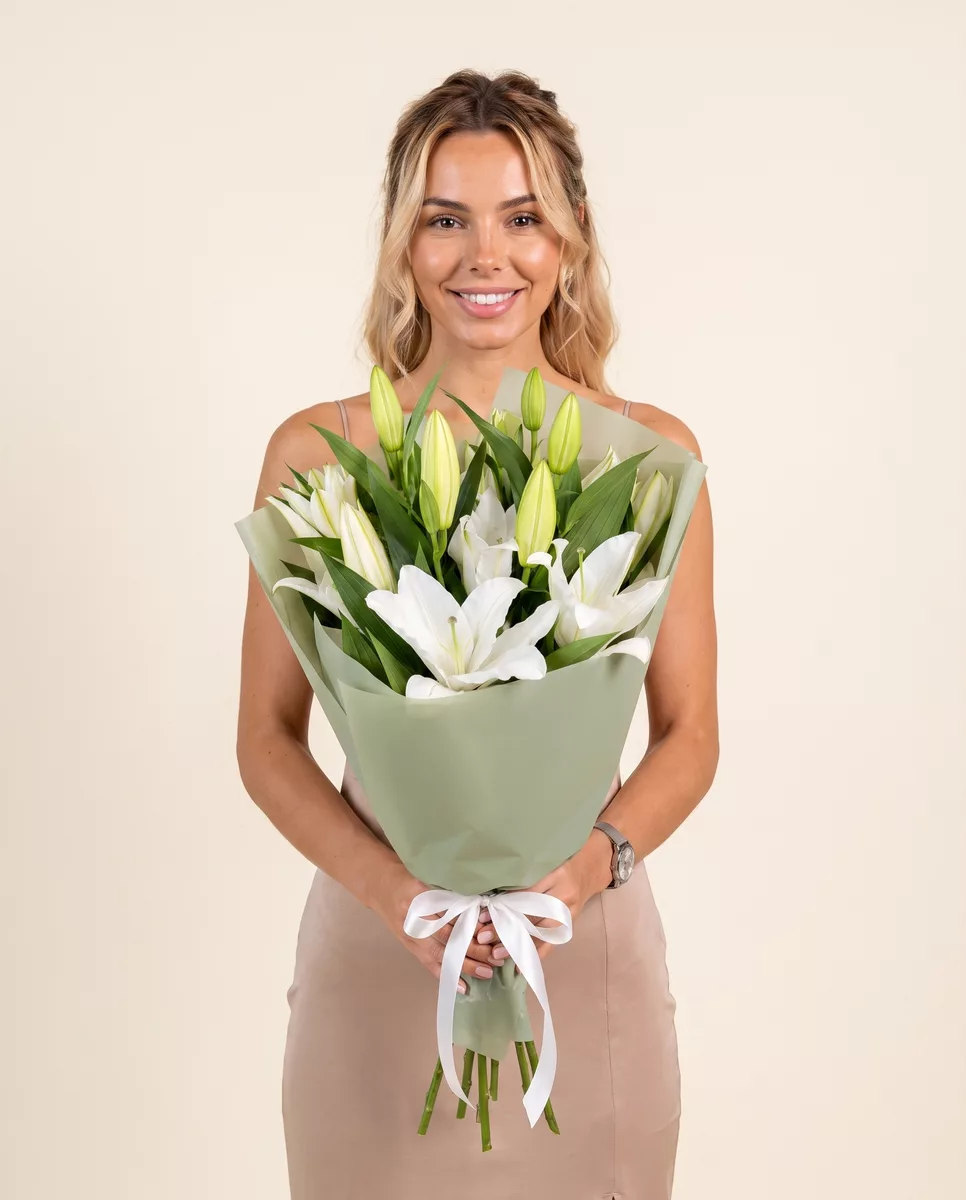
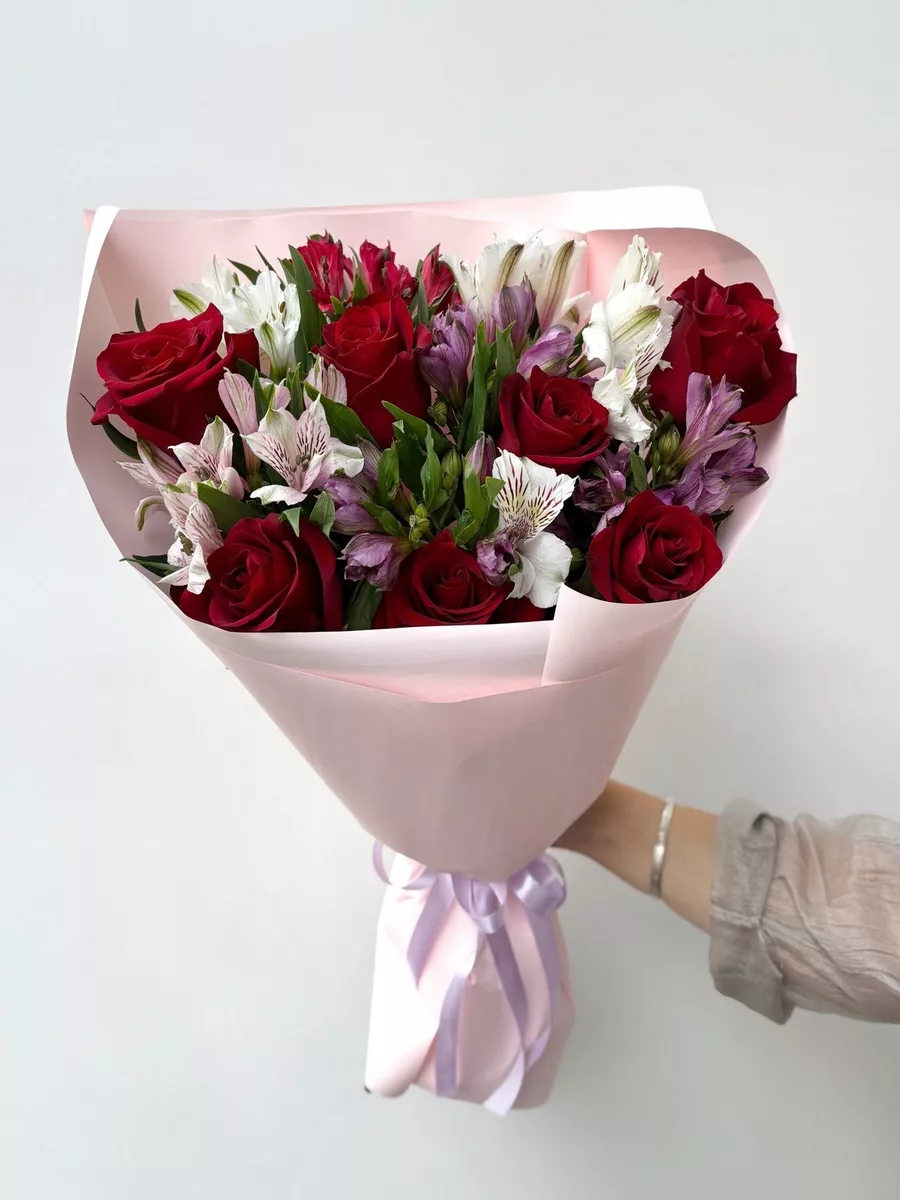
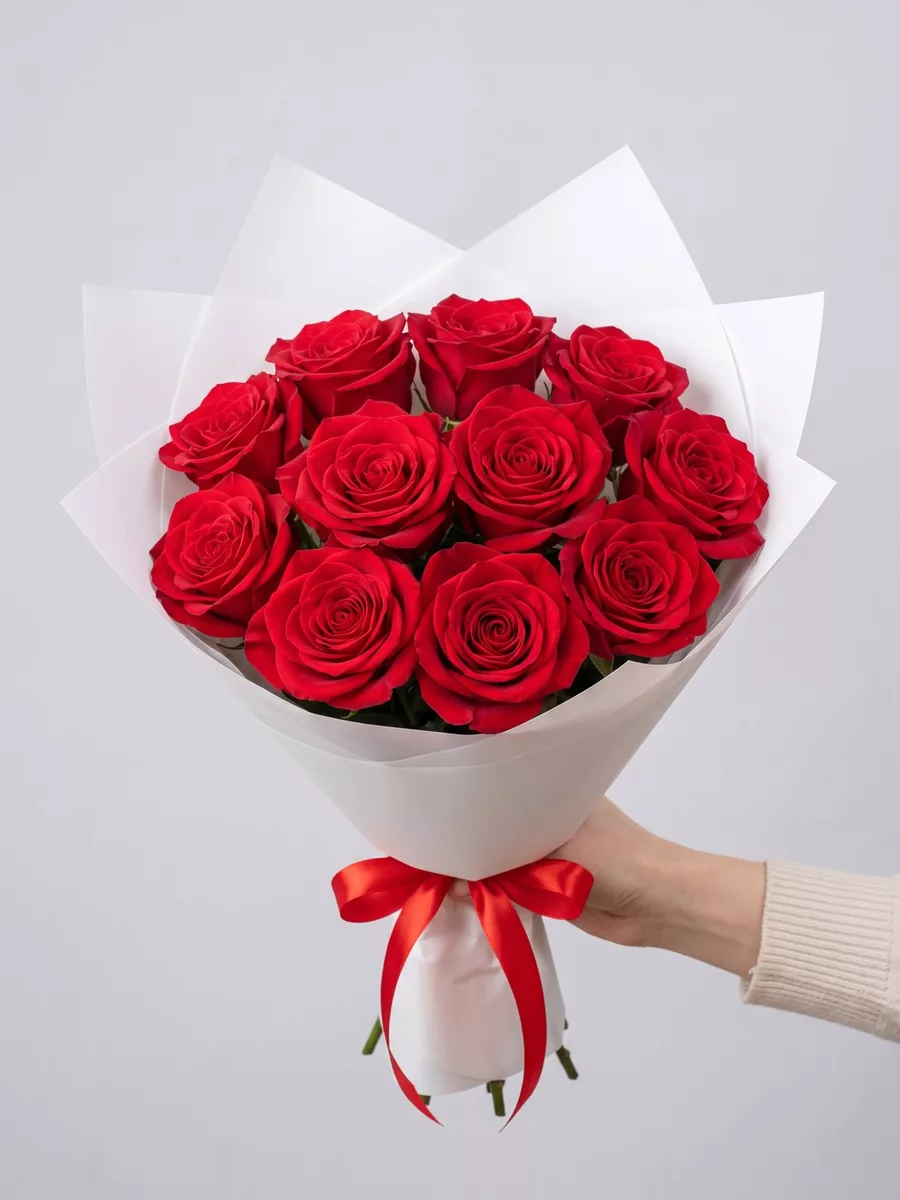

Tulips: The Undisputed Star of the Holiday
Tulips are the flower most associated with March 8 in Russia, and that association is not arbitrary. The tulip is a geophyte — a bulb plant — that requires a cold dormancy period and then responds to rising temperatures with rapid growth. This biological cycle puts its natural flowering window squarely in late winter and early spring across temperate climates, which means that around March 8 the global tulip supply is at or near its seasonal peak. The Netherlands remains the dominant source, with Dutch growers producing hundreds of millions of stems annually timed specifically for this window. Russian greenhouse producers in the Moscow and Leningrad regions also bring in significant volumes of domestically grown tulips for the holiday, though these are typically sold within days of cutting and have a shorter vase life than cold-chain Dutch stems. For customers, the practical point is this: a tulip bought on March 6 or 7 should open fully within 24 to 48 hours at room temperature, so if you want flowers that look open and full on the day itself, buy them a day ahead and keep them in a cool room. Common varieties you will see on the market include the classic red single-flowered Ile de France, the white Purity, the soft pink Menton, and the fringed parrot types like Estella Rijnveld. Double-flowered varieties such as Angelique take longer to open and hold their shape well. Stem count matters more than variety for pricing at this time of year — a bouquet of 25 tulips will cost noticeably more per stem than one of 11, because every stem is being competed for across the entire country simultaneously.
Mimosa: The Flower That Defines the Holiday Visually
If you have seen photographs of March 8 celebrations in Russia, you have seen mimosa — the bright yellow, powder-puff clusters on long grey-green stems that vendors sell in huge bundles on street corners starting in late February. What Russians call mimosa is botanically Acacia dealbata, a tree native to southeastern Australia that was introduced to the Mediterranean coast of France and Italy in the nineteenth century and has been grown commercially there ever since. The Russian market receives the bulk of its mimosa supply from the Krasnodar region of southern Russia, particularly around Sochi, where the climate is mild enough for acacia trees to grow outdoors and bloom naturally in late February. This is genuinely a seasonal flower in the strict sense: it cannot be produced year-round without enormous intervention, and the late-winter bloom is what the plant does naturally when temperatures in that subtropical coastal zone begin to rise. Mimosa is intensely fragrant, which is part of its appeal, but that fragrance also signals that the flowers are fully open and will drop their tiny florets within three to five days at room temperature. When ordering mimosa, ask specifically whether the stems are arriving fresh from Sochi or have been in cold storage — stored mimosa often looks identical on arrival but deteriorates faster once it warms. The yellow color and the texture are so strongly associated with March 8 in Russian visual culture that mimosa appears on greeting cards, packaging, and decorations for the holiday even when no real flowers are present. For many Russians over forty, the smell of mimosa is the smell of the holiday itself.
Hyacinths: Fragrance, Color Range and What to Expect
Hyacinths are the third pillar of the March 8 flower market in Russia, and they offer something tulips and mimosa do not: a wide range of saturated colors in a single compact stem. The common hyacinth, Hyacinthus orientalis, is another bulb plant with a cold-dormancy requirement, and its commercial flowering window overlaps almost exactly with the March holiday. Dutch growers produce hyacinth bulbs on a massive scale, and the stems arriving in Russia in late February and early March are typically grown in controlled greenhouse conditions where temperature and light are managed to hit the holiday window precisely. A single hyacinth stem carries dozens of individual florets arranged around a thick, upright spike, and the fragrance is stronger per stem than almost any other cut flower on the market. This intensity is a double-edged quality: customers who love it find it intoxicating, but in a small enclosed space a bouquet of six hyacinth stems can be overwhelming, and some people are sensitive to the scent. In terms of color, the commercial range runs from deep navy and violet through cobalt blue, pink, salmon, white, and a clear yellow — the blue varieties, particularly the Delft Blue cultivar, are the most widely grown and the most commonly seen on the Russian market. Hyacinths have a relatively short vase life of five to seven days even under good conditions, and they are sensitive to ethylene gas, so they should be kept away from ripening fruit. When buying hyacinths as part of a mixed bouquet for March 8, make sure the florist is not combining them with flowers that have been treated with ethylene-producing preservatives, as this accelerates petal drop significantly.
Daffodils, Ranunculus and What Else Is Actually Available
Beyond the three main flowers, a handful of other varieties are genuinely in season or available at reasonable quality around March 8, and knowing them gives you more options when the most popular stems are already spoken for. Daffodils, Narcissus in botanical terms, share the same bulb-plant logic as tulips and hyacinths: cold dormancy followed by a late-winter bloom makes them naturally abundant in late February and early March. The stems are almost entirely Dutch-sourced at this time of year, and the variety range in the Russian wholesale market is narrower than in Western Europe — you will mostly see the standard large-cupped yellow types and the white Paperwhite, which is actually grown year-round because it does not require vernalization. Ranunculus, the densely petalled flower that resembles a peony or a cabbage rose in miniature, has its commercial season running from roughly January through April, which puts March 8 squarely in its availability window. Ranunculus comes primarily from Dutch and Italian growers and is available in a full spectrum of colors. Anemones are similarly in season, with their dark centers and jewel-toned petals making them a strong choice for mixed bouquets. What is genuinely not in season around March 8 in any natural sense: peonies, garden roses in interesting varieties, lisianthus in full bloom, and most tropical flowers. These can be sourced, but they are either greenhouse-forced at significant cost or air-freighted from equatorial growing regions, which affects both price and the speed at which they deteriorate once delivered. If a customer asks for peonies for March 8, the honest answer is that they exist but they will cost more and last fewer days than a tulip or hyacinth bouquet assembled from flowers that are genuinely at their seasonal peak.
Why Seasonal Flowers Last Longer and Look Better
There is a practical reason to care about seasonality beyond price, and it comes down to the condition the flower is in when it reaches you. A tulip that is harvested in the Netherlands in late February, packed into a refrigerated container at two to four degrees Celsius, shipped to a Russian wholesale market, and delivered to your door within 72 hours of cutting is a flower that has been handled in exactly the way it was designed to be handled. The entire cold chain from Dutch greenhouse to Russian customer has been optimized over decades for this specific flower at this specific time of year. Compare that to a peony sourced in early March: peonies are typically grown in Chile or Kenya for the Northern Hemisphere off-season market, which means air freight, customs clearance, and a supply chain that is not nearly as streamlined. The result is a flower that is more likely to arrive with some transit stress, open faster than expected, and drop petals within three days rather than five or six. For the customer, the difference shows up not in how the bouquet looks in the photograph but in how it looks on the kitchen table four days after delivery. Seasonal flowers also tend to have better stem strength and more consistent coloring because they are grown under conditions that match their natural preferences. A hyacinth grown in a Dutch greenhouse in February is not being coaxed out of dormancy artificially — it is simply being given the right temperature sequence at the right time. This is why florists who know the trade will always steer March 8 customers toward tulips, mimosa, and hyacinths first: not because they are the only options, but because they are the options most likely to still look good a week after the holiday.
What to Check When Ordering Flowers for March 8
The most common mistake customers make when ordering for March 8 is leaving it too late. By the evening of March 6 and throughout March 7, wholesale stocks of the most popular varieties are significantly depleted, and florists working from depleted stock either substitute without telling the customer or charge a premium for stems that required last-minute sourcing. Ordering by March 4 or 5 gives you access to the full range, better stem selection, and in most cases the ability to specify a delivery window that suits your schedule rather than whatever gaps remain. When placing an order, ask specifically what tulip variety or color you are getting — a florist who can name the variety is working from a proper wholesale order rather than grabbing whatever is left. For mimosa, ask whether it is arriving fresh or has been in storage, and for hyacinths, ask how many days since cutting. A freshly cut hyacinth should have the lower florets just beginning to open with the upper ones still in bud — this is the ideal stage for delivery because the stem will continue opening over the next two to three days. Check that the delivery temperature is being managed: flowers left in an unheated van in Saint Petersburg in early March can suffer cold damage just as easily as they can suffer heat damage in summer. A reputable shop delivering in the city will use temperature-controlled transport or insulated packaging, particularly for hyacinths and open tulips. Finally, if you are ordering a large arrangement or multiple bouquets for an office, confirm the exact delivery time in writing — March 8 morning deliveries are the most congested window of the year, and a confirmed slot is worth more than a vague promise of morning arrival.
The flowers that fill shop windows and street stalls around March 8 in Russia are not there by accident or tradition alone — they are there because late winter is genuinely their moment. Tulips, mimosa, hyacinths, daffodils, and ranunculus are all at or near their natural seasonal peak in the last week of February and the first days of March, which means that a well-ordered March 8 bouquet is also one of the best-value, best-quality purchases you can make in the entire flower calendar. The key variables are timing your order early enough to get proper stem selection, knowing what stage of opening to expect on delivery, and understanding that the flowers dominating the holiday market are doing so for good biological reasons rather than because florists have run out of imagination. We deliver bouquets across Russia in 1–2 hours.
Frequently asked questions
Can I order peonies for March 8 in Russia?
Peonies are not in natural season in early March — they bloom in late May and June in Russia. Off-season stems are available but come from air-freighted Southern Hemisphere sources, which means higher prices and a shorter vase life of around three days. If longevity matters, tulips or ranunculus are a stronger choice for this holiday window.
How many days before March 8 should I place a flower order?
Placing your order by March 4 or 5 gives you access to the full stem selection, your preferred delivery time slot, and the ability to specify variety and color. Orders placed on March 7 are fulfilled from whatever stock remains after the peak wholesale rush, which often means substitutions or limited color choices.
Why do tulips open so fast after delivery on March 8?
Tulips respond quickly to warmth after cold-chain transport. A stem delivered at room temperature in a heated apartment will open fully within 24 to 48 hours. If you want them partially open on the day itself, keep them in a cool room — around 15 degrees Celsius — after delivery and move them to a warmer space the morning of March 8.
Is the mimosa sold for March 8 grown in Russia?
A significant share of the mimosa on the Russian market comes from the Sochi area of the Krasnodar region, where Acacia dealbata grows outdoors and blooms naturally in late February. Some stems are also imported from Italy and France. Domestic Sochi mimosa is fresher on arrival but has a shorter shelf life than cold-stored imported stems.
Do hyacinths work in a mixed bouquet with tulips?
Yes, but with one practical note: hyacinths emit compounds that can shorten the vase life of tulips when the stems share water for extended periods. Keeping them in separate vases side by side solves this entirely. If you want them combined in a single arrangement, use floral foam rather than a shared water vessel to limit stem contact.
Ready to send a bouquet?
Pick a city, choose the flowers, and we will hand them over with a photo confirmation.
Choose a city →