
Is It Rude to Send Flowers Without Calling Ahead in Russia?
Every week someone calls Five Flowers and asks the same thing before placing an order: should I warn the recipient first, or will a surprise delivery feel presumptuous? It is a fair question, and the answer depends on who is receiving the flowers, where they are, and what the occasion is. Russian attitudes toward surprise gifts are not monolithic, and getting the delivery wrong — wrong timing, wrong variety, wrong door — can undercut even the most generous gesture.
What Russian Recipients Actually Expect at the Door
In Russia, receiving an unannounced visitor — even a delivery courier — at a private apartment carries a different weight than it does in many Western cities. Apartment buildings require door codes or intercom access, and many residents are simply not home during standard working hours. A courier arriving with a large arrangement of garden roses or a box of peonies and finding no one in is not an unusual situation; it happens multiple times on a busy Saturday. The practical consequence is that the flowers wait in a cold stairwell or are returned to the shop, and the gesture loses most of its impact. That said, Russian recipients do not generally find the concept of a surprise delivery rude — they find a failed delivery frustrating. The distinction matters. What people object to is not the surprise itself but the logistical gap: a bouquet of spray chrysanthemums or tulips that arrives when no one is home, sits for forty minutes at below-zero temperatures in winter, and arrives wilted is not a romantic surprise, it is a waste. When the delivery reaches the person directly — at an office, at a home where someone is confirmed to be present, or at an event venue — surprise deliveries are genuinely appreciated and culturally normal. The social expectation is less about calling ahead out of formality and more about making sure the flowers actually reach the person in good condition.
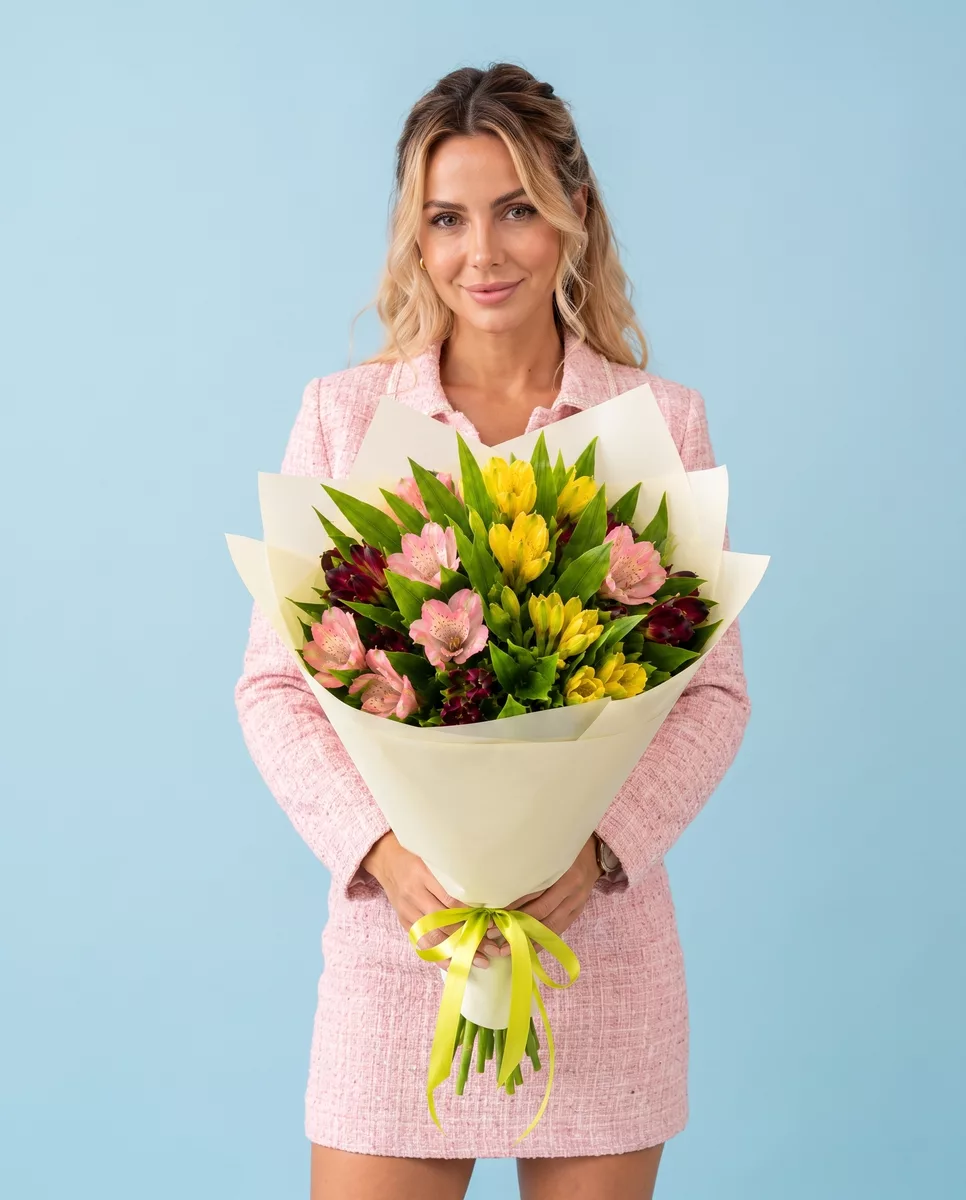
Bouquets we can deliver



When a Heads-Up Is Practically Necessary, Not Just Polite
There are specific situations in Saint Petersburg and across Russia where calling ahead is not about etiquette at all — it is about access. High-rise residential buildings built after 2000 almost universally have coded entrance doors and often a concierge or security desk. If the recipient is not expecting anyone, the courier cannot get past the ground floor. This is not a cultural quirk; it is architecture. For deliveries to offices, the situation is similar: many corporate buildings in business districts require advance registration of visitors, and a courier arriving with a bouquet of lisianthus or ranunculus without a contact name and confirmed floor will be turned away at reception. Calling ahead in these cases is the sender's responsibility, not a social nicety. The practical solution is to confirm one simple thing: will the person physically be at the address during the delivery window? You do not need to reveal that flowers are coming. A casual message — are you at the office this afternoon, or are you home this evening — is enough. Recipients rarely guess the reason, and the surprise is preserved. For dacha addresses outside the city, the problem compounds: travel distances mean a failed first attempt can add hours to delivery, and some varieties like anemones or sweet peas do not tolerate being re-routed in summer heat. Confirming presence without revealing the gift is the standard approach our couriers recommend when customers ask.
Occasions Where Surprise Deliveries Work Best
Certain occasions in Russian social life are so strongly associated with flower delivery that a surprise bouquet lands exactly as intended. Birthdays are the clearest example. In Russia, birthday flowers are expected — not receiving any on a significant birthday is more noteworthy than receiving an unannounced delivery. A courier arriving at a workplace with a wrapped arrangement of garden roses, alstroemeria, or seasonal dahlias on someone's birthday will be welcomed by the entire office, not just the recipient. The element of surprise adds to the occasion rather than creating awkwardness. March 8th, International Women's Day, is the other peak moment. On that date, surprise deliveries to homes and offices are so common that recipients are actively anticipating them. Tulips, mimosa branches, and hyacinths are the traditional choices, and the sheer volume of deliveries on that morning means everyone understands what a knock at the door means. February 14th has grown steadily in popularity among younger Russians in cities, and surprise deliveries on that date are fully accepted. Anniversary deliveries to a workplace are also reliably successful: colleagues are present, the recipient is almost certainly there, and the social setting makes the arrival of flowers feel festive rather than intrusive. The occasions that work less well for surprises are informal midweek gestures with no obvious anchor — a random Tuesday delivery to a home address without any confirmed presence is the scenario most likely to end in a missed delivery rather than a warm moment.
Temperature, Transit and Why Timing Matters More Than the Call
Saint Petersburg has a climate that makes flower delivery timing a technical issue, not just a scheduling preference. From November through March, outdoor temperatures regularly drop below minus ten degrees Celsius. Cut flowers — particularly tropical varieties like anthurium, orchid stems, and bird of paradise — suffer cell damage within minutes of exposure to those temperatures. Even cold-tolerant varieties like spray roses and alstroemeria will show petal bruising if left outside for more than a short wait. When a recipient is not home and a courier leaves flowers at the door or in an unheated stairwell, the damage is often irreversible by the time the person returns. This is a stronger argument for confirming presence than any social consideration. In summer, the problem reverses: Saint Petersburg can reach twenty-five to thirty degrees Celsius in July and August, and varieties like ranunculus, sweet peas, and anemones — which already have short vase lives of five to seven days under ideal conditions — deteriorate quickly in a warm entrance hall or on a sunny windowsill. Peonies, which are enormously popular in June, lose their tight bud structure within hours in heat. Confirming that someone will be home to receive flowers and put them immediately in water is a practical act of care for the flowers themselves. Our couriers carry insulated packaging for temperature-sensitive deliveries, but that protection only lasts so long. A thirty-minute delivery window is very different from a two-hour wait on a doorstep.
What to Order When You Cannot Confirm the Recipient Is Home
If you genuinely want to send a surprise and cannot or do not want to make any contact in advance, the choice of flowers becomes more important. The goal is to select varieties that tolerate a reasonable wait and do not require immediate water to stay presentable. Closed-bud roses — particularly varieties with dense petal counts — are the most forgiving. A bouquet of tight-budded garden roses will hold its shape for several hours without water in moderate temperatures, and the buds will continue to open attractively after the recipient places them in a vase. Spray chrysanthemums are another reliable option: they are extremely hardy, tolerate temperature variation better than most cut flowers, and have a vase life of ten to fourteen days even under imperfect conditions. Carnations, while sometimes underestimated, share the same durability. What to avoid when delivery timing is uncertain: peonies in full bloom, which bruise easily and drop petals quickly; any tropical variety; open-faced flowers like anemones or Icelandic poppies; and large statement arrangements with mixed textures that can shift and crush during a wait. Packaging also matters. A tightly wrapped bouquet with a water-soaked stem pad at the base — which our shop uses as standard — gives cut flowers significantly more resilience than a loosely tied bunch. If you are ordering for a summer delivery and cannot confirm the recipient's schedule, a box arrangement with a sealed water reservoir is worth requesting specifically. The flowers arrive upright, protected, and hydrated regardless of how long the wait turns out to be.
Office Deliveries: The Easiest Surprise in Russia
Delivering flowers to a Russian workplace is, in practical terms, the most reliable format for a surprise. Office hours in Russia are typically nine in the morning to six in the evening on weekdays, and recipients are almost always at their desk or reachable by a colleague. The courier needs a company name, a floor or department, and a contact phone number — not to warn the recipient, but to navigate reception and reach the right person. Colleagues become part of the moment, which in Russian office culture is generally a positive rather than an intrusion. Birthdays, work anniversaries, and professional achievements are all occasions where a workplace delivery lands well. The varieties that work best in an office context are those that photograph well and do not have a strong scent, since open-plan offices can make heavily fragrant flowers like lilies or hyacinths uncomfortable for coworkers. Spray roses, lisianthus, and eucalyptus-accented arrangements are popular for exactly this reason — they are visually striking without being overwhelming in an enclosed space. Alstroemeria is another solid office choice: long-lasting, available in a wide colour range, and sturdy enough to sit in a vase on a desk for a full working week without significant decline. One practical note: avoid ordering very large floor-standing arrangements for office deliveries unless you have confirmed there is space. A metre-tall arrangement in a small open-plan office creates logistical problems rather than delight. A hand-tied bouquet of medium size — twenty to twenty-five stems — is the right scale for most workplace surprises.
What to Check Before You Place the Order
Before confirming a delivery, there are four things worth verifying regardless of whether you plan a surprise or a coordinated arrival. First, the exact address including building number, entrance number, and apartment or office number. Saint Petersburg in particular has many buildings with multiple entrances on the same street number, and a courier going to the wrong entrance on a time-sensitive delivery cannot always recover the lost minutes. Second, the recipient's phone number. Even for a surprise delivery, the courier may need to call to gain building access, and having a working number prevents a failed attempt. The recipient seeing an unknown number and a courier at the intercom is usually not enough to spoil the surprise. Third, the delivery time window. Our shop delivers within one to two hours of order confirmation, but if the recipient has a lunch break, a meeting, or a school run that takes them away from the address during that window, it is worth scheduling for a time when they will be in. Fourth, any known allergies or sensitivities. Some recipients cannot be around lilies due to the pollen, and others find heavily scented varieties like tuberose or freesia problematic in enclosed spaces. Noting this when you order means the arrangement can be adjusted before it leaves the shop rather than returned or replaced. None of these checks require you to tell the recipient that flowers are coming. They are logistics, not spoilers, and taking two minutes to confirm them is the difference between a delivery that works and one that does not.
The short answer is no — sending flowers without calling ahead is not considered rude in Russian culture. What creates problems is not the surprise but the failed delivery: flowers left in a cold stairwell, a courier turned away at a coded entrance, or a bouquet of peonies sitting in summer heat for two hours. Confirming that a person will be at their address during the delivery window, choosing varieties that tolerate a short wait, and providing accurate building details are the things that determine whether a surprise delivery becomes a genuine moment or a logistical disappointment. The gesture itself is always welcome. We deliver bouquets across Russia in 1–2 hours.
Frequently asked questions
Do Russian people expect to be warned before a flower delivery arrives?
Not as a matter of etiquette, but practically it helps. Most apartment buildings have coded doors, and many offices require visitor registration. Sending a casual message to confirm the person is home — without mentioning the flowers — solves the access problem without spoiling the surprise. The gesture itself is never considered presumptuous.
Which flowers hold up best if the recipient might not be home immediately?
Tight-budded roses, spray chrysanthemums, and carnations are the most forgiving varieties for uncertain timing. They tolerate a wait without water better than open-faced flowers like anemones or peonies. In winter, any flowers left in an unheated stairwell risk cold damage, so insulated packaging and a confirmed delivery window matter more than variety alone.
Is it acceptable to send flowers to a Russian colleague's office as a surprise?
Yes, and it is actually the most reliable format for a surprise delivery. Russian office culture welcomes flowers at the workplace for birthdays and achievements. Choose varieties with little or no scent — spray roses or lisianthus rather than lilies or hyacinths — to avoid discomfort in shared spaces. Provide the floor and department name so the courier can reach the right person.
Does the season affect whether a surprise delivery is a good idea?
Significantly. In Saint Petersburg winters, flowers left outside for even ten minutes below minus ten degrees Celsius can suffer irreversible damage. In summer heat above twenty-five degrees, short-lived varieties like sweet peas and ranunculus deteriorate within hours. Confirming the recipient is present matters more in extreme temperatures than at any other time of year.
What information does the florist need to make a surprise delivery work?
You need to provide the full address including building entrance number and apartment or office number, the recipient's phone number for intercom access, and your preferred delivery window. You do not need to share any of this with the recipient. These are access details, not hints, and having them accurate is what separates a successful surprise from a missed delivery.
Ready to send a bouquet?
Pick a city, choose the flowers, and we will hand them over with a photo confirmation.
Choose a city →