
Tight Rosebud: How to Read It, Care for It and Choose Roses
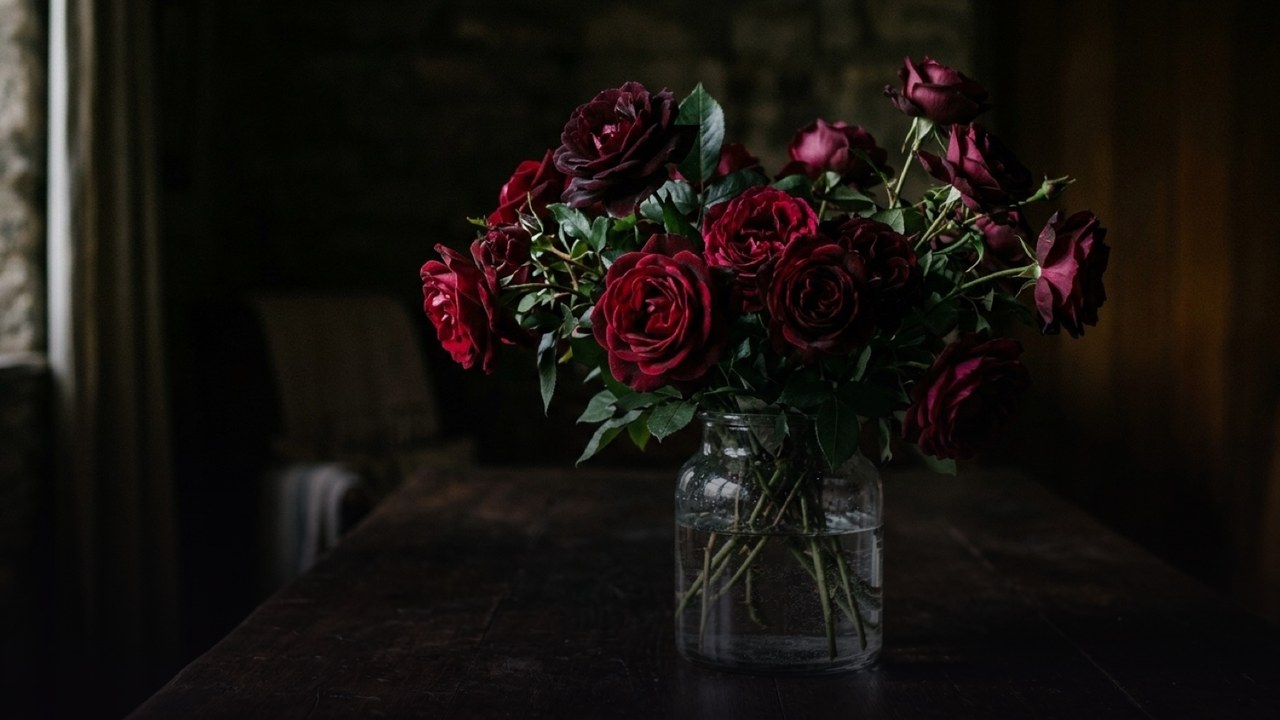
A tight rosebud is a rose whose petals remain closely folded around the centre; in a cut bouquet, it may simply be at an early opening stage. Tightness alone does not prove freshness or guarantee that the flower will open fully. Check the stem, leaves and petal condition, then give the rose clean water and time rather than pulling its petals apart.
Customers at Pyat Tsvetov (5 Flowers) often want to know whether closed roses will become fuller before a gift is presented. Since opening depends on the variety, maturity and condition of each stem, a useful answer starts with the occasion and the flower itself. We have operated flower shops in Saint Petersburg since 2011, and we explain the difference between a compact bud, a thirsty rose and a bloom that may never open well.
What a tight rosebud can tell you
Look at the whole stem before judging the bud. A firm stem, reasonably crisp leaves and petals without extensive browning are more useful clues than a closed centre alone. Roses can be naturally compact, and some varieties reveal their centre much less readily than others, even as the outer petals unfold.
The outermost petals sometimes look rougher or greener than those underneath. These protective outer petals, often called guard petals, can have small creases or marks without the entire flower being spoiled. Leave them in place unless one is clearly damaged or decaying; stripping away sound petals reduces the flower's fullness and can damage the layers beneath.
Distinguish a compact bud from one that is deteriorating. Soft, translucent patches, spreading brown areas, a musty smell or a head drooping sharply below the bloom call for attention. No single sign provides a complete diagnosis, but several together are a reason to inspect the water, stem and surrounding flowers instead of simply waiting for the petals to open.
Set up cut roses so they can take up water
Wash the vase thoroughly before filling it with clean water. Remove leaves that would sit below the waterline, because submerged foliage breaks down and makes the water dirty. Keep healthy leaves above the water where possible, and use a vase that supports the stems without squeezing the flower heads together.
With a clean, sharp blade or secateurs, cut a small section from the base of each stem and return it to water promptly. A clean cut matters more than making an exaggerated angle, and crushing the stem with blunt scissors is unhelpful. If you have cut-flower food, follow its dilution instructions rather than adding an extra dose.
Stand the vase away from direct sun, radiators, strong draughts and ripening fruit. Check the water daily, topping it up as needed and replacing it if it becomes cloudy; clean the vase again when changing dirty water. Remove fallen leaves and deteriorating flowers so that one damaged stem does not remain pressed against healthy blooms.
Bouquets we can deliver




Encourage opening gently, without damaging the petals
After preparing the stems, give the roses an uninterrupted period in water before trying anything else. A comfortable room away from direct heat is a sensible setting for observing their progress. Some buds loosen gradually, while others stay compact, so judge the change in each flower rather than expecting the bouquet to open all at once.
Avoid forcing the petals back with your fingers or blowing into the centre. Both can bruise delicate tissue, and a flower made wider by hand has not necessarily recovered its ability to take up water. Hot water, hairdryers and placement beside a heater can also stress the bloom, making them poor shortcuts for a gift you want to keep looking good.
If a rose remains tight, check whether its stem base is clean and whether it has enough water before repeating interventions. Our guide to helping tight rose buds open at home explains the care steps in more detail. There is no reliable household method that makes every closed rose open on a deadline, especially if it was cut before it could develop properly.
Choose the opening stage for the occasion
For a bouquet that will be admired immediately, a mixture of opening stages can give a fuller appearance than uniformly tight buds. More open roses show their shape clearly, while less open flowers add variation. When describing what you want, say whether the priority is a generous appearance at presentation or the experience of watching the flowers develop.
A closed rosebud is sometimes associated with beginnings, youth or affection that is still developing. These are cultural associations rather than a fixed language that every recipient will recognise. For an anniversary, a new relationship or a family celebration, a short card with a clear personal message communicates more reliably than the opening stage alone.
Think about the recipient's setting as well as the symbolism. Someone receiving flowers at work may need a manageable bouquet and a vase soon after arrival, while a gift for dinner needs enough time to be unpacked and placed in water. Browse the bouquets catalogue with the occasion in mind, and avoid assuming that every rose shown will reach exactly the same opening stage.
Plan a delivery to Russia around the recipient's day
When ordering from abroad, work out the desired arrival time in the recipient's city before choosing delivery. We deliver flowers across Russia; city delivery costs 500 RUB, while the operator confirms the price for remote districts and suburbs when confirming the order. Express delivery in large cities is available in 1–2 hours after the order is confirmed.
Other timing options are delivery at an exact time with a tolerance of plus or minus 30 minutes, or the windows 09–12, 12–15, 15–18 and 18–21. You can also pre-order 1–30 days ahead, which helps organise an occasion without leaving the order until the day itself. Delivery operates around the clock in Saint Petersburg; that schedule should not be assumed for other cities.
The courier calls the recipient about 15 minutes before arrival, so choose a time when they are likely to be available. If they are absent, we agree a second delivery the same day or, with the sender's consent, hand the flowers to a neighbour or concierge. For a celebration with a fixed start, allow time for the recipient to unwrap the bouquet and put the stems in water before presenting or displaying it.
Add a clear message and pass on simple care advice
Delivery is anonymous by default: the courier does not name the sender. A card with your text is free, so include your name in the message if you want the recipient to know who sent the flowers. A brief, recognisable greeting is especially helpful when you live abroad and the recipient may not expect a delivery from you.
Online checkout uses CloudPayments; check the payment options displayed at checkout for your order. Do not assume that every card issued abroad will be accepted, and consult the delivery and payment information when arranging the gift. Questions can be discussed by phone on 8 (812) 507-67-05, including details that need clarification before the order is confirmed.
For a recipient unfamiliar with cut roses, a short care note is enough: use a clean vase, remove submerged leaves, trim the stems and check the water daily. Explain that tight buds may open at different rates and that pulling the petals will not help them develop. If a flower stays closed despite careful handling, its appearance alone cannot establish why; maturity, variety and condition all affect the result.
Frequently asked questions
Does a tight rosebud mean the rose is fresh?
Not necessarily: tightness describes the opening stage, while freshness also depends on the condition of the petals, leaves and stem. A closed bud with browning or soft patches may be in poorer condition than a healthy, partly open rose.
How long does a tight rosebud take to open?
There is no dependable timetable for every cut rose, because variety, maturity and condition differ. Prepare the stems, provide clean water and observe their progress without relying on full opening by a particular hour.
Should I remove the outer petals to help a rose open?
Remove an outer petal only if it is clearly damaged or decaying. Sound guard petals can remain in place, and peeling away healthy layers does not solve a water-uptake or maturity problem.
Can I order roses for someone in Russia while I am abroad?
We deliver flowers across Russia, and online checkout uses CloudPayments. Check the options displayed at checkout, since acceptance of every foreign-issued card cannot be assumed.
Will the recipient be told who sent the bouquet?
The courier does not name the sender because delivery is anonymous by default. You can identify yourself in the free card by including your name in its text.
Ready to send a bouquet?
Pick a city, choose the flowers, and we will hand them over with a photo confirmation.
Choose a city →