
Tulips in Russia: The Spring Standard and Its Rules
Walk into any Russian city in late February and you will notice something unusual: tulips are everywhere, piled in buckets outside metro stations, stacked in refrigerated vans, arranged in elaborate bouquets in shop windows. For a flower that technically blooms in April and May across most of the country, this February abundance is not an accident. It is a deliberate, well-organised market event shaped by one date on the calendar — the 8th of March, International Women's Day. Understanding how tulips move through Russia, when they peak, how they are graded and what buyers actually expect will help you choose better flowers and avoid the most common mistakes people make every single spring.
Why March 8th Defines the Entire Tulip Calendar
International Women's Day on the 8th of March is, without exaggeration, the biggest flower-buying event in Russia. Nothing else comes close. In the weeks surrounding this date, tulip demand spikes so sharply that the entire supply chain — from Dutch and Ecuadorian growers to cold-storage hubs in Moscow and Saint Petersburg — reorganises itself around that single moment. Florists who work through February know this rhythm intimately. Orders for forced tulips begin arriving at wholesale depots in late January. By the first week of February, refrigerated trucks are already moving large volumes into regional distribution points.
The forcing process is key. Tulip bulbs are chilled deliberately to simulate winter, then brought into warm greenhouses to accelerate flowering. Growers time this process so that stems reach cutting maturity exactly when demand is highest. Dutch varieties dominate the forced market:Strong Gold, Purple Prince, and the ever-reliable Ile de France are workhorses that handle transport stress better than more delicate cultivars. Ecuadorian-grown tulips also appear in Russian wholesale, valued for their long stems and vivid pigmentation under high-altitude light.
For buyers, this calendar reality has a practical consequence: tulips purchased between the 5th and 9th of March are usually the freshest of the year in terms of volume and turnover speed — shops simply cannot afford to hold old stock. Outside that window, particularly in late March and April, quality can vary more noticeably because the forcing frenzy has passed and growers are transitioning to field production schedules.
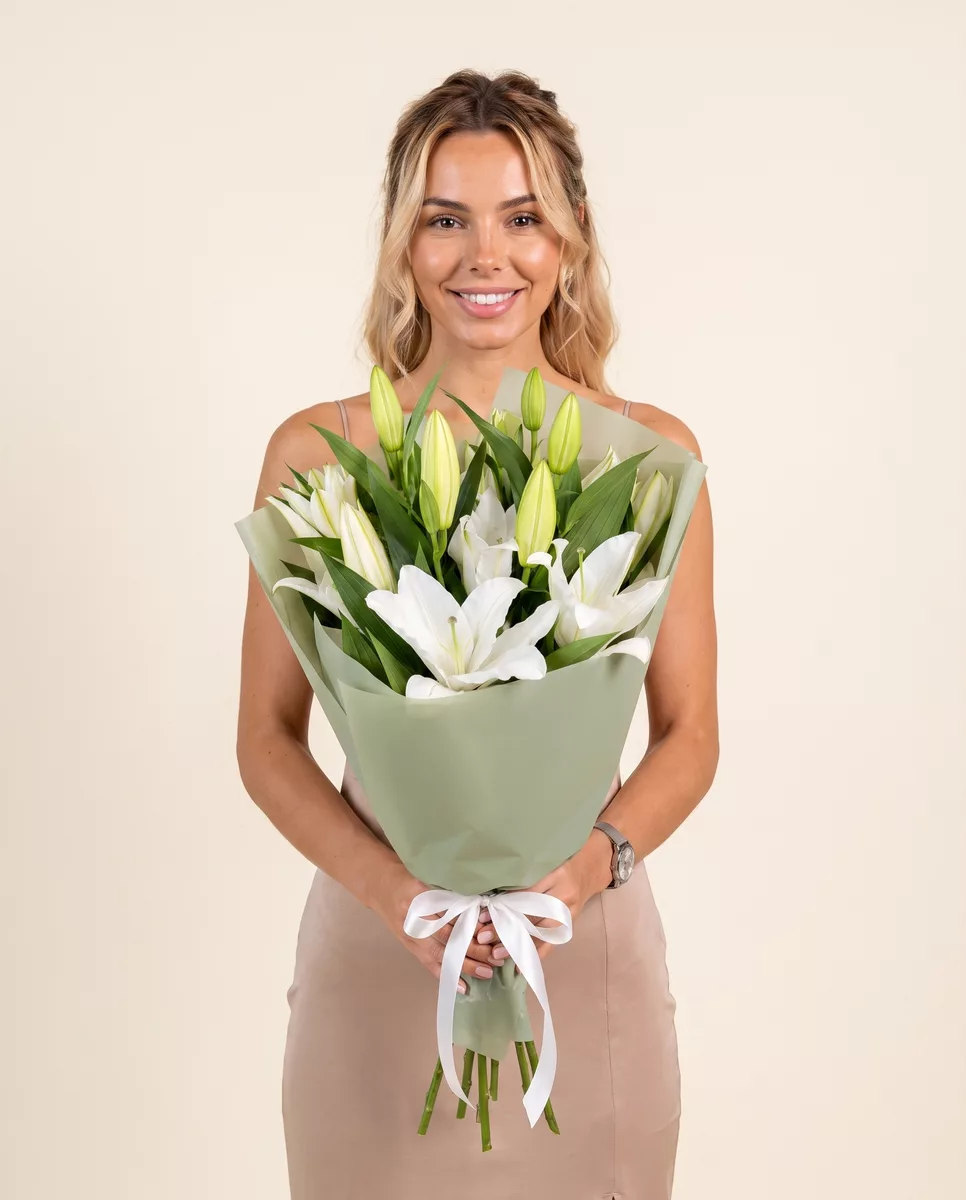
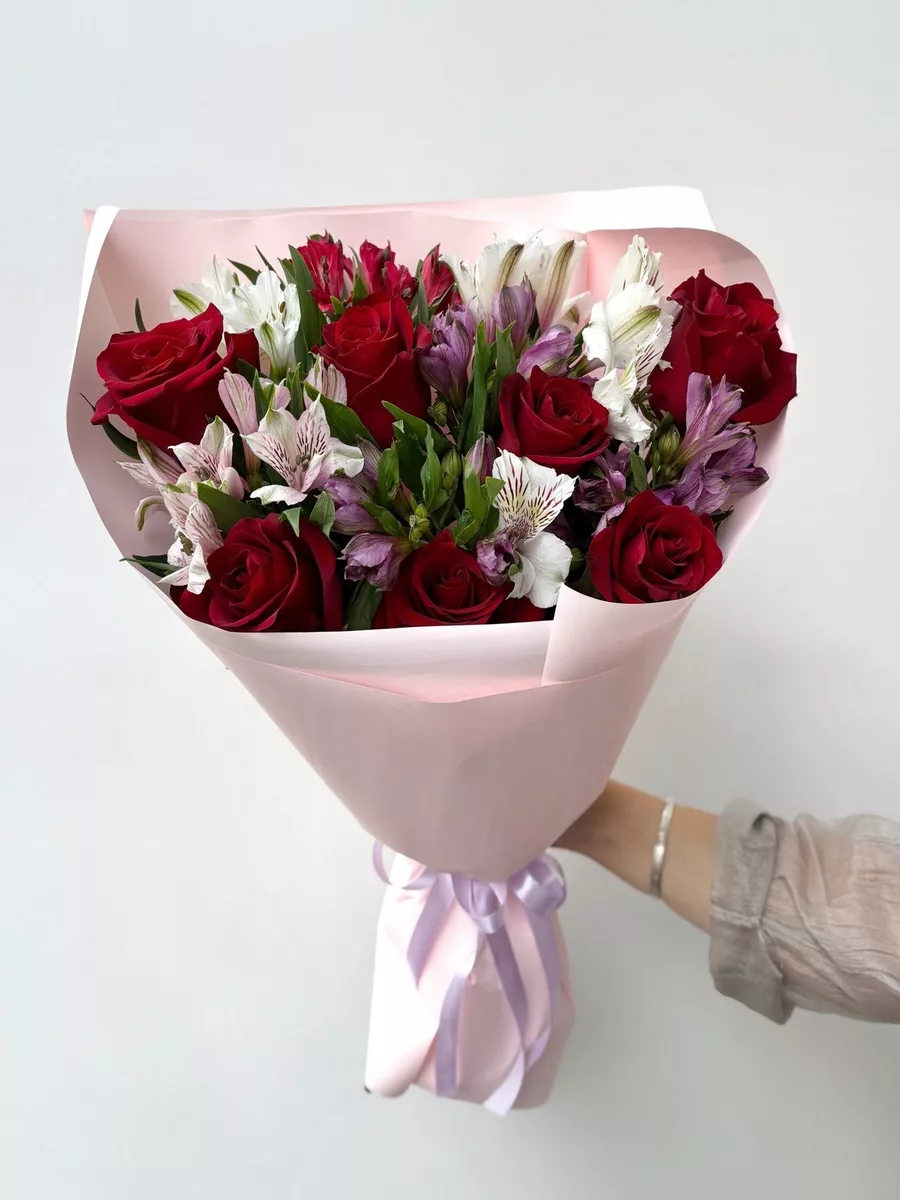
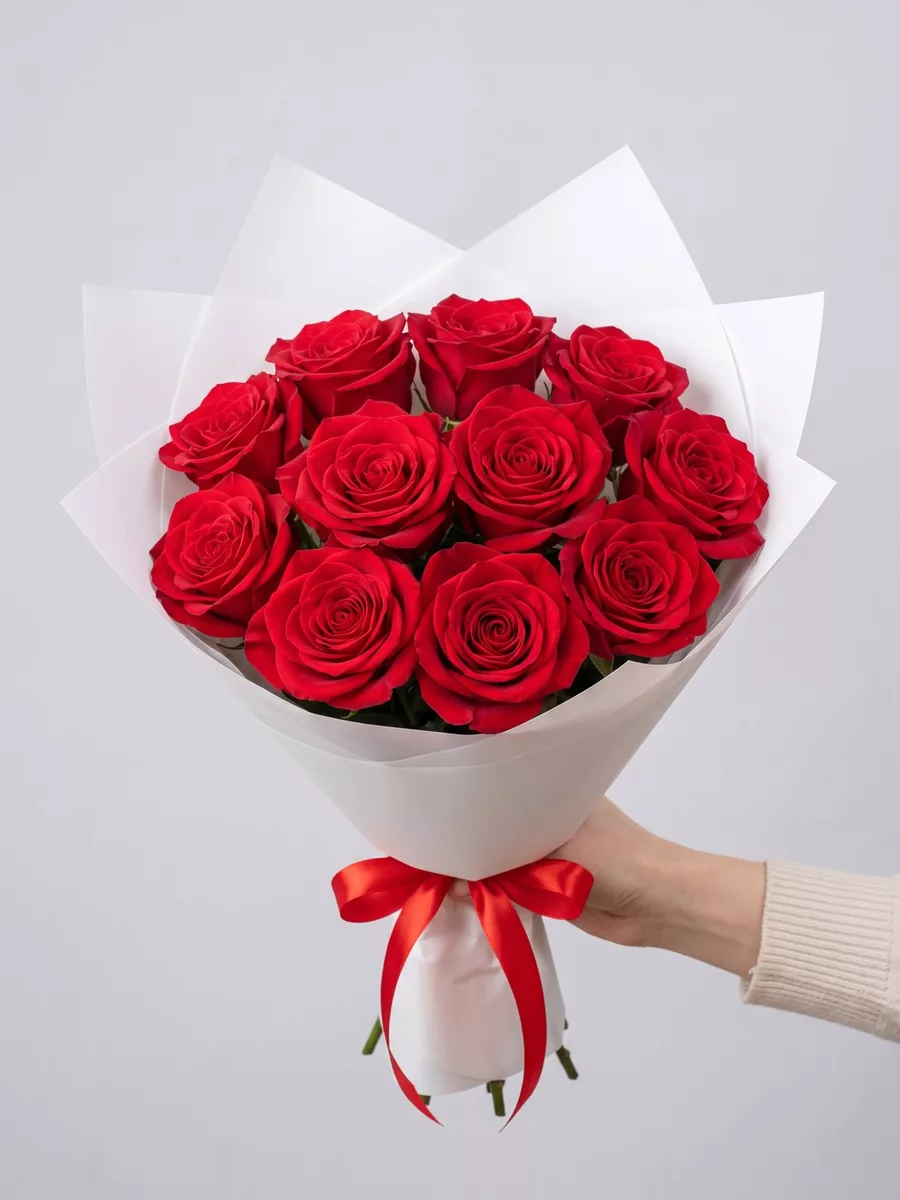
Bouquets we can deliver

The Natural Russian Season and Field-Grown Tulips
Beyond the forced-flower market, Russia does have its own natural tulip season, and it is shorter and more geographically specific than many people expect. In the southern regions — Krasnodar Krai, Stavropol, parts of the Crimean peninsula — field tulips begin opening in late March and reach their peak through mid-April when temperatures settle reliably between 10 and 18 degrees Celsius. Cooler soil temperatures slow petal development and extend vase life, which is why a field-cut tulip harvested on a morning when the ground is still cold will outlast one cut in afternoon warmth by two or three days.
In Saint Petersburg and the broader northwest, outdoor tulips bloom noticeably later — typically from late April into mid-May, depending on whether the spring is early or late. The city's maritime climate, moderated by the Gulf of Finland, keeps temperatures unpredictable well into May, and a late frost can set a garden display back by two weeks. This is one reason why florists in Saint Petersburg rely almost entirely on imported forced stems for the March peak rather than waiting for local field production.
Field-grown Russian tulips tend to have slightly shorter stems than Dutch greenhouse varieties — often 35 to 45 centimetres rather than the 50-plus centimetres common in imported stock — but their colour saturation can be remarkable, particularly in the Darwin Hybrid group, which includes varieties like Apeldoorn and its sports, known for their large, sturdy cups and resistance to temperature swings. These are honest, robust flowers that hold their shape well in mixed spring arrangements.
How Tulips Are Graded and What the Numbers Mean
When you buy tulips in Russia, you will often hear or see references to stem length in centimetres: 40 plus, 50 plus, 60 plus. This grading system is borrowed directly from Dutch auction standards and is used consistently across the Russian wholesale and retail market. A 50-plus stem means the flower has been measured from the base of the cut to the tip of the closed bud and is at least 50 centimetres long. Longer stems command higher prices and are generally associated with more mature, well-fed bulbs.
Beyond length, tulips are assessed by bud stage. Professional florists use a simple five-point scale. Stage one is a fully closed, tight green bud with barely a hint of colour showing. Stage three shows clear colour but the bud is still firmly closed. Stage five means the flower is already opening and the petals are beginning to separate. For bouquets intended to be delivered and enjoyed over several days, stage two or three is ideal. Stage one flowers can feel disappointing on the day of delivery but will open beautifully within 24 to 48 hours at room temperature.
Temperature during transit matters enormously. Tulips are stored and transported at between 2 and 5 degrees Celsius. A stem that spends even two hours in a warm car at 20 degrees will advance by at least one bud stage. This is why professional delivery services use insulated packaging or refrigerated transport, particularly in summer months or during the warm spells that occasionally hit Saint Petersburg even in early March. Receiving flowers that seem tightly closed is usually a good sign, not a bad one.
Russian Gifting Customs: Odd Numbers, Colours and Etiquette
If you are unfamiliar with Russian flower-giving customs, the first rule to learn is the odd-number rule. In Russia, even numbers of flowers are associated with mourning ceremonies and are not given as gifts to living people. A bouquet of 10 tulips would cause genuine discomfort; a bouquet of 11 or 9 is entirely appropriate. This rule applies across all flower types and is observed consistently enough that any reputable florist will automatically compose bouquets in odd numbers unless specifically instructed otherwise.
Colour carries meaning too, though the associations are less rigid than the number rule. Red tulips are the classic romantic gesture and remain the most popular choice for couples on the 8th of March and on Valentine's Day. Pink and peach tones are seen as warm and friendly, suitable for mothers, colleagues and teachers. White tulips read as elegant and sincere. Yellow tulips have historically carried a complicated reputation in some parts of Russia — associated in folk tradition with separation — though this association is fading among younger buyers in major cities like Saint Petersburg and Moscow, where yellow varieties such as Strong Gold and Yellow Purissima are now widely appreciated for their cheerful energy.
Purple and violet tulips, including the variety Purple Prince with its deep wine-coloured petals, are considered sophisticated and are popular for professional settings. Presenting a teacher or a respected colleague with a bouquet of dark purple tulips on the 8th of March is a gesture that will be understood and appreciated without any ambiguity.
Keeping Tulips Fresh After Delivery: What Actually Works
Tulips are among the most responsive cut flowers to basic care, which means the difference between a bouquet that lasts four days and one that lasts nine days often comes down to a few simple habits. The first and most important step is a fresh diagonal cut — about two centimetres from the base — made with a sharp knife rather than scissors. Scissors compress the vascular tissue at the stem end and reduce water uptake. A clean angled cut maximises the surface area through which the flower drinks.
Tulips are unusual among cut flowers in that they continue to grow after cutting. A stem placed in water will lengthen by one to two centimetres over the first day, and the flower will orient itself toward the nearest light source. This is not a defect; it is simply tulip biology. If you want the bouquet to stay upright and symmetrical, keep it away from strong directional light or rotate the vase periodically.
Water temperature matters more than most people realise. Cold water — around 10 degrees Celsius — slows cell metabolism and extends vase life noticeably. Avoid placing tulips near radiators, sunny windowsills or fruit bowls: ripening fruit releases ethylene gas, which accelerates petal drop in many flower species including tulips. Change the water every two days and re-cut the stems each time. Adding a small amount of sugar to the water can provide a mild energy boost, but commercial flower food sachets, if provided with your delivery, are formulated more precisely and work better than kitchen substitutes.
Choosing the Right Tulip Bouquet for a Russian Occasion
The sheer variety of tulip types available in Russia today goes well beyond the classic single-flowered Darwin Hybrids. Parrot tulips, with their dramatically fringed and ruffled petals, have built a devoted following among buyers who want something visually unexpected. Varieties like Black Parrot — a deep, almost black-purple — and Rococo, with its flame-edged red petals, photograph exceptionally well and are popular for styled arrangements. Double tulips, sometimes called peony tulips, offer a lush, layered look: Columbus and Angelique are two doubles that appear reliably in the Russian market and hold their shape well for three to five days after opening.
For everyday gifting — birthdays, housewarming celebrations, thank-you gestures — a monochrome bouquet of 11 or 15 single-variety tulips in a consistent stem length looks clean and intentional. For the 8th of March specifically, mixed arrangements combining two or three complementary colours are extremely popular: coral with white, or deep red with soft pink, creates a composition that feels celebratory without being chaotic.
When ordering for delivery, consider the recipient's home environment. A person in a small apartment benefits from a tighter, more compact arrangement. Someone with a large dining table can carry a tall, generous bouquet of 50-centimetre stems without it looking out of proportion. Communicating these details when you place your order allows the florist to make decisions that genuinely serve the occasion. The best tulip bouquet is not always the largest one — it is the one that fits the moment and the person receiving it.
Tulips in Russia follow a rhythm that is part agricultural calendar, part cultural tradition, and part logistical achievement. From the forced Dutch stems arriving in January cold storage to the field-grown Darwin Hybrids opening in the Krasnodar sunshine of April, the flower moves through the country in waves shaped by climate, commerce and the deep social importance of the 8th of March. Knowing when tulips are at their best, how they are graded, what the numbers and colours communicate, and how to keep them alive after delivery transforms the experience of buying and receiving them. These are not complicated rules — they are the accumulated common sense of generations of growers, florists and flower lovers. Apply them once and they become instinct. We deliver bouquets across Russia in 1–2 hours.
Frequently asked questions
When is the best time of year to buy tulips in Russia?
Late February through mid-March offers the highest volume and fastest turnover, meaning stems are genuinely fresh. The forced-flower supply is at its peak for the 8th of March holiday. Field-grown tulips from southern Russia appear in April, offering excellent colour and a slightly different character, with natural open-field fragrance that greenhouse-forced stems rarely match.
Why do Russian bouquets always have an odd number of flowers?
Even numbers of flowers are traditionally associated with funeral and mourning customs in Russia. Giving someone a bouquet with an even count — say, ten tulips — would be considered inappropriate and would likely cause discomfort. Odd numbers signal celebration and goodwill. Reputable florists automatically follow this convention unless a customer specifically requests otherwise.
My tulips arrived tightly closed. Is something wrong?
Tightly closed buds are actually a sign of good handling. Flowers are kept at 2 to 5 degrees Celsius during storage and delivery, which holds them at an early bud stage. Place the stems in cool water in a room at normal temperature and the buds will open within 24 to 48 hours. Flowers delivered already open have often been stored warm and will have a shorter vase life.
Are yellow tulips really considered bad luck in Russia?
The association between yellow flowers and separation exists in older Russian folk tradition and is still observed by some people, particularly in older generations. In major cities like Saint Petersburg and Moscow, this belief is much less common among younger buyers. If you are unsure about the recipient's views, choosing pink, red or white tulips avoids any ambiguity entirely.
How long should a tulip bouquet last after delivery?
With proper care — fresh diagonal cuts, cold water changed every two days, placement away from heat and direct sunlight — tulips typically last seven to ten days from the moment of delivery. Double and parrot varieties sometimes hold slightly less time than single-flowered types because their heavier blooms demand more from the stem. Avoid placing tulips near ripening fruit, which releases ethylene gas and shortens petal life.
Ready to send a bouquet?
Pick a city, choose the flowers, and we will hand them over with a photo confirmation.
Choose a city →