
How to unload, unpack and care for cut flowers
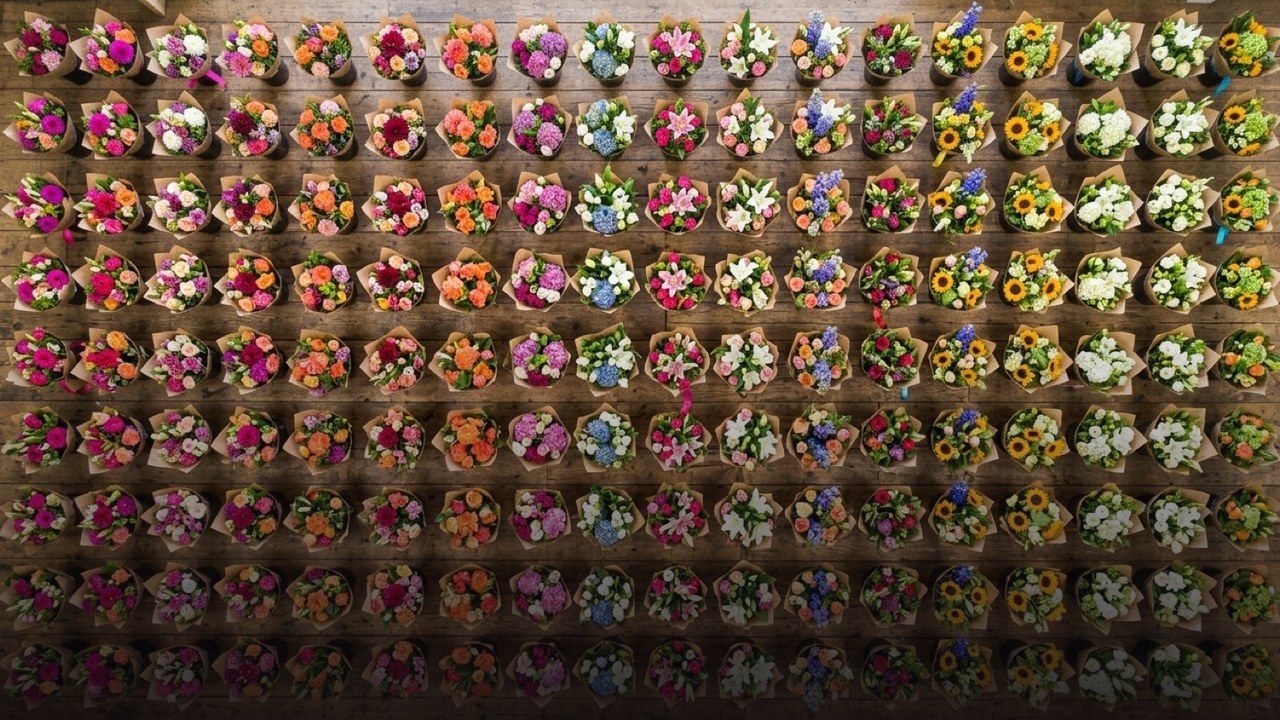
If by “unloading flowerfusts” you mean taking cut flowers out of transport containers, prepare a clean, stable work area and unload each container upright before unpacking the stems. Support flowers from beneath, keep pressure off the flower heads and place unpacked cut stems in clean water promptly. The phrase is unclear, so the guidance below covers both handling containers and receiving a wrapped bouquet.
Customers at Pyat Tsvetov (5 Flowers) often need practical guidance on what to do between receiving flowers and putting them in a vase. We have been serving customers since 2011 and have three own flower shops in Saint Petersburg. The useful distinction is between protective transport packaging, decorative wrapping and anything that supports the arrangement. Identify what you have before pulling away paper, loosening ties or adding water.
Prepare the space before unloading
Clear a route from the unloading point to a level surface where containers can stand securely. Remove obstacles before carrying flowers, because a sudden change of grip can crush petals or bend stems against the container edge. Have clean vases or buckets, fresh water, suitable scissors or secateurs, and somewhere to collect discarded packaging ready. For a single gift bouquet, a clean kitchen counter away from cooking heat is usually a practical place to work.
Check the outside of each container before lifting it, especially its base, handles and any visible water. Keep water-filled containers upright and avoid stacking anything on exposed flowers. If a load feels awkward or blocks your view, divide it into manageable movements or get help carrying it. Set containers down gently, leaving enough room to remove each bunch without dragging flower heads across neighbouring stems or catching them on the packaging.
Unpack without damaging petals or stems
Open outer packaging where you can see what lies beneath it, keeping blades away from stems and petals. Lift bunches by supporting the stems and their weight from below; pulling on the flower heads can damage the neck of a bloom. Separate sleeves carefully rather than forcing several bunches through a narrow opening at once. If paper has become wet and clings to the flowers, ease it away in small sections instead of tugging the whole sheet.
For a delivered bouquet, remove protective outer wrapping as needed to reach and inspect the stems. A tie may hold the bouquet's shape, so there is no need to cut it automatically if the stems fit comfortably in your vase. Flowers arranged in floral foam need a different approach: keep the arrangement together and add water carefully to the foam without flooding its container. Do not dismantle an arrangement simply because a loose-stem care guide describes trimming every stem.
Bouquets we can deliver




Give cut stems a clean start in water
Wash the vase thoroughly before filling it, including any residue around the base and inside rim. Remove leaves that would sit below the waterline, since submerged foliage can decay and make the water dirty. With a clean, sharp tool, make a fresh cut at the base of each accessible stem before placing it in water. Avoid crushing stems with blunt scissors or stripping away healthy foliage that will remain above the water.
If you have a packet of cut-flower food, follow its instructions for the amount of water rather than estimating a stronger mixture. Check the water level daily and replenish it as the flowers drink; replace water that becomes cloudy and clean the vase when doing so. Remove deteriorating stems and fallen leaves promptly. Keep the display away from direct sun, radiators and ripening fruit, and do not assume every flower variety benefits from the same specialist treatment.
Choose flowers with the recipient's habits in mind
A useful starting point is the recipient's preferred colours, available space and willingness to maintain a vase. A large bouquet needs a suitable vessel and somewhere to display it without crowding the stems. For someone with limited space, think about where the flowers will actually stand before deciding on size. Browse the Bouquets catalogue with those practical details in mind, and check the individual listing rather than assuming accessories are included.
Flower meanings vary between families, countries and occasions, so personal preferences are a better guide than a rigid colour dictionary. For a celebratory gift in Russia, an odd number of individual flowers is customary when the count is apparent; even numbers are traditionally associated with mourning. A short card can make your intention clear when a colour or flower has several associations. Write the occasion and a personal line instead of relying on the bouquet alone to explain the message.
Plan delivery around when someone can receive it
When ordering from abroad, choose the delivery date and time using the recipient's city and local schedule. An office delivery needs to fit the person's working day, while a home delivery works best when someone can answer the courier and take the flowers inside. We deliver flowers across Russia, and city delivery costs 500 RUB. For remote districts and suburbs, the operator confirms the delivery price when confirming the order; see Delivery and payment for delivery information.
In large cities, express delivery is available in 1–2 hours after the order is confirmed. You can also arrange delivery at an exact time with a tolerance of plus or minus 30 minutes, choose a window of 09–12, 12–15, 15–18 or 18–21, or pre-order 1–30 days ahead. In Saint Petersburg, delivery is available around the clock. Allow for the confirmation step when planning a surprise, since placing an order and having it confirmed are separate events.
Make the handover and first care straightforward
Choose the bouquet, provide the recipient's delivery details and add the text for the free card if you want one. Delivery is anonymous by default: the courier does not name the sender, so sign the card if you want the recipient to know who sent it. Online checkout uses CloudPayments; check the payment options displayed there, including whether your card can be used. For questions about an order, call 8 (812) 507-67-05.
The courier calls the recipient about 15 minutes before arrival, so a surprise still involves contact shortly before the handover. If the recipient is absent, we agree a second delivery the same day or, with the sender's consent, hand the flowers to a neighbour or concierge. Plan for the recipient to have time to unpack the flowers and put cut stems in water after receiving them. A brief personal message about finding a clean vase can be more useful than a long list of care rules.
Frequently asked questions
What does “unloading flowerfusts” mean?
The phrase is unclear without context; it may refer to unloading containers used to transport cut flowers. If that is what you mean, keep containers upright, support the stems when unpacking and prepare clean water before you begin.
Should I remove all the wrapping from a delivered bouquet?
Remove protective packaging carefully so you can place the stems in water without trapping submerged leaves. Keep a supporting tie if it helps the bouquet hold its shape, and leave flowers arranged in floral foam in their arrangement.
Can I order flowers to Russia while I am abroad?
You can place an online order for delivery across Russia. Checkout uses CloudPayments, and you should check the options displayed there to see whether your card can be used.
Will the courier tell the recipient who sent the flowers?
Delivery is anonymous by default, and the courier does not name the sender. A card with your text is free, so include your name in the message if you want to identify yourself.
What happens if the recipient is not there?
We agree a second delivery the same day or arrange a handover to a neighbour or concierge with the sender's consent. The courier calls the recipient about 15 minutes before arrival.
Ready to send a bouquet?
Pick a city, choose the flowers, and we will hand them over with a photo confirmation.
Choose a city →