
What to Write on a Flower Card in Russian: Phrases with Transliteration
You have chosen a stunning bouquet — perhaps deep-red Freedom roses, or a cloud of white hydrangeas — and now you are staring at a blank card wondering what on earth to write. Sending flowers to someone in Russia when you do not speak the language can feel daunting, but the right phrase, written sincerely and correctly, will make the whole gift land exactly as you intended. As florists who prepare hundreds of cards every week here in Saint Petersburg, we have seen what moves people and what falls flat. This guide gives you real, usable phrases with accurate transliteration so you can write something that feels genuinely warm, not machine-translated.
Why the Card Matters as Much as the Flowers
In Russian culture, a handwritten or personally composed card is not an afterthought — it is considered a mark of genuine care. When a courier arrives at the door with, say, a bouquet of peach spray roses and lisianthus, the recipient will often read the card before she even smells the flowers. That small rectangle of paper carries your voice into the room before you are there yourself.
Russian recipients pay attention to the tone. A card that sounds formal when it should be tender, or jokey when the occasion calls for sincerity, can create an awkward moment. This is partly because Russian has distinct registers: the language shifts noticeably between intimate and polite address. The word for 'you' alone has two forms — 'ty' (ты) for close friends and family, and 'vy' (вы) for everyone else, including respected elders and professional acquaintances.
For flower cards, most people default to a warm but respectful middle ground. You want to sound human, not like a corporate letterhead. Short sentences work best — Russian reads beautifully in brief, rhythmic phrases. Long, winding sentences can lose their warmth in translation.
Another practical point: our card stock is small, so three to five lines is the ideal length. A single well-chosen sentence often outperforms a paragraph of generic good wishes. Think of the card as a caption for the bouquet, not an essay. With that philosophy in mind, let us look at phrases for every occasion.
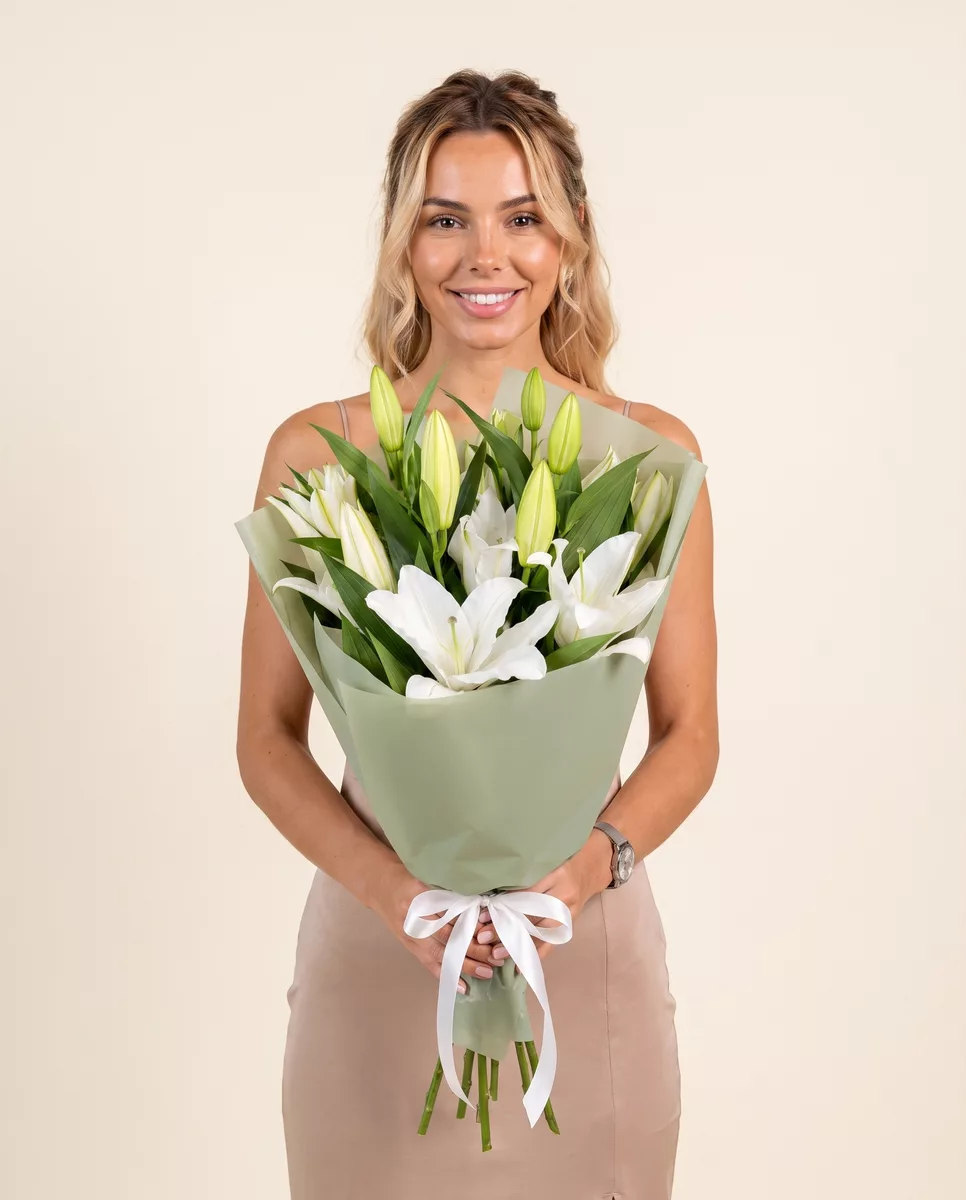
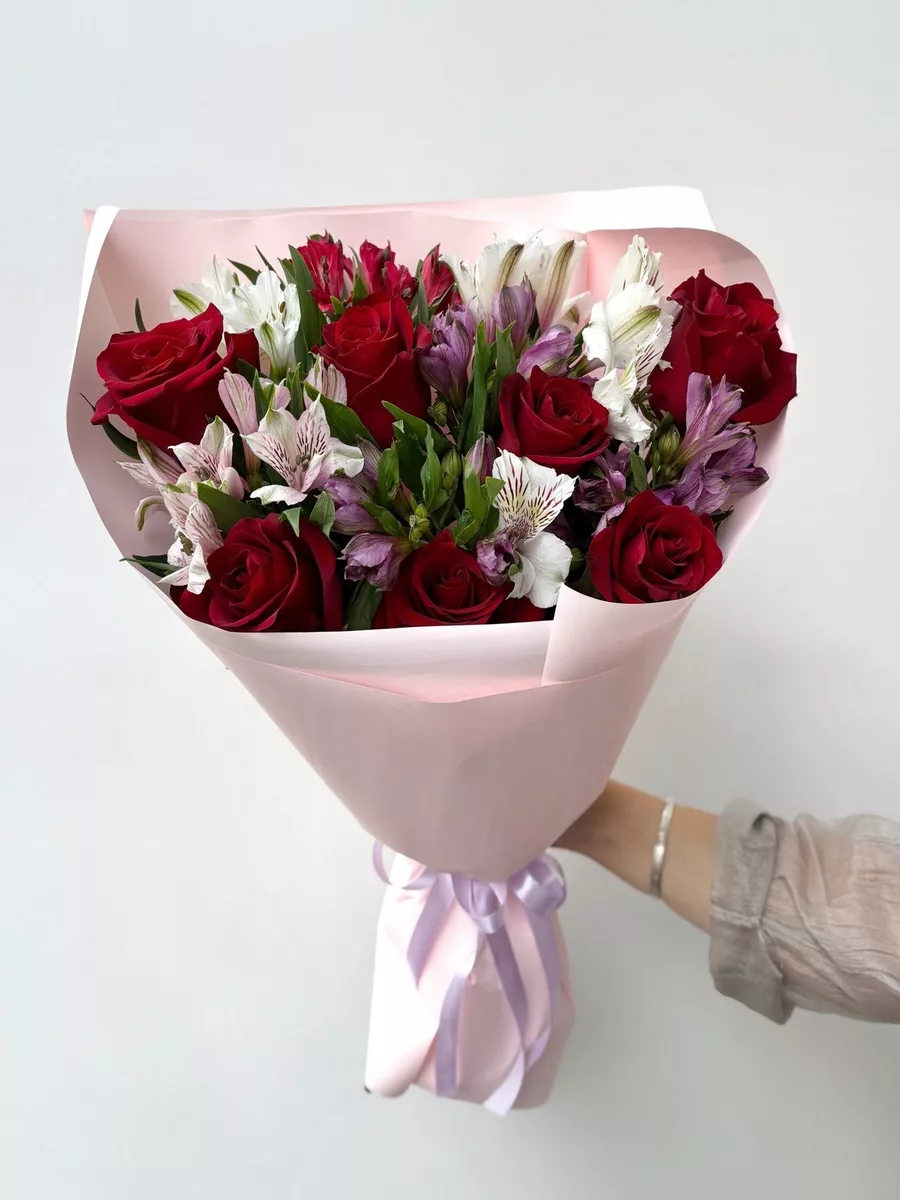
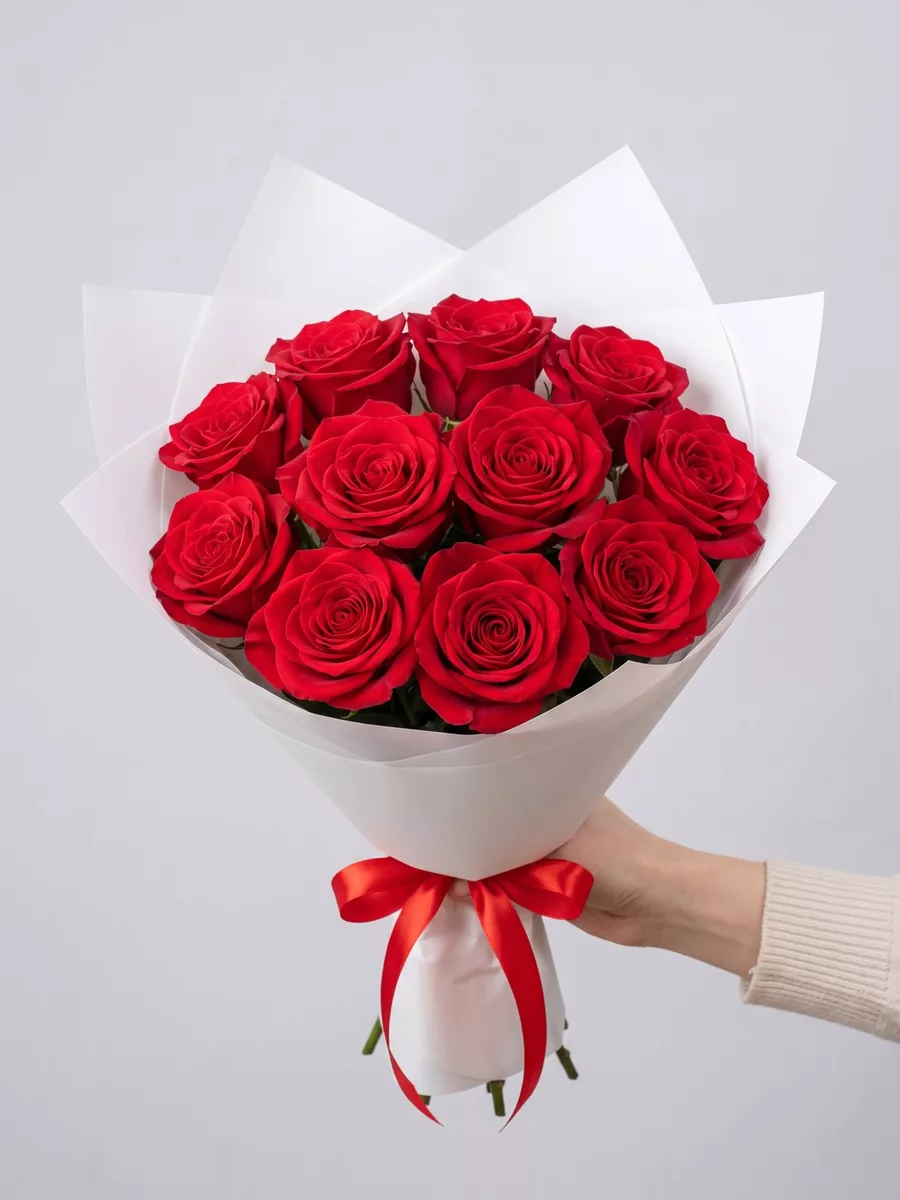
Bouquets we can deliver

Birthday Greetings That Feel Personal
The birthday greeting is the most common card we write at Five Flowers, and it is also the one most prone to cliché. 'S dnyom rozhdeniya!' (С днём рождения!) simply means 'Happy Birthday!' and is perfectly correct, but on its own it can feel bare. Pairing it with a second line transforms the message.
Here are combinations that work well:
'S dnyom rozhdeniya! Zhelayu tebe schastya i ulybok.' (С днём рождения! Желаю тебе счастья и улыбок.) — 'Happy Birthday! I wish you happiness and smiles.'
'Pozdravlyayu s dnyom rozhdeniya! Pust kazhdyy den budet yarkiy, kak eti tsvety.' (Поздравляю с днём рождения! Пусть каждый день будет яркий, как эти цветы.) — 'Congratulations on your birthday! May every day be as bright as these flowers.'
'Segodnya tvoy prazdnik — ty zasluzhivaesh tolko luchshego!' (Сегодня твой праздник — ты заслуживаешь только лучшего!) — 'Today is your celebration — you deserve only the best!'
For someone older or less familiar, switch 'tebe' to 'vam' and 'tvoy' to 'vash' to keep the polite register.
A practical florist's tip: if the birthday bouquet includes bright gerberas or sunflowers, the cheerful tone of the second example matches beautifully. For a more elegant arrangement of garden roses or peonies, the third phrase — with its note of personal admiration — tends to resonate more deeply. The flower and the word should feel like they came from the same impulse.
Romantic Messages for Every Stage of Love
Romance in Russian is expressive and direct. Russians are not shy about declaring feelings, but they also appreciate poetic phrasing. For a new relationship or a first bouquet, something light and warm is ideal. For an established partnership, depth and specificity matter more.
Early-stage romance:
'Ty delayesh moy mir krasivee.' (Ты делаешь мой мир красивее.) — 'You make my world more beautiful.' This phrase works perfectly with a delicate bouquet of ranunculus or tulips in soft tones.
'Ya dumayu o tebe.' (Я думаю о тебе.) — 'I am thinking of you.' Simple, honest, effective.
For a deeper relationship:
'Lyublyu tebya bolshe kazhdogo dnya.' (Люблю тебя больше каждого дня.) — 'I love you more with every day.'
'Ty — moyo schastye.' (Ты — моё счастье.) — 'You are my happiness.' Four words that carry enormous weight in Russian.
'S toboy kazhdyy den — prazdnik.' (С тобой каждый день — праздник.) — 'Every day with you is a celebration.'
For Valentine's Day or anniversaries, red Freedom or Explorer roses are the classic choice. We often pair them with a card that reads 'Ty — vsyo dlya menya.' (Ты — всё для меня.) — 'You are everything to me.'
One mistake we see often: translating 'I love you' word-for-word as 'Ya lyublyu tebya' is completely correct, but in spoken and written Russian the verb often comes first — 'Lyublyu tebya' — and that compressed form actually sounds more natural and heartfelt on a card.
Thank-You Notes That Go Beyond 'Spasibo'
Gratitude is a common reason to send flowers in Russia, and 'Spasibo!' (Спасибо!) — 'Thank you!' — is the obvious starting point. But a card that says only 'Spasibo' can feel almost too minimal, like a text message rather than a gesture. Expanding it by even one sentence makes the gift feel considered.
Useful thank-you phrases:
'Ogromnoe spasibo za vsyo, chto ty delayesh.' (Огромное спасибо за всё, что ты делаешь.) — 'A huge thank you for everything you do.' The word 'ogromnoe' (enormous) adds warmth without exaggeration.
'Blagodaryu tebya ot vsego serdtsa.' (Благодарю тебя от всего сердца.) — 'I thank you from the bottom of my heart.' 'Blagodaryu' is a slightly more formal and literary form of thanks, which can feel especially sincere.
'Ty tak mnogo dlya menya znachish.' (Ты так много для меня значишь.) — 'You mean so much to me.'
For a professional thank-you — to a teacher, a doctor, or a colleague — use the polite 'vy' form:
'Ogromnoe spasibo za vashu pomoshch i zabotu.' (Огромное спасибо за вашу помощь и заботу.) — 'A huge thank you for your help and care.'
When we prepare thank-you bouquets at Five Flowers, white or cream flowers — white roses, alstroemeria, or freesia — are popular because they feel clean and sincere. The scent of freesia in particular seems to reinforce the idea of a genuine, uncomplicated thank-you. Pair those flowers with a short, direct message and you have a combination that is hard to improve on.
Congratulations for Milestones and Achievements
Russians celebrate milestones enthusiastically — graduations, promotions, new homes, new babies, and academic achievements all call for flowers. The general word for congratulations is 'Pozdravlyayu!' (Поздравляю!) for 'I congratulate you,' or 'Pozdravlyaem!' (Поздравляем!) when writing on behalf of a group.
For a graduation:
'Pozdravlyayu s okonchaniem! Pered toboy — ves mir.' (Поздравляю с окончанием! Перед тобой — весь мир.) — 'Congratulations on graduating! The whole world is ahead of you.'
For a promotion or professional success:
'Ty eto zasluzhil(a)! Pozdravlyayu s zasluzhennoy pobedoy.' (Ты это заслужил(а)! Поздравляю с заслуженной победой.) — 'You earned this! Congratulations on a well-deserved victory.' Note that 'zasluzhil' is masculine and 'zasluzhila' is feminine — this small detail matters in Russian and recipients notice it.
For a new home:
'S novoselem! Pust v etom dome vsegda budet teplo i radostno.' (С новосельем! Пусть в этом доме всегда будет тепло и радостно.) — 'Happy housewarming! May this home always be warm and joyful.'
For milestone bouquets we often recommend bold, architectural flowers — Anthuriums, large-headed roses like Avalanche, or bright Eustoma — because they look like achievements. The card and the bouquet together should say: this moment deserves to be marked properly. Keep the message upbeat and forward-looking; Russians love phrases that point toward a bright future.
Practical Tips for Writing the Card Correctly
Even with the right phrase, a few common mistakes can undermine the message. Here is what we see regularly when customers submit card texts, and how to avoid each problem.
Mistake one: mixing registers. Using 'ty' in one sentence and 'vy' in the next looks careless. Decide on one form and stick to it throughout the card. When in doubt, 'vy' is always safe.
Mistake two: over-relying on automatic translation. Machine translators handle Russian poorly, especially with word order and gendered endings. The phrases in this article are florist-verified and safe to use as written.
Mistake three: forgetting gender agreement. Russian adjectives and past-tense verbs agree with the gender of the person they describe. 'Ty takaya krasivaya!' (Ты такая красивая!) — 'You are so beautiful!' — is feminine. For a man, it becomes 'Ty takoy krasivyy!' (Ты такой красивый!) Sending the wrong form is not catastrophic, but getting it right is a lovely touch.
Mistake four: signing only a name. In Russian card culture, a closing line before the name adds warmth. 'S lyubovyu,' (С любовью,) means 'With love,' and 'S uvazheniem,' (С уважением,) means 'With respect,' — the equivalent of 'Yours sincerely.'
Finally, a timing note: when you order from Five Flowers, our couriers deliver within one to two hours across Saint Petersburg. Fresh flowers travel best at cool temperatures, and we pack cards separately from the bouquet so condensation never smudges your message. Submit your card text exactly as you want it to appear — we transcribe it faithfully.
A flower card does not need to be long or literary — it needs to be true. Whether you choose a single line like 'Ty — moyo schastye' for someone you love deeply, or a warm 'Ogromnoe spasibo za vashu pomoshch' for a colleague who went above and beyond, the effort of writing something real in Russian will be felt immediately. Flowers already speak a language of their own; the card simply tells the recipient who sent them and why. At Five Flowers we handle the bouquet, the freshness, and the delivery — your job is just to find the phrase that sounds like you. We deliver bouquets across Russia in 1–2 hours.
Frequently asked questions
Can I write the card message in English and have it delivered to a Russian speaker?
Absolutely. Many recipients in Russia, especially in Saint Petersburg, read English comfortably. However, even a single Russian phrase alongside your English message — such as 'S lyubovyu' before your name — adds a personal touch that Russian recipients genuinely appreciate. It shows effort, and effort is noticed.
How do I know whether to use 'ty' or 'vy' when writing to someone in Russia?
Use 'ty' for close friends, family members, and children. Use 'vy' for anyone you address formally — a colleague, a teacher, a doctor, an older relative you are not intimate with, or anyone you have not met in person. When uncertain, 'vy' is always the respectful and safe choice and will never cause offence.
Does the type of flower affect what I should write on the card?
Not as a rule, but experienced florists notice that tone and flower variety often mirror each other naturally. A bold bouquet of red roses invites a direct, passionate message. A soft arrangement of ranunculus or sweet peas suits something gentle and poetic. Matching the mood of the card to the mood of the bouquet makes the whole gift feel intentional and cohesive.
Is it acceptable to send flowers with a card in Russia for occasions other than birthdays and romance?
Very much so. Flowers are given widely in Russia for graduations, professional achievements, housewarmings, teacher appreciation, and expressions of gratitude. There is no strict limit on occasions. Russians consider flowers an appropriate and always-welcome gift, and a thoughtful card elevates any bouquet regardless of the reason for giving it.
How should I format the card — should I include a salutation like 'Dear' at the start?
A salutation is optional but adds warmth. 'Dorogaya Anna!' (Дорогая Анна!) means 'Dear Anna!' for a woman, and 'Dorogoy Aleksey!' (Дорогой Алексей!) for a man. You can also begin directly with your message. Close with 'S lyubovyu,' or 'S uvazheniem,' followed by your name for a complete, polished result.
Ready to send a bouquet?
Pick a city, choose the flowers, and we will hand them over with a photo confirmation.
Choose a city →