
When to Throw Out Flowers: How to Tell a Bouquet Has Had Its Day
Throw out cut flowers when the stems have become soft or slimy at the base, the water turns cloudy and smells within hours of changing it, or the flower heads stay limp even after a fresh cut and a few hours in clean water. Petals that brown, drop at a touch or go papery are also a clear sign; with most bouquets this happens after one to two weeks, depending on the flowers.
Customers in our Saint Petersburg shops often bring this up from the other direction: they want to know how long they can keep a bouquet before it starts to look sad, and whether to throw out the whole thing or only part of it. Below is how we judge a bouquet at home, flower by flower, with the small rescue steps worth trying before anything goes in the bin.
The clear signs a bouquet is finished
Start with the stems, not the petals. Lift the bouquet out of the vase and look at the bottom 5 cm: healthy stems are firm and green or pale, while finished stems are brown, mushy or covered in a slippery film. A stem in this state can no longer draw water, so recutting it only helps if there is still firm, clean tissue above the soft part. If the rot has climbed high up the stem, the flower will not recover.
Next, check the water. Clean vase water should stay clear for at least a day after changing. If it turns cloudy and develops a sour or swampy smell within a few hours, the stems are decomposing faster than you can clean them, and bacteria will block whatever healthy stems remain. At that point, keeping the bouquet means keeping a source of odour in the room.
Finally, look at the flowers themselves. Petals that turn brown or translucent at the edges, fall when you brush past the vase, or feel dry and papery are at the end. A flower head that hangs limp after you have recut the stem and left it in fresh water for two to three hours is also done. One or two of these signs on a few flowers means sorting; all of them across the bouquet means it is time to let it go.
Sort, do not throw out everything at once
Most bouquets do not fade evenly. Alstroemeria, chrysanthemums and carnations often outlast roses by a week or more, and greenery such as eucalyptus or pistacia can stay fresh even longer. When the first flowers fade, take the whole bouquet out, remove the finished stems, recut the rest, wash the vase and put the survivors back in fresh water. A smaller arrangement in a shorter vase often looks better than the original.
Remove any fallen petals and wilted leaves from the table and the water, because decaying plant matter speeds up the decline of the healthy flowers. If only one bloom on a spray stem has faded, pinch it off at the base and keep the stem: the buds next to it will usually continue to open.
This sorting step, done every two or three days, is the simplest way to extend a bouquet's life. We describe the full set of signs, with examples, in When to Throw Flowers Away: How to Tell a Bouquet Is Done.
Bouquets we can deliver


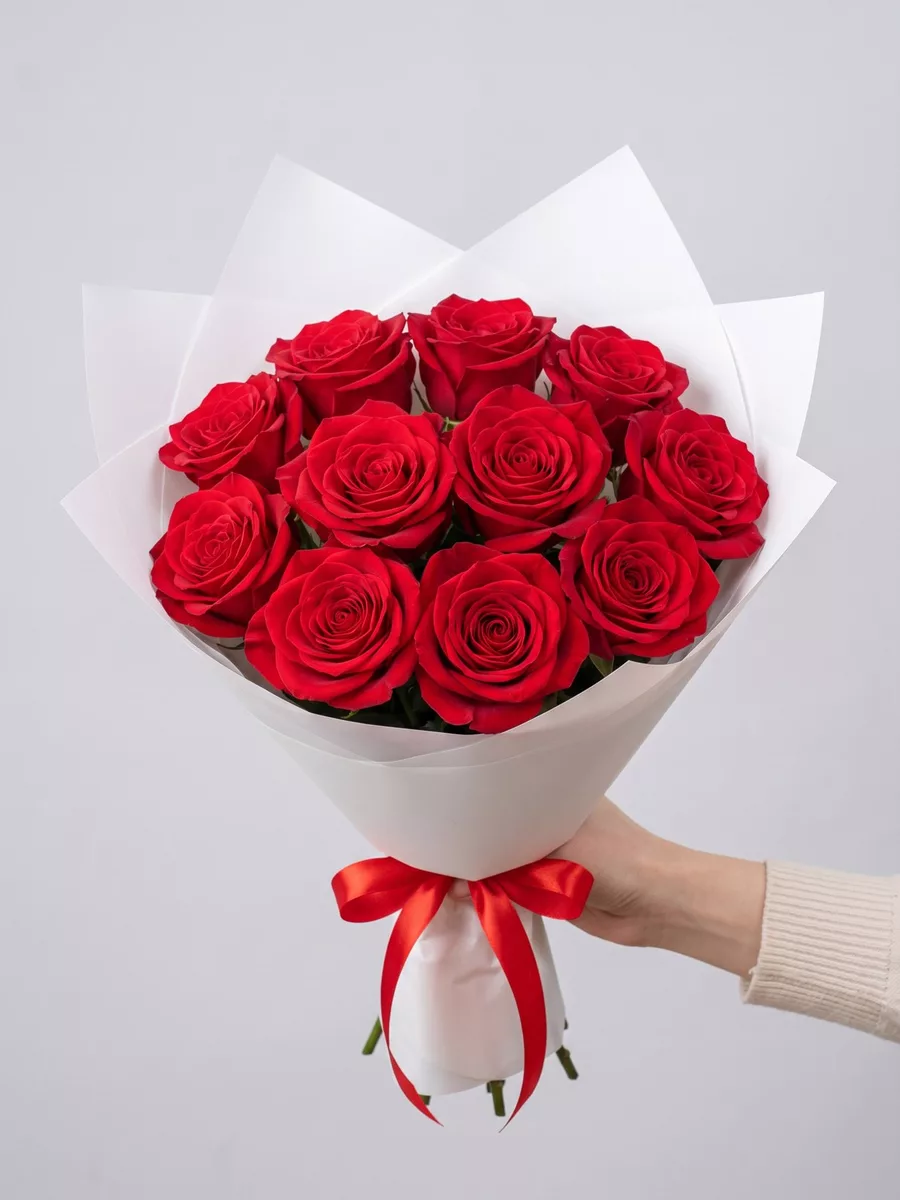

How long common flowers last before they are done
Vase life varies widely, so do not judge every bouquet by the same calendar. Carnations and chrysanthemums are the long-distance runners: two to three weeks with regular water changes is normal. Alstroemeria lasts around two weeks, and its buds keep opening. Roses usually last seven to ten days, depending on the variety; garden-type and spray roses are often shorter-lived than long-stemmed standard roses.
Tulips last five to seven days and keep growing in the vase, so a curved tulip is not necessarily a dead one. Peonies are spectacular but brief: three to five days once fully open. Hydrangeas can last a week or more but are prone to sudden wilting, which is often reversible. Lilies last up to two weeks as new buds open one after another; remove each faded bloom so the plant's energy goes to the next.
If a bouquet fades much faster than these ranges, the cause is usually the environment rather than the flowers: a warm room, direct sun, a radiator, ripening fruit nearby, or water that was not changed. Seasonal flowers such as ranunculus also have their own rhythm, which we cover in Ranunculus in Russia: When to Find Them and Why They Sell Fast.
Flowers that look finished but can still be saved
A rose that bends just below the head on day two or three is rarely dead. Usually an air bubble or bacteria have blocked the stem. Recut 2-3 cm at a sharp angle, wrap the rose tightly in paper so the head is supported, and stand it in deep, slightly warm water for one to two hours. In most cases the head lifts again.
Hydrangeas that go limp can be revived by submerging the whole flower head in a bowl of cool water for 30-60 minutes, then recutting the stem and returning it to the vase. Drooping tulips straighten if you wrap the bunch in paper and stand it in cold water for a few hours. Only if these steps fail after a day is the flower truly finished.
Some flowers also dry beautifully instead of going in the bin. Roses, hydrangeas, statice, lavender and eucalyptus can be hung upside down in a dry, dark place for two to three weeks. If the bouquet came for a wedding, an anniversary or a birth, drying a few stems is a good way to keep it without keeping the vase water.
Disposal and hygiene after the bouquet
When you do throw a bouquet out, remove the ribbon, wire and any plastic or film first, because the flowers and greenery themselves can go into food or garden waste where that is collected separately. Pour the old water away and wash the vase in hot water with detergent, using a bottle brush to remove the film on the inside. A vase that still carries bacteria from the last bouquet will shorten the life of the next one from day one.
If you keep flowers at home constantly, it helps to have two vases and alternate them, so one is always clean and dry while the other is in use. Floral foam from boxed arrangements is not compostable and should go into general waste.
Sending a fresh bouquet to someone in Russia
If you live abroad and want to send fresh flowers to family or friends in Russia, you can choose a bouquet in our bouquets catalogue. Pyat Tsvetov has worked since 2011 and has three of its own flower shops in Saint Petersburg, on Ilyushina Street, Obvodny Canal Embankment and Srednerogatskaya Street. We deliver across Russia; city delivery costs 500 RUB, and for remote districts and suburbs the operator confirms the price when confirming the order.
In Saint Petersburg, delivery runs around the clock. In large cities, express delivery takes 1-2 hours after the order is confirmed, or you can choose an exact time (plus or minus 30 minutes), a time window of 09-12, 12-15, 15-18 or 18-21, or pre-order 1-30 days ahead. Payment is online on the site by bank card, SBP or Yandex Pay, and foreign bank cards are accepted via Robokassa. Details are on the delivery and payment page.
Delivery is anonymous by default and a card with your text is free. The courier calls the recipient about 15 minutes before arrival; if they are out, we agree a second delivery the same day or leave the flowers with a neighbour or concierge with your consent. For questions, call 8 (812) 507-67-05.
Frequently asked questions
How do I know when cut flowers are dead?
The stems are soft or slimy at the base, the water clouds and smells soon after changing, and the heads stay limp even after a fresh cut and a few hours in clean water. Brown, papery or falling petals confirm it.
Should I throw out the whole bouquet when some flowers die?
No. Remove the finished stems, recut the rest, wash the vase and refill it with fresh water. Long-lasting flowers and greenery often stay fresh for another week.
Can drooping roses be saved?
Often yes. Recut the stem, wrap the rose in paper and stand it in deep, slightly warm water for one to two hours; a blocked stem usually recovers.
How long should a bouquet last?
It depends on the flowers: carnations and chrysanthemums up to two to three weeks, roses around seven to ten days, tulips five to seven days and open peonies three to five days.
Is it bad to keep dead flowers in the house?
Rotting stems and old water breed bacteria and smell unpleasant, so remove them promptly. Dried flowers are a different matter and can be kept for months.
Ready to send a bouquet?
Pick a city, choose the flowers, and we will hand them over with a photo confirmation.
Choose a city →