
Aspirin for cut flowers: useful remedy or unnecessary extra?
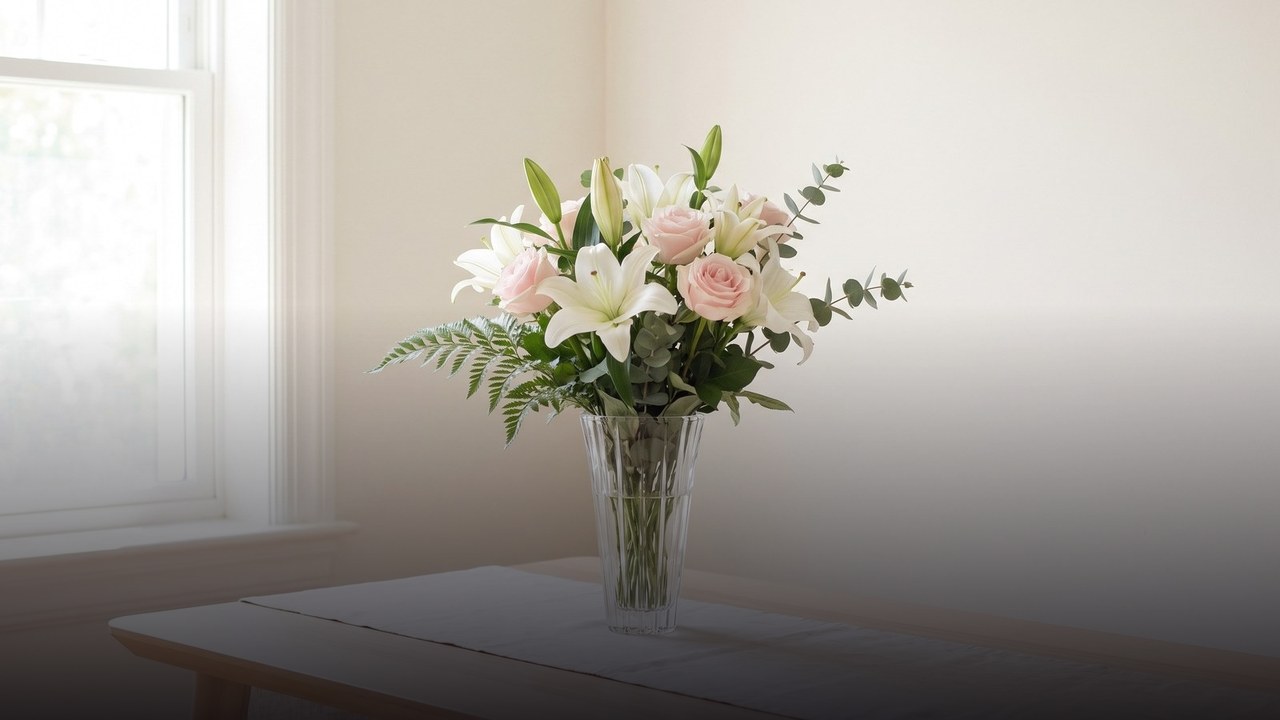
Adding aspirin to a vase is not a dependable way to keep cut flowers fresh, so we recommend clean water and flower food used according to its instructions. If you searched for “asprin for flowers”, the familiar household tip refers to crushed aspirin tablets dissolved in vase water. There is no reliable household dose we can recommend across different flowers, tablet formulations and vase sizes.
At Pyat Tsvetov (5 Flowers), customers ask what they can add to water to help a bouquet last. Our advice starts with the vase, the stems and where the flowers will stand, because an additive cannot correct dirty water or leaves soaking below the surface. We have been serving customers in Saint Petersburg since 2011, and useful care guidance begins with a routine the recipient can follow.
Why aspirin is not a substitute for flower food
Aspirin is a medicine containing acetylsalicylic acid, and dissolving it in water can affect the water's acidity. That explains part of the idea behind the tip, but changing acidity alone does not provide everything a cut flower needs. A tablet is formulated for medicinal use, and its ingredients and behaviour in water can vary between products.
Commercial cut-flower food is formulated for vase use and typically combines a nutrient source with ingredients that manage acidity and microbial growth. Aspirin does not reproduce that balanced formulation. Use the amount of flower food specified for the volume of water, rather than assuming a stronger solution will work better. If you have none available, clean water and regular maintenance are a practical starting point.
Avoid combining aspirin with sugar, bleach, vinegar or other household remedies in an improvised mixture. Their concentrations are difficult to judge, and some household chemicals are unsafe to mix. Keep vase water and any additives away from children and pets. Advice about aspirin in a vase should also stay separate from advice about treating a living plant in soil.
Prepare the vase and stems before adding anything
Wash the vase thoroughly with washing-up liquid, paying attention to residue around the base and neck, then rinse it well. Choose a vessel that supports the stems without packing them tightly together. Fill it with fresh water and measure any flower food according to the packet. A clean vase gives you a useful starting point without introducing a tablet or a homemade recipe.
Remove leaves that would sit below the waterline, while keeping healthy foliage above it where practical. Submerged leaves decay and make the water harder to keep clean. Check again after arranging the bouquet, because shorter stems and loose foliage can slip beneath the surface. Take out any fallen petals or plant fragments that you can reach without damaging the flowers.
Refresh the stem ends with a clean, sharp tool, removing a small section without crushing or splitting the stem. Put the flowers into water promptly after cutting. Avoid hammering woody stems or making deep cuts up them as a general treatment; different flowers have different needs. If the bouquet came with specific care guidance, follow that alongside these basic steps.
Bouquets we can deliver




Keep the water fresh and choose a suitable place
Check the water level daily, particularly during the first days after the bouquet arrives. Several stems sharing one vase can use water faster than the recipient expects, even while the flowers still look fresh. Keep the cut ends submerged and replenish the water as needed. When adding flower food to replacement water, measure it for that water volume rather than guessing.
Change the water promptly if it becomes cloudy, develops an odour or contains fallen plant material. As a regular routine, refresh it every day or two and clean the vase when you do. Recut stem ends if they have dried out or become slimy, using a clean tool. Remove deteriorating stems so you can maintain the rest of the arrangement more easily.
Place the bouquet away from direct sunlight, radiators, heaters and strong draughts. A cooler indoor position helps limit heat stress, but flowers should not be exposed to freezing conditions. Keep the vase away from ripening fruit, which can release ethylene that hastens ageing in sensitive flowers. Choose somewhere stable where the recipient can check the water without moving a heavy arrangement.
What to do if aspirin is already in the vase
If someone has already added aspirin, there is no need to add another product to counteract it. Empty the vase, wash and rinse it, then refill it with fresh water and correctly diluted flower food if available. Inspect the stems and remove any leaves below the new waterline. This gives you a known starting point without trying to calculate what remains of the tablet.
If the flowers are drooping, check whether the stem ends are actually in water and whether the vase has run low. Refresh the cuts, return the stems promptly to clean water and move the bouquet away from heat. These steps may help when poor water uptake is contributing to the problem. They cannot reverse every cause of wilting, including natural ageing or physical damage.
Assess individual stems rather than treating the whole bouquet as equally affected. Remove flowers with extensive decay, and gently rearrange those still in good condition. Avoid pulling apart a tight arrangement repeatedly to inspect it, since handling can bruise petals and bend stems. Recovery varies with the flower and its condition, so no aspirin recipe can promise to revive a fading bouquet.
Make flower care easy when sending a gift to Russia
When you are sending flowers from abroad, the most helpful care message is short enough to act on immediately. Suggest a clean vase, fresh water, no submerged leaves and a place away from heat. You can include that advice in the free card with your own message, although a personal greeting may matter more to the recipient. Browse our Bouquets catalogue to choose flowers for the occasion.
Think about when the recipient can receive the bouquet and put it in water. A delivery timed for a day when someone is at home can be more practical than a surprise during a busy working day. For birthdays, congratulations or a thank-you, use the card to make your intention clear. Flower meanings vary between people and cultures, so a direct personal message avoids leaving the sentiment to interpretation.
Our delivery is anonymous by default: the courier does not name the sender. If you want the recipient to know who sent the flowers, include your name in the card text. Before placing the order, check the recipient's telephone number, address and any access details you provide. These practical details help us contact the recipient and coordinate the handover.
Arrange delivery and checkout with clear expectations
Pyat Tsvetov delivers flowers across Russia, and city delivery costs 500 RUB. For remote districts and suburbs, the operator confirms the delivery price when confirming the order. In large cities, express delivery is available in 1–2 hours after order confirmation. You can also arrange delivery at an exact time with a tolerance of plus or minus 30 minutes, or choose a delivery window.
The available windows are 09–12, 12–15, 15–18 and 18–21, and orders can be placed 1–30 days ahead. In Saint Petersburg, delivery operates around the clock; our three own flower shops are on Ilyushina St., Obvodny Canal Embankment and Srednerogatskaya St. Review Delivery and payment when planning the order. For questions, call 8 (812) 507-67-05.
The courier calls the recipient about 15 minutes before arrival. If the recipient is absent, we agree a second delivery the same day or, with the sender's consent, hand the flowers to a neighbour or concierge. Online checkout uses CloudPayments; check the payment options displayed there when ordering from abroad, as acceptance of every foreign card is not guaranteed. Once the bouquet arrives, a simple fresh-water routine remains the clearest care advice to pass on.
Frequently asked questions
How much aspirin should I put in flower water?
We do not recommend a household aspirin dose for cut flowers because tablets, water volumes and flower needs vary. Use fresh water and, when available, cut-flower food measured according to its instructions.
Can I use sugar instead of aspirin?
Sugar alone does not provide the balanced formulation of flower food and can encourage microbial growth in vase water. Avoid guessing at homemade mixtures and focus on a clean vase, fresh water and removing submerged leaves.
Will aspirin revive wilted flowers?
Aspirin cannot reliably revive wilted flowers. Check the water level, refresh the stem ends and move the bouquet away from heat, while recognising that aged or damaged flowers may not recover.
Should I add aspirin if I already have flower food?
Use the flower food on its own, following the packet's dilution instructions. Adding aspirin creates an unmeasured mixture without a dependable benefit.
Can I order flowers to Russia using a foreign card?
Online checkout uses CloudPayments, and you should check the payment options displayed at checkout. Acceptance of every foreign card is not guaranteed.
Ready to send a bouquet?
Pick a city, choose the flowers, and we will hand them over with a photo confirmation.
Choose a city →