
Are They Edible? What to Know Before Eating Flowers
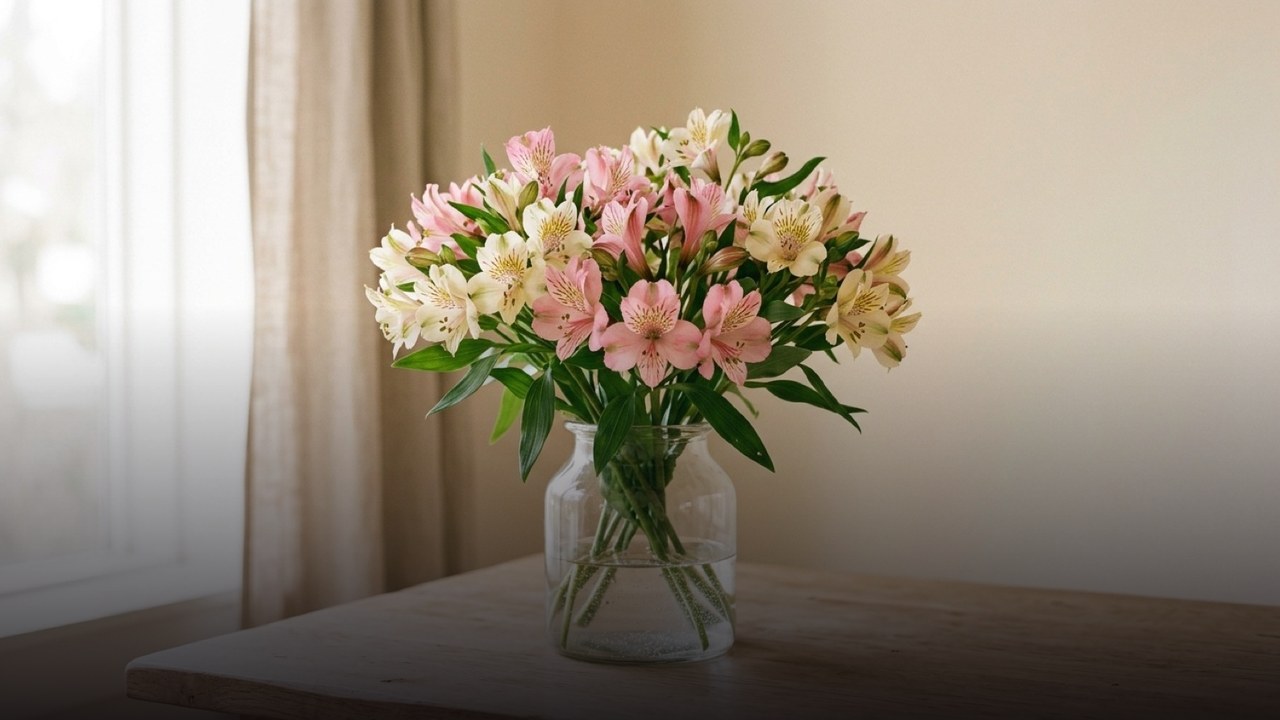
Some flowers are edible, but you should not eat flowers from a gift bouquet unless they have been specifically supplied for eating and reliably identified. A familiar-looking rose or violet is not enough to establish safety: the species, edible part and treatment history all matter. If that information is missing, keep the flowers out of food and drinks.
Customers often ask whether bouquet petals can go into tea, decorate a cake or brighten a salad. At Pyat Tsvetov (5 Flowers), our answer starts with the intended use: choosing flowers for display and choosing ingredients are different decisions. We have been serving customers in Saint Petersburg since 2011, and the practical distinction is simple: a beautiful bouquet does not establish that its flowers are suitable for eating.
What makes a flower suitable for eating
Edibility depends on a precise identification, not just a common name or a resemblance to a picture. Some flowers used in cooking include nasturtiums, certain violets and rose petals, but those examples are not permission to taste an unidentified stem. Names can cover different plants, and the edible part may be only one part of the flower. Use flowers sold specifically for culinary use with clear identification and preparation guidance.
The growing and handling history matters alongside the plant itself. Ornamental flowers may have received treatments intended for display plants rather than food crops, and their appearance cannot reveal that history. Washing does not turn an ornamental flower into a food ingredient. If a seller cannot establish that the flowers were intended for eating, choose a different ingredient.
Keep culinary flowers identifiable until you use them, retaining the packaging and following any storage or preparation instructions provided. Do not combine unknown petals in a bowl and try to identify them afterwards. Even an edible flower may not suit someone with an allergy or sensitivity. For guests, tell them what you have added and leave flowers out when you cannot check the ingredients confidently.
Why flowers from a bouquet should stay in the vase
A bouquet is assembled to be handled, arranged and displayed. Its stems may share water with other plant material, and a vase may contain flower food intended to support cut flowers. Neither the vase water nor its additives belong in food preparation. Moving petals from that arrangement onto a dessert does not remove the uncertainty about how they were treated.
Do not use smell, colour or a tiny taste as a safety test. An attractive scent does not establish edibility, and tasting an unknown plant creates the exposure you are trying to avoid. Removing stamens, peeling petals or rinsing the flower also cannot establish that it is safe. These steps may feature in recipes for known edible flowers, but they do not identify an unknown one.
Keep the intended use clear when choosing from our Bouquets catalogue: select a bouquet for the recipient to enjoy as flowers. The catalogue should not be read as a list of culinary ingredients. If you also want a floral dessert or drink, obtain its flowers separately from a supplier that explicitly sells them for eating. Keep those ingredients apart from the gift arrangement.
Bouquets we can deliver




Using flowers on cakes, in drinks and around food
For a cake, choose flowers intended for eating if the petals will touch the icing or be served with a slice. Do not assume a decorative flower becomes suitable because guests are expected to remove it. Plant material and residues can still come into contact with the food. A qualified cake maker can advise on appropriate food-safe decorations when fresh culinary flowers are unavailable.
The same rule applies to cocktails, ice cubes and tea. Freezing a petal does not make an unidentified flower safe, and hot water is not a general method of making ornamental flowers edible. For an infusion, use an ingredient specifically sold for that purpose and follow its preparation instructions. For a drink garnish, use a known food ingredient that guests can recognise.
You can still create a floral table without placing bouquet flowers on plates. Put the arrangement in its own stable vase, leave room for serving dishes and keep trailing foliage away from food. Consider scent as well as appearance: strongly scented flowers can distract from a meal. A smaller arrangement positioned clear of glasses and cutlery is often easier for guests to enjoy.
Caring for a gift bouquet safely at home
Start with a clean vase and fresh water, then remove leaves that would sit below the waterline. Trim the stems with a clean cutting tool and follow any care instructions supplied with the flowers. If flower food is provided, use it according to its directions rather than guessing the amount. Keep the sachet and prepared vase water away from children and pets.
Check the arrangement daily, replenish its water and remove deteriorating plant material. Place it away from direct heat and ripening fruit, and choose a position where it will not be knocked over. Do not use a drinking glass for flower food if someone could mistake it for a beverage. Wash your hands after arranging flowers and before preparing food.
Household safety also includes the recipient's pets: some ornamental plants are dangerous if chewed, and lilies are particularly hazardous to cats. If a pet has eaten part of an arrangement, contact a veterinarian promptly and retain the plant or a photograph for identification. If a person has swallowed an unknown flower, seek advice from a poison information service or medical professional. Do not wait for a visual identification from an online comment.
Choosing a thoughtful bouquet for someone in Russia
When sending flowers from abroad, begin with the recipient's circumstances and the occasion. A bouquet for a family dinner needs to fit the table or have another place to stand; a gift sent to work needs to be manageable there. Consider known fragrance sensitivities and pets before deciding. These practical details usually help more than assigning a fixed meaning to every colour.
Flower meanings vary between families and cultures, so use the card to make your intention clear. For a Russian recipient, an odd number of stems is the usual convention for a small, clearly countable celebratory bouquet; even numbers are traditionally associated with mourning. Mixed arrangements are less straightforward to count, so avoid treating every visible bloom as a separate symbolic message. A personal sentence about the occasion is clearer than relying on flower symbolism alone.
A card with your text is free, and our deliveries are anonymous by default: the courier does not name the sender. Sign the card if you want the recipient to know immediately who sent the flowers. If the recipient enjoys cooking, you can describe the bouquet as a gift for their table without suggesting that its petals are ingredients. Keep edible gifts and ornamental flowers distinct in your message.
How to arrange delivery when you are ordering from abroad
We deliver flowers across Russia, with city delivery costing 500 RUB. For remote districts and suburbs, the operator confirms the delivery price when confirming the order. Prepare the recipient's address, telephone number and your card text before checkout, and check the Delivery and payment information. Online payment uses CloudPayments; check the options displayed at checkout for your card.
In large cities, express delivery is available in 1–2 hours after the order is confirmed. You can also arrange delivery at an exact time with a tolerance of plus or minus 30 minutes, choose a window of 09–12, 12–15, 15–18 or 18–21, or pre-order 1–30 days ahead. When ordering from another country, check the time difference against the destination before selecting a slot. In Saint Petersburg, delivery operates around the clock.
The courier calls the recipient about 15 minutes before arrival, so allow for that contact when planning a surprise. If the recipient is absent, we agree a second delivery that day or, with the sender's consent, hand the flowers to a neighbour or concierge. For questions, call 8 (812) 507-67-05. Our three own Saint Petersburg flower shops are on Ilyushina Street, Obvodny Canal Embankment and Srednerogatskaya Street.
Frequently asked questions
Are roses from a gift bouquet edible?
Rose petals are used in cooking, but that does not make petals from a gift bouquet suitable for eating. Use roses specifically supplied for culinary use, with reliable identification and preparation guidance.
Can I wash bouquet flowers and put them on a cake?
Washing cannot establish that ornamental flowers are safe for contact with food. Choose flowers intended for eating or ask your cake maker about suitable food-safe decorations.
Can I make tea from dried bouquet petals?
Drying does not resolve uncertainty about a flower's identity or treatment history. Use ingredients specifically sold for making tea and follow their preparation instructions.
What should I do if a child eats an unknown flower?
Contact a poison information service or medical professional promptly and keep the remaining flower or a photograph for identification. If the child has trouble breathing, collapses or has other severe symptoms, call emergency services immediately.
Can I order flowers to Russia with a foreign bank card?
Online checkout uses CloudPayments, and you should check the payment options displayed there for your card. Acceptance of every foreign card cannot be guaranteed.
Ready to send a bouquet?
Pick a city, choose the flowers, and we will hand them over with a photo confirmation.
Choose a city →