
Which Flowers Last Longest in a Vase: Ranked by Real Staying Power
The most common question we hear at the counter goes something like this: I want to send flowers to my mother in Novosibirsk, but I am worried they will be dead before she even puts them in water. That is a fair worry, and the answer depends almost entirely on which flower you choose — not on the ribbon, not on the wrapping, and not on how many stems are in the bunch. Different species have genuinely different cellular structures, water uptake rates and ethylene sensitivity, and those biological facts translate directly into days of vase life. This article ranks the flowers we use most often — roses, chrysanthemums, alstroemerias, carnations and tulips — by how long they realistically last once they reach a home vase, and explains what your recipient needs to do on their end to get every possible day out of the bouquet.
Why Vase Life Varies So Much Between Species
Florists talk about vase life the way mechanics talk about tyre wear: it is not a fixed number, it is a range that depends on conditions. The biological baseline is set by the flower itself — how thick its petals are, how efficiently its stem draws water, and how sensitive it is to ethylene, the gas that accelerates ageing. Roses, for instance, have dense petal tissue that holds moisture well, while tulips have thin petals that lose water quickly through transpiration. Temperature is the single biggest external variable. A bouquet sitting on a warm kitchen counter near a fruit bowl — fruit releases ethylene — can lose two or three days of life compared with the same bouquet standing in a cool hallway at around 16 to 18 degrees Celsius. Tap water quality matters too: hard water with high mineral content clogs the tiny vessels inside the stem faster than soft water does. Saint Petersburg tap water is relatively soft, which is one reason bouquets assembled here travel reasonably well. The condition of the stems at cutting is a fixed starting point. Our couriers deliver flowers that were cut and conditioned the same day, which means the cellular tissue is fully hydrated when the bouquet arrives. If your recipient leaves the bouquet unwrapped on a table for two hours before putting it in water, that head start is already spent. The practical takeaway is that vase life figures are always best-case numbers achieved under decent conditions, and the species ranking below assumes those decent conditions are met.
Bouquets we can deliver


Chrysanthemums: The Undisputed Long-Distance Champion
If you are sending flowers to someone you will not see again for two or three weeks, chrysanthemums are the professional's choice. Spray chrysanthemums — the multi-headed variety with smaller blooms on branching stems — routinely last 14 to 21 days in a home vase when the water is changed every two days and the stems are recut at an angle every four or five days. Single-headed varieties such as the large-bloomed Zembla or the button-shaped Bacardi hold up almost as well, typically 12 to 18 days. The reason is structural: chrysanthemum petals are dense and waxy, which slows water loss dramatically, and the stems have a relatively open vascular system that keeps drawing water even after several days. The one mistake people make with chrysanthemums is leaving the lower leaves in the water. Any foliage submerged below the waterline rots within 48 hours and poisons the water with bacteria that block the stem vessels. Strip every leaf that would sit below the water surface before the first placement, and the flower will do the rest. Chrysanthemums are also among the least ethylene-sensitive common flowers, which means they tolerate being placed near a fruit bowl or in a kitchen without the rapid wilting you would see with roses. In Russia, white and yellow chrysanthemums are strongly associated with commemorative occasions, so if you are sending a celebratory bouquet, lean toward pink, lilac or burgundy varieties to avoid any unintended signal — something worth knowing if you are unfamiliar with local customs.
Alstroemerias: Two Weeks of Colour for a Modest Stem Count
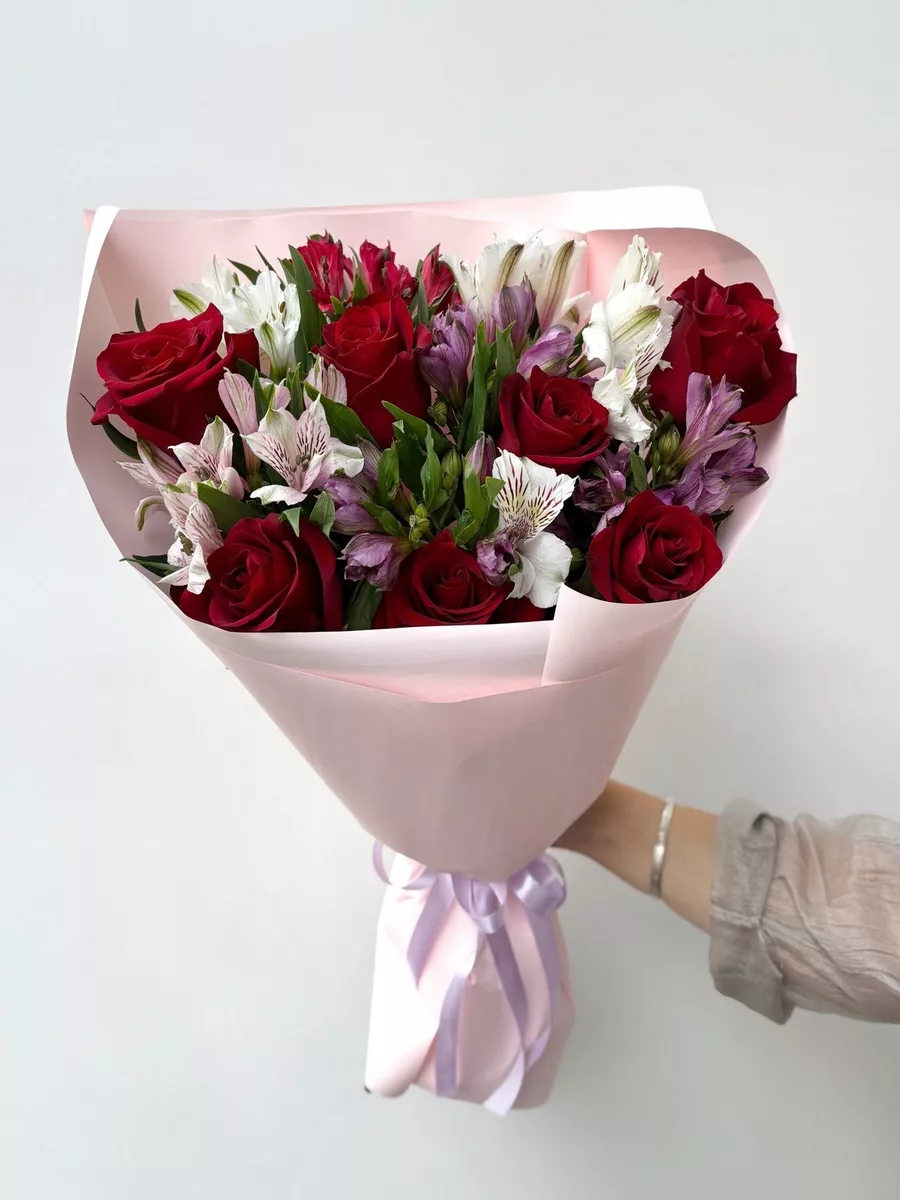
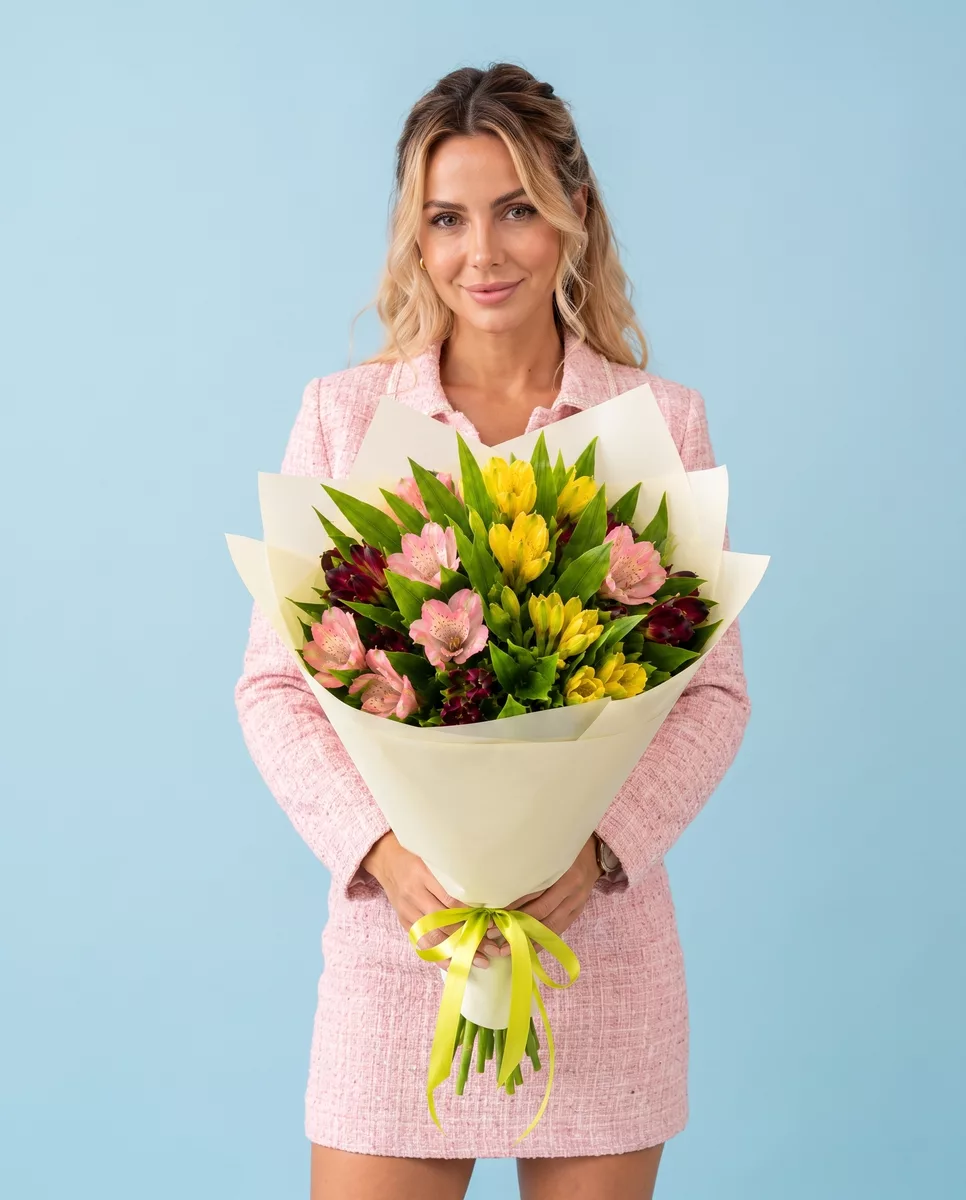
Alstroemeria, sometimes called Peruvian lily, is the flower that surprises people most. It looks delicate — slim stems, papery petals with streaked markings — but it is genuinely tough. A bunch of alstroemerias bought on a Monday will still be opening new buds the following Monday, because each stem carries multiple buds at different stages of development. The total display window runs from 10 to 14 days under normal household conditions, and individual blooms within that window open progressively, so the bouquet looks different and fresh throughout rather than peaking and fading all at once. The correct care instruction is to remove spent blooms individually as they drop rather than waiting for the whole stem to finish. This keeps the arrangement looking intentional rather than tired. Alstroemerias are moderately sensitive to ethylene, so keeping them away from ripening bananas or apples adds a noticeable number of days. They also prefer cool temperatures: above 22 degrees Celsius the buds open very fast and the overall display window compresses. If your recipient lives in a warm apartment, the bouquet will still last well, just with a faster opening sequence. One practical note for mixed bouquets: alstroemerias are sometimes combined with roses or carnations, and in those arrangements the alstroemeria will outlast its companions by four or five days. Recipients sometimes pull out the faded roses and keep the alstroemerias going in a fresh vase, which is exactly the right thing to do. Alstroemerias are a strong choice when the recipient is busy or tends to forget daily maintenance.
Carnations: Underrated Staying Power and Easy Care
Carnations have an image problem in some markets — they are associated with inexpensive, filler-heavy arrangements — but their vase life is genuinely impressive and deserves more credit. Standard spray carnations last 10 to 14 days with minimal care, and large-headed varieties such as the Dianthus caryophyllus cultivars commonly used in Russian floristry hold for 10 to 12 days even in a warm room. The petals are thick and tightly packed, which limits water loss, and carnations are among the most forgiving flowers when it comes to irregular water changes. A recipient who forgets to refresh the vase every day will still get a respectable display from carnations, whereas roses in the same neglected vase would be drooping by day five. The one genuine weakness of carnations is ethylene sensitivity. They react to ethylene faster than chrysanthemums do, so placement matters. A carnation bouquet next to a bowl of pears or tomatoes will lose three or four days quickly. Away from ethylene sources, in a spot that stays below 20 degrees Celsius, they are close to bulletproof for their category. Carnations are also one of the few flowers that respond well to a simple aspirin tablet dissolved in the vase water — the salicylic acid mildly inhibits bacterial growth in the stem vessels. This is a real florist tip, not a folk remedy, and it adds a day or two of life. If you are sending flowers to someone who describes themselves as not having a green thumb, carnations are the most forgiving option on this list.
Roses: The Standard Choice With a Narrower Window Than People Expect
Roses are the default bouquet flower in Russia and across most of Europe, and their reputation for beauty is entirely deserved. Their reputation for longevity, however, is somewhat inflated by marketing. Under good conditions — clean water changed every two days, stems recut at a 45-degree angle every three days, placement away from direct sunlight and drafts — a rose will last 7 to 10 days in a vase. That is a solid result, but it requires consistent attention. The variety matters significantly. Long-stemmed Ecuadorian roses, which make up the majority of what florists in Saint Petersburg stock, have tightly packed heads and thick stems that support good water uptake, and they sit at the upper end of that 7-to-10-day range. Shorter-stemmed roses from local greenhouse production tend to open faster and fade sooner, often by day five or six. Garden roses with many-petalled, loosely packed heads — varieties like David Austin types — are stunning but typically last only 5 to 7 days because the open structure loses moisture rapidly. The most common mistake recipients make with roses is not recutting the stems. The cut end seals over with a thin layer of dried tissue within a few hours of being in water, which blocks uptake almost completely. A fresh diagonal cut every few days, removing about a centimetre of stem each time, keeps the vascular pathway open. Roses are the right choice when visual impact on arrival matters most and the recipient is attentive enough to do basic maintenance.
Tulips: Beautiful, Brief and Worth Ordering Anyway
Tulips are the shortest-lived flower on this list, and anyone ordering them for a recipient far away should go in with clear expectations. In a cool room — 15 to 18 degrees Celsius — tulips last 5 to 7 days in a vase. In a warm apartment above 22 degrees Celsius, that window compresses to 3 to 5 days, sometimes less. The reason is the thin petal structure and the tulip's unusual growth habit: unlike most cut flowers, tulips continue to grow after cutting, sometimes adding two or three centimetres of stem length in the vase. This growth is driven by the remaining cellular energy in the stem, and it burns through the flower's reserves quickly. The positive side of this behaviour is that a tulip bouquet that arrives with tightly closed buds will open fully and impressively within 24 to 48 hours — the recipient gets to watch the bouquet bloom, which has its own appeal. Tulips also respond well to being placed in a relatively shallow amount of water, about 8 to 10 centimetres, which slows the growth surge slightly. Keeping them in a cool room, ideally away from windows that get afternoon sun, is the single most effective thing a recipient can do. In Russia, tulips are strongly associated with early spring and with International Women's Day on March 8th, when demand peaks dramatically and the whole city seems to be carrying them. Outside of that seasonal surge, they are a lovely but genuinely short-lived choice, best ordered when the recipient will enjoy them immediately rather than over a week.
What to Tell Your Recipient Before the Bouquet Arrives
The flowers leave our shop in good condition. What happens in the first two hours after delivery determines whether the recipient gets the full vase life or a shortened version of it. The most important instruction is simple: unwrap the bouquet within 20 minutes of receiving it and put it straight into clean water. Flowers that sit wrapped on a table for several hours, especially in a warm hallway, begin to dehydrate at the stem ends, and that moisture deficit is difficult to reverse fully even with a fresh cut. The second instruction is about the vase itself. It should be clean — residual bacteria from a previously used vase are the most common cause of premature wilting — and filled with cool tap water. No need for special flower food sachets if none came with the bouquet; plain cool water changed every two days is more effective than stale enriched water changed rarely. The third instruction covers placement. The three locations to avoid are: directly above a radiator, on a windowsill that gets direct afternoon sun, and anywhere near a fruit bowl or a basket of vegetables. All three of these environments either raise temperature, increase light stress or expose the flowers to ethylene. A shaded spot on a table or a kitchen counter away from the cooker is usually ideal. If your recipient is in a different city and you cannot pass these instructions along personally, consider adding a short handwritten note with the bouquet. We can include a care note with any order — just specify it when you place the order and we will write it in plain language that does not require any prior knowledge of flower care.
Choosing by vase life is not about settling for less beautiful flowers — chrysanthemums, alstroemerias and carnations are all genuinely attractive, and a well-composed bouquet of any of these species looks as considered and generous as a rose arrangement. The practical logic is straightforward: match the flower to the situation. If the recipient will be home to enjoy the bouquet immediately and is attentive about care, roses or tulips are a fine choice. If the flowers are crossing a long distance, or if the recipient is busy and unlikely to recut stems every few days, alstroemerias or chrysanthemums will deliver a better result over time. Carnations sit in the middle and reward anyone who simply keeps them cool and away from fruit. The variety, the temperature at the destination, and the first two hours after delivery matter more than almost anything else. Order with those variables in mind and the bouquet will do its job. We deliver bouquets across Russia in 1–2 hours.
Frequently asked questions
Can I ask for a bouquet specifically chosen for long vase life?
Yes. When placing your order, mention that longevity is the priority and we will build the arrangement around chrysanthemums, alstroemerias or carnations depending on what is freshest that day. We do not substitute species without telling you — if a specific flower is unavailable we will confirm an alternative before processing the order.
Do mixed bouquets last as long as single-species arrangements?
Mixed bouquets last as long as their shortest-lived component. If a mixed arrangement combines roses with alstroemerias, expect the roses to fade around day seven while the alstroemerias continue for another week. Recipients can extend the display by removing spent stems individually and keeping the longer-lived flowers in a fresh vase.
Does flower food sachets actually help, or is plain water fine?
Flower food sachets contain a mild sugar, an acidifier and a biocide, and they do extend vase life modestly when used correctly — meaning the water is still changed every two days. Plain cool water changed regularly performs nearly as well. The bigger error is leaving enriched water unchanged for five days, which allows bacteria to build up faster than in plain water.
Why do my tulips always end up drooping sideways within a day or two?
Tulips continue growing after cutting and the stems bend toward the nearest light source. Rotating the vase a quarter turn each day keeps growth vertical. Placing them in a cool room below 18 degrees Celsius slows the growth surge noticeably. A shallow water level of around 8 to 10 centimetres also helps moderate the rate at which the stems elongate.
Is it true that a copper coin in the vase helps flowers last longer?
Copper does have mild antimicrobial properties and a coin in the vase may slow bacterial growth slightly, but the effect is small compared with simply changing the water every two days and recutting the stems. It will not hurt, but it is not a substitute for basic maintenance. A clean vase and fresh water matter far more than any additive.
Ready to send a bouquet?
Pick a city, choose the flowers, and we will hand them over with a photo confirmation.
Choose a city →