
Bacteria on a Bouquet of Flowers: What to Do
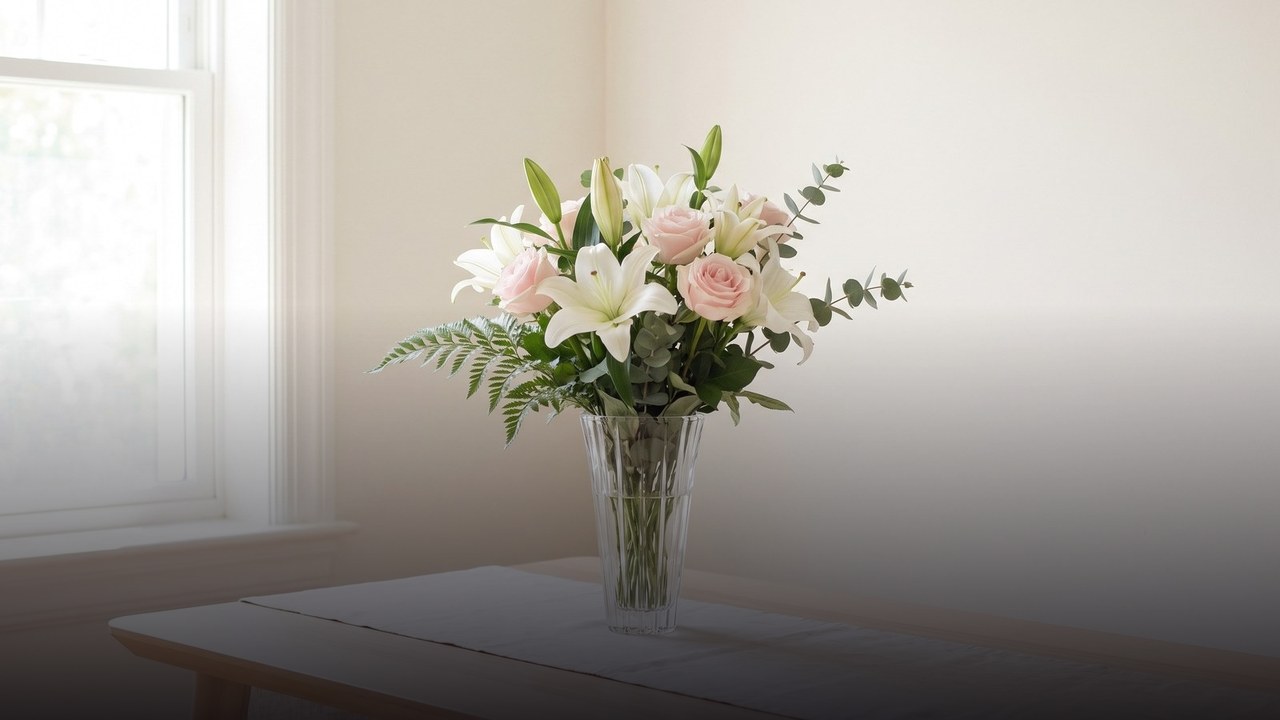
Bacteria can be present on a bouquet of flowers and multiply in its vase water, especially when leaves and damaged plant tissue sit below the waterline. Their presence alone does not establish a health hazard, and you cannot identify a bacterial species from a bouquet’s appearance or smell. The practical response is to keep the vase clean, remove decaying material and wash your hands after handling used flower water.
Customers asking about cloudy water usually want to know whether to clean the vase, trim the stems or discard the flowers. Those decisions depend on the condition of the bouquet; cloudiness does not reveal a particular organism or prove that every stem has spoiled. At Pyat Tsvetov (5 Flowers), our starting point is the same practical care routine we discuss with customers in our Saint Petersburg shops. Separate ordinary flower maintenance from any specific medical concern, which needs advice suited to the person affected.
What bacteria on flowers actually tells you
Cut flowers are plant material, and a bouquet is not a sterile object. Microorganisms may be present on stems, leaves and other surfaces without producing an obvious visible change. Once stems stand in water, fallen leaves and damaged tissue provide material that supports microbial growth. This is one reason a vase can develop a film or unpleasant smell as a bouquet ages.
A report that bacteria were found on flowers needs context before it means much. The organism identified, the sampling location and the testing method all matter; a sample of old vase water describes something different from a sample taken from a petal. Appearance cannot establish whether a named pathogen is present. If you have a laboratory result, ask the testing service or an appropriate health professional to explain its significance rather than trying to diagnose the bouquet from online photographs.
Inspect the water and stems before deciding what to keep
Check the water, then lift the bouquet out and examine the submerged parts of the stems. Cloudiness, a slippery coating and a sour or rotten smell are reasons to empty the vase and clean it. These signs can accompany microbial growth and plant decay, but they do not identify a species of bacteria. Also look for loose leaves, detached petals and soft plant tissue collecting at the bottom.
Remove individual stems that have become mushy or are breaking down, together with any loose debris. If the remaining stems are firm, clean the vase and trim their ends before returning them to fresh water. Persistent foul odour or widespread decay is a sensible reason to discard the bouquet. A drooping flower alone is less specific: our guide to wilting and falling petals explains other changes that can occur as cut flowers age.
Bouquets we can deliver




Clean the vase before refilling it
Move the flowers to a clean container while you deal with the vase. Pour away the old water carefully, avoiding splashes onto food, clean dishes or preparation surfaces. Wash the vase with detergent and water, working around the base, sides and neck with a brush that can reach them. Rinse thoroughly so that neither visible residue nor detergent remains inside.
A narrow neck can conceal a ring of residue that a quick rinse misses. Choose a vase you can actually scrub, and check the inside in good light before refilling it. If you use a disinfectant, follow its label for the surface, dilution, contact time and rinsing requirements. Never mix cleaning products, particularly bleach with acids or ammonia, and keep them away from the bouquet while cleaning.
Clean scissors or secateurs before trimming the stems, especially if the blades have touched rotting material. Wipe up spills and wash your hands when the job is finished. Vase choice also affects how easily you can inspect the stems and replace the water. Our guide to choosing a vase shape can help you match the container to the bouquet without making routine cleaning awkward.
Keep leaves out of the water and check the bouquet daily
Before arranging the flowers, remove leaves that would sit below the waterline. Recut the stem ends with a clean, sharp tool, avoiding crushing or splitting them. Add fresh water and use flower food according to its packet instructions if you have it. Measure the dose for the water volume rather than assuming that a stronger mixture will work better.
Check the water level and condition every day, because stems can take up water while debris accumulates unnoticed. Replace water that is cloudy or smells unpleasant, and clean the vase if a film has formed. Topping up dirty water leaves the residue in place, so emptying and washing the container matters. Remove fading stems promptly instead of leaving them pressed against flowers that are still in good condition.
Avoid improvised mixtures of sugar, household cleaners or other cupboard ingredients. Sugar alone does not provide the balanced treatment of a formulated flower food, and a guessed dose of cleaner can damage plant tissue or create a handling risk. Keep the arrangement away from direct heat and check that stems remain in water. These steps support flower care, but they do not sterilise a bouquet or guarantee a particular vase life.
Handle flowers sensibly around food and vulnerable people
Keep vase water away from food, drinking glasses and utensils, and do not use it for any food-related purpose. Decorative bouquet flowers should not be treated as edible flowers, even when a plant name sounds familiar. Place the arrangement where children and pets cannot drink from the vase or pull it over. Plant toxicity is a separate issue from bacteria, so check the suitability of the actual flowers if pets may reach them.
Wear household gloves if you have cuts on your hands, and wash your hands after removing decaying stems or cleaning the vase. Avoid touching your face while handling dirty water, and clean any surface that receives a spill. For a recipient with a weakened immune system, ask their care team whether cut flowers and standing water are suitable in their setting. Hospitals and care facilities may have their own rules, so check before arranging a delivery there.
If someone becomes unwell after contact with flowers or vase water, do not assume that bacteria in the bouquet caused the symptoms. Seek medical advice and describe what happened, including any ingestion, eye exposure or contact with broken skin. A bouquet photograph or a list of possible bacteria cannot establish the cause. Keep any actual test report available for the clinician rather than relying on a general internet description.
Arrange a flower delivery to Russia with practical care in mind
When sending flowers from abroad, choose a delivery time when the recipient is likely to be available to put them in water. Pyat Tsvetov has operated since 2011 and has three own flower shops in Saint Petersburg; we deliver flowers across Russia. City delivery costs 500 RUB, while the operator confirms the price for remote districts and suburbs when confirming the order. You can begin with the bouquets catalogue and check the recipient’s availability before choosing a time.
In large cities, express delivery is available in 1–2 hours after order confirmation. You can also choose an exact time with a tolerance of ±30 minutes, a window of 09–12, 12–15, 15–18 or 18–21, or preorder 1–30 days ahead. Delivery in Saint Petersburg is available around the clock. The courier calls the recipient about 15 minutes before arrival; if they are absent, we agree a second delivery the same day or a handover to a neighbour or concierge with the sender’s consent.
Delivery is anonymous by default: the courier does not name the sender, so include your name on the free card if you want the recipient to know who sent the flowers. A short personal message can accompany the bouquet without turning the gift into a care checklist. Online checkout uses CloudPayments; check the payment options displayed there rather than assuming that every foreign card will be accepted. For delivery and ordering questions, call 8 (812) 507-67-05. We deliver bouquets across Russia in 1–2 hours.
Frequently asked questions
Which bacteria are found on bouquets of flowers?
The organisms present vary with the flowers, water and handling conditions. Identifying a particular bacterium requires appropriate testing; colour, smell and photographs cannot establish its identity.
Does cloudy vase water mean the bouquet is dangerous?
Cloudiness can accompany microbial growth and plant debris, but it does not establish a specific health hazard. Empty the water, clean the vase and remove decaying material before refilling it.
Should I throw away flowers if the stems feel slimy?
Remove soft or rotting stems and clean the vase thoroughly. Firm stems may be kept after trimming, but persistent foul odour or extensive decay is a reason to discard the bouquet.
Can I add bleach to flower water to kill bacteria?
Avoid guessing a bleach dose for a bouquet; incorrect use can damage flowers and create handling risks. Use flower food according to its instructions, and follow cleaning-product labels when cleaning the empty vase.
Can I order flowers to Russia while living abroad?
Yes, Pyat Tsvetov delivers flowers across Russia, and online checkout uses CloudPayments. Check the options displayed at checkout, as acceptance of every foreign card is not guaranteed.
Ready to send a bouquet?
Pick a city, choose the flowers, and we will hand them over with a photo confirmation.
Choose a city →