
The Best Way to Cut Flower Stems at Home
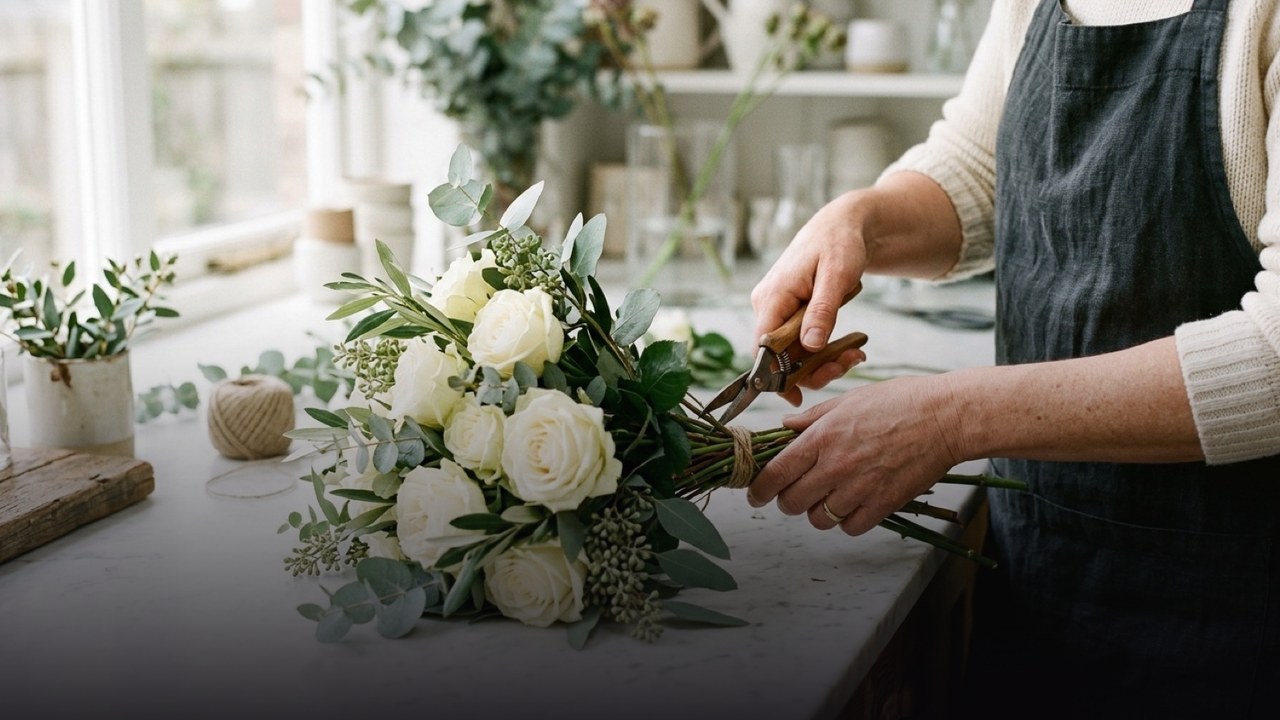
The best way to cut flower stems is to use a clean, sharp blade or floral secateurs, remove roughly 1–2 cm from each stem and place the flowers promptly into a clean vase of water. For most firm stems, make a modest diagonal cut that leaves the end clear of the vase bottom without creating a long, fragile point. Remove any leaves that would sit below the waterline, and avoid tools that flatten or tear the stem.
Customers at Pyat Tsvetov (5 Flowers) often ask whether ordinary scissors will do and how much length they should remove from a delivered bouquet. The useful distinction is between a clean cut and a crushed one: an impressive angle cannot compensate for damaged tissue or dirty water. From our Saint Petersburg flower shops, established in 2011, our advice starts with the same practical sequence: prepare the vase, inspect the stems, then trim and arrange.
Prepare the vase and tools before cutting
Wash the vase with detergent, rinse it thoroughly and fill it with fresh water before you unwrap and trim the bouquet. A narrow neck can hide residue, so use a bottle brush where your hand cannot reach and check the inside by sight. Keep a clean cutting surface nearby, with enough room to lay the flowers down without bending their heads. Having everything ready reduces the time newly cut stems spend out of water.
Choose sharp floral secateurs for firm or woody stems, or a sharp florist’s knife if you can handle it safely. Ordinary household scissors are a poor choice when their blades squeeze the stem before cutting; a clean pair may handle thin, soft stems if it slices without flattening them. Wash sap and plant residue off the blades before use and between visibly unhealthy stems. If using a knife, cut away from your hand and body, and never hold a stem against your palm.
Make a clean cut and put the stems into water
Remove about 1–2 cm from the bottom of a freshly delivered stem, cutting back farther if the end is dry, split or discoloured. On most firm stems, use a single controlled diagonal cut, roughly 45 degrees, rather than several small snips that leave a ragged edge. The angle helps keep the opening from resting flat against the vase base, but precision is unnecessary. Transfer each trimmed stem into the prepared water promptly instead of leaving the whole cut bouquet on the table.
Cutting underwater is sometimes recommended, but it is not essential for a routine bouquet refresh and can make handling a sharp blade awkward. A clean cut followed by prompt placement in water is a practical home method. Do not saw through the stem, scrape away its outer layer or hammer the end to open it up; those actions damage tissue and introduce more debris into the vase. Our guide to cutting flower stems at home covers the routine in more detail.
Bouquets we can deliver




Adjust the cut to the type of stem
Rose stems are firm and sometimes woody at the base, so use a tool strong enough to cut through them without crushing. Remove leaves that would be submerged, but avoid stripping the entire stem or gouging it while removing thorns. With very soft stems, including tulips, a clean straight cut is a sensible option because a steep diagonal can leave a weak tip. Judge the result by the intact, open end rather than trying to give every flower an identical angle.
Thick, hollow or brittle stems need support close to the cutting point so they do not buckle under the blades. Do not routinely split woody ends, pierce stems or apply boiling water: specialist treatments are not a general care method for a mixed bouquet. Daffodils need particular care because their cut stems release sap that can affect other flowers; condition freshly cut daffodils separately before combining them. If a stem releases unusual sap or you cannot identify the flower, seek advice for that species before experimenting.
Choose the final length without weakening the arrangement
Hold a stem beside the vase before shortening it, with its base level with the inside bottom, and check where the flower head will sit. Leave enough stem inside the vase for support and enough clearance above the rim that petals and lower blooms are not pressed against it. Cut conservatively at first, because you can shorten a stem again but cannot restore its length. A heavy flower head on a long stem may need a taller or narrower vase rather than another centimetre removed from the base.
Remove lower leaves individually so that none sit in the water, while keeping healthy foliage above the rim where it helps the arrangement hold its shape. Do not force a dense bouquet into a neck that pinches the stems together or makes water changes difficult. If the delivered arrangement has a binding, keep it while assessing the shape, then loosen it if necessary to inspect and trim the stems without pulling on the flowers. For compact arrangements, see our guide to cutting flower stems short.
Refresh the water and recut only as needed
Check the water level daily, especially during the first day, and replace the water whenever it becomes cloudy or contains fallen leaves. Wash the vase during water changes rather than simply topping up dirty water. If you have a flower-food sachet, follow its stated dilution instead of adding an arbitrary amount or combining it with household mixtures. Keep the bouquet away from direct sun, radiators and ripening fruit, and avoid placing it directly in the airflow from a heater or air conditioner.
Inspect the stem ends during water changes and remove a small section if they have become slimy, discoloured or damaged. There is no benefit in cutting several centimetres off every day until the bouquet no longer fits its vase. If a flower droops, first check that its stem reaches the water, that the vase is clean and that the stem is neither bent nor broken. Recutting may help a dehydrated flower, but it cannot reverse advanced ageing or repair a snapped stem; our guide to vase-water temperature explains another part of the care routine.
Help a recipient in Russia care for delivered flowers
When sending flowers from abroad, choose a delivery period when the recipient can receive them and put them in water. Pyat Tsvetov delivers flowers across Russia, with express delivery in large cities available 1–2 hours after order confirmation. You can also choose an exact time with a tolerance of ±30 minutes, a window of 09–12, 12–15, 15–18 or 18–21, or preorder 1–30 days ahead. Delivery in Saint Petersburg is available around the clock; city delivery costs 500 RUB, while the operator confirms the price for remote districts and suburbs when confirming the order.
A free card with your text can include a short care reminder: “Trim the stems with a clean, sharp tool and place them in a clean vase of water.” Delivery is anonymous by default, so include your name in the card if you want the recipient to know who sent it. The courier calls about 15 minutes before arrival; if the recipient is absent, we agree a second delivery the same day or a handover to a neighbour or concierge with the sender’s consent. See delivery and payment details before ordering: online checkout uses CloudPayments, so check the payment options displayed there rather than assuming a foreign card will be accepted; questions can be answered on 8 (812) 507-67-05.
Frequently asked questions
Should flower stems be cut straight or at an angle?
A modest diagonal cut suits most firm stems and helps prevent the cut end from sitting flat against the vase bottom. Soft stems, such as tulips, can be cut straight; a clean, uncrushed end matters more than an exact angle.
Can I cut flower stems with kitchen scissors?
Clean, sharp scissors may work on thin, soft stems if they cut without flattening them. Use floral secateurs for tougher stems, and change tools if the cut becomes ragged or crushed.
How much should I cut off a delivered bouquet?
Start with roughly 1–2 cm, removing more if the base is damaged or dried out. Check the flowers against your vase first so that the remaining stems provide enough support and reach the water.
Do I need to cut flower stems underwater?
Underwater cutting is not necessary for routine bouquet care at home. Prepare the vase first, make a clean cut and place the stem promptly into fresh water.
Will recutting stems revive every wilted flower?
Recutting can help when poor water uptake contributes to drooping, especially alongside a clean vase and fresh water. It cannot repair broken stems or reverse a flower’s natural ageing, so check the condition of the whole stem before trimming repeatedly.
Ready to send a bouquet?
Pick a city, choose the flowers, and we will hand them over with a photo confirmation.
Choose a city →