
Branded Packaging for Corporate Flower Orders: Ribbons, Cards and Boxes
Companies ordering flowers for client gifts, staff anniversaries or office events consistently ask the same question: can the bouquet look like it came from us, not from a flower shop? The answer is yes, but the options are more specific than most procurement managers expect. Branded packaging for corporate flower orders is not about wrapping paper colour alone — it covers ribbon stock, printed card formats, box construction and the sequencing of how those elements get confirmed before a large delivery goes out. This article walks through each element in the order you will need to decide it.
Why Packaging Matters More Than the Flowers for Corporate Gifting
When a bouquet arrives at a client's office, the first thing that registers is the outer presentation, not the variety mix inside. A spray of white garden roses and eucalyptus in unbranded kraft paper reads as a generic gift; the same stems in a structured box with a company-coloured ribbon and a card printed with the sender's logo reads as a deliberate statement. The flowers are identical; the commercial impression is entirely different. This is the practical reason corporate clients invest in packaging customisation rather than simply upgrading the flower budget.
For Russian business culture specifically, the gift moment carries weight. Flowers are given at contract signings, at the openings of new offices, on professional holidays such as February 23 and March 8, and at personal milestones like birthdays and retirements. Arriving with a visibly branded bouquet signals that the sender thought ahead rather than called a shop at the last minute. Procurement teams at larger companies know this and build packaging specifications into their standing flower contracts.
The practical constraint is lead time. Standard ribbon stock, pre-printed cards and box formats can be prepared quickly for repeat orders once a template is approved. First-time corporate clients, however, need to submit colour references, logo files and card text at least three working days before the first delivery. Trying to compress that into twenty-four hours is the most common mistake we see, and it usually means the first batch ships in standard packaging while the branded materials catch up.
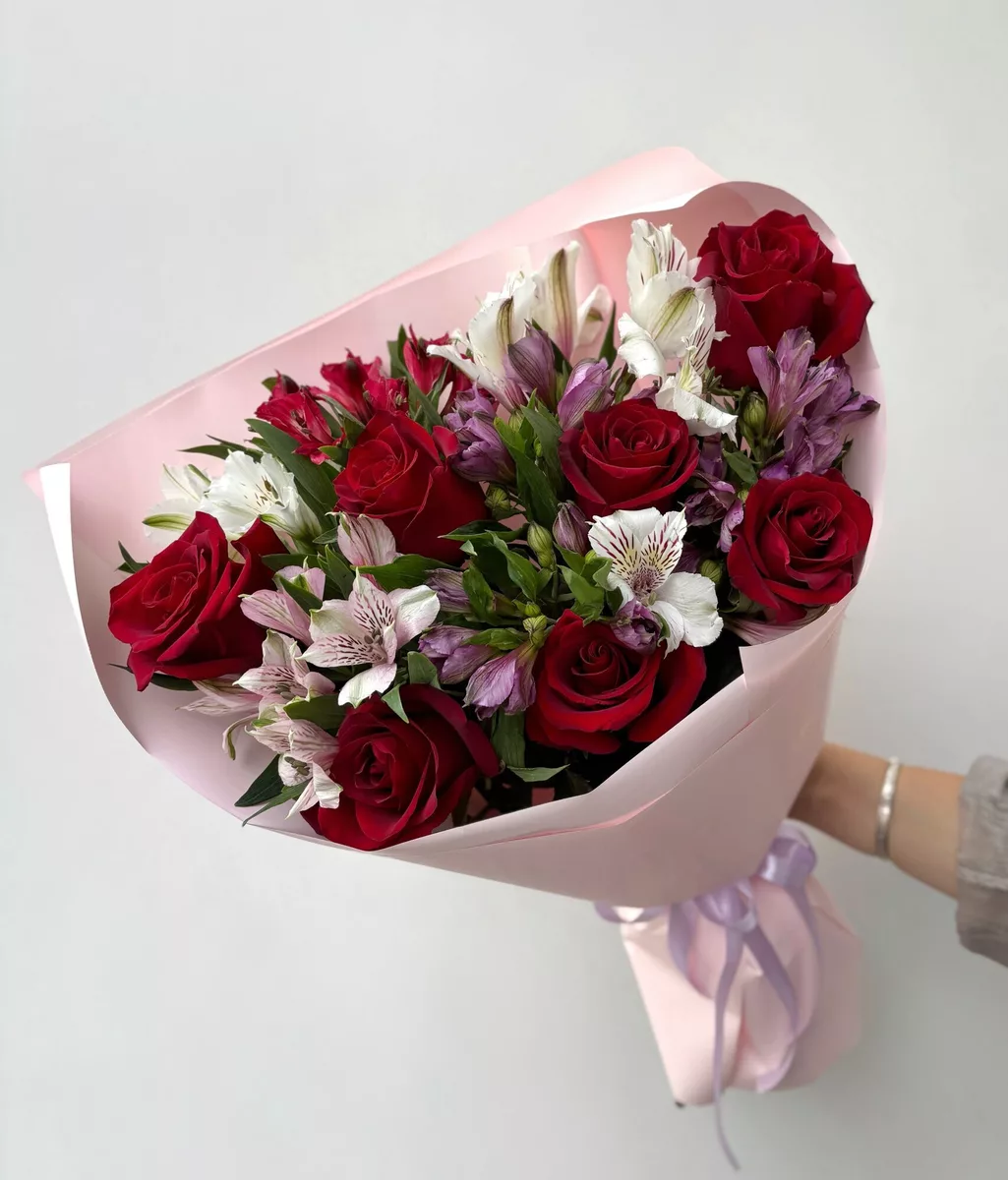
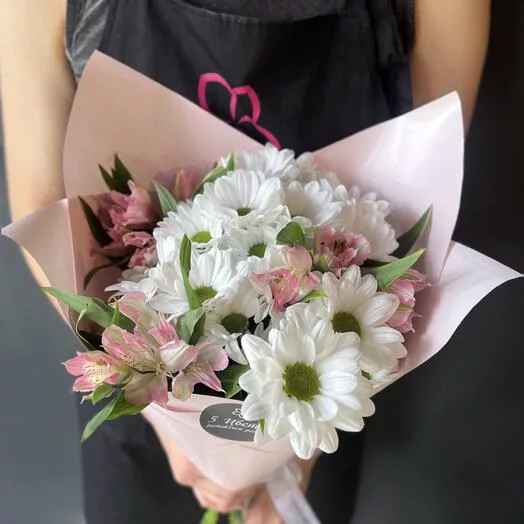
Bouquets we can deliver


Ribbon Colour Options: Matching Your Brand Palette
Ribbon is the most visible single element of a wrapped bouquet, and it is also the element most companies focus on first. Satin ribbon is the standard format used across most bouquet styles — it holds a bow cleanly, photographs well and does not wilt the way fabric alternatives can in cold storage. Grosgrain ribbon has a matte texture that suits more restrained corporate aesthetics, and organza ribbon works when the brief calls for something lighter and more translucent around a box arrangement.
Colour matching works from Pantone references or from a physical swatch. If your brand guidelines specify a particular shade of burgundy or navy, provide the Pantone code and the production team can source or confirm the closest available ribbon stock. An exact match is not always possible from standard inventory, but the practical range covers most corporate palettes. Where an exact colour is unavailable, two options exist: approve the nearest alternative from available stock, or commission a custom dye run, which requires a minimum quantity and additional lead time of roughly five to seven working days.
One detail that catches companies out: ribbon width matters for the finished look. A narrow ribbon disappears on a large box arrangement; a wide ribbon can overwhelm a compact hand-tied bouquet. When you submit your colour reference, also specify the bouquet format you are ordering — hand-tied, hat-box, or long-stem presentation — so the width can be matched correctly. Sending a photo of a previous bouquet you liked is the fastest way to align expectations without a lengthy back-and-forth.
Branded Cards: Format, Print and What to Write
Printed cards for corporate orders come in two practical formats. The first is a standard enclosure card, roughly the size of a business card or slightly larger, printed on both sides if needed. The second is a folded notecard, which gives more space for a personal message alongside the logo and is better suited when the gift accompanies a significant occasion rather than a routine delivery. Both formats use digital printing, which handles full-colour logos and photographic elements without difficulty.
The file requirements are straightforward: a vector logo file in PDF, EPS or AI format, and any specific font files if the card text needs to match your brand typography precisely. If you only have a high-resolution PNG, that usually works for smaller print runs, but vector is preferable. Card text — the message printed on the card — needs to be submitted in final form. We do not write or edit the message content; that comes from the client. What we can do is advise on character limits for each card format so the text fits without being reduced to an unreadable size.
A common mistake is leaving the card text as a placeholder until the last day. The print file needs to be confirmed at least forty-eight hours before delivery, and for large batches where each card carries a different recipient name, the full list needs to arrive in a single structured document rather than in separate messages. Companies that have placed repeat orders typically maintain a standing card template with variable fields for the recipient name and date, which cuts the confirmation time significantly for ongoing contracts.
Box Formats for Corporate Bouquets: Sizes and Flower Suitability
Hat boxes and rectangular presentation boxes are the two main formats for corporate flower orders, and they behave differently in delivery and in storage. A hat box — the round, lidded format — is sturdy, stacks cleanly and presents well when opened. It suits compact arrangements: garden roses such as David Austin varieties, ranunculus, lisianthus and mixed seasonal stems that sit at medium height. The lid keeps the arrangement protected during transit, which matters when a courier is making multiple drops across a city.
Rectangular boxes are better for long-stem presentations — single-variety roses, tulips or anthuriums where the stem length is part of the visual. They are also the format used when a client wants a flat, gift-box aesthetic rather than a traditional bouquet shape. The trade-off is that rectangular boxes are less stackable and take up more space in a delivery vehicle, which is relevant if you are ordering a batch of twenty or more pieces for a single event.
Both box formats can be produced in custom colours or with a printed exterior, but exterior printing adds to lead time and minimum order quantities. For most corporate clients, the practical approach is a standard box in a neutral colour — black, white or kraft — with the branded ribbon and card doing the identity work. This keeps lead times manageable and avoids the minimum quantity requirements that come with custom-printed boxes. If your order volume is consistently high and you want full exterior branding, that conversation is worth having, but it is a different production process than ribbon and card customisation.
Temperature and Timing: What Happens to Flowers Inside Branded Packaging
Corporate clients sometimes request that arrangements be prepared several hours in advance — for example, to be ready when a venue opens, or to be loaded into a company vehicle rather than delivered by the shop. This is possible, but the packaging choice affects how long the flowers hold. Flowers in a closed box without water retain condition for approximately two to four hours depending on the variety and ambient temperature. Roses and chrysanthemums hold reasonably well; ranunculus and sweet peas are more sensitive and begin to soften faster.
The relevant temperature range is between four and eight degrees Celsius for cold storage. If branded boxes are being prepared in advance and held before distribution, they need to be kept in a cool space, not in a warm reception area or a car boot in summer. This is a point that matters practically for event coordinators who collect flowers in the morning for an afternoon presentation. Asking the florist to condition the stems well before boxing — meaning a full overnight water uptake at the correct temperature — extends the window significantly.
For same-day delivery within the standard one-to-two hour window, packaging has no meaningful effect on flower condition. The concern only arises when boxes are prepared and held. If your event schedule requires flowers to be ready several hours early, mention this when placing the order so the preparation timing can be adjusted. Flowers cut and boxed six hours before a delivery window opens will not look the same as flowers boxed ninety minutes before arrival.
Setting Up a Standing Corporate Account: What to Prepare
Companies that order flowers regularly — for monthly client gifts, weekly office arrangements or recurring event schedules — benefit from setting up a standing account rather than placing individual orders each time. The practical advantage is that packaging specifications, approved card templates and preferred flower styles are stored and reused, which removes the confirmation step from each order cycle.
To set up a standing account, the initial submission needs to include: the full brand colour references for ribbon, the logo file in the correct format, an approved card template with variable fields identified, the preferred box format and any flower variety preferences or exclusions. Exclusions matter — some corporate clients avoid red roses for client gifts because of their romantic association, or avoid white flowers in certain contexts. Noting these once means they are applied automatically.
Billing for standing accounts is typically handled on a monthly invoice cycle rather than per-order payment, which simplifies the process for procurement departments working with internal purchase order systems. The minimum order frequency to justify a standing account setup varies, but companies placing four or more orders per month generally find the setup worthwhile.
One practical note on variety availability: seasonal changes affect what is in stock. A standing account template should specify a primary variety and an acceptable substitute, so that when, for example, garden roses are between seasons and supply is limited, the order can proceed with the agreed alternative rather than requiring a new approval round. Building that flexibility into the initial brief saves time for both sides across a full year of orders.
Branded packaging for corporate flower orders is a production question as much as a design one. The elements — ribbon colour, card format, box type — each have their own lead times, file requirements and practical constraints around flower handling. Companies that invest thirty minutes in a clear brief at the start of a contract relationship save that time repeatedly on every subsequent order. The flowers themselves, whether garden roses, tulips or mixed seasonal arrangements, perform the same regardless of the packaging; what changes is the impression they create when they arrive, and whether that impression carries your brand forward or simply says that someone sent flowers. Доставим букет по России за 1–2 часа.
Frequently asked questions
How far in advance do we need to submit our logo and ribbon colour for a first corporate order?
Allow at least three working days before the first delivery for a new corporate account. This gives time to confirm the ribbon colour against your Pantone reference, prepare the print file for the card and run a sample check. Rushing this to twenty-four hours usually means the first batch ships in standard packaging while branded materials are finalised.
Can each bouquet in a batch of thirty carry a different recipient name on the card?
Yes. Submit the full recipient list as a single structured document — a spreadsheet with name, message and delivery address in columns works well. Cards are printed in the correct sequence against the delivery schedule. Sending names individually in separate messages significantly increases the chance of errors and delays confirmation.
Do box arrangements hold as well as hand-tied bouquets during courier delivery?
For standard one-to-two hour delivery windows, both formats hold equally well. The box provides physical protection during transit. The concern arises only if boxes are prepared and held for several hours before distribution — in that case, cool storage between four and eight degrees is necessary to maintain condition, especially for varieties like ranunculus.
Is there a minimum order quantity for branded ribbon and cards?
Ribbon customisation from available stock has no minimum order quantity once a colour is confirmed. Custom dye runs for non-standard colours require a minimum quantity and additional lead time. Printed cards can be produced in small runs for single orders, though standing account templates become more efficient for companies ordering four or more times per month.
Which flower varieties work best in a hat box for corporate gifting?
Garden roses, spray roses, ranunculus, lisianthus and seasonal mixed arrangements suit the hat box format well — their stem lengths and natural head sizes fit the proportions cleanly. Long-stem single-variety roses or tulips are better presented in a rectangular box where the stem length is visible and part of the gift's visual impact.
Ready to send a bouquet?
Pick a city, choose the flowers, and we will hand them over with a photo confirmation.
Choose a city →