
Buket Roz: What Our Saint Petersburg Florists Advise When You Order Roses
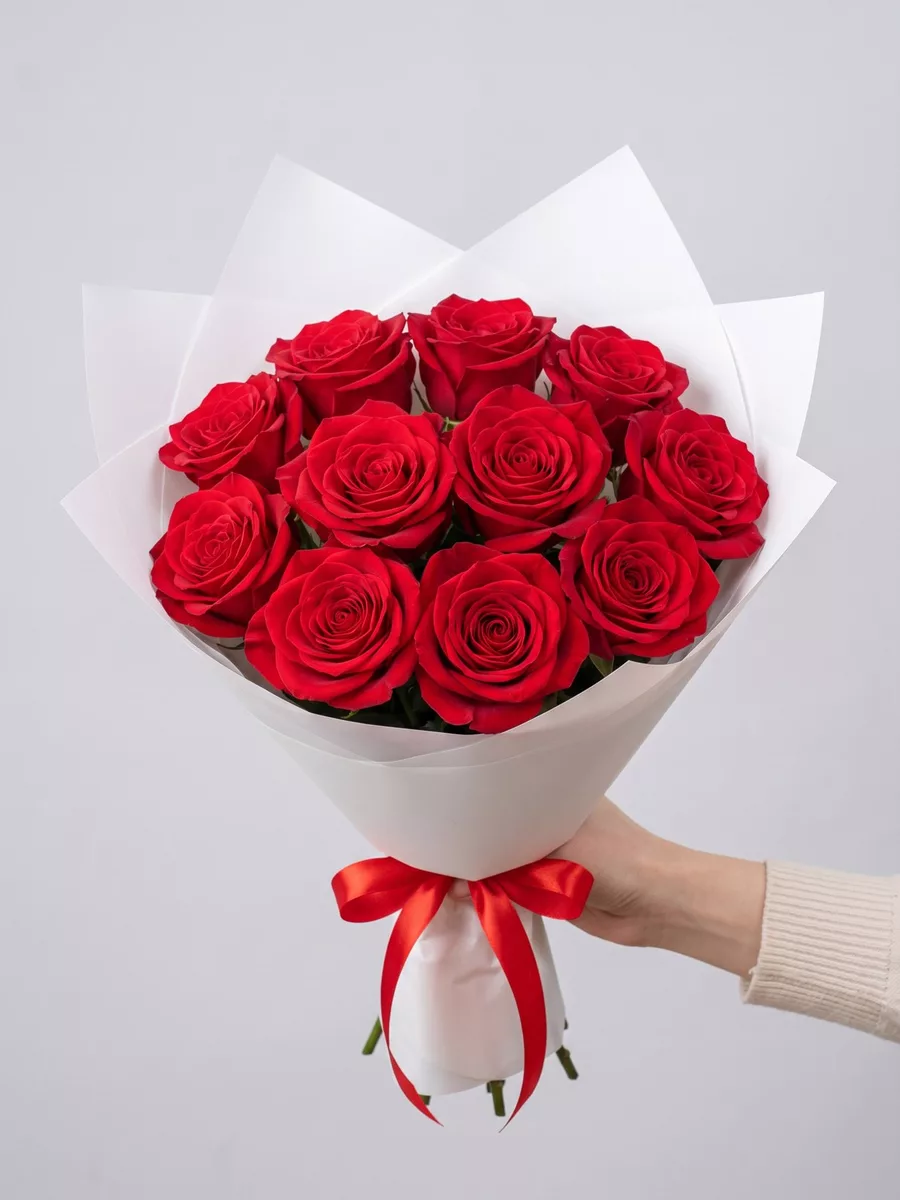
Buket roz is the Russian phrase for "a bouquet of roses", and it is the gift customers ask for most often in our Saint Petersburg shops. A good one has an odd number of stems, a colour that suits the occasion, and roses with firm, tightly closed heads that will open over the next days rather than the next hours. We deliver such bouquets across Russia, and around the clock within Saint Petersburg.
Pyat Tsvetov has been making bouquets since 2011 in our three own shops in Saint Petersburg, on Ilyushina Street, Obvodny Canal Embankment and Srednerogatskaya Street. Below we have gathered the questions people really ask us at the counter and on the phone when they order roses, together with the answers we give them, so you can order with the same confidence from London, Berlin or Tel Aviv.
"How many roses should I take?"
This is the first question in almost every conversation, and the answer starts with one firm rule: for a living person, the number of flowers is odd. Even numbers are carried to cemeteries and memorial services, and many Russians, especially over fifty, notice the count immediately. When you order a ready-made bouquet, check the stem count in the description rather than judging by the photo.
Within that rule, the number sets the tone. Three or five roses suit a first date, a small thank-you or a visit to someone's home for dinner. Seven, nine or eleven make a full birthday bouquet that fits comfortably in an ordinary vase. Fifteen to twenty-five roses look festive and generous and are a common choice for a wife or mother on a jubilee birthday.
Very large bouquets, from fifty-one roses upwards, belong to proposals and milestone anniversaries. They are heavy, need a wide, stable vase or come in a box, and make a strong statement. We wrote a separate guide on the meaning and care of 51 roses for those planning a grand gesture.
"Which colour is right for her?"
Customers usually tell us who the bouquet is for, and we pick the colour from there. For a wife or girlfriend, red remains the clear favourite and nobody will misread it. For a mother, mother-in-law or grandmother, we suggest pink, cream or peach: warm and festive without romantic overtones. For a colleague, a teacher or a doctor, white or pale pink roses look respectful and neat.
Yellow roses need a short conversation. Younger recipients see them as bright and cheerful, but an older generation in Russia may still connect yellow flowers with separation. If the recipient is over sixty, we usually steer customers towards apricot or peach, which are just as sunny and carry no doubtful meaning.
A mix of two close shades, for example white and blush, or cream and peach, is the safest choice when you do not know the recipient well. It looks soft and expensive, and it avoids the very formal look of a single block of red.
Bouquets we can deliver



How to tell a fresh rose from a tired one
When customers pick roses in our shops, we show them three things to check, and we apply the same checks to every bouquet we send. First, squeeze the head gently at its base: a fresh rose feels firm and springy, while an old one feels soft and hollow. Second, look at the outer petals, the so-called guard petals; a few marked ones are normal protection, but brown edges on inner petals are not.
Third, look at the leaves and the cut. Leaves should be green and elastic, not dry or yellowed, and the stem should look moist at the cut. A rose that has the head bent sharply just under the bud has been without water for too long and will rarely recover. These checks matter because a fresh rose bouquet typically stands a week or more in a vase, while a tired one starts dropping petals in two or three days.
Head size also changes the look. Large-headed roses on long stems give a formal, elegant bouquet; medium heads look more natural and suit a home table. Spray roses, with several small buds on each stem, give a full, airy bouquet from a modest number of stems and are a favourite for mothers and friends.
Care instructions we give with every bouquet
Before putting roses in water, cut each stem by two or three centimetres at a sharp angle with a sharp knife; scissors crush the stem and slow water uptake. Strip off every leaf that would be under the water, because submerged leaves rot and spoil the water within a day. Use a clean vase filled about halfway with cool water.
Change the water every day or every other day and refresh the cut each time. In Saint Petersburg flats the central heating is strong from October to April, and the air near radiators is dry and warm, which shortens a bouquet's life noticeably. Put the vase in the coolest part of the room, away from the radiator, direct sun and the fruit bowl.
If a rose head droops, re-cut the stem and stand the rose in deep cool water for a few hours, wrapped in paper so the stem stays straight. Most heads lift again. When the bouquet starts to fade, removing the weakest stems and moving the rest to a smaller vase keeps it looking good for a few more days.
Ordering a rose bouquet from abroad
Most of our English-speaking customers order for parents, partners or friends who live in Russia. Choose a bouquet in the catalogue, enter the recipient's name, phone and full address including entrance, floor and flat, and select the delivery time. Payment is made online on the site by bank card, SBP or Yandex Pay, and foreign bank cards are accepted through Robokassa.
We deliver across Russia. Delivery within the city costs 500 RUB; for remote districts and suburbs, the operator confirms the price when confirming the order. In large cities express delivery takes 1-2 hours after confirmation. You can also choose an exact time with a 30-minute margin, a window of 09-12, 12-15, 15-18 or 18-21, or pre-order 1-30 days ahead. Within Saint Petersburg we deliver around the clock, which helps when you want flowers to arrive exactly at midnight on a birthday.
The courier calls the recipient about 15 minutes before arriving. If nobody is home, we arrange a second delivery the same day or, with your consent, leave the bouquet with a neighbour or concierge. All conditions are collected on the delivery and payment page, and any question can be settled by phone at 8 (812) 507-67-05.
The card and anonymity
Delivery is anonymous by default: the courier hands over the flowers without naming the sender. Many customers use this for a secret admirer's bouquet or to let the recipient guess. If you want your name known, write it on the card, which comes free with your own text.
Keep the message short, two or three lines. For older relatives, a greeting in Russian, even typed in Latin letters, is received very warmly. For a partner, one sincere sentence works better than a long verse, and for a colleague a thank-you and your name are enough.
Frequently asked questions
What is buket roz in English?
It means "a bouquet of roses". Buket is bouquet, and roz is the plural form of roza, rose.
Why must the number of roses be odd?
In Russia even numbers of flowers are brought to funerals and memorials. For birthdays, dates and any other living recipient, an odd number is expected.
Can I pay for roses with a foreign card?
Yes. Foreign bank cards are accepted via Robokassa, and you can also pay by bank card, SBP or Yandex Pay on the site.
Can roses be delivered at night in Saint Petersburg?
Yes. Within Saint Petersburg delivery runs around the clock, so a bouquet can arrive at midnight or early in the morning.
How long will a bouquet of roses last?
Fresh roses usually stand about a week or more. Daily water changes, a fresh angled cut and a cool spot away from radiators make the biggest difference.
Ready to send a bouquet?
Pick a city, choose the flowers, and we will hand them over with a photo confirmation.
Choose a city →